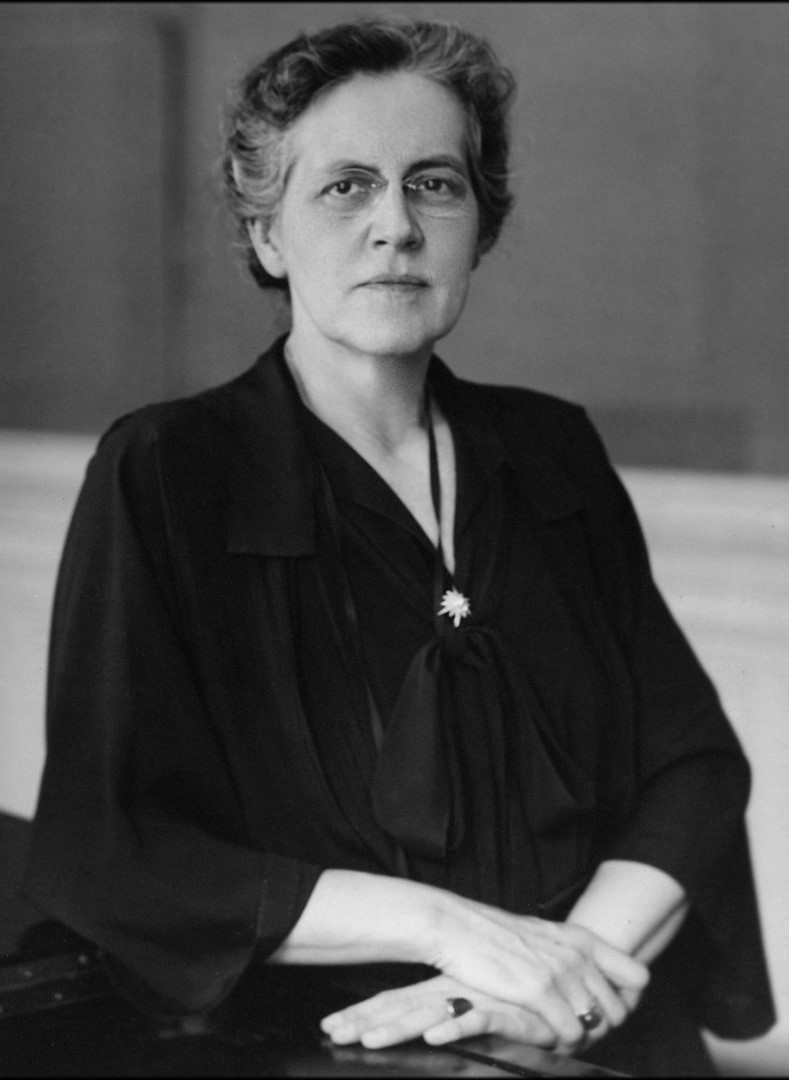
Tag: Nadia Boulanger

  • Nadia Boulanger Influential Teacher

    Nadia Boulanger Influential Teacher

    Nadia Boulanger (1887-1979) has been described as the most influential teacher since Socrates.

    Her students included everyone from Dinu Lipatti to Igor Markevitch, from Aaron Copland to Elliott Carter, from Astor Piazzolla to Philip Glass, from Michel Legrand to Quincy Jones, from Leonard Bernstein to “What Makes It Great?” creator Rob Kapilow.

    Her influence on American music, in particular, has been incalculable. Hopefuls flocked to her American Conservatory at Fontainebleau, where she accepted applicants from all backgrounds, provided they were determined to learn. It was Virgil Thomson who quipped, “She was a one-woman graduate school, so powerful and permeating that legend credits every United States town with two things: a five and dime and a Boulanger pupil.” The five and dimes may have faded, but not so the legacy of the “Boulangerie.”

    Beneath those grey hairs and pince-nez lurked an iron will that brooked no nonsense, yet Boulanger was surprisingly accepting, astonishingly objective, and generally dead-on in her assessments. When asked if a hierarchy could be established among composers – Beethoven being more important than Max Bruch, for instance – she suggests the pointlessness of such comparisons, stating it is like comparing the Himalayas to Montmartre.

    She accepted the philosophical breadth of her pupils as a matter of course: “It’s very different to confront a work you don’t know yet, or a work in which you have to recognize some worth, while secretly saying to yourself, ‘that’s a trend I would never follow.’ That’s a matter of personal taste. Cannot culture allow us to go beyond personal taste and see the beauty of an object? I may not want to buy it, but I can see that it’s beautiful.”

    We need more of that in our world. Happy birthday, Nadia Boulanger!


    Fascinating Boulanger documentary, with first-hand accounts, historical footage, and terrific insights. Leonard Bernstein is interviewed in French, beginning around the 7-minute mark.

    Boulanger conducts Fauré’s Requiem

    Her sister, Lili, was really the composer in the family. (Sadly short-lived, she died at the age of 24.) Even so, Nadia made some game attempts at composition. Here’s her own “Fantaisie variée” for piano and orchestra.

    Three Pieces for Cello and Piano

    Playing Brahms waltzes with Dinu Lipatti

  • Bard Music Festival Encounters Fisher Center at Bard

    Bard Music Festival Encounters Fisher Center at Bard

    One of the great pleasures of attending the Bard Music Festival is not only the obvious enjoyment that comes from listening to and learning about the subject at hand (this year, Hector Berlioz), but also the sense of conviviality experienced in the company of likeminded music lovers from all walks of life.

    Here I am with my newest friend from Bard. No, not Berlioz. That’s Bill Osborne on the left. Bill is a retired organist who studied at Fontainebleau with the venerable pedagogue Nadia Boulanger. For over 40 years, he served as Distinguished Professor of Fine Arts at Denison University.

    In that capacity, he also directed the Denison Singers, which brought him to Princeton a couple of times to perform at Westminster Choir College and Princeton University Chapel. He adds impishly that some of their belongings were stolen at Princeton High School. But Bill, a true gentleman and a lovely raconteur, shares all his stories with a laugh and a twinkle in his eye.

    As a student in France, he also encountered legendary organist-composers Marcel Dupré and Olivier Messiaen. During one memorable lesson, he was caught on the bench between Boulanger and André Marchal, the celebrated blind organist of St. Germain des Pres, with their at times conflicting philosophies, trying his best to diplomatically serve two masters.

    Boulanger was notorious for her strict instruction and strong opinions. Bill observed that she was a stickler for punctuality in her students, yet she herself was always late for lessons. Once, he too was running behind, and he ran into her in the courtyard. Mademoiselle, as she was affectionately known, demanded to know why he wasn’t already at their lesson.

    Back in the United States, during the course of some research he was conducting in New York, he was put up in a penthouse at the Dakota. I probably don’t have to tell you about the Dakota. It’s one of the top-tier apartment buildings on Central Park West. Anyway, he got a big kick out of that. The building is so crammed with celebrities that whenever he peered over a balcony a paparazzo would snap his photo from the street, assuming he must be somebody famous.

    Once, he walked out of the building just as a limousine pulled up. Who should spring out of the back seat but Leonard Bernstein. In his classic effusive manner, Lenny walked up to Bill, who was agog, and enfolded him in a warm embrace. Lenny said, “So good to see you again,” assuming that, if he lived at the Dakota, he must have known him; but of course, Bill had never seen him before in his life.

    Bill was also responsible for introducing the organ works of Petr Eben to the United States, after receiving the scores from the hand of the composer during a tour of Czechoslovakia. He went on to record an album of Eben’s works for Crystal Records.

    What an interesting, affable fellow! I enjoyed chatting with him over several days. You never know who you’re going to meet at Bard.

    This year’s Bard Music Festival, “Berlioz and His World,” continues through August 18. For more information, follow the link.

    https://fishercenter.bard.edu/whats-on/programs/bard-music-festival/

    Fisher Center at Bard

  • Colette Maze RIP Centenarian Pianist Dies at 109

    Colette Maze RIP Centenarian Pianist Dies at 109

    If you’re a classical music nut, the Internet Algorithm Overlords may have introduced you to Colette Maze. Maze amazed with her videos of centenarian keyboard dexterity and grace as likely the oldest pianist ever to record. Maze died this week at the age of 109. Her last record was released earlier this year.

    In 1929, at the age of 15, she entered the École normale de musique de Paris to study with Alfred Cortot and Nadia Boulanger. Alfred Cortot! This woman was living history. She continued playing daily right up to the very end, the better to maintain her memory. An amazing feat.

    The longest-lived pianist I had previously been aware of was one-time Philadelphian Leo Ornstein (founder of the now-defunct Ornstein School of Music). Ornstein, who also gained notoriety as an avant-garde composer, died in 2002 at the age of 106. I have no idea if he was still playing up to that time. He certainly was not recording.

    In 2017, I mused about Ornstein’s unlikely resurrection as a video game character. You can read the post here:

    https://www.facebook.com/search/top?q=classic%20ross%20amico%20ornstein

    Maze plays Debussy at 108

    A four-minute tribute from her 106th year

    A life dedicated to beauty can never be long enough. R.I.P.

  • Nadia Boulanger: Celebrating the Legendary Teacher

    Nadia Boulanger: Celebrating the Legendary Teacher

    Nadia Boulanger, the grande dame of 20th century music, was born on this date in 1887.

    Widely considered to have been the greatest musical pedagogue who ever lived, she was especially instrumental to the development of American composition. Hopefuls flocked to the American Conservatory at Fontainebleau, France, where she accepted applicants from all backgrounds. Her only stipulation was that they be determined to learn. It was Virgil Thomson who quipped, “She was a one-woman graduate school, so powerful and permeating that legend credits every United States town with two things: a five and dime and a Boulanger pupil.” The five and dimes may have faded, but not so the legacy of the “Boulangerie.”

    Beneath those grey hairs and pince-nez lurked an iron will that brooked no nonsense, yet Boulanger was surprisingly accepting, astonishingly objective, and generally dead-on in her assessments.

    Her students included everyone from Dinu Lipatti to Igor Markevitch, from Aaron Copland to Elliott Carter, from Astor Piazzolla to Philip Glass, from Michel Legrand to Quincy Jones, from Leonard Bernstein (unofficially) to “What Makes It Great?” radio host Rob Kapilow.

    Here’s what a few of those who benefited from her tutelage have to say about their experiences with her.

    Quincy Jones

    Harold Shapero

    Elliot Carter

    Elliot Carter and Ned Rorem

    Fascinating documentary, including first-hand accounts, historical footage, and terrific insights. Leonard Bernstein is interviewed in French, beginning around the 7-minute mark:

    There’s a live recording of Mme Boulanger conducting the Requiem of her teacher, Gabriel Fauré, from 1968 that’s circulated on various labels, with the BBC Chorus and BBC Symphony Orchestra. However, this performance too, with the Choral Art Society and the New York Philharmonic, is quite lovely, captured in Carnegie Hall in 1962.

    Nadia’s early ambition was to become a composer herself. However, she soon acknowledged that her sister, Lili, was the true talent in this regard and devoted her life to teaching. Sadly, Lili died of Crohn’s Disease at the age of only 24.

    Here’s Nadia’s own “Fantaisie variée” for piano and orchestra from 1912, written when she was 25.

    And an earlier work, “Cantique” from 1909

    Boulanger died in 1979 at the age of 92.

    Joyeux anniversaire… et merci!

  • Lili Boulanger Prix de Rome Prodigy

    Lili Boulanger Prix de Rome Prodigy

    Lili Boulanger (1893-1918), the younger sister of the renowned pedagogue Nadia – who taught Aaron Copland, Elliot Carter, Astor Piazzolla, Philip Glass, Michel Legrand, Quincy Jones, and just about everyone else – was one of the great hopes of French music, the first woman to win the Prix de Rome composition prize. She won the prize in 1913, at the age of 19, for her cantata “Faust et Hélène.” It was actually Lili’s second attempt. The year before, she collapsed during her performance.

    Lili suffered from chronic ill health, having contracted bronchial pneumonia at the age of 2. Her compromised immune system left her vulnerable to Crohn’s disease, which ended her life in 1918 at the age of 24. (Nadia’s life was as long as her sister’s was brief. She died in 1979 at the age of 92.)

    Nadia too had had ambitions to compose. She herself attempted to attain the Prix de Rome (as their father had done in 1835), but was repeatedly frustrated. She got as far as second place in 1908. It became evident that her sister was the real deal in that regard, so Nadia pursued organ and, of course, pedagogy.

    Both sisters were greatly influenced by Gabriel Fauré, who was director of the Paris Conservatory – Lili, a musical prodigy, had been accompanying her sister to the conservatory from before the age of 5 – and of course Debussy’s impact in those days was inescapable. Like Debussy, Lili gravitated toward a kind of indirection in her music, more characteristic of Symbolism than the evocative sorts of atmospheres often attempted by the Impressionists (a classification, by the way, Debussy disliked).

    Lili was greatly affected by the death of her father in 1900, and many of her works are marked by grief and loss. Ernest fathered his children quite late in life. He was 72 when Nadia was born, and 77 at the time of Lili’s birth. The girls’ mother was 41 years his junior. Despite the inherent melancholy that pervades much of her music, Lili displayed a colorful mastery of harmony and orchestration.

    Often she was perceived as destined for greatness. Her music has actually been programmed fairly frequently for a woman composer of her era. But now with greater sensitivity to male dominance in the world’s concert halls, we are starting to hear even more Lili Boulanger. It’s just a pity she didn’t leave us more.

    Happy birthday, Lili Boulanger.


    Deux morceaux for violin and piano: Nocturne and Cortège

    “Faust et Hélène”

    “D’un soir triste” (“Of a Sad Evening”)

    “D’un matin de printemps” (“Of a Spring Morning”)

    “Vieille prière bouddhique” (“Old Buddhist Prayer”)

Tag Cloud

Aaron Copland (92) Beethoven (95) Composer (114) Film Music (119) Film Score (143) Film Scores (255) Halloween (94) John Williams (185) KWAX (229) Leonard Bernstein (99) Marlboro Music Festival (125) Movie Music (134) Opera (198) Philadelphia Orchestra (86) Picture Perfect (174) Princeton Symphony Orchestra (106) Radio (87) Ralph Vaughan Williams (85) Ross Amico (244) Roy's Tie-Dye Sci-Fi Corner (290) The Classical Network (101) The Lost Chord (268) Vaughan Williams (102) WPRB (396) WWFM (881)

DON’T MISS A BEAT

Receive a weekly digest every Sunday at noon by signing up here


RECENT POSTS