Tag: New Jersey Symphony Orchestra

  • Remembering JoAnn Falletta A Generous Maestro

    Remembering JoAnn Falletta A Generous Maestro

    JoAnn Falletta is one of the nicest, most generous people in the business. Not only did she make time to drop by my morning radio shows during her summer visits to Princeton to conduct the New Jersey Symphony Orchestra Edward T. Cone Composition Institute concerts and to participate in multiple phone interviews for my syndicated radio program, “The Lost Chord,” but she’s actually gone out of her way to send me related material herself from her home. Where does she find the time? She’s in demand everywhere, and she’s constantly learning new material. The last time I saw her was at an all-Lukas Foss concert at Carnegie Hall last year. (The music was recorded, so a CD will materialize on Naxos at some point, I expect very soon.) She’s always on the lookout for worthy unusual and neglected repertoire. Is it any wonder I feel as if we are totally simpatico? Falletta’s recordings are well-represented on my radio programs and in my CD library. She holds a special place in my heart. Happy birthday, JoAnn Falletta! Thank you for your curiosity, your energy, your artistry, and your munificence.


    I almost forgot, I’ve got one of our interviews preserved on Soundcloud!

  • Zdeněk Mácal NJSO Conductor Dies at 87

    Zdeněk Mácal NJSO Conductor Dies at 87

    Zdeněk Mácal, former music director of the New Jersey Symphony Orchestra, has died. Macal led the orchestra from 1993 to 2002. Together, they made some distinguished recordings, including a Grammy Award winning album of Dvořák’s Requiem and Symphony No. 9 “From the New World.”

    Mácal fled communist Czechoslovakia for West Germany with his family after the Soviet Union and Warsaw Pact members crushed the liberal Prague Spring movement in 1968.

    He found work at the WDR Symphony Orchestra Cologne and NDR Orchestra of Hanover. He also conducted in the U.K., Australia, and the U.S., making his American debut with the Chicago Symphony Orchestra in 1972.

    Following an advisory position in San Antonio and a principal conductorship with Chicago’s Grant Park Music Festival, he became music director of the Milwaukee Symphony Orchestra in 1986. From Milwaukee, he came New Jersey to take over the NJSO.

    He returned to his homeland only after the communist regime was toppled in 1989. From 2003 to 2007, he served as chief conductor of the Czech Philharmonic Orchestra.

    Mácal died in Prague late yesterday. He was 87 years-old.


    From Dvořák’s Requiem, with Princeton’s Westminster Symphonic Choir the New Jersey Symphony Orchestra

    An interview with Bruce Duffie

    https://www.bruceduffie.com/macal.html

  • Vaughan Williams’ Covid-Era Music Precedent

    Vaughan Williams’ Covid-Era Music Precedent

    Another precedent for time of Covid:

    In 1940, Ralph Vaughan Williams suggested that composers should write works for “combinations of all manner of instruments which might be played by people whiling away the waiting-hours of war.”

    Putting this into practice, he composed “Household Music” in 1940-41. The work exists in a version for string quartet, but the parts can also be played by flute, oboe, clarinet, bassoon, bass clarinet, saxophone, recorder, cornet, euphonium, or anything else at their respective pitches.

    The work bears the subtitle “Three Preludes on Welsh Hymn Tunes.” This should not be confused with an earlier, more popular triptych of that name, composed in 1920, for solo organ. The tunes are totally different.

    Here are flutist Kathleen Nester and violist Brett Deubner of the New Jersey Symphony Orchestra, and cellist Bronwyn Banerdt of the Pittsburgh Symphony, to perform the third movement, “Aberystwyth”:

    Vaughan Williams also arranged the piece for medium-sized orchestra:


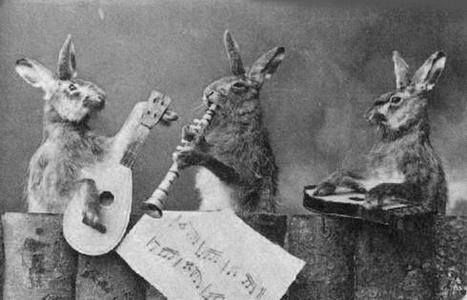
    PHOTO: “Household Music,” performed by isolating rabbits, on lute, clarinet and autoharp.

  • Bora Yoon Premieres Orchestral Work at Princeton

    Bora Yoon Premieres Orchestral Work at Princeton

    When Bora Yoon’s “The Wind of Two Koreas” is performed at Princeton University’s Richardson Auditorium on Saturday, July 20, it will be unique among her body of works.

    Yoon, a doctoral candidate at Princeton University, describes herself as an interdisciplinary composer. Typically her works assimilate classical, electronic, and cross-cultural elements and employ unconventional instruments and technologies. In this instance, however, she will be taking a more traditional approach, though not to the detriment of exploring some of her usual artistic concerns.

    In her first purely orchestral piece, Yoon will continue to draw musical connections to her heritage as an American of Korean descent and all of the paradoxical tensions she finds therein. But she’ll also be measuring herself against the early works of Igor Stravinsky.

    Yoon’s new piece will be heard on a concert that is the public face of this year’s New Jersey Symphony Orchestra Edward T. Cone Composition Institute, which will be held from July 15 through July 20.

    The Cone Institute, now in its sixth year, brings together representatives of the New Jersey Symphony Orchestra and the Princeton University Music Department to offer four emerging composers a unique laboratory experience.

    You can read more about it, Yoon, and the concert, in my article in this week’s U.S. 1 Newspaper – PrincetonInfo, out today.

    https://princetoninfo.com/a-premiere-for-princeton-composers-symphonic-expression/

  • George Walker Pulitzer Winner and Trailblazer

    George Walker Pulitzer Winner and Trailblazer

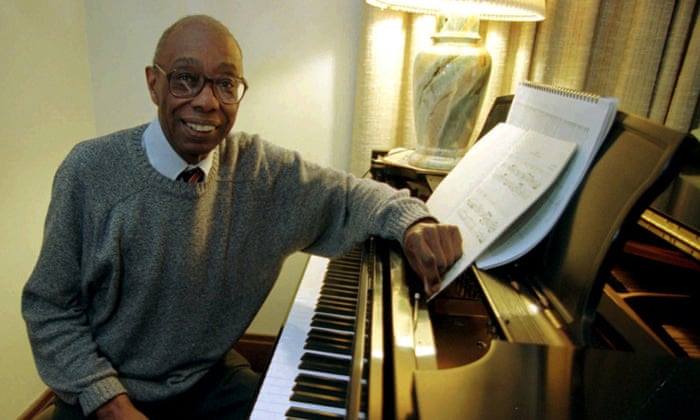
    George Walker was the first African-American recipient of the Pulitzer Prize for Music – as recently as 1996 – for his work, “Lilacs for Voice and Orchestra.” He was the first black pianist to present a solo recital at New York’s Town Hall (in 1945). He was the first black performer to appear as soloist with the Philadelphia Orchestra (performing Rachmaninoff’s Piano Concerto No. 3). He was the first black musician to graduate from the Curtis Institute of Music (where he studied with Rudolf Serkin and Rosario Scalero).

    Walker died on August 23, 2018, at the age of 96. This Sunday night on “The Lost Chord,” we’ll honor this trailblazing artist with a program of four of his original works, including his Piano Sonata No. 2 (with the composer himself at the keyboard), the award-winning “Lilacs” (after poetry of Walt Whitman), “Address for Orchestra,” and “Lyric for Strings,” his most famous music, in its original version for string quartet.

    Born in Washington, D.C., Walker was a longtime resident of Montclair, NJ. His father emigrated from Kingston, Jamaica, to study at Temple University School of Medicine; Walker’s mother supervised his first piano lessons. He was admitted to the Oberlin School of Music at the age of 14. He was then admitted to the Curtis Institute in Philadelphia, and later attended the Eastman School. For two years, he studied in Paris with the famed pedagogue Nadia Boulanger.

    Walker’s own academic career included posts with Dillard University in New Orleans, the Dalcroze School of Music, the New School for Social Research, Smith College, the University of Colorado Boulder, Rutgers University (where he served as chairman of the music department), the Peabody Institute of John Hopkins University, and the University of Delaware.

    He was the father of two sons, violinist and composer Gregory T.S. Walker and playwright Ian Walker. His sister, the pianist, Frances Walker-Slocum, died on June 9 at the age of 94.

    The New Jersey Symphony Orchestra, which has played a number of the composer’s pieces over the years, has announced that it will be adding “Lyric for Strings” to its opening concerts, October 5th through October 7th, to be performed in Newark and New Brunswick. Also on the program will be the U.S. premiere of Kate Whitley’s “Speak Out” and Beethoven’s Symphony No. 9. Find out more at njsymphony.org.

    Then join me for “Perambulations with Walker,” this Sunday night at 10:00 EDT, on WWFM – The Classical Network and wwfm.org.
Tag Cloud

Aaron Copland (92) Beethoven (95) Composer (114) Film Music (123) Film Score (143) Film Scores (255) Halloween (94) John Williams (187) KWAX (229) Leonard Bernstein (101) Marlboro Music Festival (125) Movie Music (138) Opera (202) Philadelphia Orchestra (89) Picture Perfect (174) Princeton Symphony Orchestra (106) Radio (87) Ralph Vaughan Williams (85) Ross Amico (244) Roy's Tie-Dye Sci-Fi Corner (290) The Classical Network (101) The Lost Chord (268) Vaughan Williams (103) WPRB (396) WWFM (881)

DON’T MISS A BEAT

Receive a weekly digest every Sunday at noon by signing up here


RECENT POSTS