Tag: New York Philharmonic

  • Bernstein Conducts Rózsa Rare 1943 Broadcast

    Bernstein Conducts Rózsa Rare 1943 Broadcast

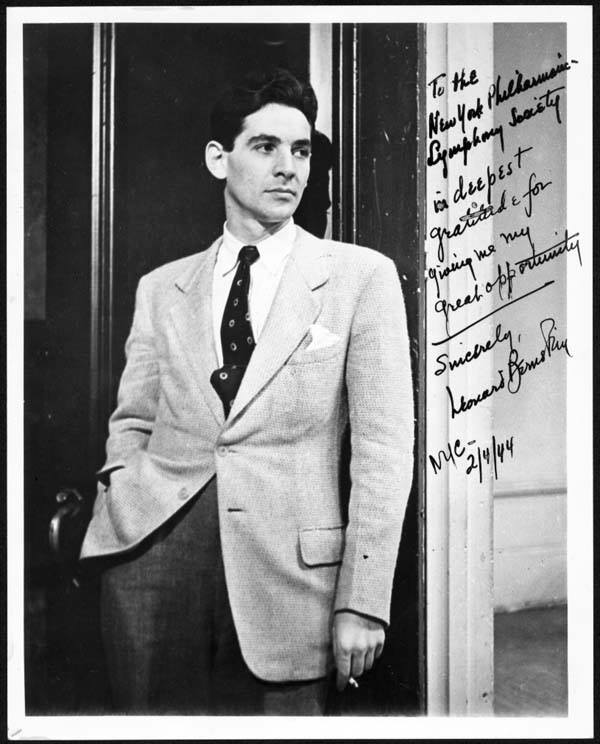
    Leonard Bernstein conducts Miklós Rózsa? No way. YES, WAY!

    On November 14, 1943, a 25 year-old Bernstein strode onto the podium to replace an ailing Bruno Walter – without rehearsal – for what became his New York Philharmonic debut. The rest, as they say, is history. On the program was Robert Schumann’s “Manfred Overture,” Richard Strauss’ “Don Quixote” and Miklós Rózsa’s “Theme, Variations and Finale.” The concert was broadcast nationwide. The New York Philharmonic issued the CBS transmission on CD in 1996. To my knowledge, this is the only document of Bernstein conducting Rózsa, who is best known for his film scores – especially that for “Ben-Hur,” but in 1943, Rózsa was chin-deep in his film noir phase.

    You’ll be able to enjoy this historic concert broadcast and much more, as I salute Bernstein on his birthday anniversary, tomorrow morning from 6 to 11 EDT, on WPRB 103.3 FM and at wprb.com. We’ll go loony for Lenny, on Classic Ross Amico.

  • William Grant Still American Composer

    William Grant Still American Composer

    They say that still waters run deep.

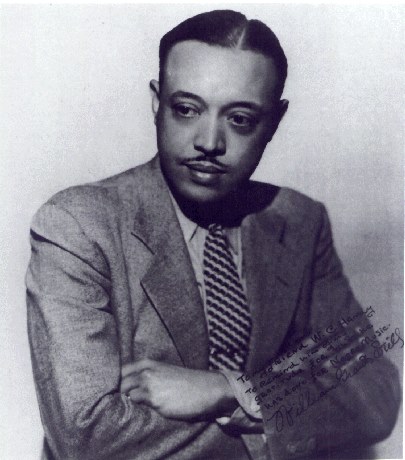
    William Grant Still, the so-called “Dean of Afro-American Composers,” composed a lot of attractive music, much of it informed by the black experience. This Sunday night on “The Lost Chord,” we’ll hear Still’s delightful Symphony No. 2, subtitled “Song of a New Race,” and a more serious work fueled by racial considerations, “And They Lynched Him on a Tree,” for double-choir, narrator and orchestra.

    Still, who lived from 1895-1978, emerged from unlikely circumstances – born in Woodville, Mississippi; raised in Little Rock, Arkansas – to become a major force in American music. Having abandoned a career in medicine for studies at the Oberlin Conservatory of Music and the New England Conservatory in Boston, where he studied with George Whitefield Chadwick, Still was a “first” in many respects.

    His Symphony No. 1, the “Afro-American Symphony,” was the first written by a black composer to be performed by a major orchestra (the New York Philharmonic). He was the first to be given the opportunity to conduct a major orchestra (the Los Angeles Philharmonic, at the Hollywood Bowl). His opera, “Troubled Island,” became the first to be produced by a major company (the New York City Opera). Another of his operas, “A Bayou Legend,” was the first to be performed on national television (as late as 1981). His works were performed internationally by the Berlin Philharmonic, the London Symphony Orchestra, the BBC Symphony, and the Tokyo Philharmonic.

    Perhaps the least likely pupil of Edgard Varèse, he incorporated jazz and blues elements into his concert music. He cut his teeth writing arrangements for Paul Whiteman, W.C. Handy and Artie Shaw. According to Eubie Blake, one of Still’s improvisations in the pit band during Blake’s revue “Shuffle Along” became the basis for Gershwin’s hit tune “I Got Rhythm.” Still didn’t appear to be bitter about the appropriation (which Blake conceded was probably inadvertent), and in fact Still and Gershwin were on friendly terms and made it a point to attend performances of one another’s music.

    Pay particular attention to the second movement of Still’s Symphony No. 2, first performed in 1936 by Leopold Stokowski and the Philadelphia Orchestra, and see if you agree that Gershwin would have killed to have composed its second movement.

    We’ll follow that with a very different piece, Still’s choral ballad “And They Lynched Him on a Tree,” composed in 1940. The libretto is by the poet Katherine G.C. Biddle, the niece of Charlotte Mason, the so-called “Godmother of the Harlem Renaissance.” The work calls for a contralto soloist, as the mother of the victim, a “white chorus” to depict the mob, a “black chorus” to discover the lynching, a narrator, and a small orchestra. The composition is almost exactly contemporary with Abel Meeropol’s “Strange Fruit.” It was given its first performance by the New York Philharmonic, conducted by Artur Rodzinski.

    There will be just a few minutes left at the end of the show, during which we’ll decompress with Still’s miniature “Summerland.”

    I hope you’ll join me for “Still Runs Deep” – an hour of music by William Grant Still – this Sunday night at 10 ET, with a repeat Wednesday evening at 6; or that you’ll listen to it later as a webcast at wwfm.org.

  • Remembering Kurt Masur

    Remembering Kurt Masur

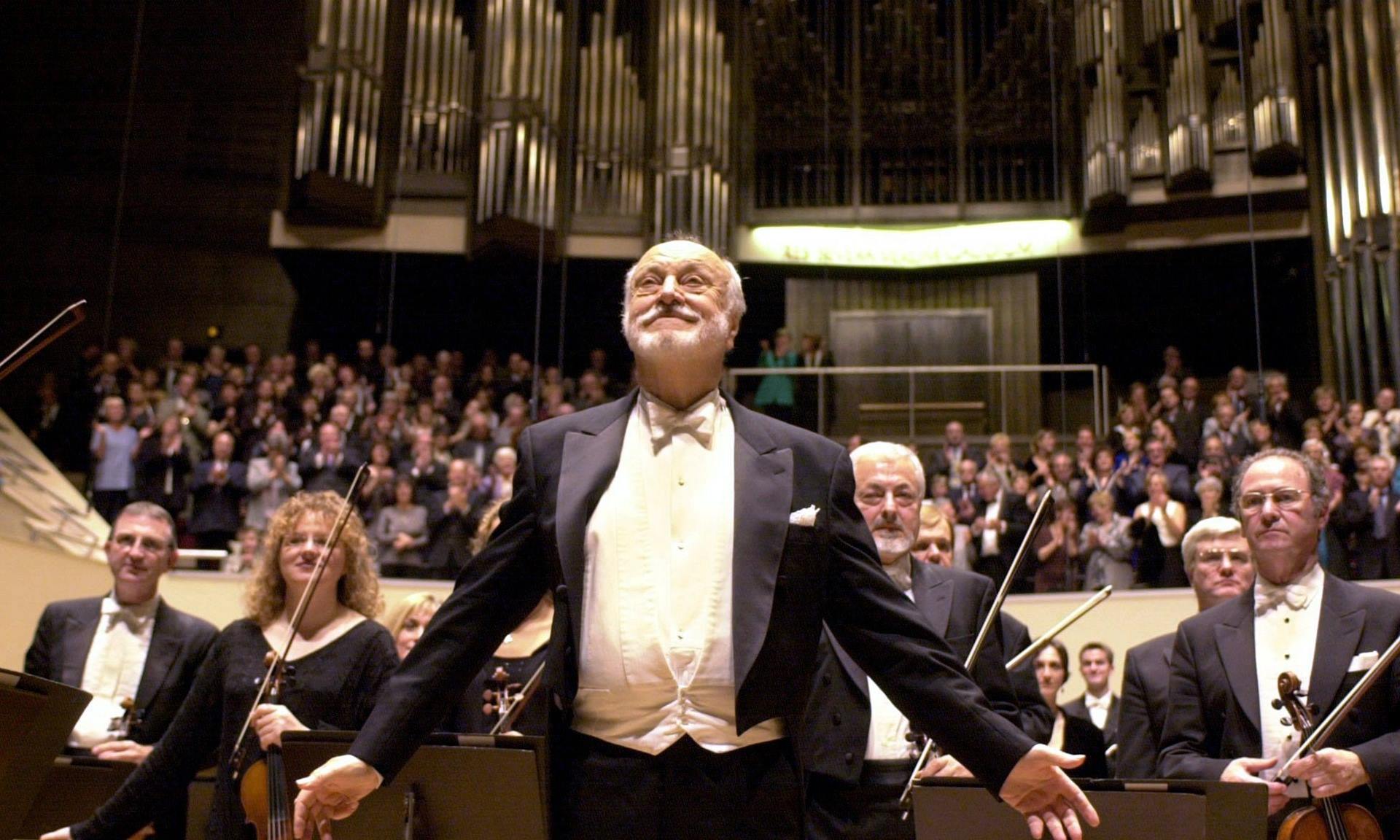
    The New York Philharmonic’s “Kapellmeister,” Kurt Masur, has died.

    I attended one of his concerts in Philadelphia, back in 1990, in which he presented Strauss’ “Death and Transfiguration” on the same program with Brahms’ “A German Requiem.” I still remember it, so it must have been pretty good. With Masur you could always count on solid performances, though you were pretty much guaranteed he wasn’t going to do anything to scare the horses.

    His reputation rests comfortably in the thick of the bratwurst and sauerkraut repertoire. I am thankful that he kept enough breadcrumbs in his pocket that he was able to stray a little off the beaten path every once in a while in order to give us recordings like those of the Bruch violin concertos, with Salvatore Accardo (ranging beyond the familiar Concerto No. 1 and the “Scottish Fantasy”), and the complete symphonies, with the Leipzig Gewandhaus Orchestra.

    He also gave many world premieres of contemporary music in New York, something for which he is not often credited. Still, Beethoven, Brahms and Mendelssohn were always in his strike zone.

    R.I.P. Kurt Masur.

    His obituary in the New York Times:

    http://www.nytimes.com/2015/12/20/arts/music/kurt-masur-new-york-philharmonic-conductor-dies.html?_r=0

    An interview he gave with Bruce Duffie:

    http://www.bruceduffie.com/masur.html

    Interestingly, he advises audiences to be open to new experiences.

  • Dvořák’s “New World” Returns to NYC

    Dvořák’s “New World” Returns to NYC

    If, like me, you’re of the opinion that Dvořák never wrote a bad note, or you are a particular fan of the “New World” Symphony, you might be interested to know that the composer’s original manuscript will be returning to New York City for five days, beginning on Nov. 17. This will be the first time the manuscript for this seminal “American” work has been outside the Czech Republic since Dvořák left with it in 1895. The document will be on display at Bohemian National Hall at the Czech Center New York, 321 E. 73rd St.

    The exhibition will be prefaced on Sunday, Nov. 16, by a performance of the “New World” Symphony at Carnegie Hall, with the Czech Philharmonic Orchestra, conducted by Jiří Bělohlávek. For more information on these and related events, look online at http://www.czechcenter.com.

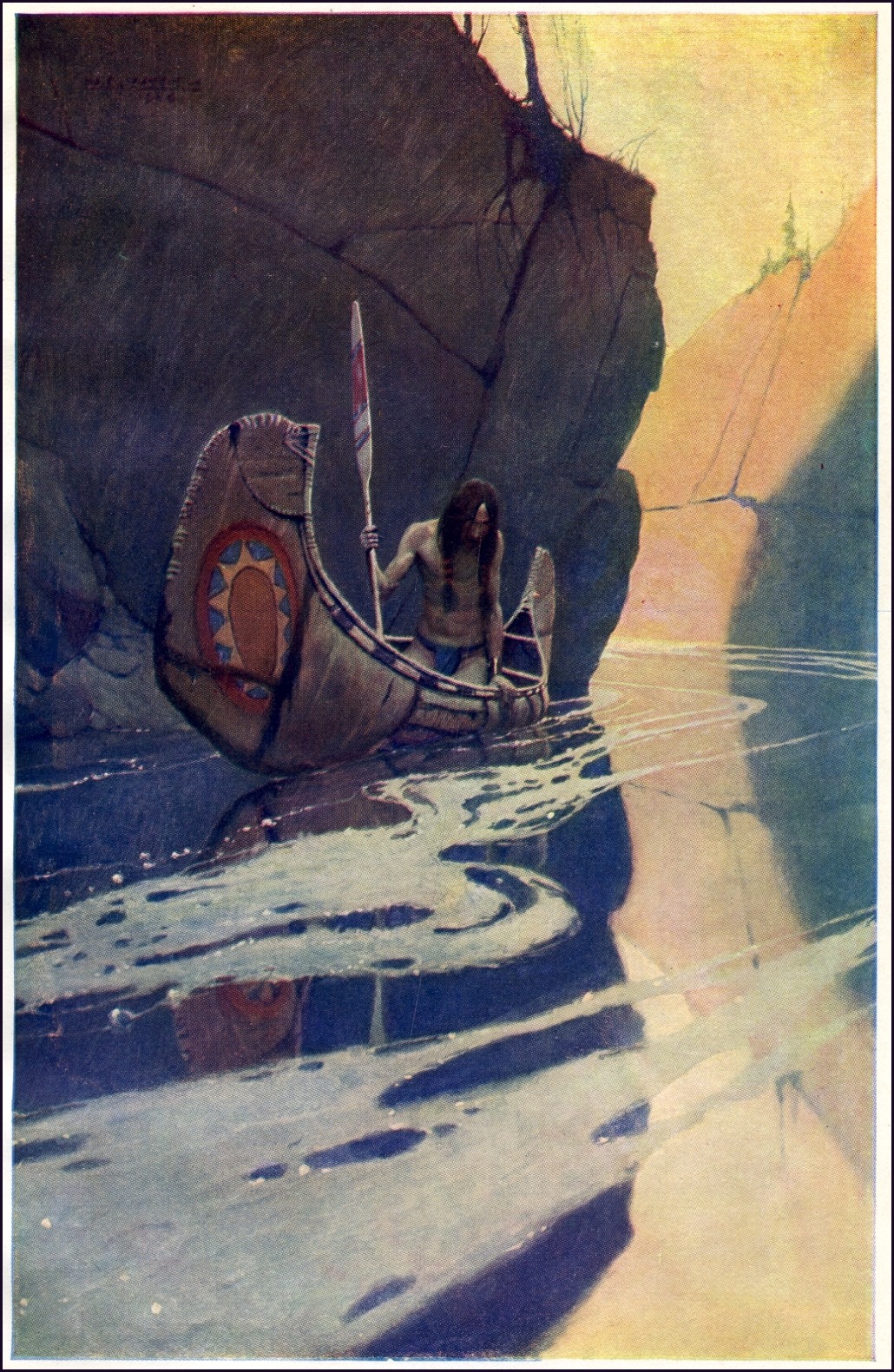
    To honor the occasion, tonight on “The Lost Chord” I thought we’d listen to a work from a fairly recent release on the Naxos label, a “Hiawatha Melodrama,” on themes of Dvořák, many of them taken from the “New World” Symphony.

    Dvořák composed what is now commonly termed his Symphony No. 9 (for decades it was recognized as his Symphony No. 5) in 1893, while he was director of the National Conservatory of Music in New York. The work was influenced by Native American music and African American spirituals. The composer intimated that certain sections were inspired by his reading of “The Song of Hiawatha.” In fact, he intended the famous Largo as a sketch for a later opera or cantata on the theme, and the third movement scherzo was suggested by a dance at Hiawatha’s wedding feast.

    Beginning in the early 1990s, cultural historian Joseph Horowitz and Dvořák scholar Michael Beckerman began experimenting with presentations incorporating portions of Longfellow’s text with music from Dvořák’s symphony. These developed into a 35-minute melodrama, which achieved its final form in 2013. (In musical terms, a melodrama is the marriage of music with spoken word.) The arrangers also lifted passages from Native American-influenced music from Dvořák’s Sonatina, Op. 100 (the composer sketched the theme for the Larghetto on his starched cuff during a visit to Minnehaha Falls in Minnesota), and his “American Suite.”

    The narrator is bass-baritone Kevin Deas. Deas regularly appears in Dvořák festivals curated by Horowitz, including a show devoted to Harry T. Burleigh, Dvořák’s African American assistant at the National Conservatory, who is said to have introduced Dvořák to the spiritual. They have toured the show to schools throughout the United States.

    The fascinating disc also contains the “American Suite” in its original piano version, as well as several of the “Humoresques,” the Larghetto from the “Sonatina,” an arrangement by Dvořák pupil William Arms Fisher of the symphony’s Largo as a spiritual, “Goin’ Home,” and three works by one of the first American composers to follow Dvořák’s example, Arthur Farwell.

    To round out the hour, I’ve also programmed selections from “Hiawatha’s Wedding Feast,” one of three cantatas which comprise “Scenes from the Song of Hiawatha,” by the English composer of African descent, Samuel Coleridge-Taylor. Coleridge-Taylor composed the work five years after Dvořák completed his “New World” Symphony.

    “Hiawatha’s Wedding Feast,” became a cultural phenomenon. By the time it was taken up by Sir Malcolm Sargent, it was given annually, from 1928 to 1939, in a costumed, semi-ballet version, featuring close to a thousand performers. Unfortunately, this was among the works the composer had sold outright, his heirs thereby missing out on the royalties. By the time of Sargent’s advocacy, the short-lived Coleridge-Taylor had already been dead for 16 years.

    The recording, released on the Argo label back in 1991, is one of the earliest of rising star Bryn Terfel.

    In the age of the computer, when first thoughts can be deleted without a trace, Dvořák’s manuscript provides an especially valuable glimpse into the artist’s creative process. WWFM’s Rachel Katz, on her show “A Tempo” this week, interviewed Czech Center director Barbara Karpetova, along with Beckerman, for their insights into the work and its cultural significance, with additional commentary by New York Philharmonic historian and archivist Barbara Haws.

    The New York Philharmonic, which owns the original orchestral parts of the “New World” Symphony and is lending them for this display, will be presenting its own Dvořák festival from Dec. 4 through Dec. 13, with Dvořák chamber works presented on their Saturday matinees throughout the season.

    If you missed “A Tempo,” the show will be posted this week as a webcast at the WWFM website, with all three conversations presented uncut. Listen in to learn about the evolution of the famous “New World” Largo and to hear a clip from a vintage performance by the New York Philharmonic, whose personnel still included performers who had played in the work’s premiere.

    In the meantime, I hope you’ll join me tonight for “Indian Summer” – works inspired by Longfellow’s “The Song of Hiawatha” – at 10 ET, with a repeat Wednesday evening at 6, or that you’ll listen to it later as a webcast at http://www.wwfm.org.
  • Memorial Day Remembrance Herrmann’s Fallen

    Memorial Day Remembrance Herrmann’s Fallen

    It’s Memorial Day. Before you start in with the burgers and the quoits and the three legged-race and the gumboot toss and all that, remember how lucky we are, and those who laid down their lives believing they were doing something for the greater good.

    Bernard Herrmann is most celebrated for his film scores, in particular those he wrote for Alfred Hitchcock, though he did much brilliant besides. Here’s a concert piece he wrote in 1943, called “For the Fallen,” in a fascinating historical document with the composer conducting the New York Philharmonic:

    Here it is again in a modern performance, with more up-to-date sound:

    Listen to both if you can. Happy Memorial Day.

Tag Cloud

Aaron Copland (92) Beethoven (95) Composer (114) Film Music (119) Film Score (143) Film Scores (255) Halloween (94) John Williams (185) KWAX (229) Leonard Bernstein (99) Marlboro Music Festival (125) Movie Music (134) Opera (198) Philadelphia Orchestra (87) Picture Perfect (174) Princeton Symphony Orchestra (106) Radio (87) Ralph Vaughan Williams (85) Ross Amico (244) Roy's Tie-Dye Sci-Fi Corner (290) The Classical Network (101) The Lost Chord (268) Vaughan Williams (102) WPRB (396) WWFM (881)

DON’T MISS A BEAT

Receive a weekly digest every Sunday at noon by signing up here


RECENT POSTS