It’s funny how perceptions change. All those years of slight regard during his time at the New York Philharmonic and eyeball rolling for his association with The Three Tenors – and here it turns out, the whole while, a genuine world-class maestro was living among us!
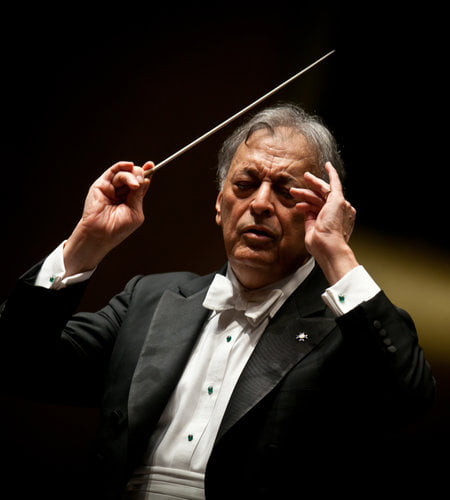
Zubin Mehta is 85. In many ways underrated in his prime – handily eclipsed in an era when so many of his colleagues championed the very repertoire that existed within his wheelhouse – Mehta is ripe for reassessment. In particular, he excelled in late Romantic/early 20th century music. It’s only now, when we’re up to our ears in mediocre performances of the “same old, same old,” that perhaps we can truly appreciate just how good we had it.
Of course, it didn’t help his cause that he was tied to so many media events. He became linked in many people’s minds to the New Year’s Concerts from Vienna. He conducted “Turandot” at the Forbidden City. He played stooge to the Tenors. Eventually, it seemed like every time Mehta was up to something, it was a publicity stunt. But how are these any worse than the excesses of Bernstein or Stokowski? Money is money, and you can’t blame a conductor for trying to generate interest.
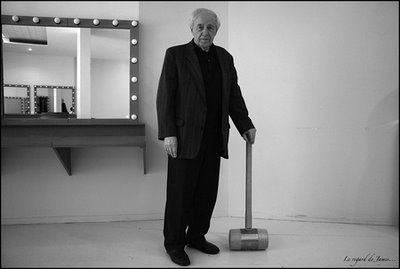
His immediate predecessors in New York were Boulez and Bernstein. And before Bernstein, Mitropoulos. He would have been mincemeat even without New York politics and personality clashes. New York didn’t even like Barbirolli or Mahler! But Mehta flourished in Los Angeles and he made beautiful music with the Israel Philharmonic for five decades.
Furthermore, generations of instrumental soloists have wanted him as their accompanist. There is something to be said for that level of trust. In the words of Jacqueline Du Pre, “He provides a magic carpet for you to float on.” Du Pre was part of a staggeringly talented circle of musicians – including Mehta, Daniel Barenboim, Itzhak Perlman, and Pinchas Zukerman – who met on their way up and remained lifelong friends.
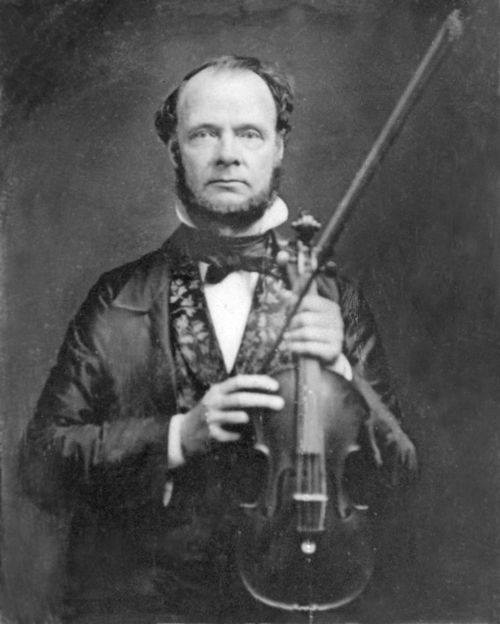
Born in Bombay in 1936, Mehta grew up surrounded by Western music. His father was a violinist who had studied in New York, then returned home to establish the Bombay Symphony. He taught his son violin and piano and allowed him opportunities to conduct during rehearsals of the orchestra. To appease his mother, the younger Mehta began to study medicine, but two years in, he dropped all pretense and was off to pursue music in Vienna. His teacher there, conductor Hans Swarowsky, described his talent as “demoniac.” And he meant it as a compliment.
When Mehta was hired by the Montreal Symphony Orchestra in 1961, he became the youngest music director ever to lead a major orchestra in North America. In 1962, he added the Los Angeles Philharmonic, which he led concurrently. In 1969, he became music advisor to the Israel Philharmonic. In 1981, he was named its music director for life. He was in New York from 1978 to 1991. Since 1985, he’s been chief conductor of the Maggio Musicale Florentino, in Florence, Italy.
When Mehta was appointed assistant conductor in L.A., Sir Georg Solti, the orchestra’s music director, resigned in protest over not having been consulted. Ironically, after Mehta’s promotion to the top spot, he might very well have been the philharmonic’s most consistently satisfying music director in modern times – sorry, Gustavo – at least on the merits of his recordings. It’s clear that he had the measure of the orchestra’s temperament and knew the secret to harnessing its dynamic potential.
Mehta’s position in the pantheon could be – and undoubtedly is – argued among passionate music lovers. The competition was stiff, especially in his early days. It’s hard to shine next to Bernstein, Karajan, or Stokowski. But when the alchemy was right, he certainly knew how to get what he wanted out of an orchestra.
Happy birthday, Zubin Mehta. Better to be recognized late than never. Thank you for a lifetime devoted to great music.
Listen to any of the following and see if the work doesn’t speak for itself:
Liszt symphonic poems (Battle of the Huns, Orpheus, Mazeppa)
Also sprach Zarathustra
Schoenberg, Chamber Symphony No. 1
Franz Schmidt, Symphony No. 4
“Star Wars” and “Close Encounters”
“The Rite of Spring” (live performance with video)
https://www.youtube.com/watch?v=DKwszNzO8lc
An extended conversation with Mehta
https://www.youtube.com/watch?v=M7XZYQyrKD4
“I feel that as a musician, I am one of the few that is blessed that every morning, when I wake up, I touch genius. I never let myself forget this. I’m not the genius. It’s the people’s music that I perform – whether it’s Bach, whether it’s Mozart, whether it’s Richard Strauss, Stravinsky, Arnold Schoenberg. We are constantly in the presence of greatness. I tell my musicians that, in the orchestra. I say don’t take this for granted. Look around you. How many people have this fortune of being surrounded by this greatness?”