Tag: New York Philharmonic

  • Samuel Barber: Rare Recordings & Insights

    Samuel Barber: Rare Recordings & Insights

    It is one of those things that would seem to go without saying, yet it should not be taken for granted – the blessing, as the 20th century progressed, of just how much recorded material exists relating to our great composers. Imagine what it would have been like to have had this kind of access to a conversational Brahms or Liszt.

    On the anniversary of his birth, here is Samuel Barber from 1978, speaking with WQXR’s Bob Sherman, prior to the premiere of the composer’s “Third Essay for Orchestra” with the New York Philharmonic. The conversation is punctuated by interesting recordings, including one of Pierre Bernac singing Barber’s “Mélodies passagères” – in French – with Francis Poulenc at the piano. Barber reveals that he acted as page-turner during the recording. Also, he mentions that he was originally expected to go to Princeton!

    https://www.wqxr.org/story/samuel-barber/

    The same interview, without ads for Scientific American (the program’s sponsor), but transferred at a lower level of sound:

    The “Third Essay for Orchestra,” the piece that would receive its premiere only a few days later:

    During the interview, Barber also teases the anticipated debut of a Concertino for Oboe, also with the New York Phil, a work that sadly never came to pass. This gorgeous “Canzonetta,” which would have served as the piece’s slow movement, is all that was released. It would be Barber’s final composition. The performance here is by Humbert Lucarelli and the now-defunct Lehigh Valley Chamber Orchestra.

    Here’s an earlier broadcast, from 1958, an intermission feature of the New York Phil, with Barber and James Fassett, the composer talking about his new orchestral work, “Medea’s Meditation and Dance of Vengeance,” distilled from the ballet for Martha Graham:

    Finally, Barber and composer Gian Carlo Menotti shared a home in Mount Kisco, New York, from 1943 to 1972. The two had met as students at the Curtis Institute of Music in Philadelphia. Menotti would serve as librettist for Barber’s Pulitzer Prize winning opera “Vanessa.” He later worked to rehabilitate Barber’s “Antony and Cleopatra” after its disastrous 1966 premiere at the grand opening of the new Metropolitan Opera House at Lincoln Center. Both composers were two-time Pulitzer Prize winners. Menotti talks about Barber, ten years after their split (the two remained friends), at Curtis in 1980:

    If you’re a Barberophile, you’ll also want to check out H. Paul Moon’s award-winning documentary, “Samuel Barber: Absolute Beauty.” You can view the trailer here:

    https://samuelbarberfilm.com/

    Thankfully, one of America’s most celebrated composers is so well-documented. Happy birthday, Samuel Barber!


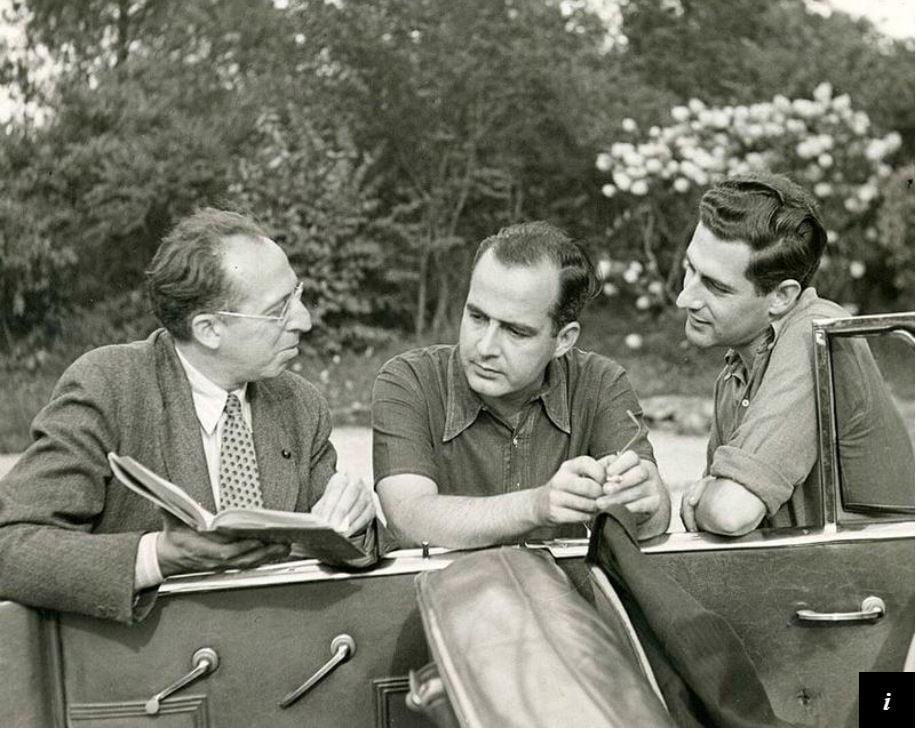
    PHOTO: A road trip with (left to right) Aaron Copland, Samuel Barber, and Gian Carlo Menotti
  • Carl Nielsen’s Symphony No. 5: A Century of Optimism

    Carl Nielsen’s Symphony No. 5: A Century of Optimism

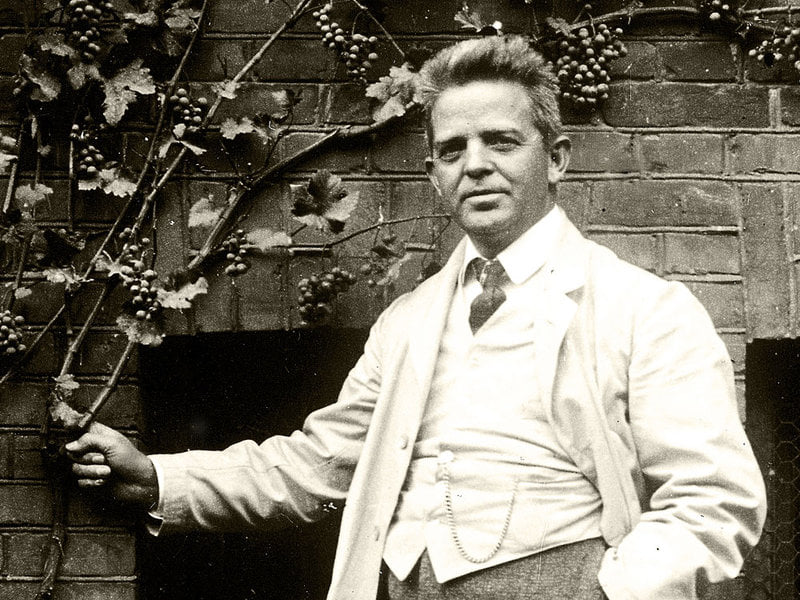
    I can’t claim to know how to solve the world’s problems, but more Carl Nielsen would be a good start.

    Nielsen was, of course, Denmark’s most celebrated composer. He experienced a lot of change in his lifetime (1865-1931), in a world of accelerating anxiety. There is plenty of struggle in his symphonies, to be sure. But to my ears, for the most part, they reflect a spirit of optimism and nobility, and they retain the power to inspire.

    Nielsen’s Symphony No. 5 was first performed in Copenhagen on this day 100 years ago. The work is built on an unusual structure, organized into two movements, as opposed to the customary four. We don’t know what inspired the composer to write his Fifth Symphony, but it’s a good guess that it is a reaction to the War to End All Wars.

    Already by four minutes in, an implacable snare drum appears, and the movement becomes a struggle of contrasts between martial and transcendent impulses. At the climax of the first movement, the composer instructs the drummer to improvise “as if at all cost he wants to stop the progress of the orchestra.” In this sense, the symphony acts almost as a second “Inextinguishable” (the subtitle of Nielsen’s Symphony No. 4, with its dueling timpani), with open wounds, but yearning for the attainment of nobler things.

    Nielsen claimed he was not conscious of the influence of recent world events in the writing of his symphony, but he conceded that “not one of us is the same as we were before the war.”

    A performance in Sweden in 1924 caused a commotion, when the audience rebelled against the cacophonous “modernism” of the first movement. There was a mass exodus from the concert hall, as about a quarter of those in attendance left. Those who remained attempted to hiss the orchestra to silence. It’s too bad they were insensible to the overarching grandeur and hard-won optimism of the piece.

    The symphony received its premiere the same week as the first performance of a very different work influenced by the war, Ralph Vaughan Williams’ “A Pastoral Symphony.” I’ll write more about that on Wednesday.

    In the meantime, here’s a classic performance of Nielsen’s Symphony No. 5, with Leonard Bernstein and the New York Philharmonic:

    Funny how the passage of the years modifies one’s perspective. At the time this recording was made, the symphony was only 40 years-old!

  • Leonard Bernstein Birthday Playlist

    Leonard Bernstein Birthday Playlist

    HAPPY BIRTHDAY, LEONARD BERNSTEIN!

    Enjoy a lovingly-curated Bernstein playlist (below).


    “Rhapsody in Blue” from the keyboard, with the fearless Stanley Drucker on clarinet

    Bernstein conducts “Prelude, Fugue and Riffs” on “Omnibus” in 1955

    Bernstein and Aaron Copland create demo record of “Fancy Free” for Jerome Robbins. Stick around for commentary at the end, with self-incriminating interjection by Copland!

    Bernstein’s sensational eleventh-hour debut with the New York Philharmonic, at 25, in 1943

    An entire playlist of Bernstein rarities!

    Conducting Haydn – with his face

    Lauren Bacall sings “The Saga of Lenny,” lyrics by Stephen Sondheim (with apologies to Kurt Weill), for Bernstein’s 70th birthday celebration.

    Bernstein’s death reported on ABC News in 1990.

    Bernstein conducts his recently-composed “Candide Overture” on a televised Young People’s Concert in 1960

    Bernstein conducts Mahler’s “Resurrection Symphony” as a memorial tribute, broadcast live, two days after the assassination of President Kennedy in 1963.

    https://www.youtube.com/watch?v=qruHjywjE_g

    Bernstein on the future of music, from one of his Harvard lectures. The answer is yes!

    Bernstein celebrates the fall of the Berlin Wall with a multinational ensemble and Beethoven’s 9th

  • Facebook Fail Correcting Composers Photo

    Facebook Fail Correcting Composers Photo

    Okay, I admit it. I over-edit my posts. I reread them and alter them until I think they read best. I especially edit them if I happen to notice a factual error.

    I was scrolling through some old posts last week, and paused when I came to an amazing photo, taken after a New York Philharmonic concert in 1977, of all the contemporary composers whose works Pierre Boulez programmed during his tenure as music director of the orchestra.

    I had previously identified one of them, in the front row, as Hershy Kay, but glancing at it again, I realize, to my embarrassment, that it is actually Ulysses Kay. So even though the post was committed over a year ago (on April 14, 2020), I hit the “edit” option to correct it. And, wouldn’t you know it, the photo disappeared.

    You see, it’s one of the quirks of “New Facebook” that when you attempt to edit a post with forwarded content as the image, the image goes away. I’ll never be able to get the photo back on the old post, but since it’s a slow news day, I figured I’d plug it in again today.

    I actually discovered it for the first time after it was shared on the Aaron Copland page, from a post by composer Daniel Plante, over at the Pierre Boulez Appreciation Group.

    Here are the names of the subjects (hopefully now correct), with Boulez standing in the foreground, proudly displaying his trophies.

    First row (left to right): Milton Babbitt, Lucia Dlugoszewski, Ulysses Kay, George Rochberg, and Mario Davidovsky.

    Second Row: David Gilbert, Stephen Jablonsky, Jacob Druckman, Roger Sessions, William Schuman, and Aaron Copland.

    Third Row: Donald Martino, Donald Harris, Daniel Plante, Morton Gould, Vincent Persichetti, and Roy Harris.

    Fourth Row: Charles Wuorinen, Carmen Moore, Sydney Hodkinson, David Del Tredici, Earle Brown, Harley Gaber, Stanley Silverman, John Cage, and Elliott Carter.

    It will surprise no one (except me, apparently) that we are living in a disposable world, and that Facebook is no place for perfectionism!

  • Tania León Wins Pulitzer for “Stride”

    Tania León Wins Pulitzer for “Stride”

    Here, with all the hullabaloo, I forgot all about the Pulitzers being announced yesterday. Congratulations to Tania León, the recipient of this year’s prize for music, for her composition “Stride.”

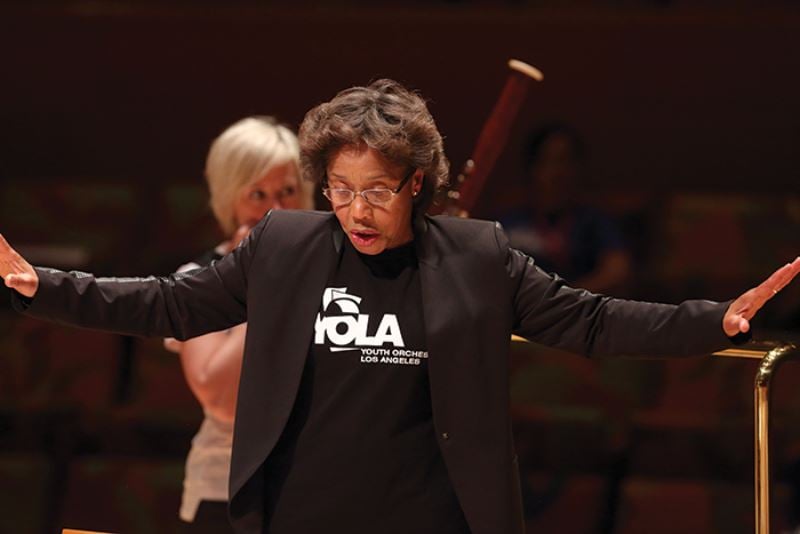
    “Stride” received its world premiere by the New York Philharmonic on February 13, 2020. The music is a response to the orchestra’s “Project 19” commissioning program, for which 19 women wrote works to mark the centennial of the ratification of the 19th Amendment, which guaranteed a woman’s right to vote. The inspiration for León’s piece was Susan B. Anthony.

    León discusses “Stride”

    The work in rehearsal:

    You’ll find an interview with the composer, in which she talks about the piece, here:

    https://www.npr.org/sections/deceptivecadence/2021/06/11/1005649919/tania-leon-wins-music-pulitzer-for-stride-a-celebration-of-womens-suffrage

    León, born in Havana, settled in New York in 1967. Among her teachers was Ursula Mamlok.

    This year’s other finalists in the category were Ted Hearne, for “Place,” and Maria Schneider, for “Data Lords.”

    It’s a good thing it’s still breakfast, because I really feel like I’ve got egg on my face for having forgotten, especially after devoting this past Sunday’s “The Lost Chord” to Pulitzer Prize winning music! If you missed it, you can still catch the show as a webcast at the link below. The playlist includes works by William Schuman (the very first recipient of the music prize), William Bolcom, and Caroline Shaw (the category’s youngest honoree).

    https://www.wwfm.org/post/lost-chord-june-6-further-pulitzer-surprises

Tag Cloud

Aaron Copland (92) Beethoven (95) Composer (114) Film Music (119) Film Score (143) Film Scores (255) Halloween (94) John Williams (185) KWAX (229) Leonard Bernstein (99) Marlboro Music Festival (125) Movie Music (134) Opera (198) Philadelphia Orchestra (87) Picture Perfect (174) Princeton Symphony Orchestra (106) Radio (87) Ralph Vaughan Williams (85) Ross Amico (244) Roy's Tie-Dye Sci-Fi Corner (290) The Classical Network (101) The Lost Chord (268) Vaughan Williams (102) WPRB (396) WWFM (881)

DON’T MISS A BEAT

Receive a weekly digest every Sunday at noon by signing up here


RECENT POSTS