Friday the 13th! Beware of ladders, broken mirrors, and… black cats?
Unluckily, metaphorical big cats is the focus this week on “Picture Perfect.”
Simone Simon’s barely repressed desires are made manifest in Val Lewton’s “Cat People” (1942). Lewton was a master of suggestion, with a majority of the horrors in his films imagined, rather than seen. Part of the approach was practical, the result of shoestring budgets imposed by RKO. Whatever the case, the insinuating weirdness undeniably produced psychological chills. In fact, it was only as a concession to the studio that a literal big cat was included at all. The music was by RKO workhorse Roy Webb.
Sean Connery plays a Berber chieftain who faces off against Teddy Roosevelt in “The Wind and the Lion” (1975). In a letter to Roosevelt (played in the film by Brian Keith), Connery’s character writes, “I, like the lion, must stay in my place, while you, like the wind, will never know yours.” Jerry Goldsmith provided one of his best scores for the Moroccan adventure. In fact, he was fairly confident he finally had a lock on the Oscar. He experienced a harsh reality check when he went to see “Jaws.” (Goldsmith would win his only Academy Award the following year for his music to “The Omen.”)
Luchino Visconti’s epic telling of Giuseppe Tomasi di Lampedusa’s “The Leopard” (1963) is a melancholy exploration of the fading Sicilian aristocracy. A bewhiskered Burt Lancaster plays Prince Fabrizio, who feels himself slipping into obsolescence. Nino Rota gives the film a full-blooded, operatic soundtrack, full of lyricism and pathos.
Finally, Lyn Murray provides the breezy accompaniment for Alfred Hitchcock’s “To Catch a Thief” (1955), with Cary Grant a reformed burglar, known as The Cat, who attempts to clear himself of some “copycat” crimes while romancing Grace Kelly on the French Riviera.
We throw salt over our left shoulder and caution to the winds, with an hour of music for metaphorical big cats – any excuse to ignore Valentine’s Day and get “The Wind and the Lion” and “The Leopard” on the same program – on “Picture Perfect,” music for the movies, now in syndication on KWAX Classical Oregon!
——–
Clip and save the start times for all three of my recorded shows:
PICTURE PERFECT, the movie music show – Friday at 8:00 PM EST/5:00 PM PST
SWEETNESS AND LIGHT, the light music program – Saturday at 11:00 AM EST/8:00 AM PST
THE LOST CHORD, unusual and neglected rep – Saturday at 7:00 PM EST/4:00 PM PST
Stream them, wherever you are, at the link!
https://kwax.uoregon.edu
Tag: Nino Rota
-

Metaphorical Big Cats on “Picture Perfect”
-

Shakespeare Film Music Streaming This Week
Am I am such a tender ass, if my hair do but tickle me, I must scratch?
This week on “Picture Perfect,” we’ll celebrate William Shakespeare, just a few days shy of the anniversary of his birth, on April 23 (observed). Tune in for an hour of music from film adaptations of his comedies. We’ll enjoy selections from “As You Like It” (William Walton), “A Midsummer Night’s Dream” (Korngold), “The Taming of the Shrew” (Nino Rota), and “Much Ado About Nothing” (Patrick Doyle), even as we wryly acknowledge that the course of true love never did run smooth.
What fools these mortals be!
Verily, the wise ones know to stream it, wherever they are, at the link, this Friday evening at 8:00 EDT/5:00 PDT!
-

Nino Rota Godfather Fellini Birthday
An hour of music by Nino Rota is an offer you can’t refuse.
Rota was born in Milan on this date in 1911. An extraordinarily prolific composer, he wrote some 150 film scores, from the 1930s until his death in Rome in 1979. That’s an average of three scores per year over a 46-year span. At the height of his productivity, from the late-40s to the mid-50s, he was writing up to ten scores a year, with a mindboggling 13 film scores to his credit in 1954.
Yet somehow, in his spare time, he managed to write ten operas, five ballets, and dozens of other orchestral, choral, and chamber works, and incidental music for the stage. As if that weren’t enough, he also taught at the Liceo Musicale in Bari, Italy, of which he was the director for almost 30 years.
This week on “Picture Perfect,” we remember him on his birthday, with some of his best-known film scores.
For the 50th anniversary of its release, we’ll hear selections from Francis Ford Coppola’s “The Godfather” (1972) and what many regard as one of the greatest sequels ever made, “The Godfather Part II” (1974). Taken collectively, this is some of the best-known and best-loved movie music ever written.
“The Godfather Part II” earned Rota his only Academy Award. But there was some controversy surrounding Rota’s contribution to its predecessor. His nomination for the original “The Godfather” was withdrawn at the eleventh hour, when it came to the Academy’s attention that the love theme had been used in a 1958 Italian comedy he had scored called “La Fortunella.” Puzzlingly, the music for the sequel went on to win the Oscar, although it featured the same theme that made the earlier score ineligible.
It could be argued that Rota was so prolific that, as was the case with many of his Baroque forebears, a certain amount of recycling was inevitable. We’ll listen to a selection from Luchino Visconti’s “Rocco and His Brothers.” Hearing it directly on the heels of “The Godfather,” you may find it unexpectedly familiar.
But lest we become too judgmental, remember Gioachino Rossini did much the same thing. And the Italian opera comparison is not inappropriate. Rota’s long-limbed melodies frequently evoke the heyday of Puccini and the Verismo School. This is most evident in his music written for another Visconti film, “The Leopard” (1963), after the poignant novel of Giuseppe di Lampedusa.
At the same time, Rota was also clearly influenced by the commedia dell’arte, or perhaps simply the world of the circus, which made him the ideal composer for the films of Federico Fellini, in which the most poignant melodies might be swept away at any moment by off-the-rails funhouse music. There would be no Danny Elfman without Nino Rota!
Rota’s association with Fellini began in 1952 with “The White Sheik.” It was the start of a working relationship that would span decades, until Rota’s death in 1979, and encompassed such classics as “La Strada” (1954), “Nights of Cabiria” (1957), “La Dolce Vita” (1960), and “8 ½” (1963). We’ll hear an impromptu suite made up of selections from all four. Such music could only be described as Felliniesque – or perhaps, more accurately, Fellini’s films should be described as Rotaesque.
Leave the gun, take the cannoli. Nino Rota sucks down all the espresso on his birthday, on “Picture Perfect,” music for the movies, this Saturday evening at 6:00 EST, on WWFM – The Classical Network and wwfm.org.
-
Zeffirelli’s Shakespeare & Film Scores
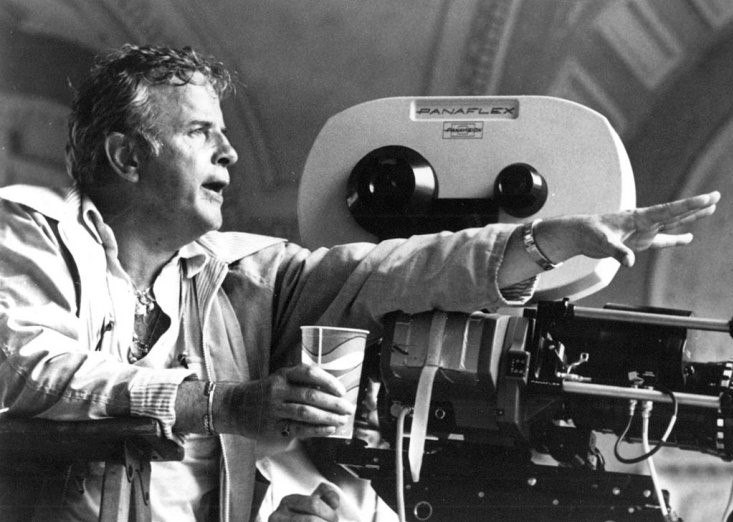
Franco Zeffirelli died on June 15 at the age of 96. The influential director favored big emotions and grandiose subjects, making his biggest mark in Shakespeare and opera. I’ll leave the opera to other hands. However, this week on “Picture Perfect,” I’ll do what I can to honor his artistry with music from a selection of his films.
“Romeo and Juliet” (1968) was probably the most culturally significant of these. Not only did it turn out to be a surprise hit, the film has been a staple of high school English curricula for decades. Zeffirelli’s vision proved especially appealing to teenaged audiences – in part because of the refreshing youth of its leads (Leonard Whiting and Olivia Hussey, 17 and 16 respectively).
“Romeo and Juliet” was nominated for several Academy Awards, including those for Best Picture and Best Director. Laurence Olivier spoke the film’s prologue and epilogue, and reportedly dubbed the voice of the Italian actor who played Lord Montague. Nino Rota wrote the music, and the love theme was popularized as “A Time for Us.”
Another enduring success for Zeffirelli, a devout Roman Catholic, was his television miniseries, “Jesus of Nazareth” (1977). This time Olivia Hussey plays Mary, mother of Jesus. The all-star cast includes eight Academy Award winners, past and future (Anne Bancroft, Ernest Borgnine, James Earl Jones, Laurence Olivier, Christopher Plummer, Anthony Quinn, Rod Steiger, and Peter Ustinov). It makes me happy to learn that the sets for the film were reused by Monty Python for “Life of Brian.”
The music was by Maurice Jarre, David Lean’s composer-of-choice. I realize we’ve been hearing a lot of late-period Jarre recently, when he was most under the spell of electronics. “Jesus of Nazareth” sports a good old-fashioned orchestral score, with obligatory Biblical chorus.
Zeffirelli proved again and again that he was especially adept at adapting Shakespeare for the big screen. With the unlikely casting of action hero Mel Gibson as the melancholy Dane, “Hamlet” (1990) was something of a gamble that paid off. Zeffirelli puzzlingly tampers with one of the all-time great openings in the history of drama, delaying the appearance of the ghost of Hamlet’s father in favor of some fabricated funeral that looks like a rejected scene from “Star Wars,” but Gibson brings to the title role a refreshing vitality. The reading is passionate and dangerous. The music was by Ennio Morricone.
Art imitates life in Zeffirelli’s first feature as director, “The Taming of the Shrew” (1967), a showcase for the famously tempestuous husband-and-wife Richard Burton and Elizabeth Taylor. In addition, “Shrew” and “Romeo” provided notable supporting roles for a young Michael York. Nino Rota supplies an alternately rollicking and melancholy score in a manner that seems characteristic of Italian composers – perhaps the influence of Italian opera?
Of course Zeffirelli made a magnificent imprint in the world of opera, with his opulent, eye-popping productions. For film, he directed adaptations of “La traviata” and “Otello,” with Placido Domingo.
Among his other films were “Brother Sun, Sister Moon,” “The Champ,” “Endless Love,” “Jane Eyre,” and “Tea with Mussolini.” But we’ll go with the spectacle – I think Franco would have wanted it that way – this Friday evening at 6:00 EDT, on WWFM – The Classical Network and wwfm.org.
-
Webern Fine Rota and More on WWFM
When is music not Fine? When it’s by Webern, of course!
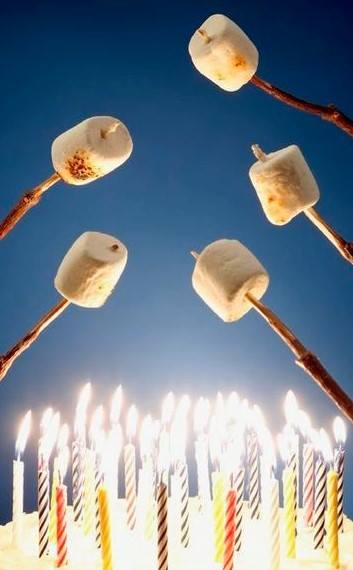
The playlist today will consist of works by birthday celebrants Irving Fine, Anton Webern, Nino Rota (both film and concert pieces), Jose Serebrier, Antonio Soler, and Paul Turok. We’ll also mark the second evening of Hanukkah.
Better pick up some more candles!
All fire codes will be flouted, from 4 to 7 p.m. EST, on WWFM – The Classical Network and wwfm.org.
Tag Cloud
Aaron Copland (94) Beethoven (95) Composer (114) Film Music (149) Film Score (143) Film Scores (255) Halloween (97) John Williams (197) KWAX (232) Leonard Bernstein (105) Marlboro Music Festival (125) Movie Music (164) Mozart (91) Opera (215) Philadelphia Orchestra (90) Picture Perfect (174) Princeton Symphony Orchestra (110) Radio (90) Ross Amico (244) Roy's Tie-Dye Sci-Fi Corner (290) The Classical Network (101) The Lost Chord (269) Vaughan Williams (107) WPRB (397) WWFM (881)