Tag: Oratorio

  • Liszt the Saint Composer’s Sacred Side

    Liszt the Saint Composer’s Sacred Side

    While the adjective “diabolical” could be applied to Franz Liszt, both in terms of his prowess as a pianist and as a ladies’ man, its application might be justified, really, by only two aspects of his outsized personality.

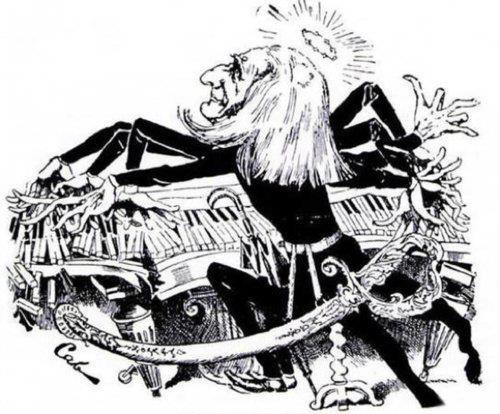
    Liszt was an especially complex individual, marked by much nobility of character. He was a generous human being, a humanitarian, and an all-around nice guy. He was also quite devout. It was his intention to marry his long-time companion, the Princess Carolyne zu Sayn-Wittgenstein, on his 50th birthday, but his hopes were dashed, after the Church refused to grant her an annulment (she had been estranged from her husband long before she met the handsome touring virtuoso). He reacted by taking minor orders and living in a monastic cell in Rome, where he became known as the Abbé Liszt. (He had also recently lost two of his three children born to him by Marie d’Agoult.)

    Liszt’s religiosity was not something he wore lightly. From an early age, he felt certain he would be a musician or a priest. In the end, he became both.

    This Sunday night on “The Lost Chord,” we’ll sample from two of at least seven of Liszt’s works inspired by his fascination with the saints – “The Legend of St. Elisabeth” and “St. Stanislaus.” St. Elisabeth was the Hungarian princess much concerned with the welfare of the poor, and St. Stanislaus is the patron saint of Poland. These are the subjects of Liszt’s first and last oratorios.

    I hope you’ll join me for “Liszt of Saints,” this Sunday night at 10:00 EDT, on WWFM – The Classical Network and wwfm.org.
  • Bruch’s Odysseus Rediscovered

    Bruch’s Odysseus Rediscovered

    It says something about how highly regarded was Max Bruch’s “Odysseus” that none other than Johannes Brahms selected it for his farewell performance in 1875 as Director of the Society of the Friends of Music in Vienna. Bruch’s oratorio racked up an impressive number of performances. Within two years of its premiere in 1873, it was given no less than 45 times. In fact, in Bruch’s heyday, the work was considered second in excellence only to his imperishable Violin Concerto No. 1 in G minor.

    Yet by the time of the composer’s death, in 1920, he was considered an artifact of a bygone era. “Odysseus” was a relic of the 19th century, and in the 19th century it would remain, until liberated by musicologist and conductor Leon Botstein in the late 1990s. Thanks to Botstein, we’ll get to enjoy the complete oratorio today on WPRB, as we listen to a full morning of music inspired by Homer.

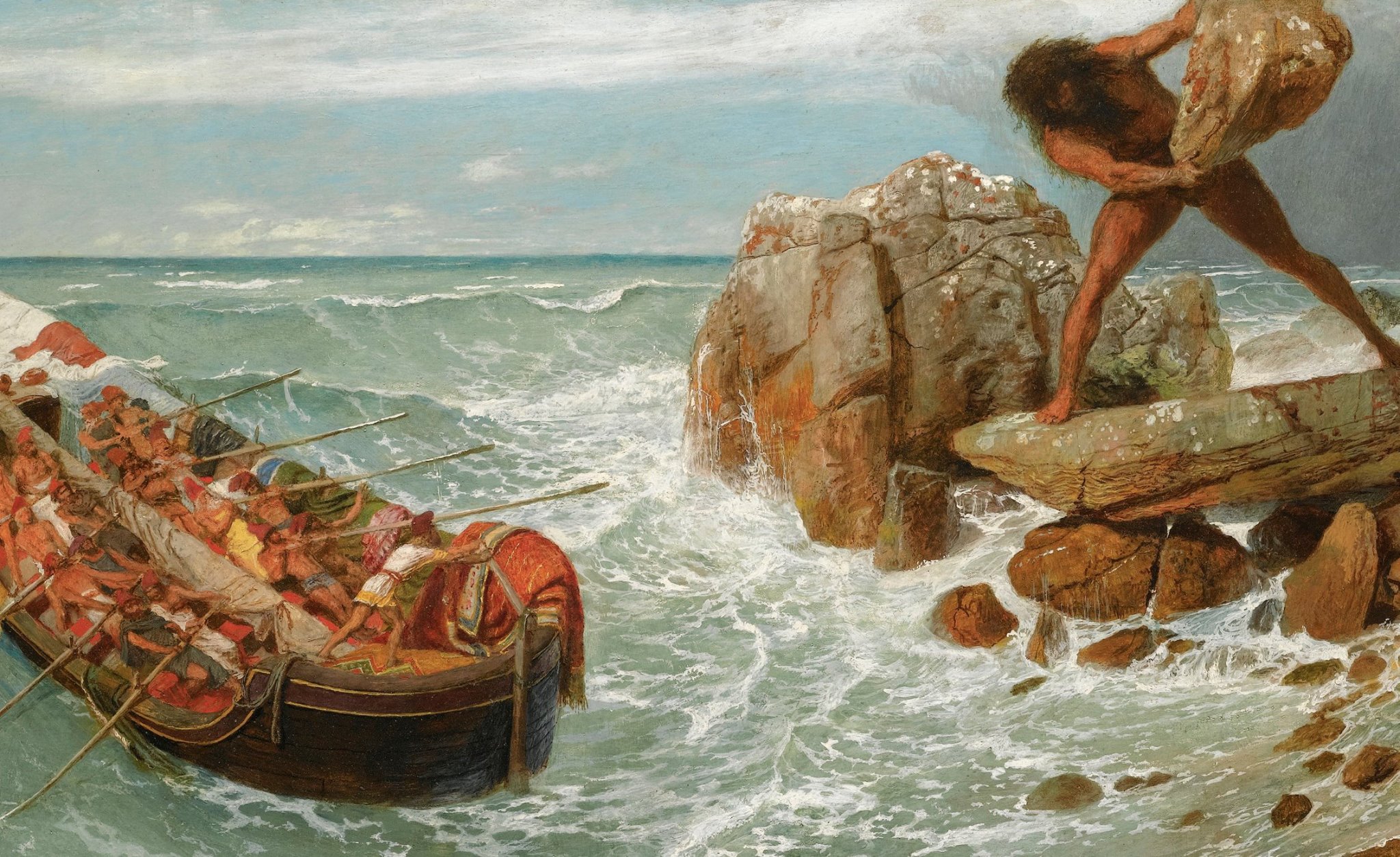
    Bruch’s oratorio perhaps unforgivably omits the cathartic bloodletting at the tale’s climax, when Odysseus slays his wife’s unwanted suitors, who have overrun his home in his absence. But Benjamin Britten was not so squeamish. Britten embraced all the inherent drama and adventure of epic vengeance in his music for radio, “The Rescue of Penelope.” We’ll cap the morning with this full-blooded work, which will be narrated by Dame Janet Baker.

    Along the way, we’ll also have music by Gabriel Fauré, Marc-Antoine Charpentier, Ernst Boehe, Jean-Philippe Rameau, Jacques Offenbach, John Harbison, Hector Berlioz, and Jerome Moross, among others.

    There will be more wine for Polyphemus, from 6 to 11 EDT, on WPRB 103.3 FM and at wprb.com. We’re always trying hard to rock your world, on Classic Ross Amico.

  • Mendelssohn’s Elijah Still Thrills After 170 Years

    Mendelssohn’s Elijah Still Thrills After 170 Years

    170 years after its premiere, Felix Mendelssohn’s oratorio “Elijah” retains its popularity. A smash in Victorian England when it was first performed, on Aug. 26, 1846, this tale of the travails and triumph of the Old Testament prophet remains a favorite of singers and audiences alike.

    Elijah will once again ride his chariot of fire into heaven this Sunday at 7 p.m., as Jason Tramm leads the Great Auditorium Choir and Adelphi Orchestra in this season’s “Sacred Masterworks” offering. Soloists will include soprano Monica Rose Ziglar, mezzo-soprano Martha Bartz, and tenor Ronald Naldi. Bass-baritone Justin Beck will sing the title role.

    “At Ocean Grove, we have a history of doing these large masterworks since the early 1900s,” says Tramm, who is also artistic director of the MidAtlantic Opera Company. “It’s a wonderful legacy. We have a very large chorus for this event, about 140 singers, and a 50-piece orchestra. I think that anyone who comes is going to be delighted.”

    The Great Auditorium at Ocean Grove is the largest enclosed auditorium in New Jersey. Its barrel-vaulted, wooden ceiling is a practical throwback to the days before amplification. In its original layout, the hall had close to 10,000 seats, reflective of its mission as a facility for camp meetings.

    “Music is such an integral part of Ocean Grove’s DNA,” Tramm says. “It’s quite a tradition, founded in 1869. It’s a unique place, a historical place. A lot of great musicians have been here and performed here, from John Philip Sousa to Enrico Caruso. I think those ghosts are still there. I think that the wonderful acoustic and the unique environment make it a really special place to go see music.”

    Read more about “Elijah” on this, its 170th anniversary, in my article in today’s Trenton Times:

    http://www.nj.com/times-entertainment/index.ssf/2016/08/classical_music_great_auditori.html

  • John Foulds’ World Requiem A WWI Masterpiece

    John Foulds’ World Requiem A WWI Masterpiece

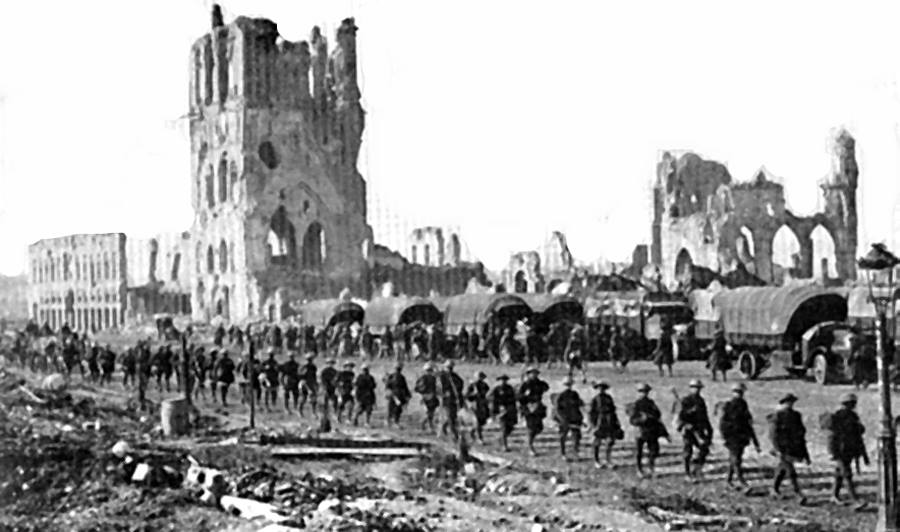
    John Foulds composed his massive oratorio, “A World Requiem,” between 1919 and 1921 to honor the memory of all those – of whatever nation – who fell during WWI. The text, in English, was assembled by his wife, Maud MacCarthy, the work’s dedicatee, who compiled it from the Requiem Mass, sundry Biblical passages, selections from John Bunyan’s “The Pilgrim’s Progress,” a poem by Kabir, and her own original material.

    The oratorio falls into 20 movements (in two parts of ten each) for soloists, massed choirs (including children’s choirs), large orchestra, offstage instrumentalists, and organ. A progressive tonal framework is spiced with quarter tones, cluster chords and certain repetitive sequences.

    It was first performed on Armistice Night, November 11, 1923, in Royal Albert Hall, by up to 1,250 musicians. The work was embraced by the public, though critical reaction was mixed. Subsequent performances took place from 1924 to 1926 as part of a Festival of Remembrance. Then the work lay neglected for some 80 years until revived in 2007 by the forces in this recording, under the direction of the indefatigable Leon Botstein.

      Part I
    

    1 I Requiem – 8:44
    2 II Pronuntiatio – 4:05
    3 III Confessio – 5:46
    4 IV Jubilatio – 5:06
    5 V Audite – 7:04
    6 VI Pax – 3:53
    7 VII Consolatio – 5:08
    8 XIII Refutatio – 0:38
    9 IX Lux Veritatis – 1:19
    10 X Requiem 3:25

      45:08
    
      Part II 
    

    1 XI Laudamus – 6:30
    2 XII Elysium – 6:24
    3 XIII In Pace – 3:17
    4 Hymn of the Redeemed – 4:37
    5 XIV Angeli – 3:27
    6 XV Vox Dei – 3:07
    7 XVI Adventus – 4:01
    8 XVII Vigilate – 2:03
    9 XVIII Promissio et Invocatio – 7:30
    10 XIX Benedictio – 1:41
    11 XX Consummatus 2:06

      44:50
    
  • Liszt’s Christus A Christmas Weekend Listen

    Liszt’s Christus A Christmas Weekend Listen

    ADVENT CALENDAR – DAY 21

    I try to make it a point to listen to Franz Liszt’s oratorio, “Christus,” every year, whether I need it or not.

    It helps that I love Liszt, of course. Not all of his music – someone so prolific had to turn out a clunker now and then – but he was such a noble, well-intentioned guy. I’ve been a hardcore admirer ever since I read Alan Walker’s biography about 14 years ago. And hearing so many performances of his Piano Sonata certainly didn’t hurt.

    Liszt was one of the most original musical thinkers of the 19th century. In fact, I’d go so far as to say that, after Beethoven, Liszt was probably the most influential musician of the 1800s. There was likely no composer who didn’t at some point make a decision to follow or react against him. Liszt wrote a lot of wonderful music, and at least as much that might be construed as a little embarrassing. He was more successful as a musical thinker than he was a consistent executor of his ideas. But Wagner, to name just one, would have been a very different composer without Liszt. And we all know how influential Wagner was.

    Liszt’s flamboyance was legendary, but I think his reputation in that regard stemmed mostly from the overwhelming impressions he created in recital, and the crowds’ hysterical reactions to them. Liszt was also an introverted, thoughtful, pious man. He was so pious, in fact, that at one point he wound up taking minor orders and living in a cell in Rome, where he was known as the Abbé Liszt. So his religious works were not mere posturing.

    The incredible “Christus” is an oratorio in three parts that is really part oratorio, part loose collection of symphonic poems. Part I, the Christmas portion, contains two purely orchestral movements, which together comprise about half an hour. The concluding “March of the Three Holy Kings” is a corker. It’s also interesting in that one of the movement’s main themes is nearly identical to Wagner’s motif for Wotan. Which came first? Both “Christus” and “Das Rheingold” were written at just about the same time.

    I know it’s the last weekend before Christmas, so everyone is likely very busy, but if there is any time to listen to “Christus” it is on a weekend. Maybe you can block out three hours late on your Sunday afternoon. Kick back on the sofa with the Christmas lights on, enjoy the tree, and wallow in this ambitious, romantic music.

    Part I: https://www.youtube.com/watch?v=F_KWFIl_XR4
    Part II: https://www.youtube.com/watch?v=pcFd4m2wa1M
    Part III: https://www.youtube.com/watch?v=6hEdexzXqcI

    If you just can’t get enough, here’s Liszt’s “Christmas Tree Suite.”

    Some of the movements in the first half incorporate traditional carols (including “Adeste Fideles,” in yet another evocation of the Three Holy Kings). In the later movements, Liszt just kind of dreamily wanders into the future the way only Liszt can. All of the movement titles are listed on the page containing the video.

    PHOTOS: Liszt takes the cloth (left); Jesus gets frankincense and myrrh

Tag Cloud

Aaron Copland (92) Beethoven (95) Composer (114) Film Music (123) Film Score (143) Film Scores (255) Halloween (94) John Williams (187) KWAX (229) Leonard Bernstein (101) Marlboro Music Festival (125) Movie Music (138) Opera (202) Philadelphia Orchestra (89) Picture Perfect (174) Princeton Symphony Orchestra (106) Radio (87) Ralph Vaughan Williams (85) Ross Amico (244) Roy's Tie-Dye Sci-Fi Corner (290) The Classical Network (101) The Lost Chord (268) Vaughan Williams (103) WPRB (396) WWFM (881)

DON’T MISS A BEAT

Receive a weekly digest every Sunday at noon by signing up here


RECENT POSTS