Tag: Passover

  • Virtual Seders Passover in the Desert Chag Sameach

    Virtual Seders Passover in the Desert Chag Sameach

    Why is this night different from all other nights? On this night, I suspect, many Seders will be conducted via Zoom. We’re all wandering in the desert this year, my friends. Next year in Jerusalem! Chag Sameach.

    Before you start the latkes, here’s a Passover mash-up:


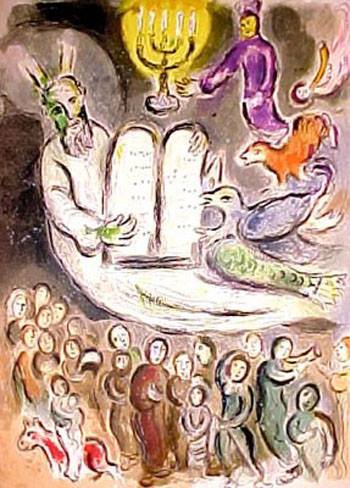
    Moses recommends: keep apart

  • Epic Biblical Film Scores for Passover & Easter

    Epic Biblical Film Scores for Passover & Easter

    Passover begins tonight, and Sunday is Easter. Time to Bible-up!

    This week on “Picture Perfect,” religion takes a back seat to spectacle, with an hour of music from mid-century Hollywood epics, including “Samson and Delilah” (Victor Young), “Solomon and Sheba” (Mario Nascimbene), “Sodom and Gomorrah” (Miklós Rózsa) and “The Ten Commandments” (Elmer Bernstein).

    We begin and end with two Cecil B. DeMille productions. DeMille could always be counted on to give his audience a good show. Both “Samson” and “The Ten Commandments” feature sultry temptresses, violent, bare-chested men, and plenty of austere moralizing. The climactic special effects in both films are still sublime.

    Tyrone Power was originally cast as Solomon in King Vidor’s “Solomon and Sheba.” However, he died of a massive heart attack during shooting (at the age of 44), paving the way for Yul Brynner to assume the role of the wise king. Brynner, of course, would later become DeMille’s pharaoh Rameses. With Gina Lollobrigida as the Queen of Sheba, you know there has to be an orgiastic dance.

    Miklós Rózsa characterized “Sodom and Gomorrah” as “an intriguing subject which developed into a bad picture,” and most critics agreed. Any film that casts Stewart Granger as Lot should be taken with a pillar of salt. Rózsa determined not to score any more Biblical epics after “Sodom,” though his music is nothing to be ashamed of. It possesses that classic Rózsa epic sound, much beloved thanks to his work on “Quo Vadis,” “Ben-Hur” and “King of Kings.”

    Chariots! Tunics! Histrionic acting! The music will be epic, this Friday evening at 6:00 EDT, on WWFM – The Classical Network. (Please note: if the time happens to conflict with your Seder, the show will be posted next week as a webcast, at wwfm.org.)


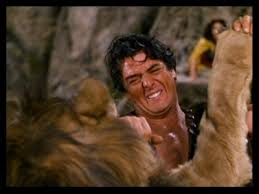
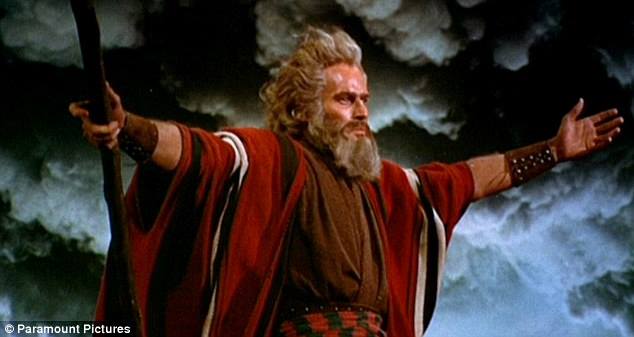
    PHOTOS: Victor Mature’s stuffed lion vs. Charlton Heston’s cotton candy beard

  • Passover Celebration on WWFM Today

    Passover Celebration on WWFM Today

    Pesach Sameach! Passover begins at sunset.

    Join me this afternoon, when among our featured works will be Mario Castelnuovo-Tedesco’s Violin Concerto No. 2, subtitled “The Prophets,” ballet music from Rossini’s “Moses,” and Wojciech Kilar’s “Exodus.”*

    We’ll also celebrate the birthdays today of conductor and composer Victor de Sabata, cellist and composer Auguste Franchomme, and pianist and composer Eugen d’Albert.

    Join me for an afternoon of unleavened entertainment, from 4 to 7 p.m. EDT, on WWFM – The Classical Network, and at wwfm.org.


    For more Passover music, join me tomorrow, immediately following the noontime concert (probably around 1:40 p.m.), for Paul Dessau’s oratorio “Haggadah shel Pesach.”

  • Passover Ernst Toch & Bitter Herbs

    Passover Ernst Toch & Bitter Herbs

    It was not my intention by focusing on Easter the past couple of days to overlook the observance of Passover. You can bet your afikoman prize that if I weren’t doing the Easter circuit yesterday, I would have been home last night watching “The Ten Commandments.”

    Though the Seders are past, Passover is an eight-day festival. I hope you’ll accept this link to a mini-documentary on Ernst Toch’s “Cantata of the Bitter Herbs” – a work which I nearly played on “The Lost Chord” yesterday (perhaps next year) – as an expression of my best wishes for a chag Pesach Sameach.

    Toch, a European exile who settled in the United States (by way of Paris and London) following Hitler’s seizure of power in 1933, was awarded the Pulitzer Prize for Music in 1956 for his Third Symphony.

  • Passover Korngold’s Hollywood Psalm

    Passover Korngold’s Hollywood Psalm

    The Jewish celebration of Passover begins at sunset. One of my favorite composers, Erich Wolfgang Korngold, wrote this “Passover Psalm” in 1941, on a commission from Rabbi Jacob Sonderling. Sonderling, rabbi of Fairfax Temple in Los Angeles, which he founded, invited a number of prominent composers to write music for the synagogue.

    Korngold, who was one of the most celebrated opera composers of his youth, lived out the war years in Hollywood, where he revolutionized the art of film scoring. He was the recipient of two Academy Awards, for his music to “Anthony Adverse” (1936) and “The Adventures of Robin Hood” (1938).

    The “Passover Psalm” and “Prayer,” both written for Sonderling, are the only sacred works Korngold ever composed.

    https://www.youtube.com/watch?v=5cpvsi4TFto

Tag Cloud

Aaron Copland (92) Beethoven (95) Composer (114) Film Music (123) Film Score (143) Film Scores (255) Halloween (94) John Williams (187) KWAX (229) Leonard Bernstein (101) Marlboro Music Festival (125) Movie Music (138) Opera (202) Philadelphia Orchestra (89) Picture Perfect (174) Princeton Symphony Orchestra (106) Radio (87) Ralph Vaughan Williams (85) Ross Amico (244) Roy's Tie-Dye Sci-Fi Corner (290) The Classical Network (101) The Lost Chord (268) Vaughan Williams (103) WPRB (396) WWFM (881)

DON’T MISS A BEAT

Receive a weekly digest every Sunday at noon by signing up here


RECENT POSTS