So do I have the flu, or just a really bad cold? After a day like yesterday, who cares? All I know is that I felt terrible. But in the worlds of radio and journalism, no one can stay sick for long. So after a full day spent flat on my back, I am once again propped up in front of the microphone. Rolf Charlston is on vacation, so I’ll be at the helm this morning, spinning classical on WRTI from 6 to noon.
Listen locally, in the Philadelphia area, at 90.1 FM or online at wrti.org. A full list of translators here: http://wrti.org/wrti-coverage-map
I’ll have plenty of citrus and chicken broth at the ready.
NOW PLAYING: Sibelius, Incidental music to “King Kristian II”
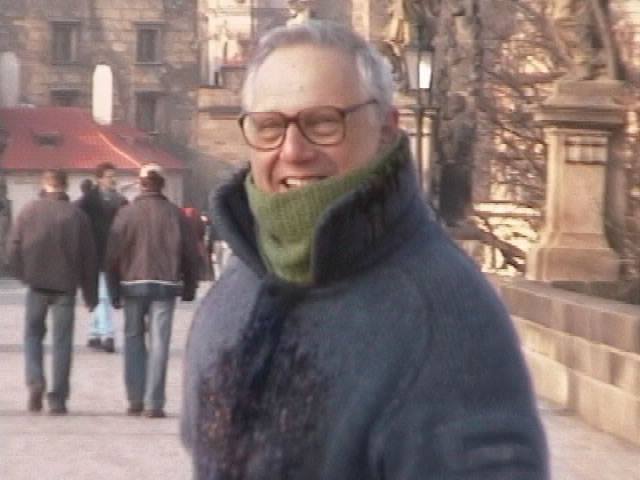
I just learned that today is the birthday of my friend, composer Robert Moran. I first encountered Bob’s music while I was scouring the bins at the now-defunct Tower Records Classical Annex, at 6th and South Sts., in Philadelphia. At a point, the suite, “Arias, Interludes and Inventions,” from his opera “Desert of Roses,” came out over the speakers, and my heart broke a little bit. I added it to my collection immediately.
A number of years later, unbeknownst to me, Bob was browsing in my bookshop. I think he tried to pay with a credit card, which is the kiss of death when dealing with Classic Ross Amico. I inquired if he happened to be the composer, and we’ve been pals ever since. Naturally, I had my recording of “Desert of Roses” on hand, and Bob penned me a very nice inscription.
Happy birthday, Bob. Whether you’re writing for Houston Grand Opera, 39 autos, giant puppets, or electric popcorn popper, the music is always vital and worth getting to know.
An aria from “Desert of Roses”:
Selections from “Trinity Requiem”:
“Obrigado” for Iowa Percussion:
Bob, looking groovy in merry prankster mode, introducing his “Lunchbag Opera” for the BBC:
When you’re finished listening to Marvin Rosen’s dance party (on Classical Discoveries, from 5:30 to 11 a.m., on WPRB 103.3 FM or at wprb.com), consider sharing your second cup of coffee with me, over at WRTI. I’ll be spinning the platters from 10 to 2, on 89.1 FM (Philadelphia) or at wrti.org. A full list of frequencies available at the station’s website.
PHOTO: A cautionary tale about the importance of minding the volume on your headphones
Just a reminder that I will be keeping the chair warm at WRTI today from 10 a.m. to 2 p.m. Tune in locally (in Philadelphia) at 90.1 FM or listen online. A complete list of frequencies available at wrti.org.
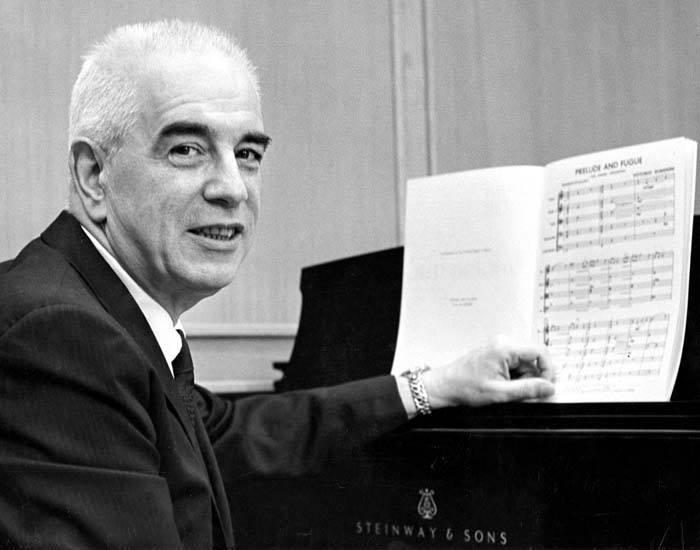
My newspaper duties have kept me off Facebook for most of the day, thereby frustrating my desire to send a shout-out to Philadelphia composer Vittorio Giannini on the occasion of his birthday anniversary.
Giannini was born in Philadelphia in 1903. He studied at the Milan Conservatory, after which he earned his graduate degree from Juilliard. He then taught at Juilliard, the Manhattan School of Music and the Curtis Institute.
Arguably his most important contribution as an educator was the foundation in 1965 of the North Carolina School of the Arts, which he envisioned as a Juilliard of the South. The school attracted to its faculty such luminaries as Ruggiero Ricci and Janos Starker. Giannini died the year after it opened, in 1966.
He was from a family of opera singers. His father founded the Verdi Opera House in Philadelphia. One sister taught voice at the Curtis Institute of Music and the other sang at the Metropolitan Opera. Giannini himself composed 14 operas, including “Lucedia,” “The Scarlet Letter,” “The Taming of the Shrew,” and one for radio, “Beauty and the Beast.” Two, “Casanova” and “Christus,” remain unperformed.
Not surprisingly, then, in his day he was known largely for his vocal music, but his Symphony No. 3 for wind band has fared best on disc. There are seven recordings in the current catalogue, from the classic release directed by A. Clyde Roller on the Mercury label to one of the later-in-life, digital recordings of Frederick Fennell.
Daniel Spalding, music director of the New Jersey Capital Philharmonic, recorded the Symphony No. 4 with the Bournemouth Symphony, for Naxos. The companion piece is Giannini’s Piano Concerto, with Gabriela Imreh, the soloist.
Spalding will conduct the New Jersey Capital Philharmonic Orchestra this Saturday, Oct. 24, at the Trenton War Memorial. The program will include Philip Glass’ “Concerto Fantasy for Two Timpanists and Orchestra” and Tchaikovsky’s Symphony No. 5. You can read all about it in the Friday edition of the Trenton Times.