It’s Chinese New Year! Welcome the Year of the Rooster by revisiting this article I wrote for the Trenton Times in 2012, about Chinese violinist and composer Ma Sicong, a political exile who lived out his life in Philadelphia, and whose music was revived locally by West Windsor’s Bravura Philharmonic Orchestra.
Get ready to creep over the river and through the woods – with millions of other folks attempting to do exactly the same thing. I’ll be there to keep you company this afternoon, as you tap the breaks, with a basket full of Thanksgiving goodies.
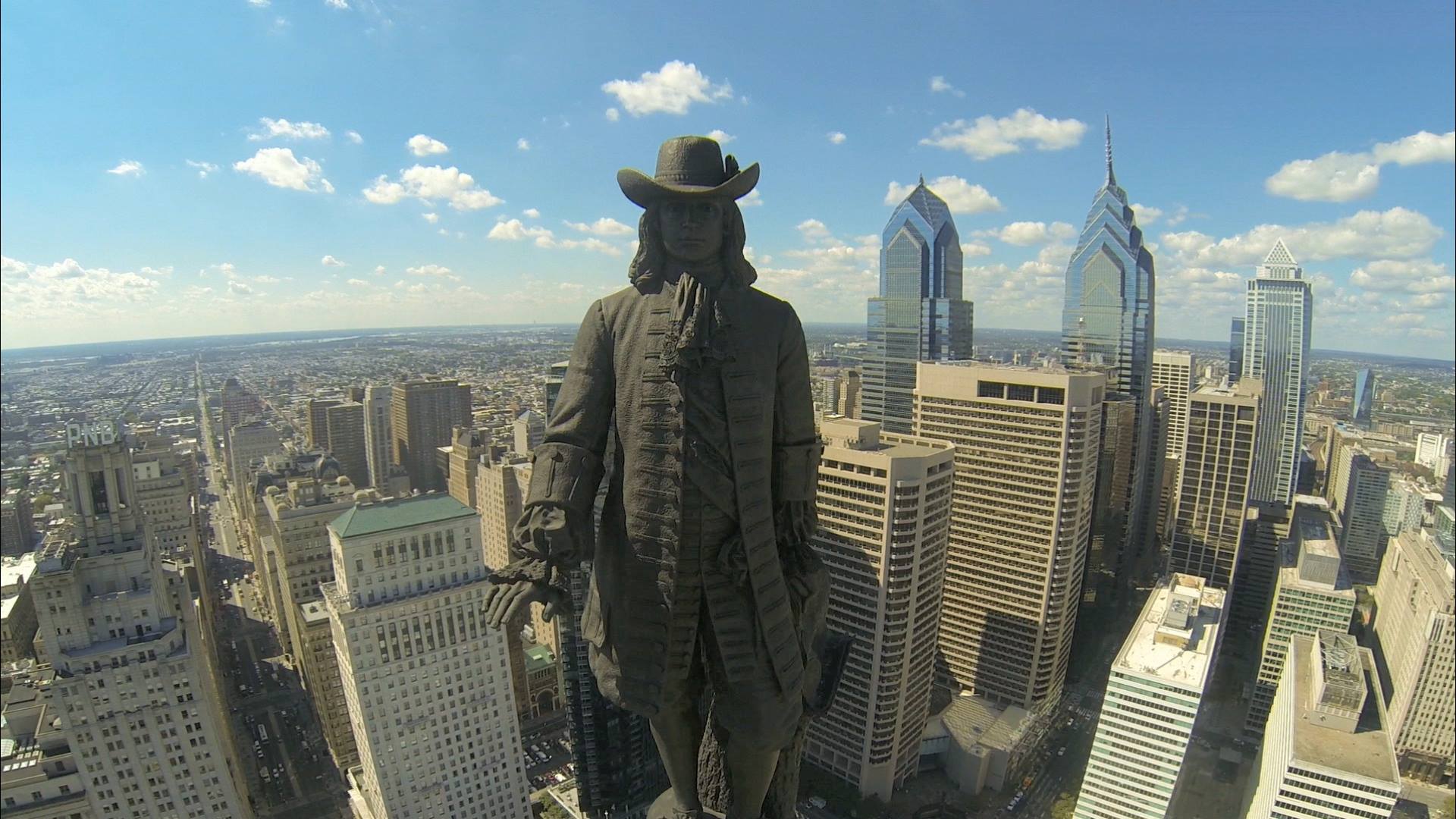
We’ll anticipate the holiday with an abundance of American music, with the aim of keeping everyone in a positive frame of mind. Just keep repeating to yourself, what would William Penn do?
That must have been what Louis Gesensway did when he came to write “Four Squares of Philadelphia.”
Gesensway was born in Latvia in 1906. A violin prodigy, he was one of the founders of the Toronto Symphony Orchestra. He came to Philadelphia at the age of 19, where he played in the orchestra under Leopold Stokowski and Eugene Ormandy.
In his mid-20s, he took a leave of absence to study composition with Zoltán Kodály. “Four Squares of Philadelphia” was described by the composer as a “symphonic poem for large orchestra, narrator and street criers.”
The piece opens with a recitation of Penn’s prayer, then continues with musical evocations of Washington Square (captured in early morning, during Colonial times, with street criers hawking their wares), Rittenhouse Square (on a bright and cheerful afternoon), Logan Square (with its fountains at dusk), and Franklin Square (at night, reflective of noisy bridge traffic, with a side excursion into Chinatown, and interjections from the honky tonk joints that used to be located about the square in the 1950s).
No telling what Penn would have thought of the honky tonk joints, but all in all, he was a pretty fair-minded guy. Also, he knew to be thankful. It took him 60 days to reach his destination, traveling from a cell in London to his “greene country towne” in America. Think of that as you gaze through the windshield at countless taillights stretching to the horizon.
“Four Squares of Philadelphia” will be among our featured works this afternoon. We’ve much to be thankful for, from 4 to 7:00 EST, on WWFM – The Classical Network and at wwfm.org.
PHOTO: Statue of Penn high atop the city he founded
If you’ve never had the chance to hear Classic Ross Amico spinning the jazz, I’ll be donning the pork pie from 6 to 9 tonight on WRTI 90.1 FM in Philadelphia and at wrti.org. Stay cool, fools!
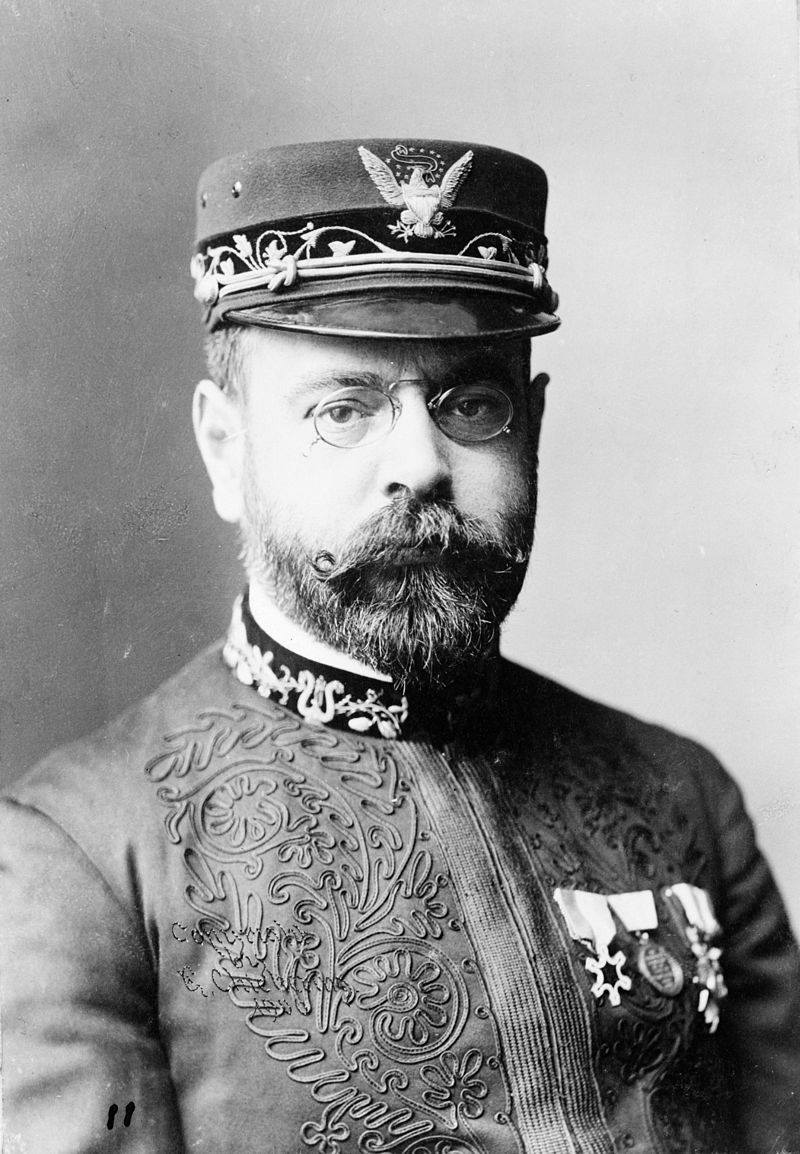
It was on this date in 1897 that John Philip Sousa’s “The Stars and Stripes Forever” was given its premiere in Philadelphia. Sousa composed the piece, in large part, on Christmas Day, 1896. He knocked it off in a New York hotel room in just a couple of hours.
Though the first performance was enthusiastically received, it wasn’t until the start of the Spanish-American War in 1898 that sales went through the roof. This was precipitated in part by the composer organizing a pageant involving hundreds of performers, complete with flag-bearing soldiers and a ravishing beauty decked out in red, white and blue.
With a dash of canny showmanship, “The Stars and Stripes Forever” surfed the wave of wartime patriotism to world-wide and lasting renown.
I find it fascinating that Germaine Tailleferre waited out World War II in Philadelphia. And yet I can never seem to find out very much about what she did while in exile.
Tailleferre was the only female member of Les Six, that loose collective of composers who rose to prominence in Paris in the late ‘teens and 1920s, under the guiding hand of Jean Cocteau. Her famous peers included Francis Poulenc, Darius Milhaud, Arthur Honegger, and Georges Auric. Louis Durey, a hard-line communist who went on to set poems by Ho-Chi Minh and Mao Zedong, is the one nobody remembers. (I wonder why.)
Tailleferre was strong-willed from the beginning. Her birth name was Taillefesse, but she changed it to spite her father, since the old man opposed her musical studies. However, she took piano lessons with her mother and was admitted to the Paris Conservatory. It was there that she met her future colleagues and that the prizes began to pile up. She also earned the friendship and received the support of Maurice Ravel.
In 1925, she married Ralph Barton, an American caricaturist, and moved to New York. Two years later, the couple returned to France, then divorced. Her career thrived in the 1920s and ‘30s. With the outbreak of World War II, however, she beat it back to the United States, leaving most of her scores at her home in Grasse, and, as I said, passed the war years in Philadelphia.
After the war, she again returned to France, where she resumed her career. As she got older, her pieces tended to be shorter, as she suffered from arthritis. She also wrote a lot for children and young pianists. She composed virtually right up until the time of her death in 1983, when she was 91 years-old. She wrote so much, in fact, that a lot of the music of her later years has never been published, and fresh discoveries from her output are being recorded all the time.
Happy birthday, Germaine Tailleferre! If anyone has any information on her activities in Philadelphia, I would be most curious to know.
The Concertino for Harp and Orchestra:
The lovely and wistful “Arabesque” for clarinet and piano: