I am very sorry to learn that Anthony Checchia has died, a great lost to the Philadelphia Chamber Music Society (which he cofounded), the Marlboro Music Festival, and the City of Philadelphia. Condolences to all, especially his widow, the soprano Benita Valente.
Tag: Philadelphia
-

Philly’s Lost Gem A Mechanic’s Farewell
When you live in a city, there are a few essentials that, once you find reliable sources, you hang on to them like grim death. It can take years to find a decent barber, for instance. Ditto, a dentist you can trust. I had so many friends with nightmare stories about their experiences with Philadelphia dentists that at a point I didn’t have my teeth cleaned for seven years! (When I finally took a chance on a recommendation, it took two appointments to chisel me out – but guess what? No cavities!)
Until I was in my mid-20s, I was able to make do with the professionals and service-providers I grew up with. You know, the people I used since I was a kid, basically. I’d simply head back to the hometown a little early on a Friday and then make it a weekend with my folks. Then I started working seven days a week. That meant I would have to start using city people or resign myself to looking like Ben Gunn.
Most difficult of all was finding a trusted mechanic. I had been reduced to using those while-you-wait oil-change places (at least it got me a free car wash) and shelling out for new tires from a tire center whenever I happened to pick up a nail, which was infuriatingly often. (Thank you, Philadelphia contractors!) Anything more serious than that, and I’d roll the dice and usually get burned.
Then one day, I decided to use this local garage that was about four blocks south of my apartment – which is to say, two blocks below South Street (shallow South Philly). It didn’t look like much – what garage does? – but it was a family business, it had been around for a while, and the lot was always packed.
I owned some pretty high-maintenance vehicles in my time. Once, after I cracked an engine block, the car had been sitting on the street with a leaky trunk for so long (I had a parking permit that was good for a year), that when I finally went to retrieve the paperwork from the glove compartment, I discovered the inside had turned into a giant moldy blueberry. The pages in the manuals were all wavy from the humidity. As the vehicle was hoisted onto a flatbed to be towed away, I kid you not, water poured out of the trunk, like that scene in “Risky Business.”
But I digress.
I can’t remember what exactly was the issue on the occasion that first brought me to 11th Street Auto (a.k.a. Sauer’s Garage). My reasoning was probably that it was close enough that I wouldn’t have to take public transportation or walk miles across town. All I know is that it was love at first sight.
Frank, son of the guy who founded the place decades before, was personable, no-nonsense, always professional in the best possible sense, and clearly compassionate. If he knew you didn’t have two cents to rub together, he would only charge you one. Sometimes he didn’t charge you at all. After they’d done real work too! In fact, 11th Street gave me so many deals, I started to wonder how it was that they could even afford to keep the doors open.
What’s more, I would send my friends there, and they wouldn’t charge them either! I guess they just dealt in volume, and they built such a loyal, grateful clientele that they never hurt for business. I don’t know, maybe the really big jobs carried a lot of the lesser ones? Either that, or the entire operation was a front. (Just kidding.)
Doing business with 11th Street was a throwback to a lost age of handshake agreements and keys left under mats in unlocked vehicles after hours. Now that I think about it, nobody in their right mind would ever want to cross Frank. He may have been a nice guy, but he had the kind of physique that comes from bench-pressing engine blocks for a living. I remember walking into the darkened lot at 10:00 at night, having just gotten back from work at the radio station in the Trenton-Princeton area, and the incredulous feeling on finding, lo and behold, my car, like the Star-Spangled Banner, was still there.
I finally got the hell out of Philly eight years ago, having done my time and then some (32 years I’ll never get back), but I still drive in from time to time to meet friends for dinner or head to a concert. And I noticed some months ago that Sauer’s had closed. It struck me as the closing of any beloved institution does. I felt a pang of sadness and a wave of nostalgia. More recently, I saw a chain-link fence had been erected around the lot, an ominous harbinger of things to come. Sure enough, on my next trip in, the building had been demolished.
I was afraid that illness or death had led to the closure of the business. I am thankful, at the very least, to have found the news story at the link below. It’s amazing how certain people and businesses that flourished before the rise of the internet so often leave the scarcest footprints.
Anyway, Frank is alive and well. He says it just felt like it was time (to close, that is). I’m sure the garage made enough that retirement was possible at 60. Still, he leaves a gaping hole – now literally, alas – in the fabric of old Philadelphia. Honest, affordable, mom-and-pop mechanics are not easy to come by. This was not a chain, but rather a small business that grew up organically with its neighborhood.
Frank is as decent as the longest day at midsummer. His lieutenants were equally trustworthy. They sent a lot of positive vibes out into the world, and that counts for a lot in Philadelphia. This was more than just an automotive shop. It was like taking your car to a mechanically-inclined uncle who would often fix or install something for the sheer satisfaction of it. I wish them all the best – thanks, guys! – and for Frank, a long and happy retirement.
-
Quay Brothers, UArts Closure & Philly’s Arts Scene
When Philadelphia’s University of the Arts slammed its gates with only one week’s notice on June 7th, it was an abrupt conclusion to its 150-year history. Among the countless artists the school fostered were the Brothers Quay, Stephen and Timothy, the unnerving stop-motion animators, who, by coincidence, were born on this date in 1947.
The first film I ever saw by them, on the big screen, was “Street of Crocodiles” (1986) – moody, atmospheric, surreal, unsettling, claustrophobic, and even a little creepy. It’s like an animated cabinet of curiosities, or perhaps being locked overnight inside Philadelphia’s Mütter Museum. If you’re not familiar with it, the museum is home to a preserved nine-foot colon from 1892, a collection of syphilitic skulls, a two-headed fetus, a segment of Einstein’s brain, and a tumor removed from the jawbone of President Grover Cleveland. Book your reservation now! Having lived in Philadelphia for 32 years myself, I’d say, yes, the Quays pretty much nailed it. Philadelphia, after all, left its mark not only on the brothers, but also David Lynch. It’s a good introduction to their aesthetic sensibility. Experience “Street of Crocodiles” here:
The Quay Brothers have always been strongly influenced by literature and classical music. They’ve even expanded into stage design for live opera productions of works such as Prokofiev’s “The Love for Three Oranges” and Louis Andriessen’s “Theatre of the World.”
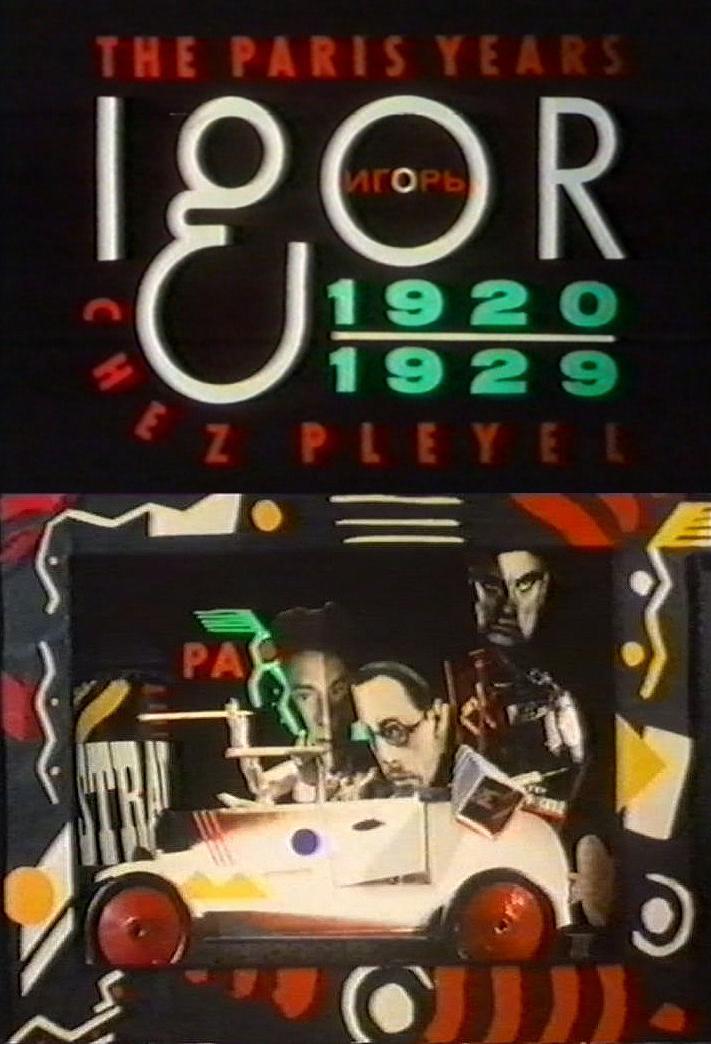
I say they were born on this date “by coincidence,” as today also happens to be the anniversary of the birth of Igor Stravinsky, and my original intention had been to share a link to the Quays’ 1983 short, “Igor, The Paris Years Chez Pleyel.” You can experience that here too:
The University of the Arts’ post-closure drama continues, with the most recent news announcing tentative agreements with six other schools now poised to try to help displaced students to pick up the pieces of their lives and continue their education. These include the already overburdened Moore College of Art and Design, Drexel University, Temple University, Montclair State University, Point Park in Pittsburgh, and The New School in New York City. In the meantime, there’s a gaping hole left in Center City, all around the Kimmel Center for the Performing Arts, home of the Philadelphia Orchestra.
With the announcement earlier this year of the discontinuation of the degree program at the Pennsylvania Academy of Fine Arts, a 200 year-old institution located at Broad and Cherry Streets, it’s a double black eye for Philadelphia’s so-called Avenue of the Arts.
And you thought “The Rite of Spring” was brutal.
Happy birthday, Igor Stravinsky – and the Brothers Quay!
https://believemedia.com/brothers-quay
Curious about visiting the Mütter?
160 years after its founding, the museum continues to stir controversy
https://www.phillymag.com/news/2023/09/23/mutter-museum-ethics-controversy/
-

Philadelphia Art Schools Closing Stuns City
In one of the most egregious examples of “Friday news dump” I have ever encountered, it was announced yesterday evening that Philadelphia’s University of the Arts will be closing, EFFECTIVE NEXT WEEK (June 7, to be exact). The reasons given are ongoing financial challenges (which have apparently escalated) and declining enrollment.
To add to the university’s woes, it has been stripped of its accreditation, over some business about not following “proper protocols.” Definitely consult some reputable news sources about this. I may be a journalist, but I am not an investigative reporter. I thought it more important that I get the news out there than to hold back until I can get to the bottom of everything.
The axe has fallen so quickly, everyone has been blindsided, including both students and faculty. The school will not be offering courses in the fall, and summer classes are cancelled.
This is the second major Philadelphia arts educational institution to announce its impending closure this year. In reading about this latest catastrophe, I only just learned that the Pennsylvania Academy of the Fine Arts will be closing at the end of the 2024-25 academic year! PAFA is a 200-year-old institution. (UArts has been around for nearly 150.) I hope and pray that the PAFA museum will continue as a separate entity. Again, the information may be out there. I haven’t had time to research it. The school closure was announced in January. [EDIT: It appears the museum will remain open.]
What will happen to UArts’ Greek Revival main hall on Broad Street or the Frank Furness arts compound on Pine is anyone’s guess. Hopefully they are already protected as historically significant. But I don’t count on anything anymore. I envision a façade being preserved as some grasping entrepreneur pounces to open the next trendy, destined-to-be-closed-within-two-years wine bar. Or salivating developers rubbing their hands over the sweet tax breaks they’ll receive in opening up Furness Condos. That stretch of Broad – which by the way is on the same block as the Kimmel Center for the Performing Arts – can’t even seem to sustain a Wawa or a parking garage/Starbuck’s.
The crater left by the closure of the University of the Arts, both in terms of real estate and the Philadelphia economy, is incalculable. Aside from the vacated properties themselves, there are soon-to-be-withered partnerships the university cultivated with other institutions, lost revenue from shows and performances that will be no more, countless vacated rentals currently occupied by UArts students, no more visiting parents, and no more student spending.
And that’s just the financial impact. Among the school’s alumni are filmmakers Joe Dante and the Brothers Quay, children’s book authors and illustrators Stan and Jan Berenstain and Katherine Milhous, movie poster legend Richard Amsel, cartoonists Frank Modell and Harold Knerr, wrought iron master Samuel Yellin, muralist and designer Miriam Tindall Smith, composers Vincent Persichetti and Marc Blitzstein, mezzo-soprano Florence Quivar, and pianist Natalie Hinderas – admittedly, a mere scratch of the surface.
Again, I am not the last word on these subjects, so please do your own research, both in terms of the University of the Arts and the fate of all those marvelous canvases housed at the Pennsylvania Academy of the Fine Arts.
That Philadelphia is losing two venerable art schools, with such long and rich histories, is staggering. As a resident of Philadelphia for over three decades, I admit I have an axe to grind with that hellhole, but I wonder just how much blame, in this instance, can be put on Philadelphia, how much is poor management, and how much is simply emblematic of the times.
We are living in an age shockingly bereft of creativity and original thinking. The nail that stands up is quickly hammered down. Computers and finance are perceived as more attractive prospects – “sure things,” if you will – while the arts, as they always have been, are unpredictable, with career paths impossible to predict.
All I know for certain is that a city cannot sustain itself on trendy restaurants and sports teams alone. There needs to be a balance with institutions that foster an inner life. A city without art is a dead city. It is a city destined for bad things. Philadelphia should consider wisely before allowing this to devolve into a land rush for corporate carpetbaggers and opportunistic developers.
-
Earthquake in NJ My Unexpected Experience
Well, there’s something you don’t experience every day. I was sitting here in the kitchen, doing some work on the computer, as a fox was grazing out under the birdfeeder. Then came the rumbling, as if one of those road-repaving behemoths were grinding through the neighborhood. Except there are no roads back here. The fox took off into the woods and the building shook for a good minute, I’d say. By then, all the neighbors were out, looking around, and the texts began to fly. A 4.8 magnitude earthquake, reported to have originated near Lebanon, NJ. Not something we experience around here every day, thankfully. No apparent damage, no loss of power. I felt sheepish even googling it, as the results turned up images of yesterday’s massive quake in Taiwan.
The last earthquake I experienced was in Philadelphia in 2011. I was sitting at my desk in my third-floor walk-up and felt this gradually intensifying shuddering. But if you’ve ever lived in Philadelphia, you know how it is: there are all these barbaric workmen always up to something. I thought maybe somebody was jumping around on the roof again. Then the vibrations increased, and I looked over at the plants in the window, and they were moving all over the place. Particles rained against the dropped ceiling.
Somebody was walking down the street, and she started to look around. Already by that point, I suspected an earthquake. I thought maybe I had better head for a crossbeam, but by the time I got to the front door, it had stopped. I went down to the street and saw three people standing on the corner. We exchanged notes, and were relieved to find that our experiences had not been unique to our respective buildings. For once, Philadelphia landlords were not to blame.
A short while later my phone rang. I saw it was the number of a certain radio station I was working for, at the time, but then when I picked up, it was this completely strange woman, calling for her daughter. It was disorienting for both of us at first, but then we realized the phone signals had somehow become scrambled. We laughed about it for a bit. She was calling from 17th and Race. I was at 11th and Pine. She said she was sitting at work and could see the buildings across the street move.
After that, I tried to call out, but was unable to get a signal. The phone didn’t work again for about an hour. In the meantime, I just sat there at the computer and listened to the helicopters.
That was a 5.8 magnitude earthquake out of Richmond, VA.
My best wishes for everyone’s safety, and my heart goes out to those who live with the looming threat and destructive force of the real thing.
Tag Cloud
Aaron Copland (94) Beethoven (95) Composer (114) Film Music (150) Film Score (143) Film Scores (255) Halloween (102) John Williams (198) KWAX (233) Leonard Bernstein (105) Marlboro Music Festival (125) Movie Music (165) Mozart (91) Opera (215) Philadelphia Orchestra (90) Picture Perfect (174) Princeton Symphony Orchestra (110) Radio (90) Ross Amico (244) Roy's Tie-Dye Sci-Fi Corner (290) The Classical Network (101) The Lost Chord (269) Vaughan Williams (107) WPRB (397) WWFM (881)