Tag: Picture Perfect

  • Fantastic 18th-Century Movie Adventures

    Fantastic 18th-Century Movie Adventures

    The Enlightenment isn’t exactly remembered for its flights of fancy. If the odd novel embraced a fantastic tone, it was frequently in the service of satire, an entertaining means to send-up contemporary mores and pursuits or to poke fun at authority figures and good old reliable human frailty. This week on “Picture Perfect,” we’ll explore a few of these fantastic adventures of the 18th century.

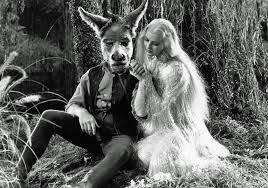
    “The Surprising Adventures of Baron Munchausen” (1785) pokes fun at a real-life German nobleman and veteran of the Russo-Turkish War, one Hieronymus Karl Friedrich, Freiherr von Münchhausen, whose reputation for telling outrageous tall tales was lampooned by Rudolf Erich Raspe. Raspe, fearing a libel suit, published the work anonymously, with the result that it was commonly believed that the Baron had actually dictated the tales himself. Naturally, Munchausen was upset by the unwanted attention. The name “Munchausen” has come down through the centuries to describe feigned illness and pathological lying.

    The book has been adapted to film several times, beginning with a silent version by Georges Méliès, all the way back in 1911. We’ll be hearing music from two subsequent adaptations. The first, titled simply “Münchhausen” (1943), is undeniably entertaining and exceptionally well-made. However, underlying a sense of enjoyment is a kind of unease in the knowledge that the film was a pet project of Joseph Goebbels, who wanted to celebrate the 25th anniversary of the UFA film studio by producing a lavish spectacle worthy to stand toe-to-toe with foreign efforts like “The Wizard of Oz” and “The Thief of Bagdad.”

    Considering the source, one would have to look awfully hard to come up with anything resembling Nazi propaganda. The entire exercise comes across as a pastoral escape from the horrors of totalitarianism, total war and the Final Solution. The elegant music, by Georg Haentzschel, would not be out of place in the concert hall. Haentzschel is regarded as perhaps the last representative of a generation of Middle European light music composers.

    More than 40 years later, director Terry Gilliam undertook another production design-driven adaptation that resembled a series of Doré illustrations brought to life. Contrary to received wisdom, “The Adventures of Baron Munchausen” (1988) managed to pull in a respectable amount of per-screen capital. Ultimately, the film was a casualty of a management turnover at Columbia Pictures, with the new regime eager to bury the projects of the old. Therefore, it was never seen theatrically beyond a very limited release. The score, by Michael Kamen, while in a romantic heroic style, wittily contains abundant allusions to music of the 18th century.

    “The Manuscript Found in Saragossa” (1805) is a transitional work, with its ecstatically lurid opening chapter – replete with gypsy storytellers, highwaymen, dueling skeletons, lesbian vampires and a couple of corpses dangling in a gibbet – dragging the Enlightenment kicking and screaming into the Romantic age. It starts out as a masterpiece of surrealism by way of Gothic convention, with the spell eventually broken, sadly, by a large cold bucket of Enlightenment water in the form of a perfectly rational explanation at the end. But until then, the author, Jan Potocki, gets an A for effort. The interlocking structure, with stories inside stories inside stories looks ahead to postmodern experiments by writers like Italo Calvino and John Barth, to say nothing of Jorge Luis Borges.

    The book was made into an acclaimed Polish film, “The Saragossa Manuscript,” in 1965. Its cult status led to a restoration financed by Jerry Garcia, Martin Scorsese and Francis Ford Coppola that was released on VHS and DVD in 2001.

    Who else could provide the perfect soundtrack to such a hallucinogenic experience but Krzysztof Penderecki? Penderecki intersperses spooky passages with neo-classical and baroque interludes.

    Finally, we’ll have music from one of the many adaptations of Jonathan Swift’s “Gulliver’s Travels” (1726). “The Three Worlds of Gulliver” (1960) simplifies the book’s narrative and dispenses with a great deal of the misanthropic humor in favor of children’s fantasy. You won’t catch Gulliver extinguishing a fire in the Lilliputian Emperor’s palace with his urine in this version. What you will find is a good deal of technical wizardry and a delightful score by Bernard Herrmann.

    I hope you’ll join me for music from fantastic 18th century adventures this week, on “Picture Perfect” – music from the movies – this Friday evening at 6:00 EST, on WWFM – The Classical Network and wwfm.org.


    PHOTO: Munchausen hitches a ride on a cannonball
  • July 4th Movie Music Celebrating Independence

    July 4th Movie Music Celebrating Independence

    With the Fourth of July right around the corner, fortify yourself with an hour of cinematic fifes and drums. This week on “Picture Perfect,” we look ahead to Independence Day.

    We’ll hear selections from the 2000 film, “The Patriot,” in which slow-burning pacifist Mel Gibson is pushed too far by ruthless British officer Jason Isaacs and reverts to his bloody French and Indian War ways. By the end of the film, he is literally waving the flag to John Williams’ triumphant score.

    Then we’ll hear a suite from the 1942 Jack Benny-Ann Sheridan fixer-up comedy, “George Washington Slept Here,” based on the play by Moss Hart and George S. Kaufman – not really about the Revolution, beyond the fact that the ramshackle Pennsylvania farm house purchased by a transplanted New York couple is alleged to have been the resting place of the Revolution’s most famous general. The music is by Adolph Deutsch.

    The 1985 film, “Revolution,” seemed to have everything going for it. The director was Hugh Hudson, whose “Chariots of Fire” was the big winner at the 1981 Academy Awards; its star was Al Pacino; and its composer was John Corigliano, who went on to win the Pulitzer Prize for Music for his Symphony No. 2 and an Academy Award for “The Red Violin.” Yet “Revolution” bombed horribly – so horribly that Pacino gave up making movies for the next four years. James Galway plays the flute and pennywhistle on the film’s soundtrack.

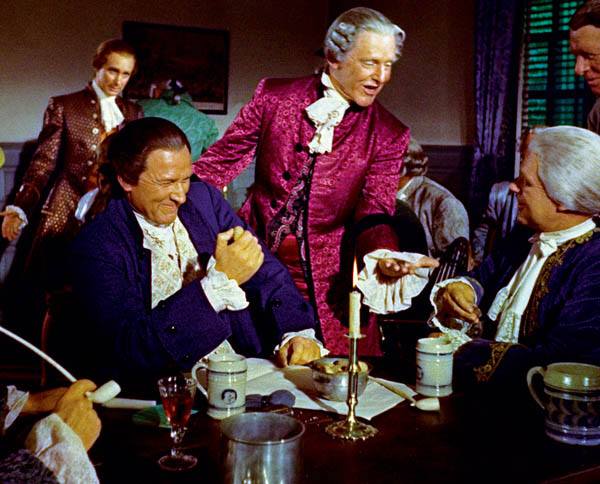
    Finally, we’ll hear music from the longest continuously-shown film in cinematic history, “Williamsburg: The Story of a Patriot,” created exclusively for the tourist attraction of Colonial Williamsburg. The film features future “Hawaii Five-O” star Jack Lord, and the score is by none other than Bernard Herrmann.

    Here’s a clip from “Williamsburg,” with some of Herrmann’s music:

    https://www.youtube.com/watch?v=A0VXfVhenXQ

    We celebrate Independence Day this week, on “Picture Perfect,” music for the movies, this Friday evening at 6:00 EDT, on WWFM – The Classical Network and wwfm.org.

    PLEASE SUPPORT IT RIGHT NOW BY CALLING 1-888-232-1212. THANK YOU!


    PHOTO: George Washington wagers he can crack a walnut with his bare hand in “Williamsburg: The Story of a Patriot”

  • Star Wars Soundtrack 40th Anniversary

    Star Wars Soundtrack 40th Anniversary

    “Star Wars” – the original, as opposed to “Star Wars Episode IV: A New Hope,” as it has been known since its 1981 reissue – was released for the first time, in theaters, on May 25, 1977. Needless to say, the film became a pop cultural phenomenon that went on to assume mythological proportions.

    This week on “Picture Perfect,” we revisit a long time ago (40 years, to be exact) in a galaxy far, far away, as we listen to selections from John Williams’ classic score. In an era when pop music was threatening to swamp the movies, Williams’ paradoxically fresh-yet-retro heroic take was credited with singlehandedly reviving the fortunes of the orchestral film score. “Star Wars” went on to become the best-selling orchestral soundtrack of all-time.

    The fashion these days is to present a score note-complete and sequentially, as it appeared in the film. But there was an art to how the composer and supervising music editor (in this case, Kenneth Wannberg) used to arrange these soundtrack albums to create a special kind of listening experience.

    Buck the trend of digital complexity and note-complete soundtrack recordings by kicking back and listening to the music as you first enjoyed it at home in 1977, with selections from the original 2-record set. The exact contents of the double-LP album have been unavailable for years, until a quite recent vinyl reissue of the complete “Star Wars” soundtracks.

    The Force is strong with this one. Join me for 40 years of “Star Wars” on “Picture Perfect,” this Friday evening at 6 EDT, on WWFM – The Classical Network and wwfm.org.

  • April in Paris & Appalachian Songs on WWFM

    April in Paris & Appalachian Songs on WWFM

    This afternoon, it’s our last chance for April in Paris. Join me today on The Classical Network for an international salute to the City of Lights.

    It’s also the birthday of John Jacob Niles, so get ready for some settings of Appalachian mountain songs. It will be a refreshing mix of foreign and domestic from 4 to 6 p.m. EDT.

    Then stay tuned for “Picture Perfect,” beginning at 6, for music from movies inspired by comic adventurers – that is, heroes from the funny pages. I’ll be elaborating on that in just a bit.

    For now, enjoy the weather and enjoy the music. It’s baguettes and banjos all around on WWFM – The Classical Network and wwfm.org.

  • Shakespeare’s Birthday Music on WWFM

    Shakespeare’s Birthday Music on WWFM

    We don’t know when, exactly, Shakespeare was born, but his baptismal date is April 26, 1564. Since it’s human nature to try to keep things neat, his natal day is generally held to be April 23, the very date of his death in 1616.

    This week on “Picture Perfect,” we’ll honor the Bard, just a few days early, with an hour of music from movies based upon his comedies. We’ll hear selections from “As You Like It” (William Walton), “A Midsummer Night’s Dream” (Korngold), “The Taming of the Shrew” (Nino Rota), and “Much Ado About Nothing” (Patrick Doyle).

    What fools these mortals be! Join me this Friday evening at 6:00 EDT for music for Shakespearean comedies, on WWFM – The Classical Network and wwfm.org.

Tag Cloud

Aaron Copland (92) Beethoven (95) Composer (114) Film Music (123) Film Score (143) Film Scores (255) Halloween (94) John Williams (187) KWAX (229) Leonard Bernstein (101) Marlboro Music Festival (125) Movie Music (138) Opera (202) Philadelphia Orchestra (89) Picture Perfect (174) Princeton Symphony Orchestra (106) Radio (87) Ralph Vaughan Williams (85) Ross Amico (244) Roy's Tie-Dye Sci-Fi Corner (290) The Classical Network (101) The Lost Chord (268) Vaughan Williams (103) WPRB (396) WWFM (881)

DON’T MISS A BEAT

Receive a weekly digest every Sunday at noon by signing up here


RECENT POSTS