Tag: Picture Perfect

  • Herrmann’s Halloween Fantasy Film Scores

    Herrmann’s Halloween Fantasy Film Scores

    Hallowe’en is fast approaching. This week on “Picture Perfect,” it’s high time we get the pumpkin rolling, with an hour of fantasy film scores of Bernard Herrmann.

    Just about everyone has some awareness of Herrmann’s fruitful run with Alfred Hitchcock, a collaborative relationship which yielded scores to “Vertigo,” “North by Northwest” and “Psycho,” among others. Concurrently, Herrmann worked with producer Charles H. Schneer to create a series of classic films on fantastic subjects, featuring special effects by stop-motion maestro Ray Harryhausen. We’ll be listening to selections from two of these.

    Jules Vernes’ novel, “Mysterious Island,” was a sequel of sorts to “20,000 Leagues under the Sea. “ During the American Civil War, a ragtag band of Union soldiers escape from a Confederate prison by hot air balloon. A storm sweeps them off to the titular island, where they encounter pirates, a castaway and an orangutan. Indeed Captain Nemo turns up late in the narrative, though no giant creatures, as in the film (made in 1961). Herrmann has a field day characterizing an enormous crab, bee and especially bird, for which he employs a fugue!

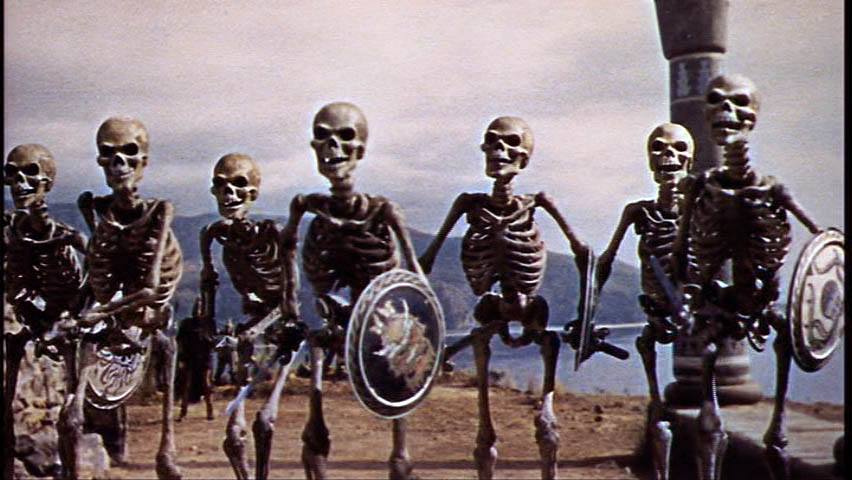
    Harryhausen’s skeleton fight from Schneer’s “Jason and the Argonauts” (1963) stands as one of the all-time classic fantasy sequences, a dream marriage of visuals and music. Herrmann, who always provided his own orchestrations, was well known for putting together unique combinations of instruments the better to illustrate the special character of a given film. In the case of “Jason,” he went in the opposite direction he had taken with “Psycho,” stripping away the strings and concentrating instead on winds, brass and percussion.

    On a somewhat gentler note, Herrmann scored the beautiful spectral romance, “The Ghost and Mrs. Muir” (1947), with Gene Tierney as a young widow who moves with her daughter to a seaside village, where she encounters the ghost of salty Captain Craigg (played by Rex Harrison). Of course, their banter leads to a hopeless attraction developing between them. Herrmann was a master at creating musical evocations of yearning, and his score for “The Ghost and Mrs. Muir” is full of romantic longing.

    Criminally, for a composer whose career spanned over four decades, from “Citizen Kane” to “Taxi Driver,” Herrmann received only a single Oscar, for “The Devil and Daniel Webster” (released in 1941 as “All That Money Can Buy”). Walter Huston makes a meal of his role as Mr. Scratch in Stephen Vincent Benet’s recasting of the Faust legend, transferred to the New England countryside. Director Wlliam Dieterle, who had his roots in German Expressionism, creates some truly eerie visuals, and Herrmann’s score barn-dances deftly back and forth between dread and whimsy.

    Join me for fantasy film scores of Bernard Herrmann this week on “Picture Perfect,” music for the movies, this Friday evening at 6; or catch it later as a webcast at http://www.wwfm.org.


  • Korngold’s Hollywood Composers

    Korngold’s Hollywood Composers

    Errol Flynn writes a ballet? Charles Boyer composes a tone poem? Claude Rains writes a cello concerto!

    This week on “Picture Perfect,” we’ve got three examples from Hollywood’s Golden Age of movies about fictional composers. These, of course, required music allegedly written by the characters, and this was provided by two-time Academy Award-winner Erich Wolfgang Korngold.

    Korngold is probably best known to movie buffs as the composer for Flynn swashbucklers such as “The Adventures of Robin Hood” and “The Sea Hawk,” but his filmography is more varied than one might at first suspect. No matter what the subject, Korngold could be counted on to bring that opulent fin de siècle gloss, developed in a Vienna steeped in Mahler and Strauss.

    We’ll hear music from “Escape Me Never” (1947), a slightly preposterous melodrama about two composer brothers who become rivals in love; “The Constant Nymph” (1943), about a would-be romantic bond between a composer struggling to find his true voice and an admiring girl on the verge of womanhood who develops deeper feelings for him; and “Deception” (1946), about a cellist reunited with his former love, who had believed him killed during the war, and the vindictive composer who attempts to shatter his psyche through grueling rehearsals of his latest concerto.

    “Deception” was Korngold’s last, wholly original score, though he was lured back to Hollywood for one final project, “Magic Fire” (1955), a biopic of the composer Richard Wagner, for which he adapted selections from Wagner’s operas. Furthermore, Korngold makes an appearance onscreen (!) as conductor Hans Richter. The film was subject to heavy cuts prior to its U.S. release and was not a success.

    Hollywood seldom gets it right when it comes to portraying the process of the composer, but Korngold, true to his name, did his best to spin gold from corn, producing some appropriately grand utterances, albeit condensed to only a few minutes of screen time. Quite a task for this figure who made his greatest mark in opera.

    Join me for these examples of Korngold as ghostwriter, on “Picture Perfect,” this Friday evening at 6 ET, or enjoy it later as a webcast at http://www.wwfm.org.
    Follow the link to hear Korngold improvise on themes from “The Flying Dutchman” (with entertaining stills):

    https://www.youtube.com/watch?v=h4bNEw1nu3I

    PHOTO: Paul Henreid in “Deception.” He wore a special jacket to accommodate the arms of two professional cellists who stood behind him as he emoted. On the film’s soundtrack the concerto was performed by Eleanor Aller Slatkin, the mother of Leonard Slatkin.

  • Artists’ Lives on the Big Screen

    Artists’ Lives on the Big Screen

    How to translate visual art to the big screen? Generally by focusing on the drama in the artists’ lives, that’s how.

    And what drama!

    This week on “Picture Perfect,” we’ll listen to music from movies inspired by the great artists. “The Agony and the Ecstasy,” based on the novel of Irving Stone, dramatizes the friction between Michelangelo (Charlton Heston) and his benefactor, Pope Julius II (Rex Harrison), over the painting of the ceiling of the Sistine Chapel. For his part, Michelangelo would have been perfectly content to stick to sculpture. Alex North’s score is an Early Music banquet, with allusions to – and sometimes outright quotations of – music of the Renaissance.

    Stone had another bestseller in “Lust for Life,” about the tormented Vincent van Gogh. This time Kirk Douglas plays one of his most sympathetic roles – and looks remarkably like the artist. Anthony Quinn turns up as his “frenemy,” the painter Paul Gaugin, and earns an Academy Award for Best Supporting Actor. The great Miklós Rózsa wrote the music, softening up the edges of his brawny Hungarian sound with the softer palette of the French Impressionists.

    John Huston brought Pierre La Mure’s novel about Henri de Toulouse-Lautrec to the big screen as “Moulin Rouge” (not to be confused with the more recent Baz Luhrmann spectacle starring Nicole Kidman and Ewan McGregor, which relegated the artist to a supporting role). José Ferrer dominates the earlier version, spending most of the film walking through off-camera trenches and shuffling along on his knees. Georges Auric, one of the composers of Les Six (which also included Francis Poulenc and Darius Milhaud), captures the spirit of the titular cabaret. The score became one of Auric’s best-known, thanks to the waltz becoming a popular hit, “Where is Your Heart.”

    “The Picasso Summer” is a departure from the usual formula of focusing on the artist himself. Instead, a young couple (played by Albert Finney and Yvette Mimieux), admirers of Picasso’s work, take off on a European adventure in an attempt to track him down. Originally Picasso himself had agreed to appear, but some off-screen drama involving a matador friend and Yul Brynner’s wife drove him off. The film was based on a short story by Ray Bradbury. Bradbury hated the adaptation, as did the studio, and “The Picasso Summer,” after being heavily cut and patched with new footage, was never released theatrically in the United States. The film is striking for its extended animation sequences inspired by Picasso’s paintings, and for its score by Michel Legrand.

    Join me for an hour of music from films about the great artists this week, on “Picture Perfect,” this Friday evening at 6 ET, or listen to it later as a webcast, at http://www.wwfm.org.

  • Tall Ships Movie Soundtracks Picture Perfect

    Tall Ships Movie Soundtracks Picture Perfect

    Summer vacation may be over, but it’s never too late to run away to sea. This week on “Picture Perfect,” we listen to music from movies featuring tall ships.

    Though Gregory Peck cuts a dashing figure as “Captain Horatio Hornblower” (1951), the movie itself is a bit episodic, adapted as it was from three of C.S. Forester’s Hornblower novels. Canadian-born master of British Light Music Robert Farnon wrote the music, lending another dimension to this nautical adventure.

    Alan Ladd and James Mason engage in a battle of wills in “Botany Bay” (1953). Ladd plays a doctor wrongly accused of a crime, being transported to a penal colony in New South Wales on a ship under the harsh command of Mason. In perhaps the film’s most memorable sequence, Mason has one of his charges keelhauled. Franz Waxman wrote the score.

    If it all sounds a mite familiar, it’s because the story was by Charles Nordhoff and James Norman Hall, authors of “Mutiny on the Bounty.” The classic film version dates from 1935, with Clark Gable butting up against Charles Laughton’s Captain Bligh. The 1962 version bears a certain notoriety, mostly for Marlon Brando’s eccentric performance, which turns Fletcher Christian into a fop, and the fact that he essentially directed all his own scenes himself. The film was colossal failure, earning back only $13 million of its $19 million budget. Nonetheless, it managed to inspire Bronislau Kaper to compose one of his most monumental scores.

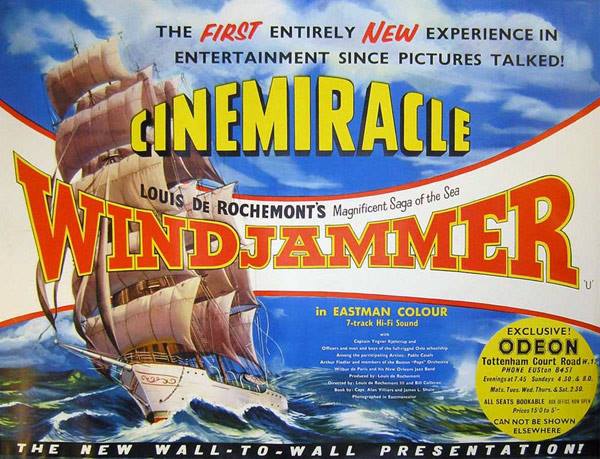
    Finally, we’ll hear music from a recent release, on Sepia Records, of the soundtrack to “Windjammer” (1958), the only film shot using the Cinemiracle process. The film documents the round-trip, transatlantic journey of a Norwegian vessel from from Oslo to the Caribbean to New York to Portsmouth, New Hampshire, and then back home again. Morton Gould wrote the evocative score, which alternates dance rhythms and sea shanties with a recurring melody suggestive of the sweeping romance of the high seas.

    Join me as we recommission these tall ships on “Picture Perfect,” music for the movies. You can enjoy it this Friday evening at 6, or catch it later as a webcast at http://www.wwfm.org,

  • Classical Music Radio Support Elmer Bernstein Special

    Classical Music Radio Support Elmer Bernstein Special

    Thank you all for your financial and moral support yesterday. While I doubt it will do much for me in terms of ensuring regular live air shifts, it was heartening to see so many familiar names. At the very least, your contributions help maintain a classical music presence on the radio, including specialty shows like “Picture Perfect” and “The Lost Chord.”

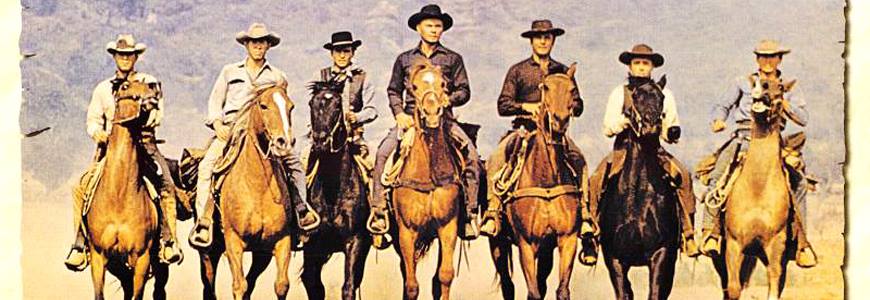
    Speaking of “Picture Perfect,” the show will air at a special time this week, on account of the pledge drive. I hope you’ll join me this afternoon at 4 ET for a selection of film scores by Elmer Bernstein, including “The Magnificent Seven,” “The Age of Innocence,” “Stripes” and “To Kill a Mockingbird.”

    Next week, “Picture Perfect” will return to its regular time, Friday evening at 6. You can always enjoy it at http://www.wwfm.org. Shows are archived as webcasts for approximately three months following broadcast.

Tag Cloud

Aaron Copland (92) Beethoven (95) Composer (114) Film Music (123) Film Score (143) Film Scores (255) Halloween (94) John Williams (187) KWAX (229) Leonard Bernstein (101) Marlboro Music Festival (125) Movie Music (138) Opera (202) Philadelphia Orchestra (89) Picture Perfect (174) Princeton Symphony Orchestra (106) Radio (87) Ralph Vaughan Williams (85) Ross Amico (244) Roy's Tie-Dye Sci-Fi Corner (290) The Classical Network (101) The Lost Chord (268) Vaughan Williams (103) WPRB (396) WWFM (881)

DON’T MISS A BEAT

Receive a weekly digest every Sunday at noon by signing up here


RECENT POSTS