Tag: Presidents Day

  • John Williams Scores the Presidents

    John Williams Scores the Presidents

    In a career that’s spanned over 60 years, John Williams has had opportunities to score just about every kind of film. Inevitably, these would include several fictionalized accounts of the American presidents. This week on “Picture Perfect,” just in time for Presidents Day, we’ll exercise our executive power and sample music from four of them.

    “JFK” (1991) is one of three collaborations between Williams and director Oliver Stone. The film has more to do with conspiracy theories surrounding the Kennedy assassination than anything to do with his presidency. A controversial feature, no doubt – Walter Cronkite dressed down Roger Ebert after he gave it a positive review – still, a compelling piece of cinema. It certainly inspired an effective score.

    Kevin Costner plays New Orleans district attorney Jim Garrison, Sissy Spacek, his wife, and Gary Oldman, Lee Harvey Oswald. Tommy Lee Jones and Joe Pesci are unforgettable as a pair of outlandish conspirators (if you ever wanted to see Jones painted gold, then this is the movie for you), and Donald Sutherland delivers a virtuoso 16-minute monologue as a government whistleblower who identifies himself only as “X.”

    Williams and Stone had previously worked together on “Born on the Fourth of July.” Later, they would reunite for a second presidential collaboration, a character study of Richard Milhous Nixon – in a film called, well, “Nixon” (1995). Anthony Hopkins, as the president, leads another impressive cast, which includes Joan Allen, Powers Boothe, Ed Harris, Bob Hoskins, E.G. Marshall, David Hyde Pierce, Paul Sorvino, Mary Steenburgen, and James Woods.

    Williams also wrote the music for Steven Spielberg’s “Amistad” (1997). The film, about a mutiny on a slave ship in 1839 and the resulting courtroom drama, features two American presidents: Nigel Hawthorne plays Martin van Buren, the sitting president; and again, Anthony Hopkins appears, in a memorable supporting turn, as aging former president John Quincy Adams. Adams argues the defense of the Africans who took part in the mutiny.

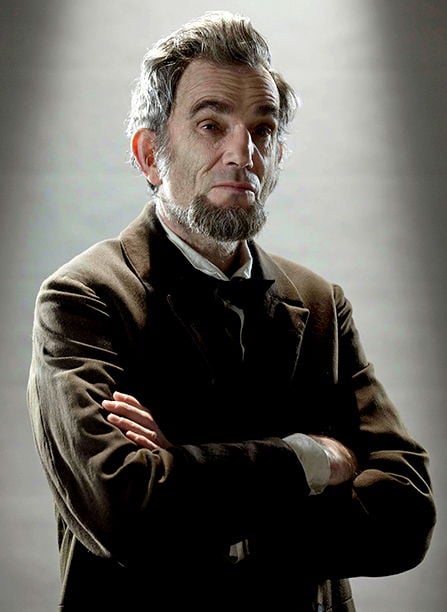
    Finally, Daniel Day-Lewis plays the nation’s 16th president, in Spielberg’s “Lincoln” (2012). He’s lent strong support by Sally Field as Mary Todd Lincoln, David Strathairn as Secretary of State William Steward, and Tommy Lee Jones, this time as Thaddeus Stevens.

    It’s a bold assessment, but Day-Lewis elevates “Lincoln,” the film, to greatness, with arguably one of the most amazing performances in cinematic history. Day-Lewis’ gentle but shrewd Man of Destiny would go to any lengths to hold the country together. Williams taps into America’s proud musical heritage, clearly influenced by Copland and the folksier side of Ives, to create a score of stirring nobility.

    I hope you’ll join me as we continue with our observance of John Williams’ 90th birthday. Williams’ scores will be represented through at least St. Patrick’s Day, on “Picture Perfect,” music for the movies. The presidents take precedence, this Saturday evening at 6:00 EST, on WWFM – The Classical Network and wwfm.org.


    PHOTOS: (clockwise from left) Day-Lewis as Lincoln; Hopkins as Nixon; poster for “JFK;” Hopkins as John Quincy Adams
  • Presidents Day: Adams, Rouse & Albert

    Presidents Day: Adams, Rouse & Albert

    It could hardly be more appropriate to celebrate a composer named John Adams on Presidents Day.

    No relation to our second president, Adams is considered by some to be America’s preeminent living composer. He emerged from the haze of minimalism to become the most versatile and substantial of early proponents of the style. In 2003, he was awarded the Pulitzer Prize for Music for his 9/11 memorial “On the Transmigration of Souls.”

    Personally I’ve always been divided on Adams’ music. Some of it I find fun (“Short Ride in a Fast Machine,” “Grand Pianola Music”), some of it I find to be quite good (“Shaker Loops,” “El Niño”), some of it I find to be boring, clumsy, or downright embarrassing (“Harmonium,” for as much as I could stand of “Doctor Atomic”).

    I concede that these are subjective evaluations. There’s no arguing against Adams’ influence or his standing. Happy birthday to John Adams on his 74th birthday, and congratulations on his long-term success.

    “Shaker Loops” (1983):

    Also born on this date was Christopher Rouse. Rouse was the recipient of a Pulitzer Prize for his Trombone Concerto in 1993. In 2002, his guitar concerto, “Concerto de Gaudi,” was recognized with a Grammy, in the category of Best Classical Contemporary Composition. He served as composer-in-residence with the New York Philharmonic from 2012 to 2015, the year of his death at the age of 70. His music was quoted extensively in a 2017 documentary, “The Devil and Father Amorth,” by “The Exorcist” director William Friedkin.

    Rouse’s Flute Concerto (1993) is dedicated to the memory of James Bulger, a toddler murdered by two ten year-old boys.

    Finally, on this American holiday, I also wanted to acknowledge composer Stephen Albert, whose birthday anniversary I noticed on February 6, but didn’t get around to sharing news of it here.
    Albert would have been 80 years-old this year. His Symphony No. 1, “RiverRun,” earned him the Pulitzer Prize in 1985. Sadly, he was killed in an automobile accident seven years later. In 1995, a posthumous Grammy was awarded, for Best Classical Contemporary Composition, for Yo-Yo Ma’s recording of Albert’s Cello Concerto.

    My favorite Albert piece also happens to be his last, the Symphony No. 2 (1992), commissioned by the New York Philharmonic. It doesn’t hurt that it reminds me of Sibelius and, at times, even John Williams. The orchestration was left incomplete at the time of Albert’s death, so it fell to Sebastian Currier to supply the finishing touches. It’s a beautiful, valedictory work, from a composer who, at 51, left us in his prime.

    Interestingly, the slow movement of Rouse’s own Symphony No. 2 is dedicated to Albert’s memory.

    All worthwhile music to enjoy on this Presidents Day.


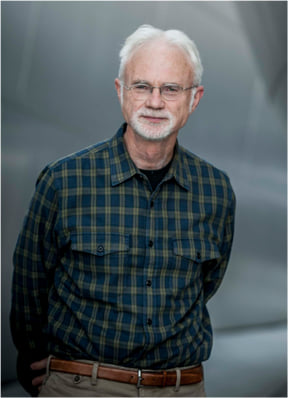
    Clockwise from left: John Adams, Christopher Rouse, and Stephen Albert (with Mstislav Rostropovich)

  • Lincoln Liberty Song Presidents Day

    Lincoln Liberty Song Presidents Day

    Happy Presidents Day.

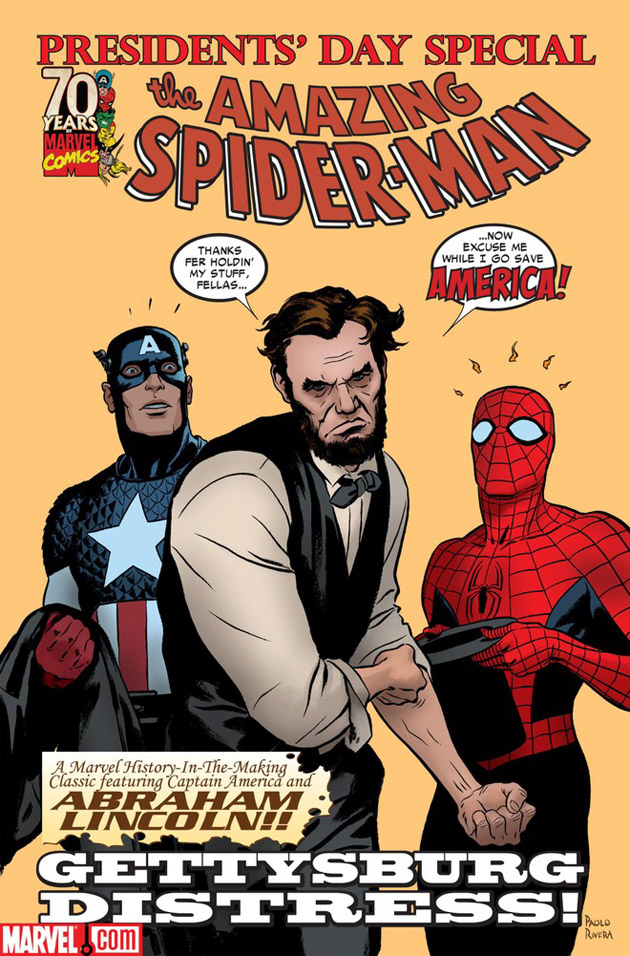
    Paul Turok composed his “Variations on an American Song: Lincoln and Liberty” in 1963. The melody is based on a traditional Irish fiddle tune, “Rosin the Bow,” which was outfitted with new lyrics for use in Lincoln’s 1859 presidential campaign.

    “Then up with our banner so glorious,
    The star-spangled red-white-and-blue,
    We’ll fight till our Cause is victorious,
    For Lincoln and Liberty, too!”


    IMAGE: With Marvel malice toward all! If only…

  • Presidents Day Music Potomac WWFM

    Presidents Day Music Potomac WWFM

    I hope you’ll join me in celebrating Presidents Day on this lovely Tuesday afternoon. I’ll been hurling CDs across the Potomac, from 4 to 7 p.m. EST, on WWFM – The Classical Network and wwfm.org.

  • Presidents Day Classical Music Special

    Presidents Day Classical Music Special

    Hail to the Chiefs!

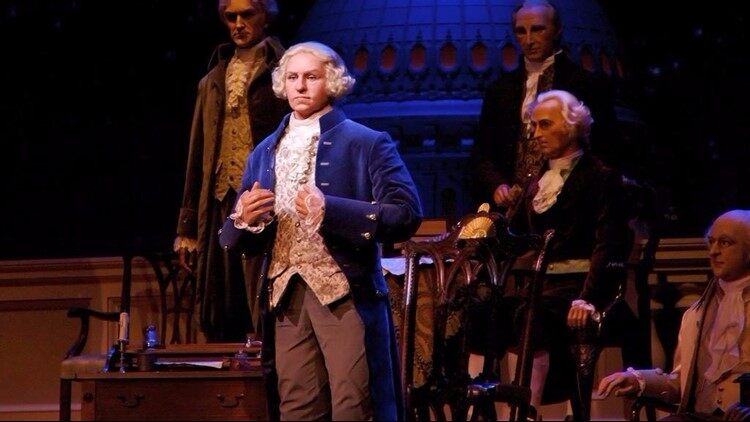
    You’d better sail through those white sales. You’ll want to be near an electronic device at 4:00 today for my annual State of the Union on The Classical Network. I’ll be revving up the musical automatons at the Hall of Presidents for Presidents Day.

    We’ll hear works inspired by Thomas Jefferson, Chester A. Arthur, Theodore Roosevelt, John F. Kennedy, Richard Nixon, and of course George Washington and Abraham Lincoln. Of course, I already played an hour’s worth of music in celebration of Lincoln for his birthday (February 12), but our 16th president inspired more note-spinning than can be crammed into a stovepipe hat.

    If you’re looking to buy a roll of quarters, you may be out of luck, the banks are closed. But Washington will be well represented, in Virgil Thomson’s naïf ballet “Parson Weems and the Cherry Tree” (a Bicentennial commission), George Antheil’s rousing concert overture, “McKonkey’s Ferry (Washington at Trenton),” and John Lampkin’s “George Washington Slept Here.”

    Composer Victoria Bond wrote four portraits of presidential character, for narrator and instrumental soloist. These were released on her album, “Soul of a Nation,” on the Albany Records label. The title track incorporates a violin for Thomas Jefferson, “The Indispensable Man” a clarinet for Franklin Delano Roosevelt, “The Crowded Hours” a trumpet for Theodore Roosevelt, and “Pater Patriae” a flute for George Washington. I’ll select one of these for airplay this afternoon.

    Peter Lieberson’s “Remembering JFK” was composed for the 50th anniversary of the Kennedy inauguration. Its moving narration, compiled from the president’s own words, will be delivered by Richard Dreyfuss. Where have all the statesmen gone?

    And, as an added curiosity, Chester A. Arthur disliked “Hail to the Chief” so intensely that he asked John Philip Sousa to write a replacement anthem. We’ll find time for that, too.

    There may be no mail today, but we’ll sure sift through plenty of junk. I hope you’ll join me in celebrating Presidents Day, from 4 to 7 p.m. EST, on WWFM – The Classical Network and wwfm.org.

Tag Cloud

Aaron Copland (92) Beethoven (95) Composer (114) Film Music (123) Film Score (143) Film Scores (255) Halloween (94) John Williams (187) KWAX (229) Leonard Bernstein (101) Marlboro Music Festival (125) Movie Music (138) Opera (202) Philadelphia Orchestra (89) Picture Perfect (174) Princeton Symphony Orchestra (106) Radio (87) Ralph Vaughan Williams (85) Ross Amico (244) Roy's Tie-Dye Sci-Fi Corner (290) The Classical Network (101) The Lost Chord (268) Vaughan Williams (103) WPRB (396) WWFM (881)

DON’T MISS A BEAT

Receive a weekly digest every Sunday at noon by signing up here


RECENT POSTS