Tag: Pulitzer Prize

  • Henry Threadgill Wins Pulitzer Prize

    Henry Threadgill Wins Pulitzer Prize

    The recipients of the centennial Pulitzer Prizes were announced this afternoon at 3:00 EDT. The final category to be addressed was that of the Pulitzer Prize for Music. And the winner is…

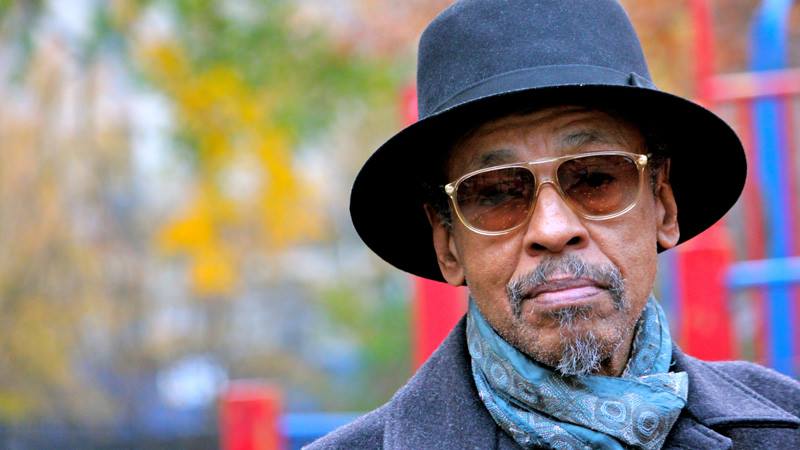
    Henry Threadgill, for “In for a Penny, In for a Pound.”

    Threadgill, 72, studied at the American Conservatory of Music in Chicago. He is a composer, saxophonist and flautist, whose compositions have pushed boundaries for the past 50 years. His orchestral, chamber, and solo instrumental works have been performed at BAM, Bang on a Can, and Carnegie Hall. Peter Watrous of The New York Times described Threadgill as “perhaps the most important jazz composer of his generation,” though Threadgill has distanced himself from any such easy categorization.

    You can read a review of the recording here. Threadgill plays sax in the embedded video

    http://www.allaboutjazz.com/in-for-a-penny-in-for-a-pound-henry-threadgill-pi-recordings-review-by-mark-f-turner.php

    Here’s another sample of his work (NOT “In for a Penny,” which has not, to my knowledge, been posted), this time with the composer on flute and sax, from the Library of Congress in Washington, DC:

    And a conversation with Threadgill, also from the Library of Congress:

    In other music news, Lin-Manuel Miranda was recognized with the Pulitzer Prize for Drama for his Broadway juggernaut “Hamilton.”

  • Pulitzer Prize Winning Music on the Radio

    Pulitzer Prize Winning Music on the Radio

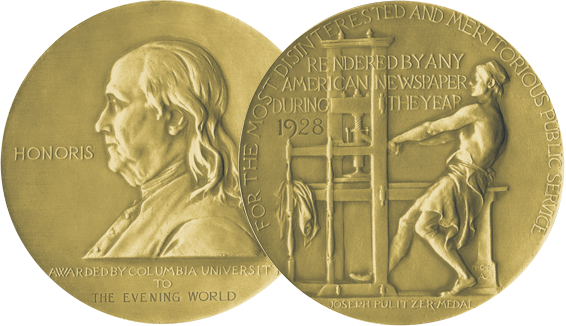
    April is Pulitzer Prize time. This year marks the centennial of the award, which honors excellence in journalism and the arts. Media interest is cresting in advance of the naming of the 2016 honorees, which will take place tomorrow.

    This Sunday night on “The Lost Chord,” we’ll take a look at the Pulitzer Prize for Music. The first Pulitzer Prizes were awarded in 1917, in the fields of journalism, education, letters and drama. The music prize didn’t come along until 1943.

    Of the dozens of pieces honored over the years, surprisingly few have remained in the public consciousness. Only Aaron Copland’s “Appalachian Spring” and perhaps Charles Ives’ Symphony No. 3 “The Camp Meeting” have established themselves firmly in the repertoire – though the operas of Gian Carlo Menotti and Robert Ward are occasionally revived.

    I thought we’d spend yet another hour in what has become an annual salute with some perhaps lesser-known works, though their lack of familiarity is certainly no reflection on the quality of the music or the talent of the composers themselves.

    We’ll hear a piece by Norman Dello Joio, who was awarded a Pulitzer for his “Meditations on Ecclesiastes” in 1957. You know the famous Bible verse, from Book Three of Ecclesiastes, which begins “To everything there is a season.” Its twelve sections consist of an introduction, a statement of a theme, and then ten variations on that theme, calibrated to reflect the verses’ inner meanings. We’ll hear the strings of the Oregon Symphony conducted by James DePriest.

    Then we’ll turn to a deserving work from more recent times. Caroline Shaw, currently a Ph.D. candidate at Princeton University, was 30 years old when she received her award in 2013, making her the youngest Pulitzer winner in her category.

    She was recognized for a virtuosic piece of “a cappella” writing, her “Partita for 8 Voices,” composed between 2009 and 2012. Shaw wrote it for performance by her ensemble, Roomful of Teeth, of which she is a founding member. Roomful of Teeth is well-versed in world styles, and the “Partita” reflects the group’s mastery of a broad array of genres and idioms.

    The Pulitzer committee cited Shaw’s creation as a “highly polished and inventive a cappella work uniquely embracing speech, whispers, sighs, murmurs, wordless melodies and novel vocal effects.” Its four movements are titled after baroque dance forms – Allemande, Sarabande, Courante and Passacaglia. The texts are drawn from instructions for a wall drawing by Sol Lewitt, “Wall Drawing 305,” currently on display at the Massachusetts Museum of Contemporary Art. The performance on this recording, issued on New Amsterdam Records, is incredible.

    I hope you’ll join me for “Pulitzer Prized” – music by recipients of one of music’s most prestigious awards – this Sunday night at 10 ET, with a repeat Wednesday evening at 6; or that you’ll listen to it later as a webcast at wwfm.org.

  • George Walker Pulitzer Winner & More

    George Walker Pulitzer Winner & More

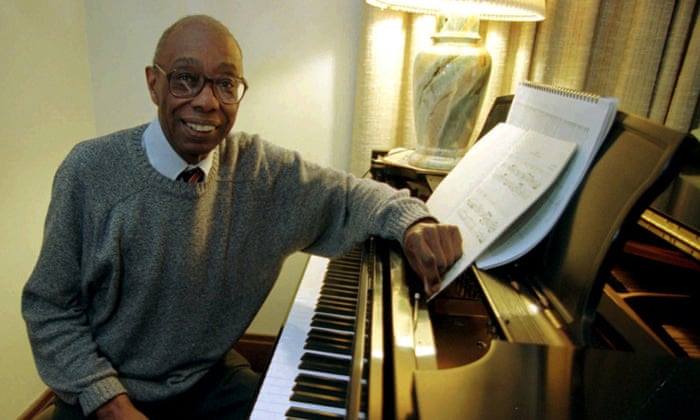
    I wonder if George Walker – born on this date in 1922 – ever gets tired of reading that he was the first African American to be awarded the Pulitzer Prize for Music? It is generally the first thing we read about him. What makes it especially remarkable is that it occurred as recently as 1996. But Walker is so much more than a statistic.

    The composer, who makes his home in Montclair, NJ, was recognized by the Pulitzer committee for “Lilacs,” four songs for soprano and orchestra, after the poetry of Walt Whitman. The work was given its premiere by Faye Robinson and the Boston Symphony, under the direction of Seiji Ozawa.

    60 years earlier, he gave his first public performance as a pianist, at the age of 14. He studied piano at the Curtis Institute of Music in Philadelphia with Rudolf Serkin and Mieczyslaw Horszowski. He also studied composition there with Rosario Scalero. Later, he went to Paris for additional studies with Robert Casadesus and Nadia Boulanger. He was good enough a pianist that he performed the Rachmaninoff Piano Concerto No. 3 with the Philadelphia Orchestra.

    Walker has produced an impressive body of work, over a career which has spanned nearly 80 years. The New Jersey Symphony Orchestra gave the world premiere of his Sinfonia No. 4, “Strands,” as part of its 2011-12 season. In 2009-10, the Philadelphia Orchestra gave the world premiere of his Violin Concerto, with the composer’s son, Gregory, as the soloist. On a separate series of concerts, the orchestra also performed “Lilacs.”

    However, it is for a work Walker composed while still a student at Curtis that he is probably best-known. The “Lyric for Strings,” dedicated to the memory of the composer’s grandmother, is touching in its simplicity. It deserves to be as widely played as Barber’s “Adagio,” although Walker’s is quite a different piece. The tender recollection manages to be moving without all the hand wringing and angst.

    In an interview given in 2012, Walker commented, “I’ve always thought in universal terms, not just what is black or what is American, but simply what has quality.”

    Happy birthday, George Walker!


    “Lyric,” in its original version for string quartet: https://www.youtube.com/watch?v=W17alPNaVfY

    “Lilacs,” with Faye Robinson: https://www.youtube.com/watch?v=_ScgQUzMqhg&list=PLdBmNPZATi4xJ-5iSf7vNLfmErvsoOsP1

    Brief 2012 documentary on Walker, in which he is interviewed, for the occasion of his 90th birthday: https://www.youtube.com/watch?v=tYnEXI3WyRQ

    An interview he gave with the Detroit Free Press earlier this year: http://www.freep.com/story/entertainment/music/2015/03/03/george-walker-classical-roots-dso/24332241/

  • George Perle: Celebrating a Centennial of Sound

    George Perle: Celebrating a Centennial of Sound

    You might say he was a Perle among American composers.

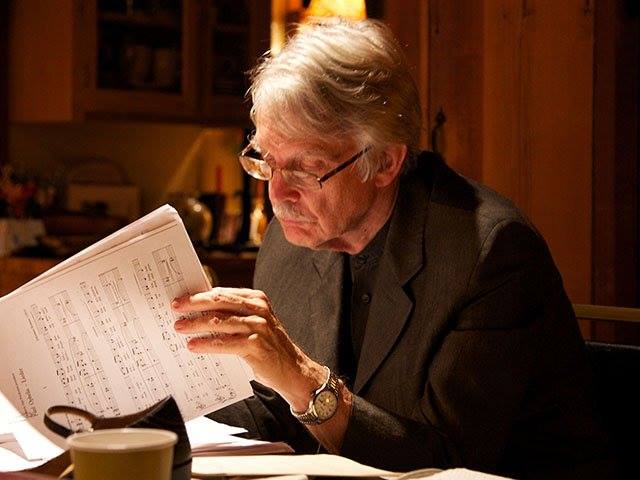
    Today marks the 100th anniversary of the birth of George Perle. Perle was born on this date in 1915 in Bayonne, NJ, though he grew up on farms in Wisconsin and Indiana.

    Fascinated with music from the time he was a child (he was literally transfixed when he heard his aunt play a Chopin etude), his choice of career was pretty much a given. Perle attended DePaul University and took private lessons with Ernst Krenek. Among his own students was retired Princeton University professor Paul Lansky.

    Perle fell under the spell of twelve-tone masters Arnold Schoenberg, Anton Webern and Alban Berg. In 1968, he cofounded the Alban Berg Society with Igor Stravinsky and Hans F. Redlich. Arguably his greatest musicological achievements were his discoveries that Berg’s “Lulu” was not in fact a sketch, but rather three quarters finished, and that Berg’s “Lyric Suite” contains a secret program related to a clandestine love affair.

    His own music is influenced by the twelve-tone idiom, though it is weighted to his own purposes, with certain notes of the chromatic scale given precedence to create a kind of synthetic tonality. Perle’s Fourth Wind Quintet was awarded the Pulitzer Prize for music in 1986.

    Maybe his music is not for everyone, but if you’re receptive, I think you’ll find it never wears out its welcome.

    Happy birthday, George Perle!

    Six New Etudes (1984): https://www.youtube.com/watch?v=SxDqR_23Puo

    Adagio for Orchestra (1992): https://www.youtube.com/watch?v=w-_PuCrsT9Q

    Perle in conversation with David Dubal! https://www.youtube.com/watch?v=1JGa7Jd5uEY

    Of course, you can listen to Dubal’s “The Piano Matters” Wednesday evenings at 10 and Sundays at noon at http://www.wwfm.org.

    PHOTO: Give Perle a whirl

  • Thomson’s Louisiana Story Pulitzer & Ormandy

    Thomson’s Louisiana Story Pulitzer & Ormandy

    Yesterday, I posted about Virgil Thomson. On this date in 1948, the Philadelphia Orchestra gave the first performance of Thomson’s “Louisiana Story Suite.” As I mentioned, “Louisiana Story” was the first – and so far only – film score to be awarded the Pulitzer Prize for Music.

    Robert Flaherty’s semi-documentary, commissioned by the Standard Oil Company, whitewashes the impact of oil drilling in the bayous, which barely impacts a Cajun boy’s adventures with his pet raccoon. Much more irksome is a pesky alligator, for which Thomson composed a fugue.

    I’d also like to take this opportunity to give a belated nod to Eugene Ormandy, whose birthday I missed on Nov. 18. Ormandy, of course, was music director and conductor of the Philadelphia Orchestra for 44 years.

    Praise be! Somebody posted Ormandy’s recording of “Louisiana Story” on YouTube. I’m not sure that it’s ever appeared on CD. At any rate, it is currently unavailable.

    Here’s the complete film, if you’re interested. The print, posted by a Russian(!), is much better than an alternative, murkier print, also posted, if you can forgive the foreign subtitles.

    https://www.youtube.com/watch?v=lSvBQOSqHGI

    Happy Thanksgiving, everyone. Be careful driving!

Tag Cloud

Aaron Copland (92) Beethoven (95) Composer (114) Film Music (119) Film Score (143) Film Scores (255) Halloween (94) John Williams (185) KWAX (229) Leonard Bernstein (99) Marlboro Music Festival (125) Movie Music (134) Opera (198) Philadelphia Orchestra (87) Picture Perfect (174) Princeton Symphony Orchestra (106) Radio (87) Ralph Vaughan Williams (85) Ross Amico (244) Roy's Tie-Dye Sci-Fi Corner (290) The Classical Network (101) The Lost Chord (268) Vaughan Williams (102) WPRB (396) WWFM (881)

DON’T MISS A BEAT

Receive a weekly digest every Sunday at noon by signing up here


RECENT POSTS