Tag: Pulitzer Prize

  • Perambulations with Walker on “The Lost Chord”

    Perambulations with Walker on “The Lost Chord”

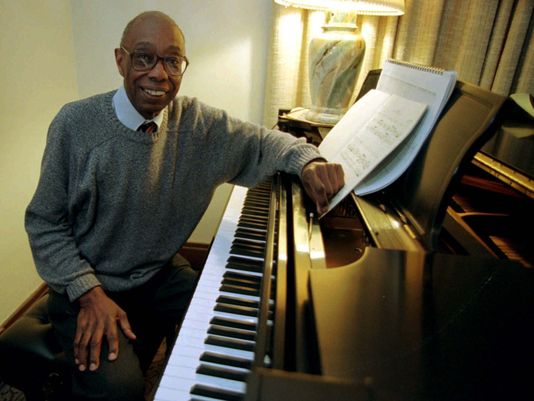
    It’s crazy that the first time an African American composer would receive the Pulitzer Prize for Music was only in 1996. I remember when it happened. It was a pretty big deal. A special award had been made to Scott Joplin in 1976 – 59 years after Joplin’s death – and there have been some special citations and a number of Black honorees since. In more recent years, it’s not been unusual for composers of all races to be recognized. But it was George Walker who broke the glass ceiling.

    This week on “The Lost Chord,” we’ll celebrate this trailblazing artist with a program of four of his original works, including his Piano Sonata No. 2 (with the composer himself at the keyboard), the award-winning “Lilacs” (after poetry of Walt Whitman), “Address for Orchestra” (his first major orchestral work), and “Lyric for Strings” (his most famous music, in its original version for string quartet).

    By his own assessment, Walker was a composer more interested in building “elegant structures” than in “creating beauty.” Depending on one’s sensibility, it could be argued that he achieved both.

    In an interview given in 2012, he commented, “I’ve always thought in universal terms, not just what is Black or what is American, but simply what has quality.”

    I hope you’ll join me for “Perambulations with Walker” on “The Lost Chord,” now syndication on KWAX Classical Oregon!

    ——–

    Clip and save the start times for all three of my recorded shows:

    PICTURE PERFECT, the movie music show – Friday at 8:00 PM EST/5:00 PM PST

    SWEETNESS AND LIGHT, the light music program – Saturday at 11:00 AM EST/8:00 AM PST

    THE LOST CHORD, unusual and neglected rep – Saturday at 7:00 PM EST/4:00 PM PST

    Stream them, wherever you are, at the link!

    https://kwax.uoregon.edu

    ——–

    A fascinating interview with Walker by Frank J. Oteri, which, among other things, lends an added dimension to Walker’s most frequently performed music (the “Lyric”) and offers insights into his life and musical philosophy. Also, some great photos!

    https://nmbx.newmusicusa.org/george-walker-concise-and-precise/

  • Richard Wernick Pulitzer Winner Almost Hit Me

    Richard Wernick Pulitzer Winner Almost Hit Me

    To my knowledge, Richard Wernick is the only Pulitzer Prize-winning composer ever to nearly run me down with a car.

    Wernick was a highly visible presence in Philadelphia when I attended musical events there in the 1980s and ‘90s, and for all I know, beyond. When I started working weekend mornings at a certain radio station in 1995, I had to get up at 3 or 4:00 in the morning. Ironically, it cut into my ability to attend concerts.

    For all the times I espied Wernick around Philadelphia, I only spoke to him once. He was in the company of fellow Pulitzer Prize-winner George Crumb at a student recital at the Curtis Institute of Music. Now, I adored Crumb, and having him there in the back of the room, especially with Wernick by his side, was rather intimidating. I so wanted to speak to him, but I was conflicted. I certainly didn‘t want to bug him at a concert, especially if he was with somebody, and doubly-especially if that somebody happened to be Richard Wernick. Little did I realize, until many years later, when we had multiple opportunities to meet during rehearsals and concerts of Orchestra 2001, just how much of a pussycat Crumb could be. On this particular day, he struck me as unapproachable and as terrifying as one of his Black Angels.

    Be that as it may, I couldn’t let the opportunity pass. It just so happened that I lived only about a block away, so I was able to dash back to my apartment and retrieve a CD on Bridge Records, Inc. that contained works by both composers.

    When I got back, I caught them just as they were leaving the building, and Crumb, likely nonplussed by this 20 year-old autograph hound, was kind enough to sign. Then I looked to Wernick sheepishly, and with Crumb’s signature already on the booklet, he couldn’t very well say no. I know I mumbled a few words of appreciation, but probably didn’t say much of worth. At best, I may have provided a source of amusement on their walk back to the car, as when they left I could see they were chuckling with one another.

    When I decided I would be writing about this, I wanted to get the time-line straight. Did the autograph encounter happen first, or was it after Wernick went “Death Race 2000” on me? It took me a while, but I decided the autograph had to have come first, because when I stepped off the curb into Market Street, as Wernick hurtled toward 15th Street at City Hall, I was essentially pulled back by a friend, a classmate and coworker I hadn’t become close to until a few years after the Curtis encounter. In fact, at the time, he confirmed what had already flashed before my eyes. “I’m pretty sure that was Richard Wernick!” he said.

    Wernick was always easily identifiable from his facial hair – a mustache and goatee – and an unmistakable, black-brimmed hat he wore. I don’t remember what he was driving, but I seem to remember it was a rather incongruously compact car to be holding such a flamboyantly-hatted figure.

    So it was somehow appropriate, in my case, that Wernick won the Pulitzer Prize for Music for his “Visions of Terror and Wonder” in 1977. (Crumb was recognized for “Echoes of Time and the River” in 1968.)

    Wernick served on the faculty of the University of Pennsylvania (with Crumb and George Rochberg) from 1968 to 1996. During Riccardo Muti’s tenure as music director of the Philadelphia Orchestra, he also served as a programming consultant, suggesting new works to the maestro, with a particular emphasis on American composers – hence his frequent presence at the Academy of Music.

    Wernick studied at Brandeis University with composers of the Boston School, including Irving Fine, Harold Shapero, Arthur Berger, and Leonard Bernstein. He received further lessons in composition at Tanglewood from Ernst Toch, Aaron Copland, and Boris Blacher. His own music sounds like none of these. In fact, his music steadfastly refuses to meet an audience halfway. Make of that what you will. You’ll find plenty of it posted on YouTube.

    I didn’t know him as a man. For all I know, he could have exuded warmth and humor. I don’t hear any of that in his compositions. Still, I recognize his significance, and I am sorry to see him go, since, as I say, he was such a presence during a certain period of my life.

    Wernick died on Friday at the age of 91. Which means he was probably about my age as he barreled down on me! How did I get stuck in this time-loop?

    R.I.P.


    Wernick interview with Bruce Duffie:

    https://www.kcstudio.com/wernick.html


    CLOCKWISE FROM LEFT: Wernick, Rochberg and Crumb; amiable-looking Wernick; Wernick in the Chapeau of Doom; Wernick’s autograph

  • Copland Sorey Pulitzer Music Victory

    Copland Sorey Pulitzer Music Victory

    It was on V-E Day, marking Allied victory in Europe on this date in 1945, that Aaron Copland became the recipient of the Pulitzer Prize for Music for his ballet “Appalachian Spring.” It remains one of the most successful of Pulitzer Prize winners, very few of which have remained in the active repertoire.

    This is a good opportunity for me to acknowledge the fact, only slightly belatedly, that this year’s honoree is Tyshawn Sorey, who was awarded the prize on Monday for “Adagio (For Wadada Leo Smith),” a 20-minute work for alto saxophone and orchestra. Sorey describes the piece, which was co-commissioned by the Atlanta Symphony Orchestra and Lucerne Festival, as an “anti-concerto,” designed to “provide a respite from the chaos and intrusiveness on modern life.”

    I was able to locate an audio file here:

    https://soundcloud.com/tyshawn-sorey/adagio-for-wadada-leo-smith

    In 2020, Sorey joined the faculty of the University of Pennsylvania. Belated congratulations to him for this year’s Pulitzer recognition.

    https://www.tyshawnsorey.com/

  • Ellen Zwilich at 85 A Musical Trailblazer

    Ellen Zwilich at 85 A Musical Trailblazer

    Ellen Taaffe Zwilich was born on this date in 1939. Today is her 85th birthday.

    Zwilich made history when she became the first female recipient of the Pulitzer Prize for Music, in 1983, for her Symphony No. 1.

    Seven years later, she made history for a second time for being perhaps the only living classical music composer – and to my knowledge the only woman composer – to be referenced in Charles Schulz’s beloved comic strip “Peanuts.”

    In the first of three panels, Peppermint Patty and Marcie are shown attending a concert. Marcie, holding a program, says to Patty, half-asleep, that the next piece will be a Concerto for Flute and Orchestra. In the second panel, she notes, “It was composed by Ellen Zwilich who, incidentally, just happens to be a woman!” Patty springs awake, and in the last panel, she’s standing on her chair. As Marcie slumps into her seat in evident embarrassment, Patty cries, “GOOD GOING, ELLEN!” (The original strip is posted in the comments section below.)

    Turnabout is fair play, and in 1996, Zwilich composed a concertino of sorts, for piano and orchestra, titled “Peanuts Gallery.” The work includes movements inspired by Schroeder, Linus, Snoopy, Charlie Brown, Lucy, and Peppermint Patty and Marcie. It was given its premiere on a Carnegie Hall children’s concert, by the pianist Albert Kim and the Orpheus Chamber Orchestra.

    The piece was recorded for the Naxos label, with pianist Jeffrey Biegel and the Florida State University Symphony Orchestra. The movements are posted individually on YouTube. I have it cued up so that you can let them all play through, continuously, here:

    As an alternative, here’s the entire work, performed without break, with actors and dancers, in a reduction for two pianos:

    “Peanuts Gallery” became the subject of a prize-winning PBS documentary. A second Zwilich documentary was produced to trace the development of her “Gardens” Symphony:

    https://www.pbs.org/video/the-gardens-birth-of-a-symphony-xfgoh6/?fbclid=IwZXh0bgNhZW0CMTAAAR1PIQ2uldOCQe3tzTRrFXVXRQNPLdRIcakR-YIN9orK2ZUuCxPR8UvmUcQ_aem_ARDIAOPDG6wZNz9bA8o_1b1jOUcK6PdB4IWFCnYTfaUCPR2PzA8ttiqL27nmr2_-zmiBpgPg0rIbA4x4dtxIGksG

    Birthdays are a time for celebration. Go ahead and go (Pea)nuts for Ellen Taaffe Zwilich.


    “Celebration”

    The Pulitzer-winning Symphony No. 1 (in three movements)

    Peppermint Patty’s revelation: the Concerto for Flute and Orchestra

  • “Omar” Wins Pulitzer Prize for Music

    “Omar” Wins Pulitzer Prize for Music

    And this year’s Pulitzer Prize for Music goes to… Rhiannon Giddens and Michael Abels for the opera “Omar.”

    “Omar” was inspired by the memoir of an enslaved Muslim man, Omar ibn Said, whose autobiography was written, mostly in Arabic, in 1831. In 1807, Said was captured during a military conflict, taken from his home in Futa Toro (in what is now Senegal), and sold to slavers. He was 37 years-old. He was also from a wealthy family and highly educated.

    In the U.S., he had contrasting experiences under a cruel master and one who realized his exceptional nature. It was the latter who encouraged him to write his story down. Said was offered the chance to return home, but doubtful about the fate of his people, he chose to remain in North Carolina.

    The opera was commissioned by Spoleto Festival USA. Giddens wrote the libretto and composed the music, and then handed it off to co-composer Abels for him to orchestrate it. According to The New York Times, the score is “a melting pot inspired by bluegrass, hymns, spirituals, and more, with nods to traditions from Africa and Islam. It’s an unforced ideal of American sound: expansive and ever-changing.”

    And according to the Pulitzer committee, it’s “an innovative and compelling opera about enslaved people brought to North America from Muslim countries, a musical work that respectfully represents African as well as African American traditions, expanding the language of the operatic form while conveying the humanity of those condemned to bondage.”

    Here are some clips and promotional material from the West Coast premiere with LA Opera:

    https://www.laopera.org/performances/202223-season/omar/

    The composers talk a little bit about it here:

    Congratulations to Rhiannon Giddens and Michael Abels!

Tag Cloud

Aaron Copland (92) Beethoven (95) Composer (114) Film Music (119) Film Score (143) Film Scores (255) Halloween (94) John Williams (185) KWAX (229) Leonard Bernstein (99) Marlboro Music Festival (125) Movie Music (134) Opera (198) Philadelphia Orchestra (87) Picture Perfect (174) Princeton Symphony Orchestra (106) Radio (87) Ralph Vaughan Williams (85) Ross Amico (244) Roy's Tie-Dye Sci-Fi Corner (290) The Classical Network (101) The Lost Chord (268) Vaughan Williams (102) WPRB (396) WWFM (881)

DON’T MISS A BEAT

Receive a weekly digest every Sunday at noon by signing up here


RECENT POSTS