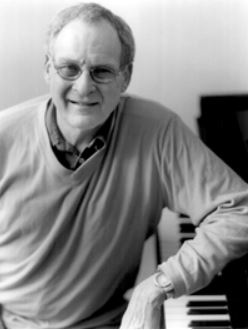
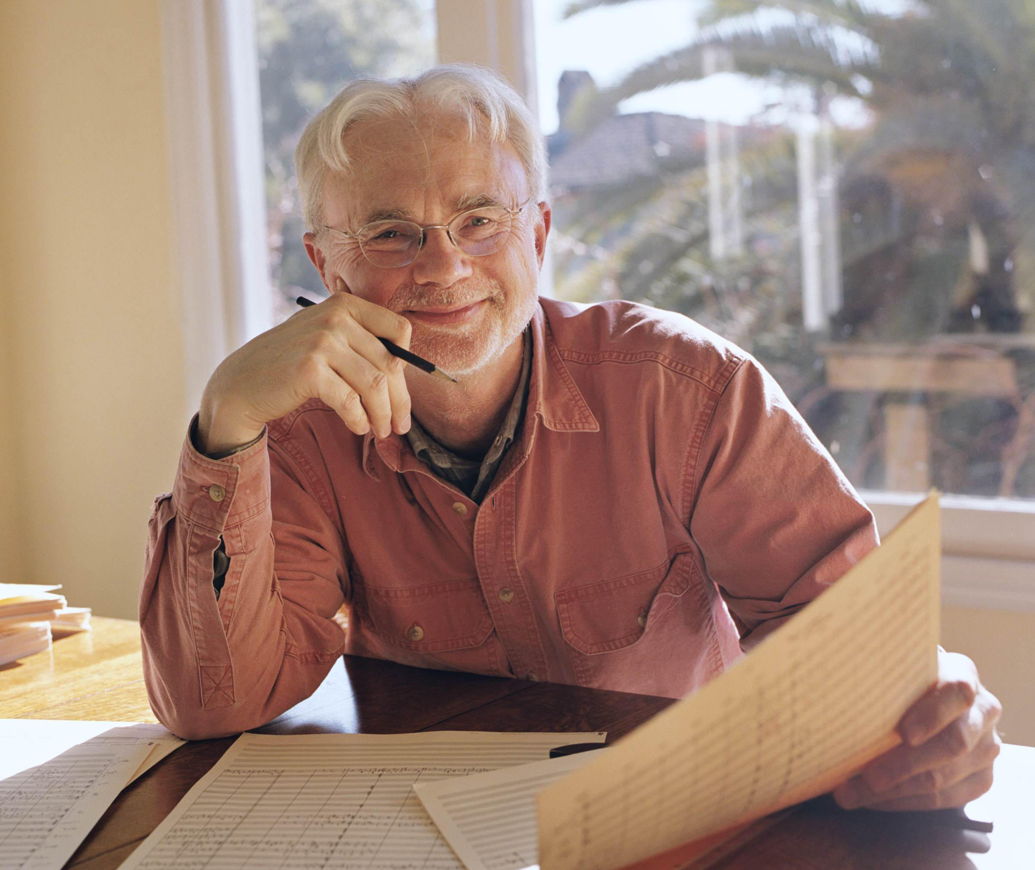
It was on V-E Day, marking Allied victory in Europe on this date in 1945, that Aaron Copland became the recipient of the Pulitzer Prize for Music for his ballet “Appalachian Spring.” It remains one of the most successful of Pulitzer Prize winners, very few of which have remained in the active repertoire.
This is a good opportunity for me to acknowledge the fact, only slightly belatedly, that this year’s honoree is Tyshawn Sorey, who was awarded the prize on Monday for “Adagio (For Wadada Leo Smith),” a 20-minute work for alto saxophone and orchestra. Sorey describes the piece, which was co-commissioned by the Atlanta Symphony Orchestra and Lucerne Festival, as an “anti-concerto,” designed to “provide a respite from the chaos and intrusiveness on modern life.”
Ellen Taaffe Zwilich was born on this date in 1939. Today is her 85th birthday.
Zwilich made history when she became the first female recipient of the Pulitzer Prize for Music, in 1983, for her Symphony No. 1.
Seven years later, she made history for a second time for being perhaps the only living classical music composer – and to my knowledge the only woman composer – to be referenced in Charles Schulz’s beloved comic strip “Peanuts.”
In the first of three panels, Peppermint Patty and Marcie are shown attending a concert. Marcie, holding a program, says to Patty, half-asleep, that the next piece will be a Concerto for Flute and Orchestra. In the second panel, she notes, “It was composed by Ellen Zwilich who, incidentally, just happens to be a woman!” Patty springs awake, and in the last panel, she’s standing on her chair. As Marcie slumps into her seat in evident embarrassment, Patty cries, “GOOD GOING, ELLEN!” (The original strip is posted in the comments section below.)
Turnabout is fair play, and in 1996, Zwilich composed a concertino of sorts, for piano and orchestra, titled “Peanuts Gallery.” The work includes movements inspired by Schroeder, Linus, Snoopy, Charlie Brown, Lucy, and Peppermint Patty and Marcie. It was given its premiere on a Carnegie Hall children’s concert, by the pianist Albert Kim and the Orpheus Chamber Orchestra.
The piece was recorded for the Naxos label, with pianist Jeffrey Biegel and the Florida State University Symphony Orchestra. The movements are posted individually on YouTube. I have it cued up so that you can let them all play through, continuously, here:
As an alternative, here’s the entire work, performed without break, with actors and dancers, in a reduction for two pianos:
“Peanuts Gallery” became the subject of a prize-winning PBS documentary. A second Zwilich documentary was produced to trace the development of her “Gardens” Symphony:
And this year’s Pulitzer Prize for Music goes to… Rhiannon Giddens and Michael Abels for the opera “Omar.”
“Omar” was inspired by the memoir of an enslaved Muslim man, Omar ibn Said, whose autobiography was written, mostly in Arabic, in 1831. In 1807, Said was captured during a military conflict, taken from his home in Futa Toro (in what is now Senegal), and sold to slavers. He was 37 years-old. He was also from a wealthy family and highly educated.
In the U.S., he had contrasting experiences under a cruel master and one who realized his exceptional nature. It was the latter who encouraged him to write his story down. Said was offered the chance to return home, but doubtful about the fate of his people, he chose to remain in North Carolina.
The opera was commissioned by Spoleto Festival USA. Giddens wrote the libretto and composed the music, and then handed it off to co-composer Abels for him to orchestrate it. According to The New York Times, the score is “a melting pot inspired by bluegrass, hymns, spirituals, and more, with nods to traditions from Africa and Islam. It’s an unforced ideal of American sound: expansive and ever-changing.”
And according to the Pulitzer committee, it’s “an innovative and compelling opera about enslaved people brought to North America from Muslim countries, a musical work that respectfully represents African as well as African American traditions, expanding the language of the operatic form while conveying the humanity of those condemned to bondage.”
Here are some clips and promotional material from the West Coast premiere with LA Opera:
If you’re going to throw your hat into the operatic arena, you’d better have the stomach for a long fight.
Composer Lewis Spratlan was the recipient of the 2000 Pulitzer Prize for Music for a concert version of Act II of his three-act opera “Life Is a Dream.” Spratlan had actually composed the work between 1975 and 1978, on a commission from New Haven Opera. But while he was at work on the piece, New Haven Opera ceased to exist. It wasn’t until 2000 that Act II was first heard at Amherst College (where Spratlan taught) and then Harvard University. The complete opera would be heard at Santa Fe Opera for the first time only in 2010.
Spratlan composed a second opera, “Earthrise” for San Francisco Opera. His third, “Architect,” a chamber opera about Louis I. Kahn, was released on Navona Records in 2013. There’s also a fourth opera, “Midi,” which transplants the Medea story to the French Caribbean.
A recipient of a number of fellowships from Guggenheim, Rockefeller, Bogliasco, NEA, Massachusetts Cultural Council, and MacDowell, among others, Spratlan also produced significant orchestral, chamber, choral, and instrumental works.
He is remembered by his students for his empathy and his generosity. Not one to impose his own aesthetic values, he allowed his pupils to develop their own compositional voices, but on a firm musical foundation, always with a consideration of structure and technique and an historical awareness of what came before.
Spratlan died on February 9. He was 82 years-old. R.I.P.
Spratlan on “Life Is a Dream”
“Invasion,” his response to the war in Ukraine
“Bangladesh”
“When Crows Gather”
Characteristically fine album from Boston Modern Orchestra Project (BMOP)
“Vespers Cantata: Hesperus is Phosphorus,” a truly lovely work composed for The Crossing and Network for New Music
John Adams, the composer, may be no relation to John Adams, our second president, but today he is most definitely feeling the spirit of “76.” Adams was born on this date in 1947. Considered by some to be America’s preeminent living composer, he emerged from the haze of Minimalism to become the most versatile and substantial of early proponents of the style. In 2003, he was awarded the Pulitzer Prize for Music for his 9/11 memorial “On the Transmigration of Souls.”
Personally I’ve always been divided on Adams’ music. Some of it I find to be fun; some of it I find to be quite good; some of it I find to be boring, clumsy, or downright embarrassing. But what do I know? I’m just some dope posting on the internet.
My subjective evaluations do nothing to mar Adams’ influence or his standing. Happy birthday to John Adams on his 76th birthday, and congratulations on his long-term success!
FUN FACTS: Adams’ name may recall our second president, or perhaps his son, sixth president John Quincy Adams, but the composer’s middle name is actually Coolidge. Presidents John Adams and Calvin Coolidge were third cousins five times removed, through John and Priscilla (Mullins) Alden of the Mayflower fame. Admittedly, none of this has to do with the composer, beyond the fact that he was indeed named for Adams the president, who had no middle name.
A few of my Adams favorites:
“Short Ride in a Fast Machine”
“Shaker Loops”
“Nixon in China,” here introduced by Walter Cronkite