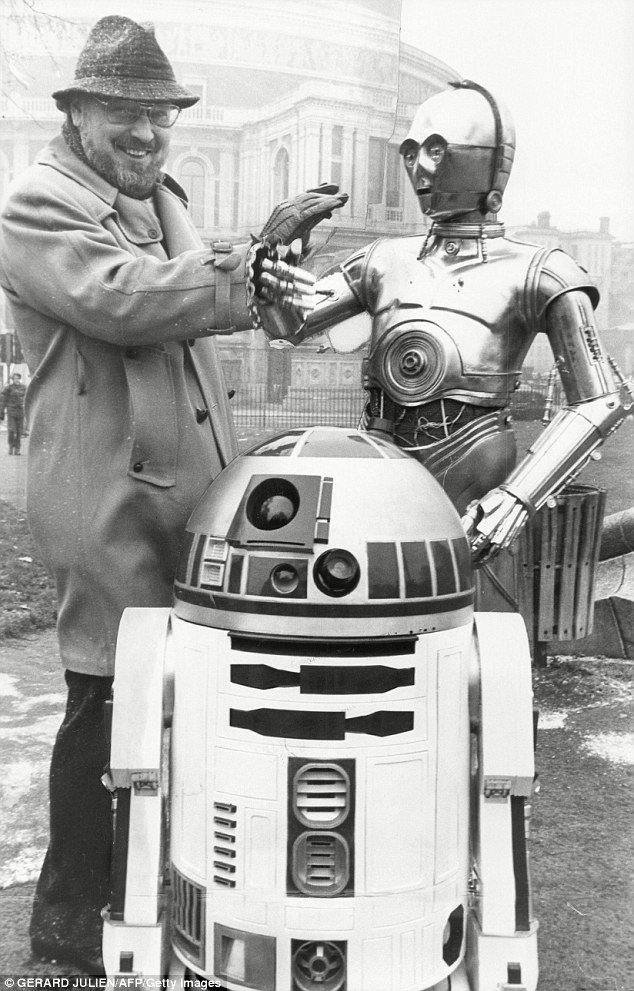
Well, whaddya know? Just when you thought there wasn’t an award he hasn’t already received, John Williams has been knighted.
On Queen Elizabeth II’s final awards list, Williams was granted the honorary title of KBE (Knight of the British Empire). Of course, in order to be formally addressed as “Sir,” he would have to become a British citizen.
Musically, Williams has been a lifelong anglophile. He has also been a frequent collaborator with the London Symphony Orchestra.
His scores to “Star Wars,” “The Fury, “Superman,” “Dracula,” “The Empire Strikes Back,” “Raiders of the Lost Ark,” “Monsignor,” “Return of the Jedi,” “Harry Potter and the Sorcerer’s Stone,” “The Phantom Menace,” “Attack of the Clones,” “Harry Potter and the Chamber of Secrets,” “Harry Potter and the Prisoner of Azkaban,” and “Revenge of the Sith” were all recorded with the LSO.
Furthermore, there would be no “Star Wars” or “Williams sound,” for that matter, without the influence of Sir William Walton, Ralph Vaughan Williams, Sir Edward Elgar, and Gustav Holst.
“You have chosen… wisely.”
A brief history of Williams’ special relationship with the London Symphony Orchestra
If you’re curious, here’s a program of all the music played at the Queen’s funeral today.
Happy to see a selection from Vaughan Williams’ 5th Symphony made it, albeit in transcription for organ. Also “O Taste and see,” his setting of Psalm 34, first sung at the Queen’s coronation in 1953.
Curious to find Malcolm Williamson on the roster, as surely he was the most controversial of Masters of the Queen’s music. (He was notorious for missing deadlines.) Pleased to note his inclusion, nonetheless. An underappreciated composer.
Judith Weir, current Master of the King’s Music, and Sir James MacMillan have written new works for the occasion.
Thank you so much to Colin Curless, who directed me to this touching article (linked below) about Queen Elizabeth II and her exceptional kindness to Benjamin Britten toward the end of his life. Britten enjoyed a special relationship with the Royal Family. The Queen Mother was a patron of the Aldeburgh Festival, founded by Britten in 1948, and the Queen, by all appearances, was a good friend over at least the course of his last decade.
Britten wrote an opera, “Gloriana,” as part of the celebrations surrounding Elizabeth’s coronation in 1953. It was given its premiere at Covent Garden with members of the Royal Family, including the Queen, in attendance. The opera, which portrayed Elizabeth I in what many considered an uncomfortably human light, was downbeat and “modern” and rather coolly received. If Elizabeth II didn’t care for it, she didn’t hold it against him. In fact, the composer was left with the impression that she was “delighted and flattered.”
The Queen opened the Snape Maltings Concert Hall at Aldeburgh in 1967, for the festival’s 20th anniversary. After the hall was damaged by fire in 1969, again she was in attendance at its reopening in 1970.
Britten never spoke publicly about his sexuality and was very careful about public displays of affection with his muse and life partner, the tenor Peter Pears. Nevertheless, the couple came under scrutiny of the police and at one point Britten wondered if Pears would have to be set up in a sham marriage.
It was only in 1967 that same-sex relationships were decriminalized in England. (In Scotland, it was not until 1981, and in Ireland 1993.) Although homosexuality was illegal in the UK for the first 54 years of Britten’s life, the Queen tacitly acknowledged his and Pears’ relationship, and after the composer’s death, she sent Pears a personal message of condolence. In all, Britten and Pears were creative and personal partners for almost 40 years.
When Britten died in 1977, his memorial service at Westminster Abbey was headed by the Queen Mother. It’s believed that Britten had declined a knighthood some years earlier (oddly, there doesn’t seem to be a record of it), but toward the end of his life, he accepted a life peerage.
This article is the first time I ever heard that he was offered the post of Master of the Queen’s Music – unusually, by Elizabeth herself, rather than an assistant, in advance of a public announcement – which Britten felt he had to turn down in light of his failing health.
You can read more about the Queen and Britten here:
No one seems to have posted online the definitive recording of Britten’s “A Birthday Hansel,” with Pears and harpist Osian Ellis, the work composed for the Queen Mother referenced in the article. (There are other performances available if you search on YouTube.) However, I did come across this interesting 10-minute documentary, full of fascinating footage and commentary. The Queen makes an appearance around the 7-minute mark.
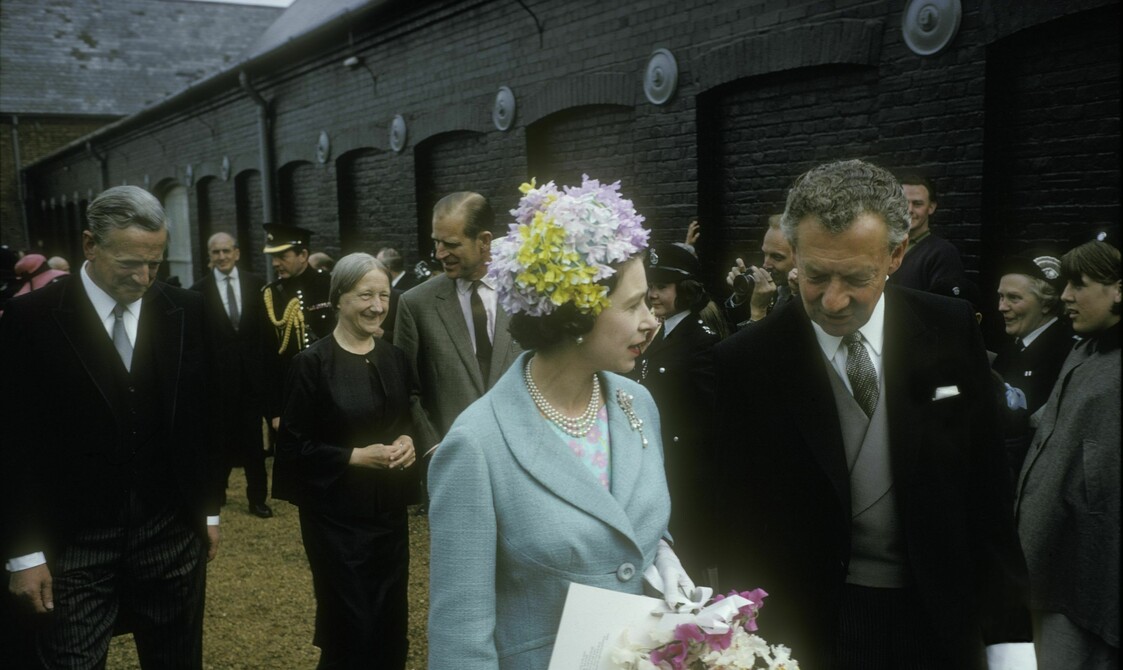
PHOTO: Britten and the Queen at Aldeburgh. In the background, left to right, Peter Pears, Imogen Holst (daughter of Gustav, a composer herself who served as Britten’s assistant), and Prince Philip
Naturally, the death Queen Elizabeth II this week had me reflecting on all the music that was written for her. The coronation music alone could fill many hours, to say nothing of all the ceremonial and occasional pieces churned out over the course of her 70-year reign. It’s crazy to think that Sir Edward Elgar, so much an historical figure in our minds, wrote his “Nursery Suite” for then-Princess Elizabeth and her sister, Margaret.
Eric Coates. Sir Arnold Bax. Sir William Walton. Ralph Vaughan Williams. Herbert Howells. Sir Arthur Bliss. Sir William Walton. Benjamin Britten. Malcolm Williamson. Judith Weir. Many, many others, all wrote music for the Queen.
Be that as it may, this Sunday night on “The Lost Chord,” we’ll broaden our scope even further to listen to music written for the Royal Family.
We’ll hear the “Suite for the Birthday of Prince Charles” by Sir Michael Tippett, the “Naxos” Quartet No. 8, composed for the Queen’s 80th birthday by Sir Peter Maxwell Davies, and “The Thistle and the Rose,” commissioned by Charles for the 90th birthday of the Queen Mother, by Patrick Doyle – a composer best known for his film scores, especially those for Kenneth Branagh.
This is a rebroadcast from 2009, so don’t be scandalized if you hear King Charles III referred to as “Prince Charles” or Maxwell Davies alluded to as the “current Master of the Queen’s Music.” (Max died in 2016.)
I hope you’ll join me for a diadem of music for the House of Windsor. That’s “Sounds Imperial,” this Sunday night at 10:00 EDT, on WWFM – The Classical Network and wwfm.org.
The BBC has cancelled the last two Proms, out of respect for the Queen’s passing. Last night, barely an hour after her death was announced, the Philadelphia Orchestra took the stage of Royal Albert Hall to play “God Save the Queen” and “Nimrod” from Elgar’s “Enigma Variations.”
Traditionally, the Last Night of the Proms is a raucous affair, marked by audience participation and lots of flag-waving, “popular” in the truest sense. Many people attend the event that ordinarily would never set foot in a concert hall. Certainly, you’re not going to please everyone, but might not the scheduled programs have been altered to include selections of a more suitable mood?
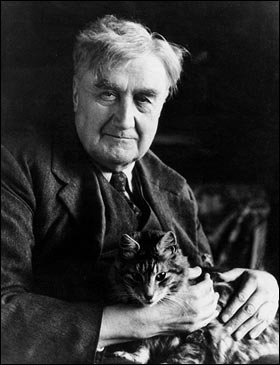
The music of Ralph Vaughan Williams has been very well-represented on this year’s Proms, as well it should be, in his sesquicentennial year. Interestingly, it turns out that the Queen was an admirer of Vaughan Williams’ Symphony No. 5. This serene work by a 71 year-old composer bears a message of consolation and hope and has been offering solace to audiences since its premiere in June 1943 – the height of World War II – introduced on a Prom concert at Albert Hall, no less. An air-raid warning sounded before the concert, but was ignored.
Might not this favorite of the Queen, a symphony of such national significance and great humanity, have been substituted, rather than simply turning out the lights and leaving everyone to pass the evenings at home with their phones and tellies?
Vaughan Williams’ Symphony No. 5
“O Taste and See,” composed for the Queen’s coronation in 1953