Tag: Ross Amico

  • Martinu Trio Celebrates 300 Likes & Views

    Martinu Trio Celebrates 300 Likes & Views

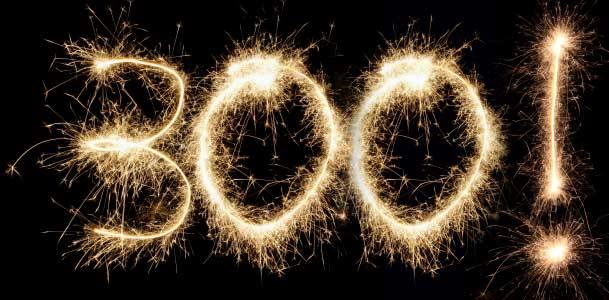
    My goodness, I hit 300 likes last night! Honestly, I don’t feel a day over 299. Thank you all for helping me build this little Facebook empire.

    To celebrate, here’s a performance of the prolific Czech composer Bohuslav Martinu’s Trio for Flute, Cello and Piano, H. 300, very well played by young performers. (Coincidentally, it looks as if the YouTube video has received a little over 300 views.)

    Martinu is a sleeping giant among 20th century composers. The only reason I can imagine that his music is not better known is that there is simply so overwhelmingly much of it, and all of it is of a comparatively similar (that is to say, very high) quality.

    The “H,” if you’re curious, refers to a system of cataloguing Martinu’s works that was prepared by the Belgian musicologist Harry Heilbreich, first introduced in 1968.

    Have a slice of cake (it’s only 300 calories), enjoy the Martinu, and thanks again for liking Classic Ross Amico!

  • Ralph Vaughan Williams Birthday Celebration

    Ralph Vaughan Williams Birthday Celebration

    It’s never truly autumn until we can celebrate the birthday of Ralph Vaughan Williams. One of England’s greatest composers, Vaughan Williams looked back to his country’s agrarian roots as a roundabout way of securing the future of its cultural identity. This Thursday morning on WPRB, we will salute the great man in all his rumpled glory by sampling from a broad cross-section of his multifaceted output.

    As did so many composers who were caught in the wildfire of nationalism that swept across Europe from the mid-19th century forward, Vaughan Williams rebelled against the prevailing academicism that stretched its tendrils all the way from Germany to choke the musically “provincial” outlands. He emerged from an environment that had produced far too many knock-offs of Mendelssohn and Brahms. Vaughan Williams would revolutionize his compatriots’ perception of art music by embracing the sounds of the English countryside.

    However, much like Béla Bartók, he was no simplistic, twee purveyor of folk music. On the contrary, the rhythms and inflections of his native land were already in his DNA. The songs he documented while roaming the fields and fens with his colleague, Gustav Holst, merely brought to the surface what was already innate. What he expressed in his original music was thoroughly digested and deeply personal.

    Some of Vaughan Williams’ best loved works are imbued with nostalgia for a faded world, but the composer pushed forward, as well, through two world wars and into the Great Beyond. He was not a conventionally religious man, but mysticism seems to color a fair amount of his music. Other pieces stare desolation unflinchingly in the face. His lessons with Maurice Ravel made him a thoughtful orchestrator, so that throughout his life he deployed his instrumental forces with considerable creativity and expertise. Given the proper attention, there is much to engage on all levels of his music.

    I hope you’ll join me as we salute this fascinating composer with five hours of lesser-known works and recordings of historic significance. While you might not want to take his instruction on the best way to tie ties, musically you will be in the hands of a master, this Thursday morning from 6 to 11 EDT on WPRB 103.3 FM and wprb.com. You can put your faith in Ralph (pronounced “Rafe”), on Classic Ross Amico.


    Ralph Vaughan Williams Society

  • Age of Exploration Music Adventure on WPRB

    Age of Exploration Music Adventure on WPRB

    No smartphones. No Starbuck’s. No 7-Elevens.

    In their place, strange microbes, uncharted shoals, unknown perils.

    Once they left, they were really gone, and they didn’t know when – or if – they were coming back. Now that’s adventure!

    Regardless of how you may personally feel about some of the behavior of the great European explorers, you have to admit, they had cojones.

    This Thursday morning on WPRB, in advance of Columbus Day, the focus will be on the Age of Exploration, the push, beginning in the late 15th century, toward discovery – and yes, in many cases, conquest and colonization – of new lands.

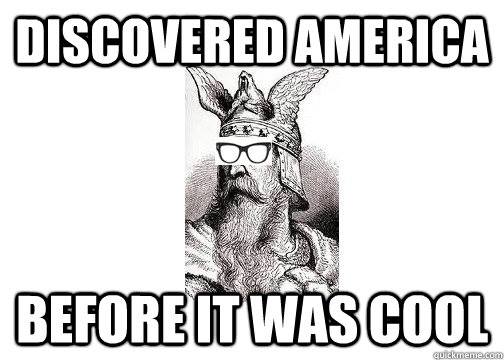
    We’ll hear music inspired by Henry Hudson, Sir Walter Raleigh, Juan Ponce de Leon, Francisco Pizarro, and of course Christopher Columbus. We’ll even include a few works in honor of Icelandic explorer Leif Erikson, who arrived in North America 500 years before Columbus’ first voyage.

    As a special treat, Sir Edmund Hillary will narrate “Landfall in Unknown Seas,” composed by Douglas Lilburn to commemorate the 300th anniversary of the arrival of Abel Tasman in New Zealand. From the early years of the 20th century, we’ll travel to the polar regions with Roald Amundsen and Robert Falcon Scott. And to bring us up to the present, we’ll listen to Joaquin Rodrigo’s salute to NASA and its commitment to the final frontier, “In Search of the Beyond.”

    For centuries, the great explorers were celebrated as heroes. In more recent decades, the best we can hope for is a more nuanced view. But consider this: without the courage of these bold rascals, where would most of us be? On an overcrowded continent without coffee or potatoes. That sounds like a very cranky existence indeed.

    I hope you’ll be able to rise above any personal revulsion to join me for these armchair explorations, this Thursday morning from 6 to 11 EDT, on WPRB 103.3 FM and wprb.com. We’ll provide the suntan lotion and mosquito repellant, on Classic Ross Amico.
  • Yom Kippur Music on WPRB

    Yom Kippur Music on WPRB

    Yom Kippur begins on Friday evening. The holiest day of the Jewish calendar caps ten Days of Awe and Repentance, which began with the Jewish New Year on Rosh Hashanah. This Thursday morning on WPRB, we’ll mark the Jewish High Holy Days with a full playlist of music on Jewish themes.

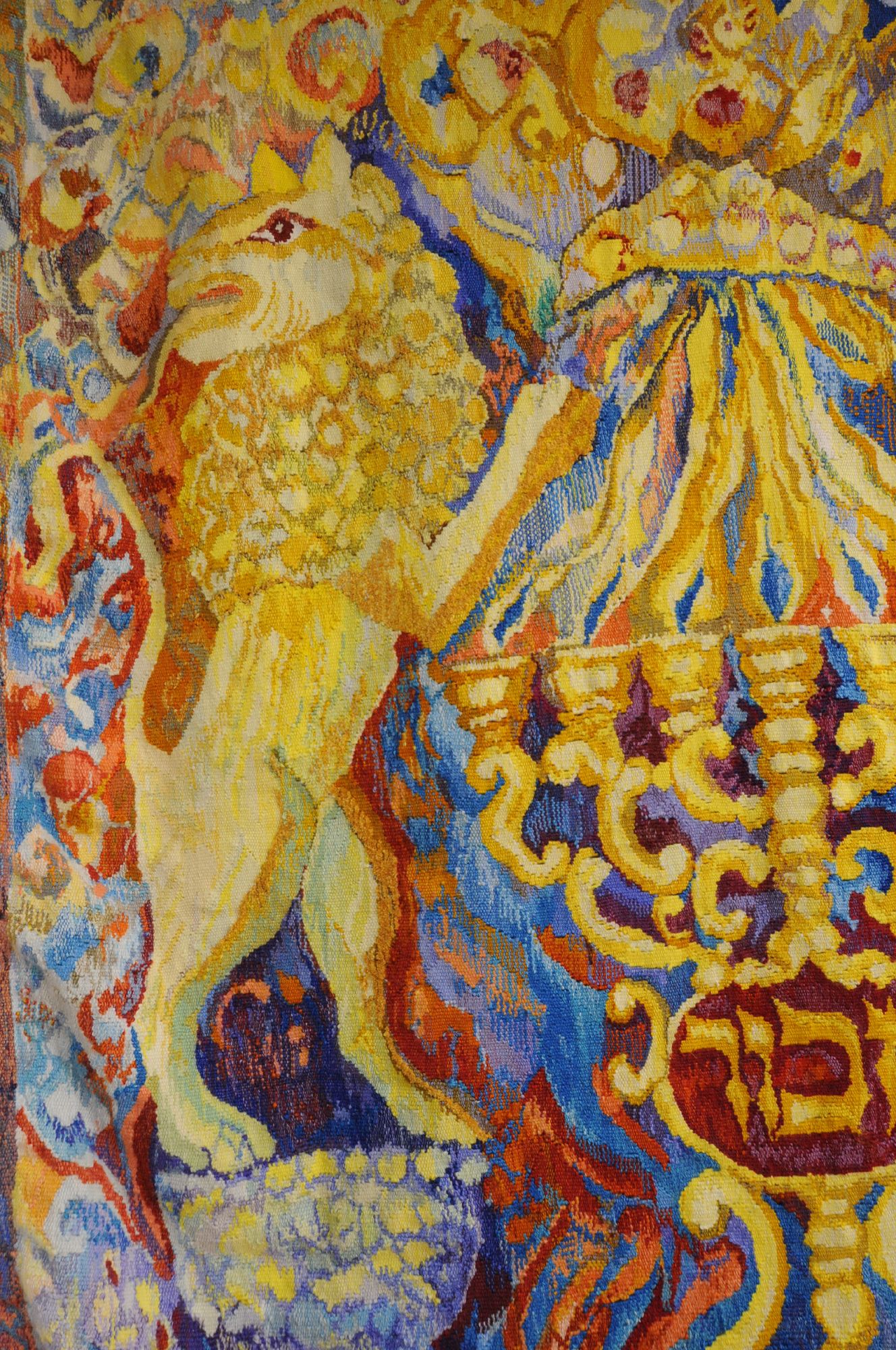
    We’ll begin with some evocations of the shofar, in Aaron Minsky’s “Judaic Concert Suite” and David Stock’s “Tekiah,” then progress through several arrangements of the Yom Kippur prayer Kol Nidre — by Jacob Weinberg, Arnold Schoenberg, Emil Nikolaus von Reznicek (of “Donna Diana Overture” fame), and of course Max Bruch — and arrive finally at Thomas Beveridge’s “Yizkor Requiem,” which beautifully consolidates the Jewish and Catholic liturgies for the dead. Along the way, there will be a symphony, some dances, and even a collection of tone portraits of the stained glass windows of Abell Syagogue at Hadassah University Medical Center in Jerusalem, which depict the Twelve Tribes of Israel.

    If you’re looking for music for the High Holidays, I’m your goy, this Thursday morning from 6 to 11 EDT, on WPRB 103.3 FM and wprb.com. Wishing you a sweet and happy 5778, on Classic Ross Amico.

  • Rosh Hashanah Playlist: Music of Creation

    Rosh Hashanah Playlist: Music of Creation

    L’shana tova! Rosh Hashanah begins at sundown. The Jewish New Year marks the traditional anniversary of the creation of Adam and Eve.

    This Thursday morning, though the observant will likely be in synagogue as I present my weekly show on WPRB, I thought I would try to tie in loosely with the celebrations by assembling a playlist of music about the creation of the world. We’ll hear Aaron Copland’s “In the Beginning,” the Adam and Eve duet from Franz Joseph Haydn’s oratorio “The Creation,” Jerome Moross’ Adam and Eve ballet “The Last Judgment,” and the “Creation Symphony” by Scottish composer William Wallace.

    Not all of the selections will derive from the Judeo-Christian tradition. We’ll also hear Alberto Ginastera’s “Popol Vuh,” after the Mayan creation story; Darius Milhaud’s “La Création du monde,” inspired by African creation myths; “The Creation of the World” from the “Edda Oratorio” by Icelandic composer Jon Leifs; and Jean Sibelius’ “Luonnotar,” after a passage from the Finnish national epic, the Kalevala.

    Some of the music will tie in very loosely indeed. Sir Arthur Bliss’ ballet “Adam Zero” begins with the birth of Adam, then sets him on an allegorical journey through the cycle of life. Romeo Cascarino’s “Pygmalion” is a beautiful metaphor for the artist who falls in love with his own creation.

    One of the morning’s true curiosities will be a collaborative effort organized by composer and conductor Nathaniel Shilkret, who managed to cajole a number of the day’s greatest talents, then living in California, into contributing to a seven movement piece for narrator, chorus and orchestra. The individual movements of the “Genesis Suite” were composed by Arnold Schoenberg, Alexandre Tansman, Mario Castelnuovo-Tedesco, Ernst Toch, Igor Stravinsky, Milhaud and Shilkret himself.

    The creation of the heavens and the earth may have taken six days, but we’ve got only five hours this Thursday morning, from 6 to 11 EDT, on WPRB 103.3 FM and wprb.com. I’ll be sending you best wishes for a sweet new year, from Classic Ross Amico.


    IMAGE: Adam and Eve (1526) by Lucas Cranach the Elder

    “Is there any honey on that apple?”

Tag Cloud

Aaron Copland (92) Beethoven (95) Composer (114) Film Music (123) Film Score (143) Film Scores (255) Halloween (94) John Williams (187) KWAX (229) Leonard Bernstein (101) Marlboro Music Festival (125) Movie Music (138) Opera (202) Philadelphia Orchestra (89) Picture Perfect (174) Princeton Symphony Orchestra (106) Radio (87) Ralph Vaughan Williams (85) Ross Amico (244) Roy's Tie-Dye Sci-Fi Corner (290) The Classical Network (101) The Lost Chord (268) Vaughan Williams (103) WPRB (396) WWFM (881)

DON’T MISS A BEAT

Receive a weekly digest every Sunday at noon by signing up here


RECENT POSTS