
Tag: Roy Harris

  • Election Day Music on The Classical Network

    Election Day Music on The Classical Network

    Election Day. I found these Uncle Sam clothespins for you to wear in the voting booth. Just like Grandma used to make.

    Once you’ve completed your civic duty, I hope you’ll join me on The Classical Network for today’s Noontime Concert, a recital with commentary by harpsichordist Dylan Sauerwald. Sauerwald will present “Clashing Influences: Vienna in the Late 17th Century,” with works by Johann Caspar Kerll and Georg Muffat. The program, part of the free midday concert series presented by Gotham Early Music Scene (or GEMS), was recorded at Saint Bartholomew’s Church, 50th Street and Park Avenue, in New York City. The concerts are held every Thursday at 1:15 p.m. This 45-minute broadcast recital will commence this afternoon at 12.

    Interestingly, the music was written at a time when Columbia (then Columbina) was but a glint in Samuel Sewall’s eye. Sewall, of Salem witch trials notoriety, was the creator of one of the most enduring symbols of our future republic.

    Later in the afternoon, I’ll be joined by Eric Houghton and Ruth Ochs of the Westminster Conservatory of Music. Houghton’s “Pioneer Songs” will be performed at Patriots Theater at the War Memorial in Trenton this Saturday at 7:30 p.m. The cycle of fifteen symphonic songs, for vocal soloists, choir, and narrator, celebrates the first successful passage of wagon trains to California in the 1840s. Ochs will conduct the performance, which will feature the Westminster Community Orchestra, the Westminster Community Chorus, and the Glassbrook Vocal Ensemble. Our interview will take place at 3 p.m.

    Along the way, we’ll also hear Roy Harris’ Symphony No. 9, dedicated to the city of Philadelphia. Harris was himself a product of the prairies. He was born in a log cabin in Lincoln County, OK, on Lincoln’s birthday, February 12, 1898. Though he was celebrated in the 1930s and ‘40s as one of our great American symphonists, by 1962, the year of his Ninth Symphony, his reputation had plummeted. Harris’ music is a fascinating blend of the old and new. I always think of him as an American Sibelius. His symphonies are tied closely to the land and to the American character of his prime – confident, morally certain, and totally devoid of irony. Each movement of the Ninth sports an epigraph from the U.S. Constitution; the last is lent further gravitas through the inclusion of subtitles drawn from Whitman.

    I can’t promise it will be an all-American afternoon, but I can guarantee that we’ll be united in music, today from 12 to 4 p.m. EST, on WWFM – The Classical Network and wwfm.org.
  • Lincoln’s Legacy in Music on The Lost Chord

    Lincoln’s Legacy in Music on The Lost Chord

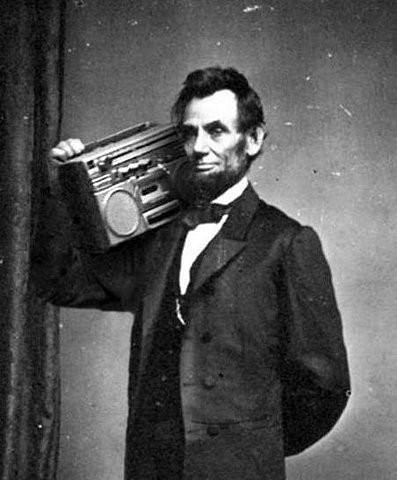
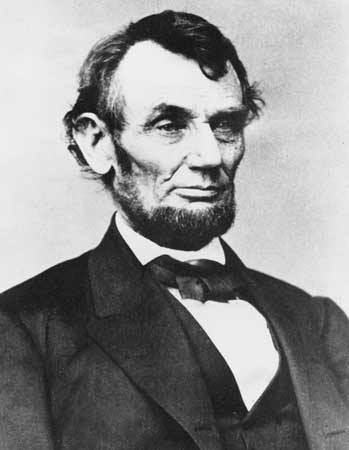
    Abraham Lincoln, 16th President of the United States. Above and beyond his own considerable accomplishments, Lincoln has inspired a lot of music. This Sunday on “The Lost Chord,” we’ll honor him on his birthday, with three diverse works.

    Composer David Diamond set the Gettysburg Address as “On Sacred Ground,” a work for mixed chorus, children’s chorus, baritone solo and orchestra. The piece was given its first performance two days before the centenary of Lincoln’s delivery of the actual Address, which he spoke on November 19, 1863. We’ll hear it tonight, to start.

    Then, as a bit of a palate-cleanser, we’ll listen to Paul Turok’s buoyant “Variations on an American Song: Lincoln and Liberty,” also composed in 1963. The melody is based on a traditional Irish fiddle tune, “Rosin the Bow,” which had been outfitted with new lyrics for use in Lincoln’s 1859 presidential campaign:

    “Then up with our banner so glorious,
    The star-spangled red-white-and-blue,
    We’ll fight till our Cause is victorious,
    For Lincoln and Liberty, too!”

    Finally, we’ll return to Gettysburg and music by American composer Roy Harris, who shares Lincoln’s birthday, though born 89 years apart. Furthermore, Harris was born in a log cabin in Lincoln County, Oklahoma. If that doesn’t fill one with a sense of destiny, I don’t know what will!

    In his day, Harris was regarded as one of America’s greatest composers, particularly renowned for his symphonies. His Symphony No. 3 is his most famous work; what we’ll be hearing is the Symphony No. 6, subtitled “Gettysburg.”

    Each movement bears a superscription taken from the Gettysburg Address.

    I. Awakening (“Fourscore and seven years ago…”);

    II. Conflict (“Now we are engaged in a great civil war…”);

    III. Dedication (“We are met on a great battlefield of that war…”);

    IV. Affirmation (“…that we here highly resolve that these dead shall not have died in vain…).

    It’s all music in honor of the Great Emancipator. I hope you’ll join me for “Lincoln Portraits,” this Sunday night at 10:00 EST, on WWFM – The Classical Network and at wwfm.org.

  • Roy Harris Neglected Genius of American Symphony

    Roy Harris Neglected Genius of American Symphony

    Roy Harris was born on Lincoln’s birthday, in a log cabin in Lincoln County, Oklahoma. Did he let it go to his head? Maybe. He went on to become one of America’s greatest composers.

    He basically drove a milk truck while studying with “American Indianist” composer Arthur Farwell. Contacts in the East got him touch with Aaron Copland, who put in a good word with Nadia Boulanger. Harris was one of the legions of composers who studied with Boulanger in Paris.

    Back home, he attracted the attention of Serge Koussevitzky, then music director of the Boston Symphony Orchestra. It was Kouss who first performed Harris’ “Symphony 1933.” But the real pay dirt came with Harris’ Symphony No. 3, regarded then, as now, as one of the finest American symphonies. Its tightly-argued, single-movement structure manages to recall Renaissance polyphony, Jean Sibelius, and the American prairie. It was the perfect work for its time, with the world teetering at the brink of war and the country starting to emerge from the Great Depression.

    Yet, for some reason, the composer of this most-revered symphony is also one of our most neglected. In fact a number of his symphonies have yet to be recorded. Why?

    Tune in at 8:30 this morning to enjoy Harris’ Symphony No. 6, “Gettysburg,” which takes its impetus from the Gettysburg Address. It’s all music honoring the presidents, on this, Lincoln’s birthday, until 11:00 this morning on WPRB 103.3 FM and at wprb.com

  • Ormandy’s Lost American Music Rediscovered

    Ormandy’s Lost American Music Rediscovered

    I hope you’ll join me tonight on “The Lost Chord,” as we round out our trilogy of programs featuring rarely-heard recordings of American music by Eugene Ormandy and the Philadelphia Orchestra.

    We’ll hear two songs (originally from a collection of five), after texts of William Blake, by Virgil Thomson; Roy Harris’ underrated Symphony No. 7, in a powerhouse performance; and Louis Gesensway’s “Four Squares of Philadelphia.”

    Gesensway was born in Latvia in 1906. A violin prodigy, he was one of the founders of the Toronto Symphony Orchestra. He came to Philadelphia at the age of 19, where he played in the orchestra under Stokowski and Ormandy.

    In his mid-20s, he took a leave of absence to study composition with Zoltán Kodály. “Four Squares of Philadelphia” was described by the composer as a “symphonic poem for large orchestra, narrator and street criers.”

    The piece opens with a recitation of William Penn’s prayer, then continues with musical evocations of Washington Square (captured in early morning, during Colonial times, with street criers hawking their wares), Rittenhouse Square (on a bright and cheerful afternoon), Logan Square (with its fountains at dusk), and Franklin Square (at night, reflective of noisy bridge traffic, with a side excursion into Chinatown, and interjections from the honky tonk joints located around the square in the 1950s).

    I hope you’ll join me for one more trip to the well, with “All-American Ormandy III,” tonight at 10 ET, or that you’ll listen to it (while you’re sitting in traffic, no doubt) when the show repeats Thanksgiving eve at 6. If your family is stressing you out, you can always catch it later as a webcast at wwfm.org.


    PHOTO: Statue of Penn high atop the city he founded

Tag Cloud

Aaron Copland (92) Beethoven (95) Composer (114) Film Music (119) Film Score (143) Film Scores (255) Halloween (94) John Williams (185) KWAX (229) Leonard Bernstein (99) Marlboro Music Festival (125) Movie Music (134) Opera (198) Philadelphia Orchestra (86) Picture Perfect (174) Princeton Symphony Orchestra (106) Radio (87) Ralph Vaughan Williams (85) Ross Amico (244) Roy's Tie-Dye Sci-Fi Corner (290) The Classical Network (101) The Lost Chord (268) Vaughan Williams (102) WPRB (396) WWFM (881)

DON’T MISS A BEAT

Receive a weekly digest every Sunday at noon by signing up here


RECENT POSTS