Tag: Rudolf Serkin

  • Max Reger

    Max Reger

    His surname reads the same forward and backward; which is oddly appropriate for a composer whose music plenty of listeners have felt doesn’t seem to really go anywhere. But knowing what I do of Max Reger, I’m sure he couldn’t have cared less about other people’s opinions.

    Perhaps the craziest exemplar of crazy German contrapuntalism, Reger could write music of such density that the individual voices could get lost in a tangle, deep inside a knot, somewhere in an impenetrable thicket.

    He was mostly a composer of “abstract” music – mainly a lot of fugues and sets of variations – seeing himself as the heir of Beethoven and Brahms. But it is the Baroque masters Reger most closely resembles, in his own gargantuan, overcooked way, especially in his organ works, of which he composed many.

    Aside from his sporadically delightful (though occasionally borderline) “Variations and Fugue on a Theme by Mozart” and a handful of organ works, most of his prolific output is known mainly by specialists. For some reason or another, Rudolf Serkin remained a high-profile torchbearer. Serkin recorded Reger’s Piano Concerto with the Philadelphia Orchestra and, later in life, the “Variations and Fugue on a Theme of Bach.”

    To me, Reger comes closest to being palatable – and even charming – when restricted to a single, non-keyboard instrument, as in his sonatas for solo violin and suites for solo cello.

    Also, it sounds like he may have actually had some fun composing his “Four Tone Poems after Arnold Böcklin.” Böcklin, you may recall, was the Swiss artist who painted “The Isle of the Dead,” which inspired the third of these. Surprisingly, the tone poems are late works. Did anyone see them coming? I guess after a lifetime of getting all tangled up, Reger just wanted to walk around with loose shoelaces for a change.

    Despite the fact that in most of his photos he looks like he’s got a mouth full of sauerkraut, Reger actually proved himself to have a sharp sense of humor. His most famous retort to a critic came in the form of a letter written in 1906. It reads: “I am sitting in the smallest room of my house. I have your review in front of me. Soon it will be behind me.”

    Reger, you rascal. Why couldn’t you get more of that into your music?

    On the occasion of his sesquicentenary, happy 150th, Max Reger!


    “Variations and Fugue on a Theme by Mozart”

    “Fantasy and Fugue on B-A-C-H”

    Rudolf Serkin plays the “Variations and Fugue on a Theme by Bach”

    Serkin plays the Piano Concerto

    Sonata for Unaccompanied Violin in G Major, Op. 91, No. 6

    Mov’t I https://www.youtube.com/watch?v=rW4Jk3zmbzg
    Mov’t II https://www.youtube.com/watch?v=SKfGFwQZgeg
    Mov’t III https://www.youtube.com/watch?v=8u_sWKiLc60
    Mov’t IV https://www.youtube.com/watch?v=yoaTz5mVuXg

    Suite for Unaccompanied Cello in G Major, Op. 131c, No. 1

    “Four Tone Poems after Arnold Böcklin,” with the paintings that inspired them (let the playlist run)


    PHOTOS: The many moods of Max Reger (1873-1916)
  • Remembering Peter Serkin Marlboro Legend

    Remembering Peter Serkin Marlboro Legend

    With the passing of Peter Serkin on Saturday at the age of 72, a major voice of the Marlboro Music Festival has fallen silent. On this week’s “Music from Marlboro,” we’ll pay tribute to this extraordinary artist.

    Serkin was barely beyond a toddler when his father, Rudolf Serkin, and maternal grandfather, Adolf Busch, co-founded the Marlboro Music School and Festival in 1951. Rudolf Serkin, of course, was one of the great pianists of the 20th century. Busch, his frequent recital partner, was the noted violinist, composer, and anti-fascist. As you can imagine, that’s quite a legacy to have to live up to!

    Naturally, the younger Serkin was absorbed into the family trade and soon developed into a brilliant musician in his own right. He was already performing in public at the age of 12. At 19, he was recognized with a special Grammy Award.

    But in his early 20s, the business of making music began to ring hollow. He became frustrated with the grind of being a performer and disagreed with the way in which musicians’ interpretations were being evaluated. He decided it was time to do some serious soul-searching.

    In the late ‘60s, he turned his back on the concert platform to confront bigger questions in his own life. He dropped out, traveled to India, and moved to rural Mexico to seek peace with his wife and daughter.

    Then one Sunday morning, he happened to overhear Bach being broadcast over a neighbor’s radio. It was then that he felt the tug back to his true calling.

    When he returned, it was with a freshness of purpose. Serkin employed his intelligence and introspection in probing more deeply into the classics and in exploring new frontiers with contemporary music.

    Of all the great chamber ensembles that had their roots in Marlboro, few were more adventurous than Tashi, a group Serkin co-founded. It was a Marlboro performance of Messiaen’s “Quartet for the End of Time” that inspired him to form the group, alongside Ida Kavafian, Fred Sherry, and Richard Stoltzman. Their recording of the quartet is still venerated as the benchmark.

    Among composers who wrote works specifically for Serkin were Luciano Berio, Oliver Knussen, Peter Lieberson, Bright Sheng, Toru Takemitsu, and Charles Wuorinen. He was also an ardent champion of the music of Stefan Wolpe.

    We’ll celebrate Peter Serkin this evening, with two recordings tied to his Marlboro experiences.

    An affection for Max Reger is something Peter held in common with his father and grandfather. He recorded Reger’s Cello Sonata No. 4 in A minor, with Mischa Schneider, at Marlboro in 1963. The composer’s characteristic tension between Baroque polyphony and fin de siècle chromaticism holds no terrors for either musician. Serkin was only 16 when he sat down before the microphones.

    Then Peter will join Rudolf Serkin for an ebullient performance of Mozart’s Concerto for Two Pianos, recorded in New York the previous year, with the Marlboro Festival Orchestra conducted by Alexander Schneider.

    PLEASE NOTE: This Peter Serkin tribute is too great to be confined within a single hour. Because of the musical content of this evening’s program, “Music from Marlboro” will begin FIVE MINUTES EARLIER THAN USUAL, at 5:55 EST. Set your watches and dial us up early to enjoy my scintillating intro, on WWFM – The Classical Network and wwfm.org.

    Marlboro School of Music and Festival: Official Page

  • Beethoven at Marlboro Music Festival

    Beethoven at Marlboro Music Festival

    On this week’s “Music from Marlboro, we’ll hear Beethoven, early and late (maybe), performed by Marlboro artistic directors, past and present.

    It is clear from the Quintet for Piano and Winds, Op. 16, that Beethoven was an admirer of Mozart. The work, written when the composer was in his mid-20s, is evidently modeled on Mozart’s K. 452, scored for the same instrumental combination. It’s even written in the same key (E-flat).

    Beethoven’s Quintet will be performed at the 2012 Marlboro Music Festival by pianist Jonathan Biss, oboist Mary Lynch, clarinetist Tibi Cziger, hornist Wei-Ping Chou, and bassoonist Natalya Rose Vrbsky. Biss was appointed co-artistic director of the school and festival, joining Mitsuko Uchida, in 2018.

    When exactly did Beethoven composer his “Kakadu Variations?” The last of his piano trios was published in 1824. However, the first full manuscript dates from 1816. It’s possible its genesis lay even a good deal earlier than that. Was it a slip when Beethoven wrote to his brother and described the piece as having been composed in 1803? Or on another occasion, when he described it as “among my early works?”

    In any case, it’s thought that the piece underwent substantial revisions. In 1824, Beethoven was churning out masterpiece after masterpiece, including the “Diabelli Variations,” the “Missa solemnis,” and the Ninth Symphony.

    It is curious that the trio opens with such protracted air of solemnity, given its source material. The work’s Papageno-like theme is borrowed from the song “Ich bin der Schneider Kakadu” (“I am Kakadu the tailor”), from Wenzel Müller’s 1794 singspiel “Die Schwestern von Prag” (“The Sisters from Prague”). Müller’s opera had been revived in Vienna in 1814.

    The trunk of Beethoven’s trio is full of whimsy, a series of variations on Müller’s theme. Toward the end, however, the work slips back into a minor key and begins to take on renewed gravitas. The final variation exhibits on an unexpected depth, rigor and maturity, as Müller’s ditty is subjected to an incongruous display of chromatic and contrapuntal complexity.

    We’ll hear the “Kakadu Variations” performed by pianist Rudolf Serkin, violinist Yuzuko Horigome, and cellist Peter Wiley, who played the work at Marlboro in 1983. Serkin, of course, was Marlboro’s founding artistic director, from 1951.

    You can’t beat Beethoven. The composer takes wing, on the next “Music from Marlboro,” this Wednesday evening at 6:00 EST, on WWFM – The Classical Network and wwfm.org.

    Marlboro School of Music and Festival: Official Page

  • Schubert’s Bittersweet Farewell at Marlboro

    Schubert’s Bittersweet Farewell at Marlboro

    Blissful days, you are eternally past!

    On this week’s “Music from Marlboro,” as this year’s Marlboro Music Festival approaches its final weekend, we’ll partake of an hour of bittersweet musings, courtesy of Franz Schubert. Even at the best of times, Schubert’s emotional equilibrium could be extraordinarily sensitive to change. But the works of his final year seem especially intimate – confessional, even.

    Is the melancholy traveler borne out to sea in “Auf dem Strom” (“On the River”) actually parting from life? The narrator is cut off from all human contact. He is unable to hear songs from the distant shore. His memory of his beloved is intense, even as she grows increasingly distant. The text, by Ludwig Rellstab, was originally intended for Beethoven, but Beethoven died before he could set to work on it.

    We’ll hear a performance of this remarkable art song from the 1960 Marlboro Music Festival, featuring soprano Benita Valente, hornist Myron Bloom, and pianist Rudolf Serkin.

    Faced with his own mortality, Schubert reacted as only Schubert could, by churning out masterpiece after masterpiece: two piano trios, three piano sonatas, the String Quintet in C, the song cycle “Schwanengesang,” and “The Shepherd on the Rock,” alongside assorted smaller works, all within the span of only six months. It’s an extraordinary act of defiance, or perhaps acceptance, of the inevitable.

    The haunting second movement of his Piano Trio No. 2 in E-flat major was written just as he received the news that his illness was beyond cure and that the end was near. The music holds the tragic and the romantic in devastating balance.

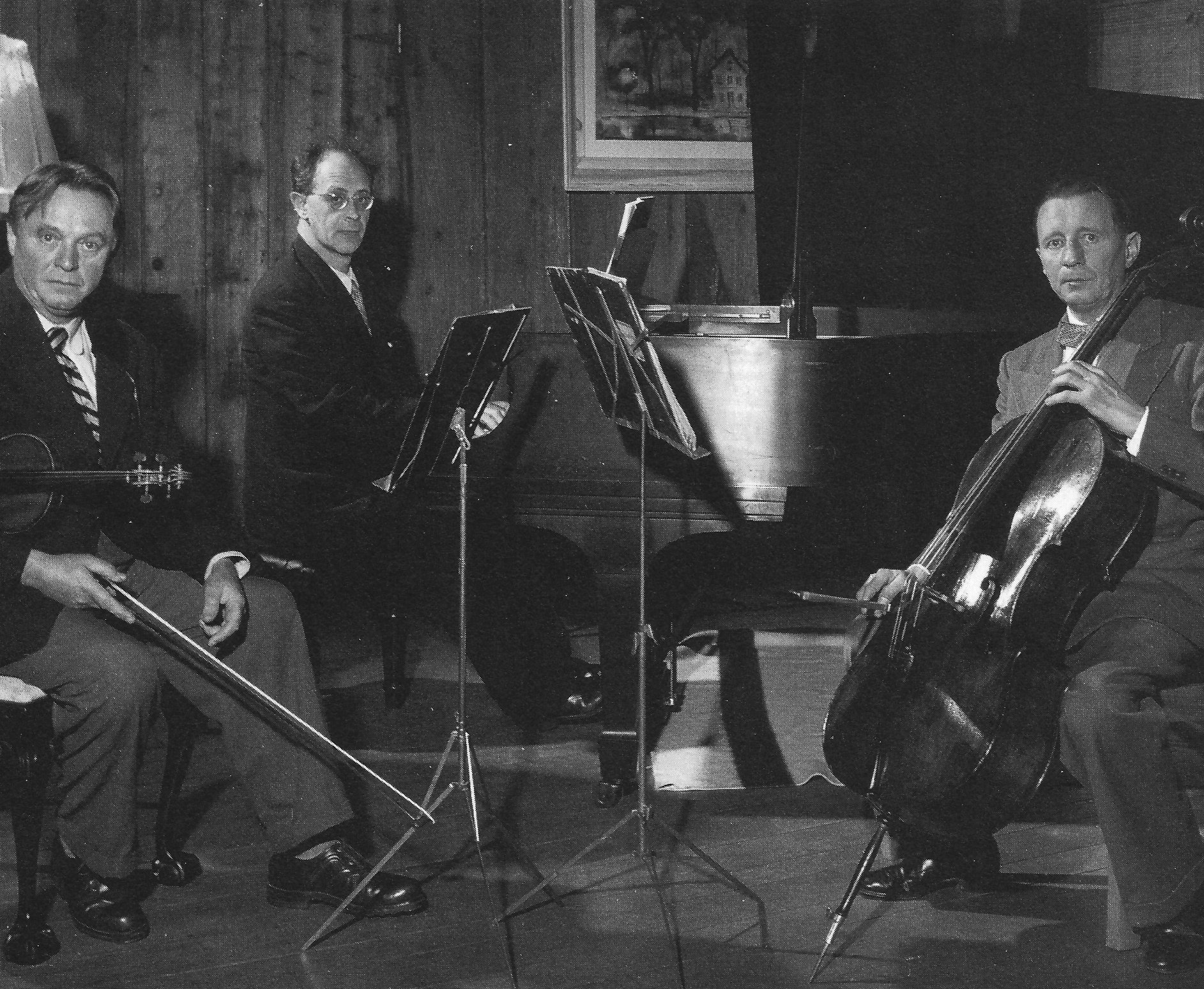
    The entire trio will be heard in a recording made in Brattleboro, VT, all the way back at the beginning, on October of 1951, featuring Marlboro cofounders, pianist Rudolf Serkin, violinist Adolf Busch, and cellist Herman Busch.

    By coincidence, tomorrow, August 8, is Adolf Busch’s birthday. What better way to celebrate than to remember him making music with those he loved?

    Both of these works, by the way, were presented on the only public concert devoted exclusively to Schubert’s music during the composer’s lifetime. The concert was held on the first anniversary of Beethoven’s death, March 26, 1828. Schubert himself would be dead only eight months later, at the age of 31.

    For more information on the concluding weekend of this summer’s Marlboro Music Festival, and its three valedictory concerts, visit marlboromusic.org.

    All good things must come to an end, on the next “Music from Marlboro,” this Wednesday evening at 6:00 EDT, on WWFM – The Classical Network and wwfm.org.

    Marlboro School of Music and Festival: Official Page


    PHOTO: Rudi and the Busches

  • Peter Serkin & Marlboro Music Festival

    Peter Serkin & Marlboro Music Festival

    For some reason, I always equate Peter Serkin in my mind with Peter Fonda. Perhaps it’s because he’s like the Easy Rider of pianists. At one point, he even totally dropped out, moving to Mexico and not playing for a couple of years. When he returned, as often as not, he was a kind of countercultural champion of modernist works (he was one of the founders of the new music ensemble Tashi). But he is, after all, his father’s son (sired by legendary pianist Rudolf Serkin), so Bach and Beethoven have been just as important to him as an artist and as a person.

    Hard to believe that Peter Serkin is 72 years-old today. On this week’s “Music from Marlboro,” we’ll hear a performance of Mozart’s Concerto for Two Pianos (the Piano Concerto No. 10), KV 365, with Peter, at 15, joined in music-making by his Marlboro co-founding father.

    Then we’ll keep our spirits high, as Pablo Casals conducts the Marlboro Festival Orchestra in Franz Schubert’s Symphony No. 5. Schubert was totally under the spell of Mozart at the time of its composition, remarking in his diary, “O Mozart! Immortal Mozart! what countless impressions of a brighter, better life hast thou stamped upon our souls!”

    This summer’s Marlboro Music Festival is about to enter its third weekend, with three concerts on the agenda. The festival’s annual town benefit concert will be held on Friday at 8 p.m., featuring music by Schumann, Stravinsky, Mozart, and György Kurtág. Marlboro co-directors Mitsuko Uchida and Jonathan Biss will appear on separate concerts on Saturday and Sunday. Uchida will be the pianist in Schumann’s Piano Quintet on a program which will also feature music by Schoenberg, on Saturday at 8 p.m. Biss will perform Dvořák’s Piano Trio in F minor on a concert which will also include works by Mozart and Marlboro composer-in-residence Jörg Widmann, on Sunday at 2:30 p.m. For complete listings and more information, visit marlboromusic.org.

    For today, musicians from the renowned chamber music festival take a break from playing chamber music. It’s a well-orchestrated program on this week’s “Music from Marlboro,” this Wednesday evening at 6:00 EDT, on WWFM – The Classical Network and wwfm.org.

    Marlboro School of Music and Festival: Official Page


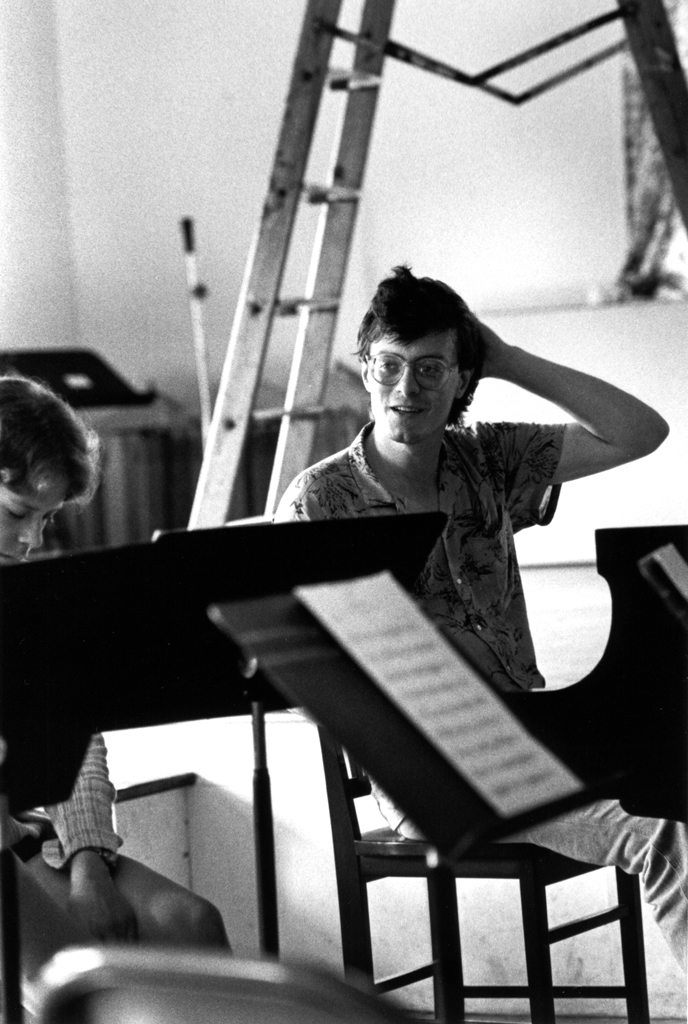
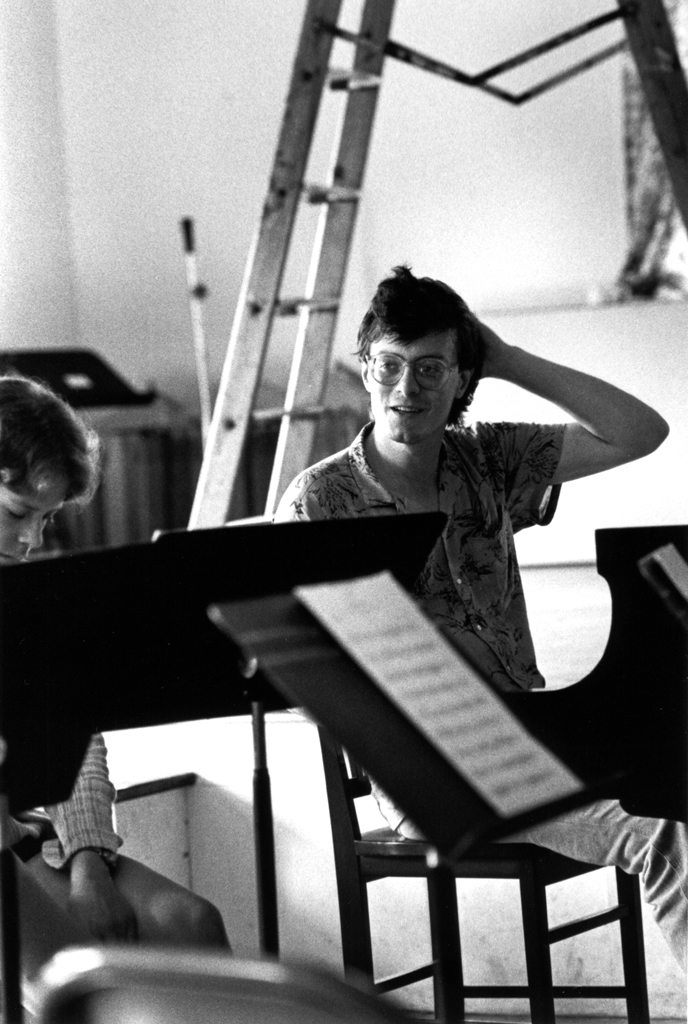
    PHOTO: Young Peter Serkin performs Mozart on today’s broadcast of recordings from the archive of Marlboro Music.

Tag Cloud

Aaron Copland (92) Beethoven (95) Composer (114) Film Music (120) Film Score (143) Film Scores (255) Halloween (94) John Williams (185) KWAX (229) Leonard Bernstein (100) Marlboro Music Festival (125) Movie Music (135) Opera (198) Philadelphia Orchestra (88) Picture Perfect (174) Princeton Symphony Orchestra (106) Radio (87) Ralph Vaughan Williams (85) Ross Amico (244) Roy's Tie-Dye Sci-Fi Corner (290) The Classical Network (101) The Lost Chord (268) Vaughan Williams (103) WPRB (396) WWFM (881)

DON’T MISS A BEAT

Receive a weekly digest every Sunday at noon by signing up here


RECENT POSTS