Tag: Rudolf Serkin

  • Strauss, Busch & Marlboro’s Divergent Paths

    Strauss, Busch & Marlboro’s Divergent Paths

    On the next “Music from Marlboro,” we’ll have works by two German composers who traveled widely divergent paths.

    As the aging elder statesman of Romantic opulence, Richard Strauss was in his late 60s when the Nazis seized control of Germany in 1933. He was 75 at the outbreak of World War II. Controversially, he remained at home, hoping to preserve and promote German music (including his own) and to shield his Jewish daughter-in-law and grandchildren. While comprehending Strauss’ importance as a propaganda tool, Goebels wasn’t actually fond of his music, referring to him privately as a “decadent neurotic.”

    All that was still decades in the future at the time Strauss wrote his Piano Quartet in C minor, in 1883-84, at the tender age of 20. Interestingly, for a composer who became celebrated for the apotheosis of the lavish tone poem, Strauss here channels his admiration for Johannes Brahms, and in a genre not generally associated with a follower of the post-Wagnerian “New Music School.” Brahms was at the height of his fame while the young Strauss was living in Berlin. In fact, Strauss attended the premiere of Brahms’ Fourth Symphony, following his appointment as music director in Meiningen at 21.

    We’ll hear Strauss’ quartet, performed at the 1972 Marlboro Music Festival, with Walter Klien at the keyboard, in his early 40s and at the peak of his pianistic powers. The string players will include violinist Edith Peinemann, violist Philipp Naegele, and cellist Miklós Perènyi.

    Violinist Adolf Busch lived with his family – and friend, future son-in-law Rudolf Serkin – in Berlin in the 1920s, as Serkin established himself as one of Europe’s outstanding young pianists. The musicians remained in Germany until 1927. The much-respected Busch, who was not Jewish, vehemently opposed the National Socialists. He was one of the first prominent non-Jews to do so. With the rise of Hitler, Serkin and the Busches relocated to Switzerland. Busch repudiated Germany entirely in 1933.

    He and Serkin arrived in the United States, with the rest of Busch’s family, in 1938, with Europe on the brink of war. They settled in Vermont in the 1940s. There, alongside flutist Marcel Moyse, they founded the Marlboro Music School and Festival in 1951, having successfully eluded the horrors that had claimed so many others to create something of lasting beauty – a chamber music retreat in what must have seemed like a bucolic paradise.

    In addition to being one of the great violinists, Busch was also a talented composer. We’ll hear his “Divertimento for 13 Solo Instruments,” from 1925, in a 1982 recording featuring Marlboro musicians: Isidore Cohen and Irene Serkin, violins; Caroline Levine, viola; Robie Brown Dan, cello; Carolyn Davis, double bass; Odile Renault, flute; Rudolph Vrbsky, oboe; Cheryl Hill, clarinet; Stefanie Przybylska, bassoon; Robin Graham and Stewart Rose, French Horns; Henry Nowak, trumpet; and Neil Grover, timpani, all under the direction of Sol Schoenbach.

    The path of least resistance leads to misery, on the next “Music from Marlboro,” this Wednesday evening at 6:00 EDT, on WWFM – The Classical Network and wwfm.org.

    Marlboro School of Music and Festival: Official Page


    More about Strauss’ complicated relationship with the Third Reich here:

    http://holocaustmusic.ort.org/politics-and-propaganda/third-reich/reichskulturkammer/strauss-richard/


    PHOTO: Adolf Busch and Rudolf Serkin in 1928
  • Bach Birthday & Marlboro’s Music

    Bach Birthday & Marlboro’s Music

    The Eve of Bach is upon us.

    Tomorrow will mark the 334th anniversary of Johann Sebastian Bach’s birth. I’m sure you are aware by now that The Classical Network is in the final hours of its Bach 500 campaign. Every March, we ask that 500 generous listeners step up and support the music by making a donation to the station IN ANY AMOUNT. Once we hit those 500 contributions, we stop asking and throw open the floodgates, filling the airwaves with undiluted Bach all day on March 21st. If we don’t hit that goal, we have to keep asking. The champagne goes flat and the ice cream cake melts.

    So I’m asking one final time: if you haven’t contributed yet, or if you haven’t given in a while, or if your St. Patrick’s Day peregrinations have left you with a pot of gold, please do whatever you can. YOU set the amount. You won’t catch us sneering at an Andrew Jackson or two. But the truth is, anything counts toward the 500. Once we hit 500 donations, we can collect over $14,000 in challenge money from our Bach Pot, and then the Bacchanal can begin in earnest. Please call us during business hours at 1-888-232-1212, or contribute anytime at wwfm.org (click on “Donate”).

    To prime the pump, on this week’s “Music from Marlboro,” I’ll be presenting an hour of fabulous Bach recordings from the archive of the legendary music school and festival.

    Forget the period instrument movement. Scholarship has its place, but these artists believed unwaveringly in the transcendent quality of Bach’s music and its ability to communicate across the ages.

    These are Old School performances. You’ll hear pianos all over the place. Marlboro co-founder Rudolf Serkin will offer a sensitive interpretation of 14 canons on the aria ground from the “Goldberg Variations,” in a performance recorded at Marlboro in 1976.

    Then the venerable Mieczyslaw Horszowski will join a Marlboro orchestra led by Felix Galimir for Bach’s Keyboard Concerto No. 7 in G minor, BWV 1058. The performance was captured in 1982, when the pianist was 90 years-old. Horszowski, who gave his first public performance in 1901(!), died in 1993, just shy of his 101st birthday. No doubt his extraordinary longevity can be attributed in part to his healthy and sustained immersion in music such as this.

    And of course, we can’t have an hour of Marlboro Bach performances without hearing from Pablo Casals. The legendary cellist was affiliated with the Marlboro Music Festival for the last 13 years of his life, from 1960 to 1973. His loving, humanistic interpretations of Bach’s orchestral works form a remarkable capstone to an extraordinary career.

    Don’t let the “festival orchestra” appellation deceive you. These are no ragtag assemblages of itinerant performers. The ensembles are made up of world-class artists and stars-of-tomorrow, many of whom maintained their relationships with Marlboro for years.

    You don’t have to break the bank for Bach, but your contribution in any amount will make a difference. Call now at 1-888-232-1212 or click on “Donate” at wwfm.org. Then kick back and enjoy an hour of magical Bach performances on the next “Music from Marlboro,” this Wednesday evening at 6:00 EDT, on WWFM – The Classical Network and wwfm.org.

    Marlboro School of Music and Festival: Official Page


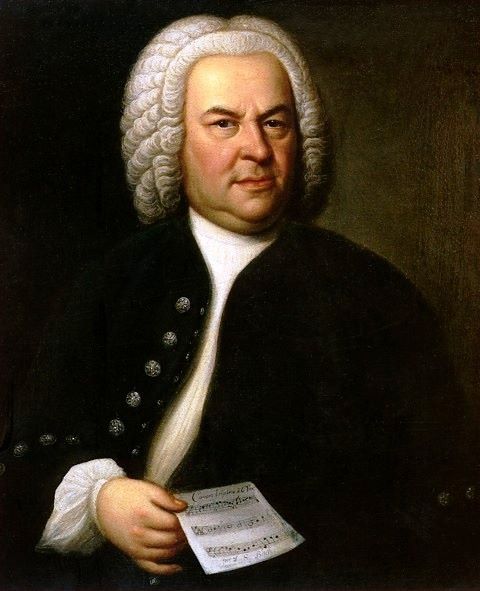
    Bach with Marlboro advocates (top to bottom) Pablo Casals, Mieczyslaw Horszowski & Felix Galimir, and Rudolf Serkin.

  • Trout Quintet for Thanksgiving: Music from Marlboro

    Trout Quintet for Thanksgiving: Music from Marlboro

    It’s trout for Thanksgiving on this week’s “Music from Marlboro.”

    Franz Schubert was 22 years-old when he completed his “Trout” Quintet. That was in 1819. The work wasn’t published until 1829, the year after his death.

    Formally identified as the Piano Quintet in A major, D. 667, the piece was conceived for the novel combination of piano, violin, viola, cello, and double bass (bass like the instrument, not the fish). Schubert tailored his quintet for a gathering of musicians who were to perform Johann Nepomuk Hummel’s Septet, which Hummel had arranged for the same instrumentation. I know, it’s very disappointing that the work is not played on five fishes.

    The quintet gets its nickname from the fourth movement (of five), a set of variations on Schubert’s lied, “Die Forelle,” or “The Trout.” The music is generally lighthearted and leisurely, with perhaps a few feints toward melancholy in the second movement Andante. But Schubert wouldn’t be Schubert without a dash of melancholy, and neither would Thanksgiving. Overall, the quintet is just the sort of thing to calm your nerves, even as the ear is engaged by its striking harmonies and catchy melodies.

    We’ll hear a performance recorded at Marlboro in 1967, with pianist Rudolf Serkin, violinist Jaime Laredo, violist Philipp Naegele, cellist Leslie Parnas, and bassist Julius Levine.

    Then we’ll round out the hour with some part-songs, composed around 1801, by Franz Joseph Haydn, including “Abendlied zu Gott” (“Evening Song to God”), after a text by Christian Fürchtegott Gellert:

    Lord, You who have given me life
    Up until this very day,
    Child-like, I pray to You.
    I am much too unworthy of the faithfulness that I sing of,
    And that You grant me today.

    Four vocalists – soprano Claudia Visca, mezzo-soprano Constance Fee, tenor Michael Sylvester, and bass John Paul White – join Luis Batlle at the piano, at the 1976 Marlboro Music Festival.

    It sure beats romaine lettuce. Schubert’s “Trout” will buoy your spirits, even as you wade through traffic, on this Thanksgiving eve.

    Give thanks for musical sustenance on “Music from Marlboro,” this Wednesday evening at 6:00 EST, on WWFM – The Classical Network and wwfm.org.

    Marlboro School of Music and Festival: Official Page

  • Jonathan Biss to Lead Marlboro Music

    Jonathan Biss to Lead Marlboro Music

    In foreign lands, cries of “Bis!” at the end of a concert signify an audience’s desire to hear more. It is a happy coincidence, then, that at the Marlboro Music School and Festival, Biss happens to be the surname of its incoming co-artistic director.

    Earlier this week, it was announced that the pianist Jonathan Biss will join Mitsuko Uchida as co-director of the celebrated chamber music retreat, which is situated in Vermont’s Green Mountains. Uchida has served in a leadership capacity at Marlboro for over 20 years. For the past five of these, she has been the festival’s sole artistic director. Prior to that, she was assisted in the festival’s direction by Richard Goode (1994-2013) and Andras Schiff (1994-1999).

    Biss first attended the Marlboro Music Festival in 1997. He was invited to return as a senior artist in 2006 – in classic Marlboro fashion, giving back to new generations of young musicians the kind of mentorship and comradery he himself experienced there.

    Biss, who is on the faculty of the Curtis Institute of Music in Philadelphia, is acclaimed not only as a performer and recording artist, but also as a teacher and a writer, wholly comfortable exploring unique opportunities of the digital age, offering online lectures and publishing a bestselling eBook, “Beethoven’s Shadow.”

    We’ll celebrate Biss’ appointment on this week’s “Music from Marlboro,” with a performance of Franz Schubert’s Piano Trio No. 1 in B-flat major, D. 898. Biss will be joined by violinist David Bowlin and cellist Marcy Rosen, from the 2008 Marlboro Music Festival.

    Then we’ll hear Marlboro legends, soprano Benita Valente, clarinetist Harold Wright, and pianist Rudolf Serkin, in Schubert’s “The Shepherd on the Rock.” The three set down a classic recording of the work in 1960; we’ll hear a live performance, captured at Marlboro nine years later.

    The Marlboro Music School and Festival was co-founded in 1951 by Serkin, Adolf Busch, and Marcel Moyse. Serkin served as Marlboro’s first artistic director until his death in 1991.

    Today happens to be the anniversary of Busch’s birth. Tune in this afternoon, between 4 and 6 p.m., prior to today’s “Music from Marlboro” broadcast, for a little bonus, in the form of one of Busch’s own compositions.

    “Music from Marlboro” begins at 6:00 EDT, on WWFM – The Classical Network and wwfm.org.

    Marlboro School of Music and Festival: Official Page


    PHOTO: Uchida (left), with Marlboro’s incoming co-artistic director

  • Celebrating Serkin A Marlboro Music Birthday

    Celebrating Serkin A Marlboro Music Birthday

    This week on “Music from Marlboro,” we’ll serve up a great big musical cake for Rudolf Serkin’s birthday.

    Serkin, one of the indisputably great pianists of the 20th century, co-founded, with Adolf and Hermann Busch, and Marcel, Blanche, and Louis Moyse, the Marlboro Music School and Festival in 1951. Above and beyond his own artistic achievements, Serkin inspired countless young musicians, both as a pedagogue at – and then director of – the Curtis Institute of Music in Philadelphia and as artistic director of the Marlboro Music Festival for 40 years, until his death in 1991.

    We’ll supplement that cake with a little sherbet – better make that Schubert – and a special recording of the Piano Trio No. 2 in E-flat major, op. 100, set down in Brattleboro, VT, right at the very beginning, in October of 1951, with Serkin and the Brothers Busch. This is music-making between friends – and relatives – of the highest caliber.

    Then we’ll enjoy an additional treat in the form of Schubert’s “Auf dem Strom” (“On the River”). Serkin will join Philadelphia-based soprano Benita Valente and hornist Myron Bloom for a performance of this work that was composed in tribute to Beethoven. Ludwig Rellstab’s text was originally intended for the older master. The song was first performed on the only concert devoted exclusively to Schubert’s music during Schubert’s lifetime, which took place on the first anniversary of Beethoven’s death, March 26, 1828. The Marlboro performance dates from 1960.

    I hope you’ll join me in celebrating Rudolf Serkin, on the anniversary of his birth, with an all-Schubert program, this Wednesday evening at 6:00 EDT, on WWFM – The Classical Network and wwfm.org.

    Marlboro School of Music and Festival: Official Page


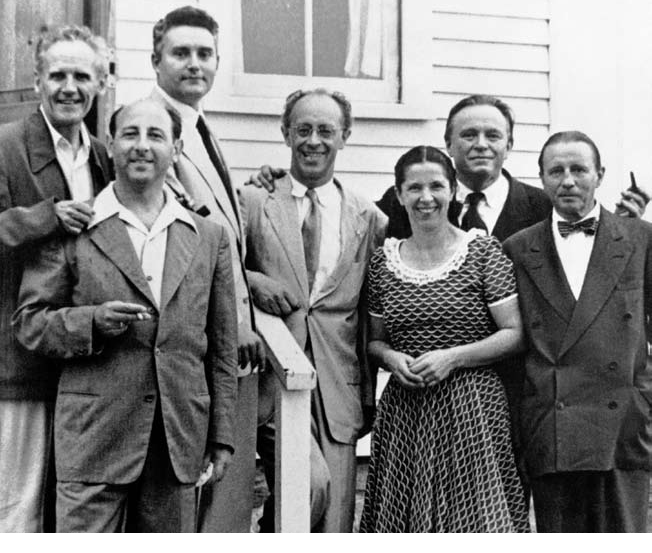
    PHOTO: Serkin (center) with his Marlboro family, co-founders Marcel Moyse, Louis Moyse, Blanche Moyse, Adolf Busch, and Hermann Busch (with cellist Nathan Chaikin second from left)

Tag Cloud

Aaron Copland (92) Beethoven (95) Composer (114) Film Music (120) Film Score (143) Film Scores (255) Halloween (94) John Williams (185) KWAX (229) Leonard Bernstein (100) Marlboro Music Festival (125) Movie Music (135) Opera (198) Philadelphia Orchestra (88) Picture Perfect (174) Princeton Symphony Orchestra (106) Radio (87) Ralph Vaughan Williams (85) Ross Amico (244) Roy's Tie-Dye Sci-Fi Corner (290) The Classical Network (101) The Lost Chord (268) Vaughan Williams (103) WPRB (396) WWFM (881)

DON’T MISS A BEAT

Receive a weekly digest every Sunday at noon by signing up here


RECENT POSTS