Tag: Russian Composers

  • Tcherepnin Dynasty: 3 Generations

    Tcherepnin Dynasty: 3 Generations

    The classical music world has certainly had its share of dynasties. There are the Bachs. There are the Bendas. There are the Strausses.

    The Tcherepnin line, which began in the 1870s, continues to the present day. This week on “The Lost Chord,” on the eve of Father’s Day, we’ll sample wares from the family business, with works from three generations.

    Nikolai Tcherepnin (1873-1945), whose father was a strict disciplinarian, who demanded that he study law, became a pupil of Nikolai Rimsky-Korsakov. He himself became a teacher, took a position at the St. Petersburg Conservatory (later becoming its principal), conducted at the Russian Musical Society, the Moscow Philharmonic, and the Mariinsky Theatre, and led the debut performance of Serge Diaghilev’s famed Ballets Russes, beginning a five-year association with the company.

    In 1918, he took up over the directorship of the National Conservatory of Tbilisi, the capitol of the Democratic Republic of Georgia. With the Bolshevik takeover of Georgia in 1921, Tcherepnin moved to Paris, where he lived the remainder of his life. There, he conducted, performed as pianist, and founded the Russian Conservatory. He became president of the Belyayev publishing house, a position he maintained until his death.

    In 1909, he wrote a symphonic poem, “The Enchanted Kingdom,” a work based upon the same fairy tale that inspired the ballet “The Firebird.” Tcherepnin is said to have been an early contender to write the music for “The Firebird,” after Anatoly Liadov bowed out and before Igor Stravinsky was granted the commission.

    We’ll also hear the Symphony No. 3 by Nikolai’s son, Alexander Tcherepnin (1899-1977), whose own path led him from Russia to Paris to China (his wife was the Chinese pianist Lee Hsien Ming) to DePaul University in Chicago.

    Alexander’s sons, Serge (b. 1941) and Ivan (1943-1998), became fascinated with electronics. Ivan studied with Leon Kirchner, Karlheinz Stockhausen, and Pierre Boulez. In 1972, he became director of the Harvard University Electronic Music Studio, where he remained until his death in 1998.

    Ivan’s early music was experimental in nature. He gradually developed a tendency toward modernism and postmodernism. We’ll listen to his “Concerto for Two Continents” – the continents in question being North America and Asia, lands with which Ivan, born to Russian and Chinese parents and raised in the United States, felt a deeply personal connection. The concerto alludes to a number of familiar Russian and American folk and popular melodies. It also employs a judicious amount of electronics, making for some otherworldly effects.

    In case you’re curious, the Tcherepnin dynasty continues to flourish with its fourth generation of composers – Nikolai’s great grandsons, Stefan (b. 1977) and Sergei (b. 1981) – but today we’ll only have time for three!

    Talent runs in the family. I hope you’ll join me for “Tcherepnin Troika,” on “The Lost Chord,” now in syndication on KWAX, the radio station of the University of Oregon!


    Clip and save the start times for all three of my recorded shows:

    PICTURE PERFECT, the movie music show – Friday at 8:00 PM EDT/5:00 PM PDT

    SWEETNESS AND LIGHT, the light music program – ALL NEW! – Saturday at 11:00 AM EDT/8:00 AM PDT

    THE LOST CHORD, unusual and neglected rep – Saturday at 7:00 PM EDT/4:00 PM PDT

    Stream them, wherever you are, at the link!

    https://kwax.uoregon.edu/


    PHOTOS: (top) Alexander Tcherepnin and Lee Hsien Ming with their sons, Ivan and Serge; (bottom left) paterfamilias Nikolai Tcherepnin; and Ivan and Alexander at the piano

  • Mily Balakirev and Russia’s Mighty Five

    Mily Balakirev and Russia’s Mighty Five

    Mily Balakirev was Russia’s musical kingmaker.

    Balakirev, of course, was the founder of the “Mighty Handful,” or “The Russian Five,” that collective of Russian nationalist composers that also included Nikolai Rimsky-Korsakov, Modest Mussorgsky, Alexander Borodin, and Cesar Cui.

    He had very strong ideas about what Russian music should be, and he was not at all bashful about telling other composers what to do. He essentially micromanaged the early careers of his acolytes, which included not only “The Five,” but on several occasions Peter Ilych Tchaikovsky.

    In his later years, though Balakirev’s influence was on the wane, he made two final, important contributions. He was responsible for introducing the prodigy Alexander Glazunov to Rimsky-Korsakov, and he was blessed with one last, very talented disciple, Sergei Lyapunov.

    This Sunday night on “The Lost Chord,” we’ll hear music by this last of the Russian nationalists, who was as much influenced by the keyboard prowess of Liszt as he was the patriotic zeal of his mentor. He also happens to be the composer of “The Lost Chord” signature music.

    I hope you’ll join me for “One Past Five,” music of Sergei Lyapunov – one hour later than usual, due to the length of today’s opera broadcast – this Sunday night at 11:00 EDT, on WWFM – The Classical Network and wwfm.org.


    WHEN BEARDS WERE IN: Top left, Mily Balakirev; bottom left (clockwise), Cesar Cui, Modest Mussorgsky, Alexander Borodin, Nikolai Rimsky-Korsakov; right, Sergei Lyapunov

  • The Tcherepnin Dynasty of Composers

    The Tcherepnin Dynasty of Composers

    The classical music world has certainly had its share of dynasties. There are the Bachs. There are the Bendas. There are the Strausses.

    The Tcherepnin line, which began in the 1870s, continues to the present day. This Sunday night on “The Lost Chord,” we’ll sample wares from the family business, with works from three generations.

    Nikolai Tcherepnin (1873-1945), whose father was a strict disciplinarian, who demanded he study law, became a pupil of Nikolai Rimsky-Korsakov. He himself became a teacher, took a position at the St. Petersburg Conservatory (later becoming its principal), conducted at the Russian Musical Society, the Moscow Philharmonic, and the Mariinsky Theatre, and led the debut performance of Serge Diaghilev’s famed Ballets Russes, beginning a five-year association with the company.

    In 1918, he took up over the directorship of the National Conservatory of Tbilisi, the capitol of the Democratic Republic of Georgia. With the Bolshevik takeover of Georgia in 1921, Tcherepnin moved to Paris, where he lived the remainder of his life. There, he conducted, performed as pianist, and founded the Russian Conservatory. He became president of the Belyayev publishing house, a position he maintained until his death.

    In 1909, he wrote a symphonic poem, “The Enchanted Kingdom,” a work based upon the same fairy tale that inspired the ballet “The Firebird.” Tcherepnin is said to have been an early contender to write the music for “The Firebird,” after Anatoly Liadov bowed out and before Igor Stravinsky was granted the commission.

    We’ll also hear the Symphony No. 3 by Nikolai’s son, Alexander Tcherepnin (1899-1977), whose own path led him from Russia to Paris to China (his wife was the Chinese pianist Lee Hsien Ming) to DePaul University in Chicago.

    Alexander’s sons, Serge (b. 1941) and Ivan (1943-1998), became fascinated with electronics. Ivan studied with Leon Kirchner, Karlheinz Stockhausen, and Pierre Boulez. In 1972, he became director of the Harvard University Electronic Music Studio, where he remained until his death in 1998.

    Ivan’s early music was experimental in nature. He gradually developed a tendency toward modernism and postmodernism. We’ll listen to his “Concerto for Two Continents” – the continents in question being North America and Asia, lands with which Ivan, born to Russian and Chinese parents and raised in the United States, felt a deeply personal connection. The concerto alludes to a number of familiar Russian and American folk and popular melodies. It also employs a judicious amount of electronics, making for some otherworldly effects.

    In case you’re curious, the Tcherepnin dynasty continues to flourish with its fourth generation of composers – Nikolai’s great grandsons, Stefan (b. 1977) and Sergei (b. 1981) – but tonight we only have time for three!

    Talent runs in the family. I hope you’ll join me for “Tcherepnin Troika,” this Sunday night at 10:00 EDT, on WWFM – The Classical Network and at wwfm.org.


    PHOTOS: (top) Alexander Tcherepnin and Lee Hsien Ming with their sons, Ivan and Serge; (bottom left) paterfamilias Nikolai Tcherepnin; and Ivan and Alexander at the piano
  • Rediscovering Medtner Rachmaninoff’s Forgotten Genius

    Rediscovering Medtner Rachmaninoff’s Forgotten Genius

    It’s hard to figure out exactly why the music of Nikolai Medtner hasn’t caught on with audiences. Except, of course, it hardly ever gets played, so nobody knows it’s out there.

    On today’s Noontime Concert on The Classical Network, violinist Rolf Schulte will be joined by pianist Nicolas Namoradze for a performance of Medtner’s “Three Night Songs,” (or “Nocturnes”), Op. 16, alongside two works by Sergei Prokofiev – “Five Melodies,” Op. 35b, and the Violin Sonata No. 1, Op. 80. The concert, titled “From Czarist Russia to the Soviet Union,” was recorded on April 19, at Elebash Recital Hall in Midtown Manhattan, as part of The Graduate Center, CUNY’s free “Music in Midtown” series, designed to showcase the university’s DMA program. Schulte is on the faculty there; Namoradze is a DMA candidate.

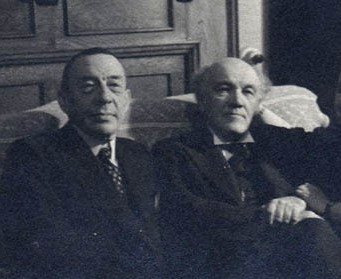
    Medtner was a good friend and classmate of Sergei Rachmaninoff. Both studied with Vasily Safanov at the Moscow Conservatory. Later, they both became exiles, who shared a painful nostalgia for their homeland.

    It was Rachmaninoff who arranged for Medtner his first North American concert tour – the programs decidedly uncommercial affairs, devoted entirely to Medtner’s music. Medtner never captured the public’s imagination in the way that Rachmaninoff did, and to this day, despite many recordings on the market (including the early ones sponsored by Jayachamarajendra Wadiyar, twenty-fifth maharaja of the Kingdom of Mysore), Medtner remains largely a pianist’s composer.

    Tellingly, Rachmaninoff believed whole-heartedly in his friend’s superior talent. He also described him as “the greatest composer of our time.” Medtner, for his part, deeply admired Rachmaninoff’s conducting, and supported him emotionally through periods of self-doubt. Rachmaninoff would dedicate his Fourth Piano Concerto to Medtner (composed in 1926; with the final, revised version appearing in 1941); Medtner returned the compliment by dedicating his Second Concerto (composed between 1920 and 1927) to Rachmaninoff.

    Following today’s Noontime Concert broadcast, stick around to hear Medtner’s Piano Concerto No. 2. It will be among my featured works between 12 and 4 p.m. EDT on WWFM – The Classical Network and wwfm.org.


    PHOTO: The Rachmaninoff-Medtner Mutual Admiration Society

  • Russian Cello Concertos Davidoff & Weinberg

    Russian Cello Concertos Davidoff & Weinberg

    Cello, da!

    This Sunday night on “The Lost Chord,” we’ll hear two works for cello and orchestra, written by composers of Eastern European origin, both of whom attained fame in Russia.

    Carl Davidoff (sometimes spelled Karl Davydov) was born in Latvia in 1838. He became head of the St. Petersburg Conservatory, where Tchaikovsky was a colleague. Tchaikovsky dubbed him “The Tsar of the Cello.” Davidoff wrote four cello concertos, all of which have been recorded on the CPO label. We’ll be listening to the first of these, performed by Wen-Sinn Wang.

    Mieczyslaw Weinberg (also known as Moisei Vainberg) was of Polish-Jewish origin. Despite having suffered the loss of much of his family in the Holocaust and being singled out for persecution in the Soviet Union under Stalin, Weinberg was a dizzyingly productive composer. He wrote 22 symphonies, 7 operas, and an enormous amount of chamber and instrumental music, including 17 string quartets, 8 violin sonatas, 6 cello sonatas, and 6 piano sonatas, to say nothing of dozens of film scores. Yet Weinberg’s achievements were eclipsed by those of Shostakovich and Prokofiev.

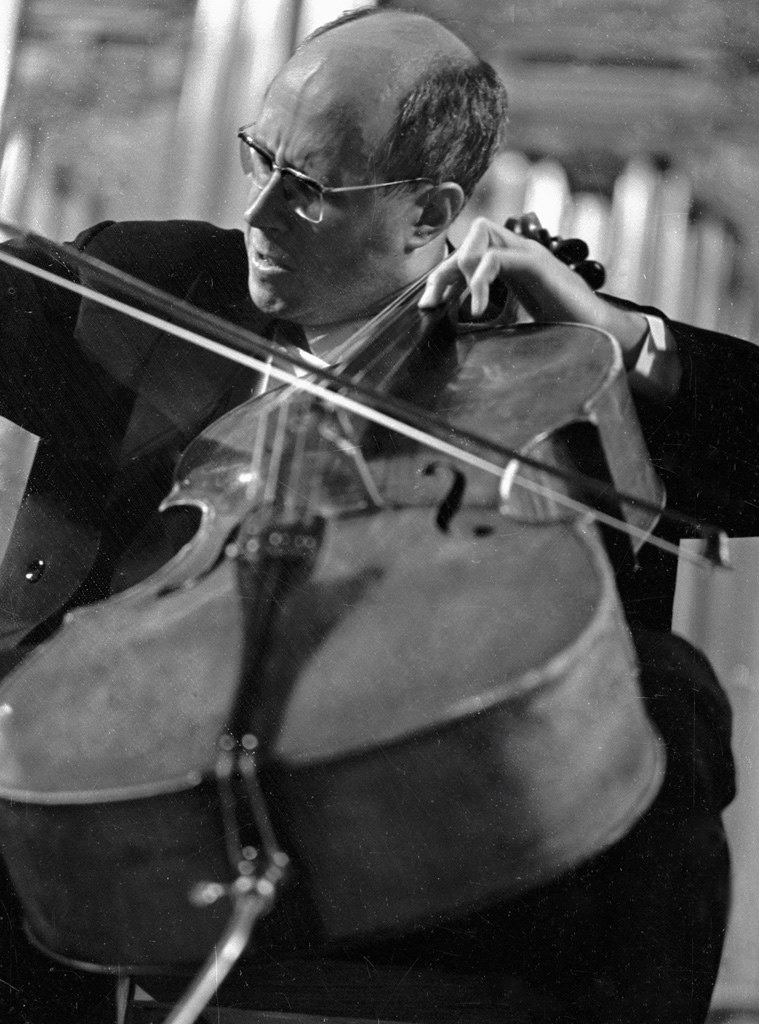
    Shostakovich took a special interest in the younger composer, frequently interceding on his behalf, and promoting him as “one of the most outstanding composers of the present day.” We’ll hear Weinberg’s Cello Concerto of 1948, performed by the work’s dedicatee, Mstislav Rostropovich.

    Join me for “A Russian Cellobration,” this Suunday night at 10:00 EDT, on WWFM – The Classical Network and wwfm.org.


    PHOTO: Slava rocks the cello

Tag Cloud

Aaron Copland (92) Beethoven (95) Composer (114) Film Music (123) Film Score (143) Film Scores (255) Halloween (94) John Williams (187) KWAX (229) Leonard Bernstein (101) Marlboro Music Festival (125) Movie Music (138) Opera (202) Philadelphia Orchestra (89) Picture Perfect (174) Princeton Symphony Orchestra (106) Radio (87) Ralph Vaughan Williams (85) Ross Amico (244) Roy's Tie-Dye Sci-Fi Corner (290) The Classical Network (101) The Lost Chord (268) Vaughan Williams (103) WPRB (396) WWFM (881)

DON’T MISS A BEAT

Receive a weekly digest every Sunday at noon by signing up here


RECENT POSTS