Tag: Saint-Saëns

  • Saint-Saëns’ Danse Macabre Halloween Classic

    Saint-Saëns’ Danse Macabre Halloween Classic

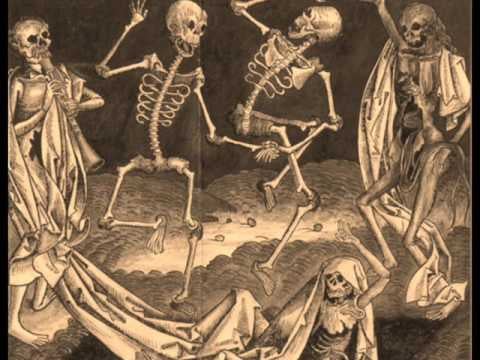
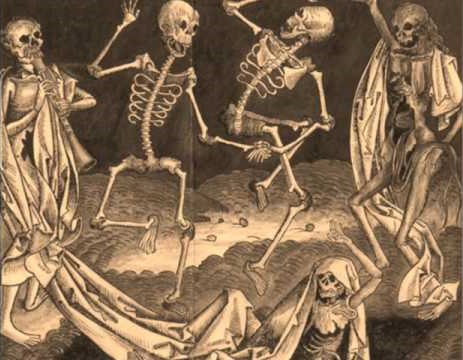
    I don’t care how stealthily one creeps through the graveyard at midnight. You won’t get through the Halloween season without encountering Camille Saint-Saëns’ “Danse Macabre.”

    Saint-Saëns, born on this date in 1835, originally set Henri Cazalis’ poem – about the personification of Death summoning the departed from their graves to cut a rug until cockcrow – as a chanson, or art song, for voice and piano in 1872. Two years later, he expanded it, putting some flesh on its bones and crafting it into the beloved symphonic poem, which has been a staple of Halloween programs ever since.

    Someone married the classic 1937 cartoon short “Skeleton Frolic” – pretty well, I think – to the orchestral version.

    It’s also used effectively in this modern trailer for the 1922 silent classic “Häxan.”

    And featured prominently in this scene from Jean Renoir’s 1939 film “Rules of the Game.”

    Here it is, in its original version. José Van Dam sings it, with Jean-Philippe Collard at the piano.

    Here’s a translation of the text, by Henri Cazalis:

    Zig, zig, zig, Death in cadence
    Striking a tomb with his heel
    Death at midnight plays a dance-tune
    Zig, zig, zag, on his violin

    The winter wind blows, and the night is dark;
    Moans are heard in the linden trees
    White skeletons pass through the gloom
    Running and leaping in their shrouds

    Zig, zig, zig, each one is frisking
    You can hear the cracking of the bones of the dancers
    A lustful couple sits on the moss
    So as to taste long lost delights

    Zig zig, zig, Death continues
    The unending scraping on his instrument
    A veil has fallen! The dancer is naked
    Her partner grasps her amorously

    The lady, it’s said, is a marchioness or baroness
    And her green gallant, a poor cartwright
    Horror! Look how she gives herself to him
    Like the rustic was a baron

    Zig, zig, zig. What a saraband!
    They all hold hands and dance in circles
    Zig, zig, zag. You can see in the crowd
    The king dancing among the peasants

    But hist! All of a sudden, they leave the dance
    They push forward, they fly; the cock has crowed
    Oh what a beautiful night for the poor world!
    Long live death and equality!


    These “grave” thoughts a little lurid for your taste? Try this autumnal Clarinet Sonata, one of three woodwind sonatas written by the composer during the last year of his life, 1921, when he was 85 years old.

    Happy birthday – and happy Halloween – Saint-Saëns!
  • Saint-Saëns’ Danse Macabre Halloween Classic

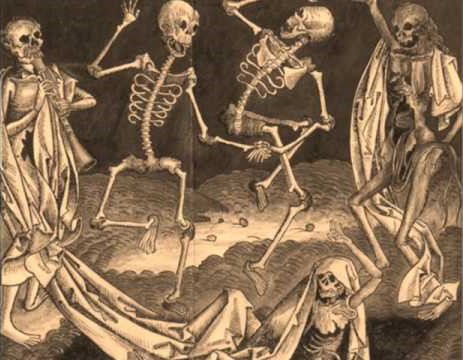
    I don’t care how stealthily one creeps through the graveyard at midnight. You won’t get through the Halloween season without encountering Camille Saint-Saëns’ “Danse Macabre.”

    Saint-Saëns, born on this date in 1835, originally set Henri Cazalis’ poem – about the personification of Death summoning the departed from their graves to cut a rug until cockcrow – as a chanson, or art song, for voice and piano in 1872. Two years later, he expanded it, putting some flesh on its bones and crafting it into the beloved symphonic poem, which has been a staple of Halloween programs ever since.

    Someone married the classic 1937 cartoon short “Skeleton Frolic” – pretty well, I think – to the orchestral version.

    It’s also used effectively in this modern trailer for the 1922 silent classic “Häxan.”

    And featured prominently in this scene from Jean Renoir’s 1939 film “Rules of the Game.”

    Here it is, in its original version. José Van Dam sings it, with Jean-Philippe Collard at the piano.

    That’s celebrating Saint-Saëns‘ birthday, with some rather “grave” thoughts! Bon anniversaire, mon vieux!


    Translation of the text, by Henri Cazalis:

    Zig, zig, zig, Death in cadence
    Striking a tomb with his heel
    Death at midnight plays a dance-tune
    Zig, zig, zag, on his violin

    The winter wind blows, and the night is dark;
    Moans are heard in the linden trees
    White skeletons pass through the gloom
    Running and leaping in their shrouds

    Zig, zig, zig, each one is frisking
    You can hear the cracking of the bones of the dancers
    A lustful couple sits on the moss
    So as to taste long lost delights

    Zig zig, zig, Death continues
    The unending scraping on his instrument
    A veil has fallen! The dancer is naked
    Her partner grasps her amorously

    The lady, it’s said, is a marchioness or baroness
    And her green gallant, a poor cartwright
    Horror! Look how she gives herself to him
    Like the rustic was a baron

    Zig, zig, zig. What a saraband!
    They all hold hands and dance in circles
    Zig, zig, zag. You can see in the crowd
    The king dancing among the peasants

    But hist! All of a sudden, they leave the dance
    They push forward, they fly; the cock has crowed
    Oh what a beautiful night for the poor world!
    Long live death and equality!

  • Saint-Saëns Danse Macabre & Halloween

    Saint-Saëns Danse Macabre & Halloween

    I’m going to be celebrating an awful lot of Vaughan Williams the next few days, but just so as not to completely snub Camille Saint-Saëns on his birthday (today), here’s a seasonal favorite.

    “Danse Macabre” was originally conceived as a chanson for voice and piano. The composer made several other arrangements. Most famous is the more fully developed orchestral work, but he also wrote a version for voice and orchestra. Here it is performed by Nelson Eddy, of all people.

    Still, it’s better than Nelson’s commercial recording, which is terrifying for all the wrong reasons.

    Here’s a translation of the text, by Henri Cazalis:

    Zig, zig, zig, Death in cadence
    Striking a tomb with his heel
    Death at midnight plays a dance-tune
    Zig, zig, zag, on his violin

    The winter wind blows, and the night is dark;
    Moans are heard in the linden trees
    White skeletons pass through the gloom
    Running and leaping in their shrouds

    Zig, zig, zig, each one is frisking
    You can hear the cracking of the bones of the dancers
    A lustful couple sits on the moss
    So as to taste long lost delights

    Zig zig, zig, Death continues
    The unending scraping on his instrument
    A veil has fallen! The dancer is naked
    Her partner grasps her amorously

    The lady, it’s said, is a marchioness or baroness
    And her green gallant, a poor cartwright
    Horror! Look how she gives herself to him
    Like the rustic was a baron

    Zig, zig, zig. What a saraband!
    They all hold hands and dance in circles
    Zig, zig, zag. You can see in the crowd
    The king dancing among the peasants

    But hist! All of a sudden, they leave the dance
    They push forward, they fly; the cock has crowed
    Oh what a beautiful night for the poor world!
    Long live death and equality!

    Happy birthday – and happy Halloween – Saint-Saëns!

  • Remembering Saint-Saëns: A Musical Prodigy

    Remembering Saint-Saëns: A Musical Prodigy

    Roll over, Beethoven! Camille Saint-Saëns died one hundred years ago today, and he’s telling Tchaikovsky the news!

    One of classical music’s most astonishing enfants prodiges, Saint-Saëns composed his first piece before he was three-and-a-half years old. He made his public debut as an accompanist at the age of five. At ten, he performed his first solo recital – at the conclusion of which, he offered to play as an encore any of the Beethoven piano sonatas, from memory. He won top prizes, wrote his first symphony at 16, and was introduced to Franz Liszt, who would become a close friend.

    Hector Berlioz quipped of the teen-aged composer, “He knows everything, but lacks inexperience.”

    Saint-Saëns began as a musical radical, assimilating the influences of Liszt and Wagner and introducing their works to a France steeped in Bach and Mozart. However, he lived a very long life (86 years). By his final decades, he wound up an arch-conservative, railing against the musical crimes of Debussy and Richard Strauss.

    When he began his career, in the 1840s, Chopin and Mendelssohn were in their prime. By the time of his death, Paris had entered the Roaring ‘20s – the Jazz Age. He died in 1921, eight years after the debut of “The Rite of Spring,” when composers like Francis Poulenc and Darius Milhaud were just beginning to make their mark.

    He was said by Liszt to have been unequalled as a performer on the organ. He is also credited with having written the first original film score (for “The Assassination of the Duke of Guise,” in 1908).

    Though stunningly prolific, Saint-Saëns is basically remembered for one masterpiece in just about every genre: the Symphony No. 3, the Piano Concerto No.2, the Violin Concerto No. 3, the Cello Concerto No. 1, the opera “Samson and Delilah.” Yet above all, perhaps, is he known for “The Carnival of the Animals,” a work brimful of charm and wit, yet one the composer deliberately tried to suppress, perhaps fearing what history has eventually borne out: his being perceived as a lightweight, less-than-wholly-serious composer.

    Poor Saint-Saëns. Seemingly destined always to be France’s Mendelssohn.

    But for today, we salute you!


    Saint-Saëns composed his “Christmas Oratorio” in less than two weeks. It was completed ten days before the work’s premiere on Christmas Day, 1858. The composer was 23 years-old.

    For Ludwig Van’s birthday, “Variations on a Theme of Beethoven” (1874)

    “The Carnival of the Animals” (1886), performed by the Seattle Youth Symphony Orchestra, with fun images of all the critters. “The Swan” has the most famous music, but “Aquarium” can’t be far behind. Also, listen for a reeeeeeally slowed-down version of Offenbach’s “Can-Can,” the most incongruously frenetic music Saint-Saëns could think of, to characterize “Tortoises,” ponderous “fairy” music for “Elephants,” and a sly “meta” moment, a quotation from the composer’s own “Danse Macabre,” in “Fossils.” Each section is linked below the video.

    https://www.youtube.com/watch?v=1L993HNAa8M

    A piano roll of Saint-Saëns playing Beethoven in 1905


    PHOTO: Saint-Saëns spends the day in his pajamas

  • Danse Macabre Halloween Serenade

    Danse Macabre Halloween Serenade

    31 DAYS OF HALLOWEEN (DAY 12)

    I totally snubbed Saint-Saëns this week on his birthday, October 9th, so here’s “Danse Macabre.” “Danse Macabre” was originally conceived as a chanson for voice and piano. The composer made several other arrangements. Most famous is the more fully developed orchestral work, but he also wrote a version for voice and orchestra. Here it is performed by Nelson Eddy, of all people.

    https://www.youtube.com/watch?v=PIVdUOnNWKM

    Still, it’s better than Nelson’s commercial recording from two years earlier, which is terrifying for all the wrong reasons.

    The text is by Henri Cazalis:

    Zig, zig, zig, Death in cadence
    Striking a tomb with his heel
    Death at midnight plays a dance-tune
    Zig, zig, zag, on his violin
    The winter wind blows, and the night is dark;
    Moans are heard in the linden trees
    White skeletons pass through the gloom
    Running and leaping in their shrouds
    Zig, zig, zig, each one is frisking
    You can hear the cracking of the bones of the dancers
    A lustful couple sits on the moss
    So as to taste long lost delights
    Zig zig, zig, Death contines
    The unending scraping on his instrument
    A veil has fallen! The dancer is naked
    Her partner grasps her amorously
    The lady, it’s said, is a marchioness or baroness
    And her green gallant, a poor cartwright
    Horror! Look how she gives herself to him
    Like the rustic was a baron
    Zig, zig, zig. What a saraband!
    They all hold hands and dance in circles
    Zig, zig, zag. You can see in the crowd
    The king dancing among the peasants
    But hist! All of a sudden, they leave the dance
    They push forward, they fly; the cock has crowed
    Oh what a beautiful night for the poor world!
    Long live death and equality!

Tag Cloud

Aaron Copland (92) Beethoven (95) Composer (114) Film Music (123) Film Score (143) Film Scores (255) Halloween (94) John Williams (187) KWAX (229) Leonard Bernstein (101) Marlboro Music Festival (125) Movie Music (138) Opera (202) Philadelphia Orchestra (89) Picture Perfect (174) Princeton Symphony Orchestra (106) Radio (87) Ralph Vaughan Williams (85) Ross Amico (244) Roy's Tie-Dye Sci-Fi Corner (290) The Classical Network (101) The Lost Chord (268) Vaughan Williams (103) WPRB (396) WWFM (881)

DON’T MISS A BEAT

Receive a weekly digest every Sunday at noon by signing up here


RECENT POSTS