Tag: Sergei Taneyev

  • Bard Music Festival Discovering Neglected Gems

    Bard Music Festival Discovering Neglected Gems

    Eureka!

    I feel like a classical music prospector who’s struck the motherlode of unusual and neglected repertoire!

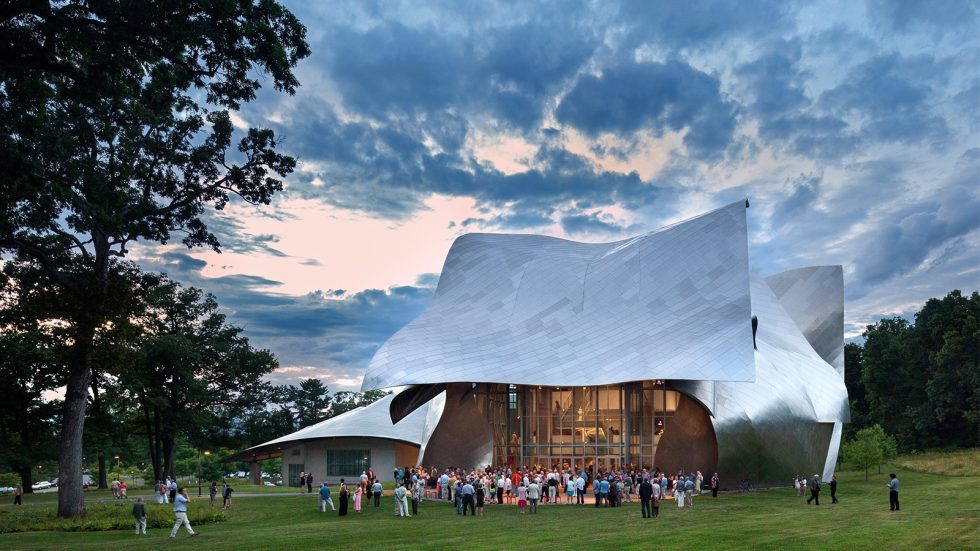
    The Bard Music Festival, held each summer at Bard College in sylvan upstate New York, is the crown jewel of Bard SummerScape, a broader celebration of the arts. The festival’s primary focus is on a specific composer and his or her world. So even if the star attraction is, say, Rimsky-Korsakov, Sibelius, or Carlos Chávez, a significant amount of the programming is devoted to that composer’s contemporaries, influences, and successors.

    No word yet on whether or not the Bard Music Festival will decide to move ahead with this summer’s projected celebration of Nadia Boulanger. But judging from the facts that just about every other music festival in North America has already cancelled, and that Bard College is located just two hours north of New York City, I’m not holding my breath (except around other people, especially at the grocery store).

    In the meantime, Bard is finding ways to connect with audiences beyond its idyllic campus, and I am pumped to have tapped into this treasure trove of past Bard performances, especially of the operas (read on).

    Traditionally, musicians of the American Symphony Orchestra have formed the core of the Bard Festival Orchestra (Leon Botstein, the president of Bard College, serves as artistic director of both), though in recent years, a number of the concerts have also been performed by Bard’s resident orchestra, The Orchestra NOW.

    Some of ASO’s contributions, Bard-related and otherwise, can now be streamed from the orchestra’s website:

    ASO Online

    In addition, every week, the Fisher Center at Bard is sharing a page of content based on the outstanding work the festival has done in reviving the neglected output of a number of deserving composers. This week, the focus is on Sergei Taneyev:

    https://fishercenter.bard.edu/upstreaming/

    Nadia Boulanger is the first woman to be selected as the focal point of Bard proper (though Grazyna Bacewicz was the subject of a satellite festival in San Francisco, Bard Music West, last year, and works by women composers – including Nadia’s sister, Lili – have been included as a matter of course in regular Bard programming). Boulanger’s influence, as one of the great pedagogues of the 20th century, was enormous. She was particularly influential in the artistic development of innumerable American composers. So when the festival does come to pass, the repertoire should be notably diverse and, as always, fascinating.

    For more information, visit https://fishercenter.bard.edu/bmf/

  • Sergei Taneyev Honest Russian Composer

    Sergei Taneyev Honest Russian Composer

    Never one to hold back or sugar-coat the truth, Sergei Taneyev (1856-1915) could be brutally honest and in fact generally was. He managed to offend every one of the musicians of the Mighty Handful (Mily Balakirev, Alexander Borodin, César Cui, Modest Mussorgsky, and Nikolai Rimsky-Korsakov) with his blunt assessments. Yet somehow Peter Ilych Tchaikovsky, who was probably the most sensitive composer in all of Russia, actually went out of his way to invite Taneyev’s criticism, even when it threw him into fits of despair.

    On this week’s “Music from Marlboro,” we’ll have music by this most forthright of Russian composers, alongside a delightful caprice by a Frenchman, based on Danish and Russian airs.

    Tchaikovsky valued Taneyev’s keen insight and transparent honesty, perhaps in part because he knew, as Taneyev’s teacher at the Moscow Conservatory, that Taneyev was equally hard on himself. Also, there was little doubt of his disciple’s devotion. Taneyev was the soloist in the Moscow premiere of Tchaikovsky’s Piano Concerto No. 1, and in the Russian premiere of his Piano Concerto No. 2. After Tchaikovsky’s death, Taneyev completed several of his master’s works from sketches left in various states of completion, including the Piano Concerto No. 3. In turn, Tchaikovsky dedicated his symphonic fantasy, “Francesca da Rimini,” to Taneyev.

    Taneyev entered the Moscow Conservatory at the age of nine. His characteristic diligence and impeccable craftsmanship revealed themselves early, and through their application he rose quickly in the estimation of his professors. Tchaikovsky rated Taneyev as Russia’s greatest master of counterpoint and questioned if there was anyone, even in the West, who could match him in this regard.

    When Tchaikovsky resigned his post at the conservatory in 1878, Taneyev was appointed in his place to teach harmony and orchestration. Soon, he was also teaching piano and composition. Finally, he served as the conservatory’s director from 1885 to 1889. Among his own pupils were Sergei Rachmaninoff, Nikolai Medtner, and Alexander Scriabin. (FUN FACT: Taneyev died in 1915 after catching pneumonia at Scriabin’s funeral.)

    For the most part, Taneyev’s life was as orderly as his music. He never married; all his needs were tended to by his childhood nanny. He even managed to remain oblivious when the wife of his friend, Leo Tolstoy, basically threw herself at him. He preferred study to relaxation, passing countless hours poring over volumes on natural and social science, history, mathematics, Plato and Spinoza. He also taught himself Esperanto.

    Perhaps he could have used a little of Tchaikovsky’s spontaneity, both in his life and in his music. Tchaikovsky was more of an impulsive artist, always allowing his creativity and emotion to lead the way, while Taneyev tended to hold his raw materials in balance, carefully considering his ideas and themes, subjecting them to intensive analysis before committing them to manuscript. For as dry as that may sound, his music is still rewarding to listen to!

    Taneyev’s String Quintet in G major, Op. 14, dates from 1901. We’ll hear it performed at the 2005 Marlboro Music Festival by violinists Lily Francis and David Bowlin, violist Yu Jin, and cellists Michael Nicholas and David Soyer.

    By way of introduction, the program will open with a “Caprice on Danish and Russian Airs” by Camille Saint-Saëns (1835-1921). Scored for flute, oboe, clarinet, and piano, the work was composed for a series of concerts organized by the Russian Red Cross that were held in St. Petersburg during Easter Week, 1887. The piece was dedicated to the the Tsarina, Maria Feodorovna, formerly Princess Sophie Frederika Dagmar, daughter of the King of Denmark – hence, Saint-Saëns’ use of Danish and Russian themes.

    We’ll hear it performed at Marlboro in 1968 by pianist Ruth Laredo, flutist Paula Robison, oboist John Mack, and clarinetist Larry Combs.

    No doubt Taneyev would decline my invitation – and he wouldn’t hesitate to tell me why – but there is nothing to keep us from reckless enjoyment of the next “Music from Marlboro,” this Wednesday evening at 6:00 EST, on WWFM – The Classical Network and wwfm.org.

    Marlboro School of Music and Festival: Official Page


    PHOTO: Tell us what you really think, Sergei.

Tag Cloud

Aaron Copland (92) Beethoven (95) Composer (114) Film Music (123) Film Score (143) Film Scores (255) Halloween (94) John Williams (187) KWAX (229) Leonard Bernstein (101) Marlboro Music Festival (125) Movie Music (138) Opera (202) Philadelphia Orchestra (89) Picture Perfect (174) Princeton Symphony Orchestra (106) Radio (87) Ralph Vaughan Williams (85) Ross Amico (244) Roy's Tie-Dye Sci-Fi Corner (290) The Classical Network (101) The Lost Chord (268) Vaughan Williams (103) WPRB (396) WWFM (881)

DON’T MISS A BEAT

Receive a weekly digest every Sunday at noon by signing up here


RECENT POSTS