Tag: Serialism

  • Pierre Boulez A Mad Genius at 100

    Pierre Boulez A Mad Genius at 100

    “Blow the opera houses up!”

    “All the art of the past should be destroyed!”

    “A musician who has not experienced… the necessity for the dodecaphonic language is USELESS!”

    “From Schoenberg’s pen flows a stream of infuriating clichés!”

    “The Paris opera is full of dust and crap! Operatic tourists make me want to vomit!”

    Pierre Boulez could be provocative and full of contradictions. Is it any wonder there’s been so much blowback against him and what he came to represent? This gadfly of the avant-garde was born 100 years ago today.

    As a composer and polemicist, he was ever the rebel angel, the archnemesis of tonality and tradition. He studied under Olivier Messiaen at the Paris Conservatory, but in his advocacy of the abstruse, Boulez froze his teacher out. (Boulez characterized Messiaen’s “Turangalîla-Symphonie” as “brothel music.”) He idolized the Igor Stravinsky of “The Rite of Spring;” but in 1945, when Stravinsky unveiled his “Four Norwegian Moods,” a neoclassical pastiche in the style of Edvard Grieg, of all people, Boulez and his classmates booed vigorously.

    As a conductor, he could be a persuasive interpreter of Mahler, Debussy, and Ravel. He enjoyed particular success with a landmark centenary production of Wagner’s “Ring Cycle,” directed by Patrice Chéreau – a triumph scored in one of those very opera houses he was so eager to have destroyed. In his later years, he found value even in the music of Strauss and Bruckner.

    But for the most part, the composers he championed were those who were perceived as revolutionary in their own time and who, as Liszt so memorably put it, had hurled their lances into the future.

    In contemporary music, Boulez was a master. You’re on pretty safe ground if Boulez is conducting Webern, Xenakis, or himself. He even came around to grasping the value of his old mentor, Messiaen.

    It’s as a composer that his reputation hangs in the balance. There’s been a lot of vituperation launched against Boulez’s aesthetic, but it’s hard to deny that he brought it on himself. Passionate acolytes remain, though they live like anchorites in the wilderness, in hovels and on barren cliff-faces, with no friends outside internet chat groups, or perhaps, depending on how closely they emulate the rhetoric of their idol, not even there.

    Myself, I tend to be a little more moderate in my views, at least in this regard. Depending on my mood, I can put on a Boulez record and just go with it. His chamber cantata “Le Marteau sans maître” (1955), which I’ve played on the radio a few times over the years, is a good example of that. I understand what he’s up to, because I’ve done my homework, but it’s not to say I can hear everything any more than I can in any other serial score. But it sure does make some fascinating sounds. Actually, I find it his most approachable piece.

    That’s about as good as it gets, folks. Later in life, when speaking of his “Structures, Book I” for two pianos (1951-52), Boulez described it as a work in which “the responsibility of the composer is practically absent. Had computers existed at that time I would have put the data through them and made the piece that way. But I did it by hand… It was a demonstration through the absurd.” Asked whether it should still be listened to as music, Boulez replied, “I am not terribly eager to listen to it. But for me it was an experiment that was absolutely necessary.”

    Sometimes you have to push hard in order to find equilibrium. Ironically, Boulez makes such a show of breaking with tradition, yet he’s still caught within the tradition.

    Boulez might not be to everyone’s taste, either as a composer or a conductor, but if he did one thing well it was to force everyone to think – about music, about progress, and about the reasons we value the things we hold sacred.

    Boulez once proclaimed, “A civilization that conserves is one that will decay!” Even so, I’m glad we have his records.

    Happy 100th, you mad prodigal.


    Maurizio Pollini plays Boulez’s Piano Sonata No. 2 (1948)

    Serial for breakfast: “Le Marteau sans maître” (1955)

    https://www.youtube.com/watch?v=ljcDXPcWRvI

    Boulez rehearsing “Structures” (Book I, 1952; Book II, 1961) with Messiaen’s second wife, Yvonne Loriod

    Conducting Debussy’s “Images for Orchestra”

    An early “The Rite of Spring”

    Conducting Bruckner’s Symphony No. 8 (live video)

    “Das Rheingold,” from the Chéreau “Ring”


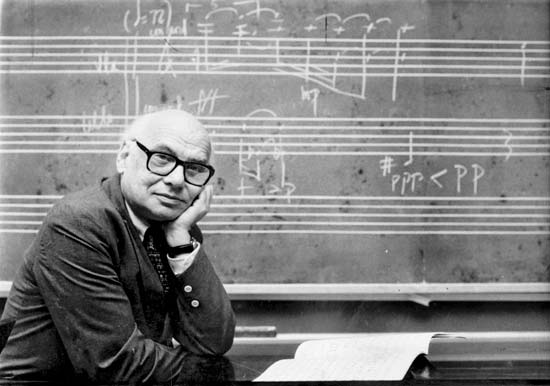
    PHOTO: Put your hands up for Pierre Boulez

  • Rochberg: D-Day, Music, and Unlikely Heroism

    Rochberg: D-Day, Music, and Unlikely Heroism

    On the 80th anniversary of D-Day, my thoughts turn to American composer George Rochberg, who could write symphonies with the best of them, but was also a man of principle, who had real guts.

    Rochberg, born in Paterson, NJ, in 1918, was for decades a fixture at the University of Pennsylvania, where he chaired the music department until 1968. He continued to teach there until 1983.

    But his big claim to fame – or, in some circles, notoriety – is that he was one of the first composers of his kind to emerge from the strictures of serialism, predominant in academic circles from mid-century, to embrace a new tonality. The shift was brought on, it is said, by the untimely loss of his son, Paul, to a brain tumor in 1964.

    Rochberg felt the musical vocabulary he had been employing inadequate to express his grief and rage. Beginning with his String Quartet No. 3 in 1971, he began to incorporate tonal passages back into his music, much to the dismay of his academic peers. His String Quartet No. 6 of 1978 includes a set of variations on Pachelbel’s “Canon.” Horrors!

    Little did anyone realize at the time that this was the most avant-garde thing Rochberg could have done. He was the unwitting prophet of a new pluralism that went on to become the norm.

    What is perhaps not so well known is that Rochberg’s mettle had been tested well before the petty skirmishes of Ivory Tower politics, when he was thrown into the deep-end of one of the pivotal operations of World War II.

    Rochberg was drafted into the U.S. Army infantry in 1942. A lot of musicians fulfilled their military service by composing marches or playing in military bands. Many were never even shipped overseas. While Rochberg did have his share of musical assignments, he saw real action as part of George S. Patton’s Third Army during its perilous breakout from Normandy following D-Day in 1944.

    Amy Lynn Wlodarski writes about it in her book, “George Rochberg, American Composer: Personal Trauma and Artistic Creativity” (University of Rochester Press, 2019):

    “Nearly fifty years later, he could still vividly recall the ‘look of fear’ on the faces of the soldiers who had been wounded in the initial onslaught: ‘Walking away from the plane that had just landed on an airstrip on Omaha Beach… and seeing the wounded, walking and on stretchers, going to the same plane that had just taken us from England. The look in their eyes, a look I’d never seen before that day. Almost an animal look; glistening fear, anxiety, uncertainty radiating from their eyes.’ Upon arrival, his division was immediately dispatched to help with the second stage of the invasion, which involved breaking through the hedgerows in northern France, a deafening assault that required explosive charges to dislodge the thick, thorny bushes of the French countryside. The fatigue from constant marching and physical work was overwhelming despite nearly a full year of basic training: ‘I remember being dog-tired [at] night. Apparently I [once] slept through some minor bombing by German reconnaissance planes.’”

    Mangled feet were par for the course, but Rochberg himself wound up taking a bullet, the first of several substantial injuries he would receive in combat. His doctors remarked that if it had been the First World War, it would have cost him a leg.

    The accepted narrative is that the composer’s later grief over the death of his son motivated his drift toward a more communicative means of expression in his music. But Rochberg was always at heart a humanist, and already during the war, twenty years earlier, his worldview and aesthetic outlook were beginning to coalesce, as when he came to regard the destruction he witnessed at the town of Saint-Lô, where the Allies faced off against the Second SS Panzer Division of the German Army, as “a metaphor for the precarious state of Western culture.”

    Rochberg, of course, was not the only artist to think this way. The war left its indelible mark on all the arts. In music, especially, its devastation and sorrow were reflected in the creations of composers on all sides, as demonstrated in Jeremy Eichler’s recent, excellent book, “Time’s Echo: The Second World War, the Holocaust, and the Music of Remembrance” (Knopf, 2023).

    The varied experiences of Richard Strauss, Arnold Schoenberg, Dmitri Shostakovich, and Benjamin Britten are examined at some length. None of them actually “saw action,” although Shostakovich was present during the siege of Leningrad and Britten performed on site for survivors of Bergen-Belsen. Rochberg is not part of the narrative.

    Rochberg drafted a number of musical sketches during the European campaign. These later became the basis for his Symphony No. 6, completed in 1986. The work is tonal, yet harmonically extremely loose. I don’t believe it has even been recorded for commercial release. The linked performance is conducted by Raymond Leppard, which is interesting, since Leppard was regarded for so long as a Baroque specialist. But of course his repertoire was much broader than that, and he conducted a number of first performances of works by contemporary composers.

    There’s another recording on YouTube, taken from a concert with Leppard conducting the Saint Louis Symphony, but the sound isn’t as good. So we’ll stick with this one, with Leppard’s own orchestra, the Indianapolis Symphony, the orchestra he directed from 1987 to 2001.

    What’s with the video’s moon imagery is anyone’s guess.

    Rochberg died in Bryn Mawr, outside Philadelphia, in 2005. He left more than 100 works, including six symphonies, seven string quartets, and an opera, “The Confidence Man,” after Melville. At the time of his death, he was 86-years-old.

    His service is remembered, as is that of everyone who made the push through on D-Day possible, so that the free world could achieve victory over fascism.


    Symphony No. 2 (1955-1956), serial but, contrary to the composer’s later concerns, still emotionally expressive

    Pachelbel Variations from the String Quartet No. 6 (1978)

    Opening of the “Transcendental Variations” (1971-1972, the third movement of Rochberg’s String Quartet No. 3, transcribed for string orchestra in 1975)


    PHOTO: Wlodarski and the cover of her book, with Rochberg in uniform

  • Milton Babbitt Beyond the Monster Myth

    Milton Babbitt Beyond the Monster Myth

    The headline read “Who Cares if You Listen?” And the notoriety was instant and long-lasting.

    All at once, Milton Babbitt was a musical monster.

    Babbitt, a staple at Princeton University for many years, was born in Philadelphia on this date in 1916. He received lasting blowback from angry villagers wielding torches and pitchforks for an essay he wrote for High Fidelity magazine, which bore the title stated above.

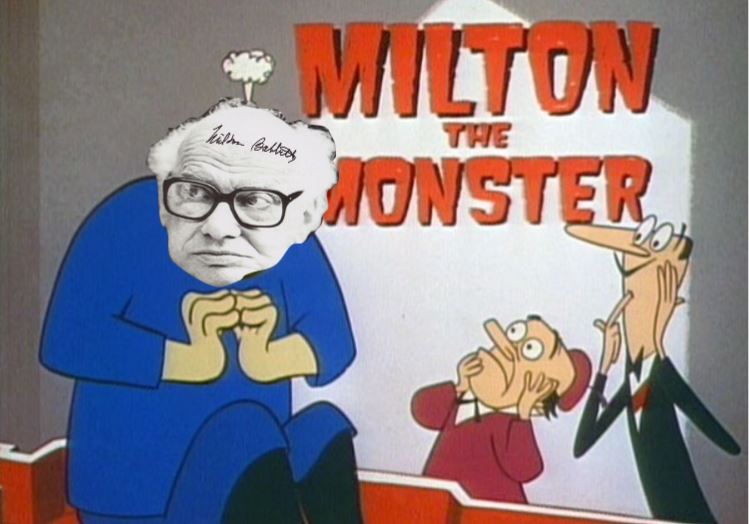
    Unfortunately, the headline wasn’t Babbitt’s. It was actually an editorial decision. Babbitt’s original title had been “The Composer as Specialist” – not nearly as eye-catching or provocative. Today, we might describe it as clickbait. But it stuck like Karloff’s neck-bolts, as both a source of animation and a signal of abnormality, branding him in the eyes of the superstitious rabble as an outcast to be feared.

    Also, it is kind of arrogant.

    While it’s true that Babbitt frequently composed in a serial style, which might be off-putting to some coming to it for the first time, his music is often fairly lucid, without undo congestion and with a minimum of soul-crushing dissonances. On the contrary, he often achieved a paradoxical simplicity under the guise of complexity.

    In the 1960s, Babbitt became interested in electronic music, apparently for its rhythmic precision, as opposed to any unusual timbral considerations. I find it endearing that he was also fond of jazz and musical theater and that late in life he enjoyed a friendship of sorts with film composer John Williams. (They bonded over Bernard Herrmann.) His one-time student, Stephen Sondheim, characterized him as “a frustrated show composer.”

    Babbitt himself was a saxophonist. In 1946, he penned a musical, “Fabulous Voyage,” a retelling of Homer’s “The Odyssey.”

    Yes, we all have our off-days, but the lasting impression Babbitt left on his students and colleagues seems to be that he was largely a warm and personable human being. He loved Broadway, beer, and football. Simple pleasures for someone portrayed as so lofty, he didn’t give a hang if you listened.

    Babbitt was the recipient of an honorary Pulitzer Prize in 1982. He died in Princeton in 2011, at the age of 94.

    Listen to “Penelope’s Night Song” from “Fabulous Voyage” and tell me if it seems to you like the product of a rampaging monster.

    “Composition for Twelve Instruments” (1948):

    “Reflections” (1974) for piano and synthesized tape:

    Milton Babbitt on electronic music:

    John Williams talks Babbitt in The New Yorker

    https://www.newyorker.com/culture/persons-of-interest/the-force-is-still-strong-with-john-williams?fbclid=IwAR1gsLDyvvw7MFV_1NTP2OYNFwkYSOqHhiwBatZFtCT1FFYe4qWw6pt0Ems

    If you’re interested in learning more about Princeton’s important role in the history of computer music and haven’t done so yet, do check out this podcast, produced by the Princeton University Engineering Department.

    Composers & Computers, a podcast

    I profiled the podcast’s creator, Aaron Nathans, in September for the Princeton weekly U.S. 1.

    https://www.communitynews.org/princetoninfo/artsandentertainment/a-good-ear-for-stories-and-electronic-music-inspires-a-princeton-podcast/article_93780110-3384-11ed-93a9-1ba8b9106ed7.html?fbclid=IwAR0vF9aavdWS2hecaAE5XkVs62EOYFY9fFHcQYRVr1jReBT6_-WFPuPoyyg

    A refresher on “Milton the Monster”

    “Milton the Monster” Mixed Horror with Humor

    Happy birthday, Milton Babbitt!

  • Milton Babbitt Serial Simplicity

    Milton Babbitt Serial Simplicity

    Who cares if you read this?

    Milton Babbitt, a staple at Princeton University for many years, was born in Philadelphia on this date in 1916. Babbitt gained widespread notoriety for an essay he wrote for High Fidelity magazine, titled “Who Cares If You Listen?” It turns out the provocative stance was actually the result of an editorial decision, and that Babbitt’s original title had been “The Composer as Specialist” – not likely to generate nearly as much controversy.

    While he frequently composed in a serial style, Babbitt’s music is often fairly lucid, without undo congestion and with a minimum of soul-crushing dissonances. On the contrary, he often achieved a paradoxical simplicity under the guise of complexity.

    In the 1960s, Babbitt became interested in electronic music, apparently for its rhythmic precision, as opposed to any unusual timbral considerations. I find it endearing that he was also fond of jazz and musical theater and that late in life he enjoyed a friendship of sorts with film composer John Williams. (They bonded over Bernard Herrmann.) His one-time student, Stephen Sondheim characterized him as “a frustrated show composer.”

    Babbitt himself was a saxophonist. In 1946, he penned a musical, “Fabulous Voyage,” a retelling of Homer’s “The Odyssey.”

    He was the recipient of an honorary Pulitzer Prize in 1982. Babbitt died in Princeton in 2011, at the age of 94.

    Listen here for “Penelope’s Night Song” from “Fabulous Voyage”:

    https://soundcloud.com/phillipc…/penelopes-night-song-from

    “Composition for Twelve Instruments” (1948):

    “Reflections” (1974) for piano and synthesized tape:

    Milton Babbitt on electronic music:

    John Williams talks Babbitt in The New Yorker

    https://www.newyorker.com/culture/persons-of-interest/the-force-is-still-strong-with-john-williams?fbclid=IwAR1-ndYl2wO4btjBdjgEBam70F8tEE7mLR51ykWmV5VHqb8ZcI5L_SgO5qI

    If you’re interested in learning more about Princeton’s important role in the history of computer music and haven’t done so yet, do check out this podcast, produced by the Princeton University Engineering Department.

    Composers & Computers, a podcast

    I profiled the podcast’s creator, Aaron Nathans, in September for the Princeton weekly U.S. 1.

    https://www.communitynews.org/princetoninfo/artsandentertainment/a-good-ear-for-stories-and-electronic-music-inspires-a-princeton-podcast/article_93780110-3384-11ed-93a9-1ba8b9106ed7.html

    Happy birthday, Milton Babbitt!

  • Alban Berg’s Shocking “Lulu” Opera

    Alban Berg’s Shocking “Lulu” Opera

    If one were to bake a birthday cake for Alban Berg, one would be forgiven for rendering a handgun in icing and hollowing out the layers to make room for prostitutes and madmen.

    When Berg came to write his sordid, darkly humorous, ultimately bloodcurdling masterpiece “Lulu,” he based it on the plays of Frank Wedekind. However, significantly, the influence of film also permeates the work.

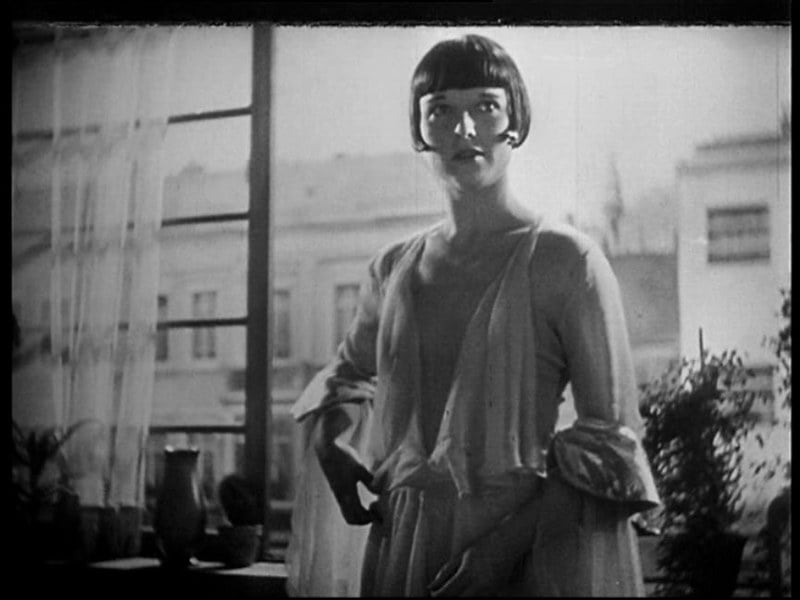
    I don’t know that it’s ever been proved, but the composer had to have seen Louise Brooks’ sensational performance in G.W. Pabst’s “Pandora’s Box” (1929). The scandalous silent film classic, based on the same material, was an international triumph, and to this day, stage Lulus frequently emulate Brooks’ iconic style.

    Also, at the very center of the opera is a filmed interlude. The composer was obsessed with symmetry and palindromes. They pervade the opera, so much so that in the cinematic centerpiece, a silent film that dramatizes the events surrounding Lulu’s incarceration and escape, the music reads the same backwards and forwards.

    In a piece that’s so aggressively contemporary in its decadence and cynicism, it’s unsurprising that Berg would embrace modern technology. One wonders what he would have made of the digital age.

    Love, eroticism, and death were nothing new to opera, but there is something about “Lulu” that’s especially disturbing and transgressive. It’s subversive, sleazy, squalid, and calculated to shock. It’s not for nothing that Lulu, the protagonist, is introduced by a lion tamer!

    But Lulu is just being Lulu. The title of the first of Wedekind’s plays is “Erdgeist” – “Earth Spirit.” Lulu is plucked from the streets, and her raw sexuality has devastating effects on both the men and women in her life. Moral confusion abounds. Sure, she makes some monstrous choices. But we’re left to wonder, as with Jessica Rabbit, is she bad, or did society just draw her that way?

    Lulu in her amorality is the product of in an inauthentic world. After three acts of unfettered destruction, she dies at the hands of Jack the Ripper. Serialism’s greatest heroine falls prey to history’s most notorious serial killer.

    Berg composed his opera between 1929 and 1935. The ‘30s were a fraught time in Europe. It goes without saying, the Nazis did not like “Lulu.” Berg himself may not have been Jewish, but his teacher, Arnold Schoenberg, high priest of dodecaphony, was. Berg’s twelve-tone idiom alone would have been enough to get his opera banned. And his reputation had already been made with the equally disturbing “Wozzeck,” given its first performance in Berlin in 1925. He was added to the Nazi catalogue of “entartete” composers in 1933.

    The composer did not live to see the Führer’s furor over “Lulu.” He died of blood poisoning, the result of an insect sting, on Christmas Eve 1935. He was 50 years-old.

    At the time of his death, the opera was not yet quite complete. He was well along on the piece when two things occurred:

    First, he learned from Wilhelm Furtwängler that the climate in Berlin was unfavorable to a performance there. So he broke off on orchestrating the opera to develop some of the music into a “Lulu Suite,” which he hoped to have played in concert. Erich Kleiber, who had introduced “Wozzeck” in 1925, programmed the suite at the Berlin State Opera. After the performance, he was forced to resign and basically run out of the country.

    Berg paused a second time to compose his Violin Concerto for Louis Krasner. This he dedicated to the memory of 18 year-old Manon Gropius, one of Berg’s muses, whom he and his wife had come to view as their own daughter. Manon’s birth parents were Alma Mahler, Gustav’s widow, and Walter Gropius. The concerto would go on to become Berg’s best-loved work.

    At some point, the composer wrote to Anton Webern to let him know that “Lulu” was essentially complete. He anticipated he would need only two or three weeks to overhaul it before he started in on its orchestration.

    After his death, it was found he had managed to complete most of it. The parts he did not were left in short score, with detailed indications as to his plans for filling out the orchestration. Nevertheless, Schoenberg, Webern, and Zemlinsky, all friends of Berg, declined to take up its completion. Berg’s widow was left with the impression that the task must have been impractical, if not impossible. It was only after her own death in 1976 that Friedrich Cerha moved ahead with plans to finish it.

    “Lulu” received its premiere, incomplete, in Switzerland, in 1937. Cerha’s edition was first staged soon after its publication in 1979. This was rapturously received, and it is now the preferred version.

    Berg was always considered the Romantic among serialists. One critic dubbed him “the Puccini of twelve-tone music.” “Lulu” is freely-composed, but makes use of the twelve-tone technique promulgated by Schoenberg. Fascinatingly, each character in the opera gets his or her own tone row, so that each of the rows serves the purpose of a leitmotif – a fragmentary slip of music, bearing extramusical associations – as in the works of Richard Wagner. But if there is an opera further from Wagner’s Valhalla than “Lulu,” I don’t know it!

    Interestingly, there was nothing at all sordid about Berg the man. There was no violence or scandal in his life. He was intellectual and well-spoken, and he didn’t consort with criminals and prostitutes. He just knew a good succès de scandale when he saw one.

    “Lulu” has long since taken its place in the standard repertoire, alongside Berg’s “Wozzeck.” I can’t say it’s the most pleasant night at the theater, but it is an absorbing one, and it still retains its modern edge.

    Happy birthday, Alban Berg!


    Berg’s “Lulu Suite”

    The Violin Concerto

    Louise Brooks as Lulu

    “Lulu”… by Lou Reed and Metallica?

Tag Cloud

Aaron Copland (92) Beethoven (95) Composer (114) Film Music (119) Film Score (143) Film Scores (255) Halloween (94) John Williams (185) KWAX (229) Leonard Bernstein (99) Marlboro Music Festival (125) Movie Music (134) Opera (198) Philadelphia Orchestra (86) Picture Perfect (174) Princeton Symphony Orchestra (106) Radio (87) Ralph Vaughan Williams (85) Ross Amico (244) Roy's Tie-Dye Sci-Fi Corner (290) The Classical Network (101) The Lost Chord (268) Vaughan Williams (102) WPRB (396) WWFM (881)

DON’T MISS A BEAT

Receive a weekly digest every Sunday at noon by signing up here


RECENT POSTS