
Once more unto the beach, dear friends!
This morning on “Sweetness and Light,” for Labor Day weekend, we’ll wring the last from our beach towels as we bid farewell to the summer season.
I’ll have two works that are Jersey Shore specific, including the “Cape May Suite” by Rick Sowash (who lives in Cincinnati) and “The Atlantic City Pageant” by John Philip Sousa – named for the famous beauty pageant and given its first performance on Atlantic City’s Steel Pier.
We’ll also hear from Virgil Thomson, Émile Waldteufel, Ronald Binge, Clive Richardson, Ralph Vaughan Williams, John Williams, and Morton Gould.
It will be hotter than Harfleur, but we’ll seek solace in the surf. Join me by the seaside for the last throes of summer, on “Sweetness and Light,” this Saturday morning at 11:00 EDT/8:00 PDT, exclusively on KWAX Classical Oregon!
Stream it, wherever you are, at the link:
https://kwax.uoregon.edu/
Tag: Shakespeare
-
A Dream to Some… A Nightmare to Others!
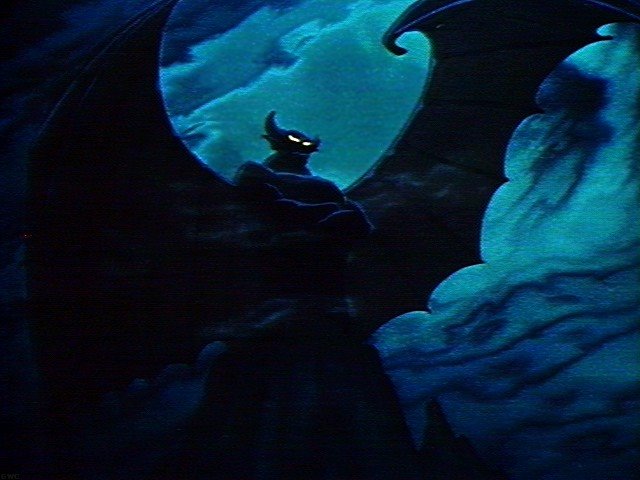
Even though the solstice was on Sunday, the longest day, a lot of Europeans celebrate the height of the season tonight, St. John’s Eve. For the record, that’s when the demon Chernobog is supposed to emerge from Bald Mountain – regardless of what Disney may think. (The narrator of “Fantasia,” Deems Taylor, says it’s supposed to be Walpurgis Night, April 30, the eve of May Day.)
In England, June 23 is Midsummer’s Eve, the setting of Shakespeare’s most famous comedy. I have a soft spot for the 1935 film version of “A Midsummer Night’s Dream,” overseen by Viennese impresario Max Reinhardt and featuring a real hodgepodge of actors from the Warner Bros. stable, including crooner (and later tough guy) Dick Powell as Lysander, Olivia de Havilland as Hermia, James Cagney as Bottom, and yes, 14-year-old Mickey Rooney as Puck.
But it’s the technical achievement that really puts it over. The opulent film (spun off from an extravagant Hollywood Bowl production) sports an effervescent score by Erich Wolfgang Korngold, woven together with dewy gossamer from the compositions of Felix Mendelssohn, enthralling production design and art direction by Anton Grot, with an especially delightful sequence of fairies ascending a woodland mist encircling a tree, and poetic choreography by Branislava Nijinska. There’s so much poetry in this movie it even sustains the ridiculous antlered crown worn by magnificent Victor Jury (soon to play John Wilkerson, the unsavory overseer in “Gone with the Wind”), putting his superior elocution to impressive use as Oberon.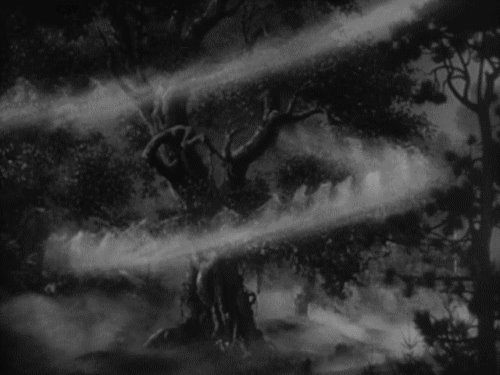
“A Midsummer Night’s Dream” has been filmed many times, of course. (I’m still trying to forget a middle-aged Stanley Tucci as Puck, riding a turtle, from the frustrating 1999 version, also starring Michelle Pfeiffer and Kevin Kline.)
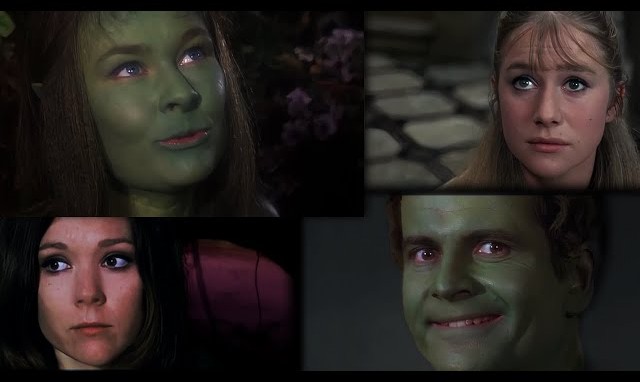
One I find especially unpleasant sports perhaps the most impressive pedigree of them all – a 1968 version that stars, among others, Judy Dench, Helen Mirren, Diana Rigg, David Warner, and Ian Holm, in green body paint, as perhaps the creepiest Puck in history. Also, for “Star Wars” aficionados, one-time Annakin Skywalker (before George Lucas scrubbed him out) Sebastian Shaw as Peter Quince. To think, the film is directed by theatrical deity Peter Hall! With such an assemblage of talent, how could it miss?
Well, it *was* 1968, and there were certainly more attractive, more lucid eras. As I recall, the film is uningratiating – ugly and claustrophobic, with hand-held cameras and “Kung Fu Theater” style editing, little concern for the beauty of the language, and perhaps Holm’s only bad performance (with that damn tongue).*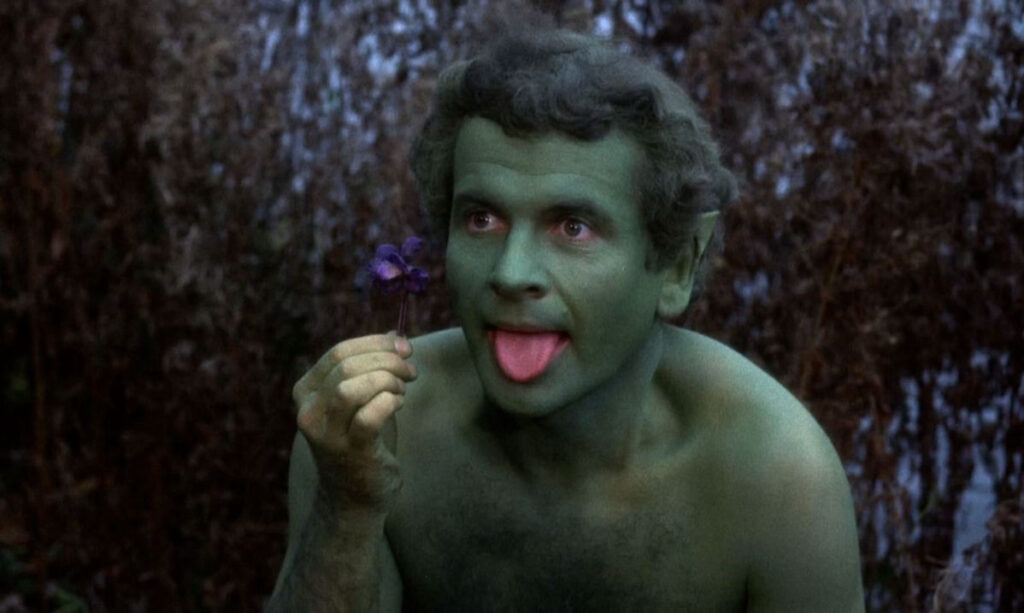
I disliked it so intensely, in fact, that it’s one of those instances in which I feel surely it couldn’t be as bad as I remember. This is the most dangerous kind of bad, because there’s a good chance I will wander back to it, lured beyond my will by curiosity and fey enchantment.
I must say, at least the print at the link is in the best resolution I have ever seen. I’m used to encountering it in transfers from grainy VHS. Here it is. Don’t say I didn’t warn you!
Then check out the 1935 version, for the production, especially. It really is like a dream. Perhaps it won’t hit you the same way it does me, but I find it to be pure enchantment. Here’s a taste.
It’s unfortunate I couldn’t find a crisper transfer.
Americans might question why Midsummer would fall at the beginning of the season. Traditionally, in much of Europe, summer began on May Day. Under the Julian calendar, the calendar employed the Roman Empire that traveled to Anglo-Saxon England, summer began on May 9. So Midsummer is June 24.
Yeah, they got it wrong, but when in Rome…
Happy Midsummer Night!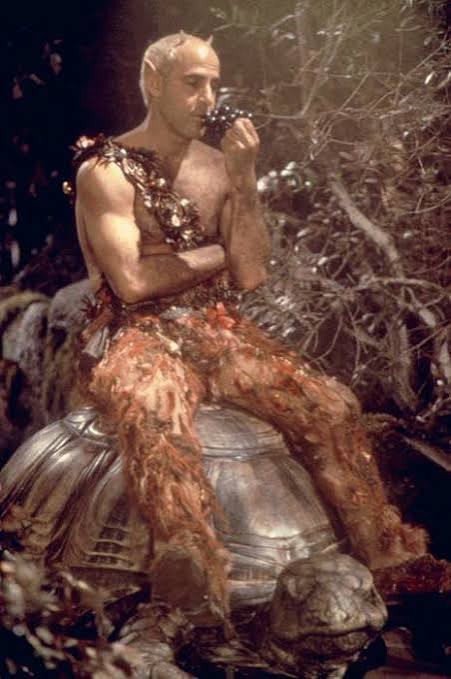
———-*EDIT: Okay, maybe I went too far in my savaging of the 1968 version with “little concern for the beauty of the language.” This is one cleanly-articulated text. I’ve been noticing of late how nobody these days enunciates. So the readings were actually quite refreshing. The problems (the rapid-fire delivery and disruptive editing) don’t really kick in until the fairies show up. Holm must have had a thermos of coffee and a kilo of cocaine every morning on the way to the shoot. It’s still an ugly movie, but if you just listen to the words, it’s actually quite good. And of course, you can’t dismiss it out hand with that cast!
-
Romeo and Juliet Ends in Cat-astrophe
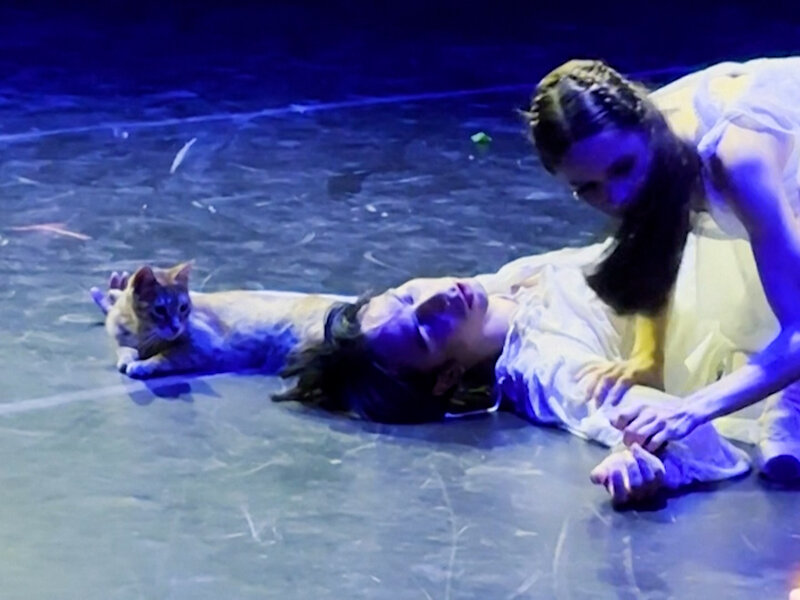
I guess Tybalt wasn’t the only rat-catcher in this production of “Romeo and Juliet.”
A stray cat brought unexpected levity to Prokofiev’s “Romeo and Juliet” during a performance by the Imperial Russian Ballet in Izmir, Turkey. Far from being upset by the four-legged interloper, the dancers evidently took to the feline balletomane, as he or she was brought out a few minutes later to share in the final bow. Later, it was shown that the ginger started turning up at rehearsals.
Scroll down to watch all three videos at the link.
https://slippedisc.com/2026/06/cat-steals-the-scene-in-ro-meouw-and-juliet-ballet/
Isn’t the Imperial Russian Ballet now properly identified as the Mariinsky?
Or hereafter, the Meow-riinsky? -
So Much for Escapism: Power Corrupts on “The Lost Chord”
This week on “The Lost Chord,” I indulge my inner English major with a program inspired by two plays that explore the relationship of power and corruption – Shakespeare’s “Macbeth” and Eugene O’Neill’s “The Emperor Jones.”
The impulse grew out of my recollection of the rarely-heard ballet by Heitor Villa-Lobos, which originally aired on television in 1957. However, since the score was never published, it was believed lost for decades until rediscovered by the conductor Jan Wagner (who is Venezuelan, despite his Teutonic name). Wagner will conduct the Odense Symphony Orchestra, a Nordic band, in a surprisingly idiomatic performance.
Also on the program will be a half-remembered relic of American musical history, an aria from Louis Gruenberg’s opera, “The Emperor Jones,” sung by baritone Lawrence Tibbett, recorded in 1933.
“The Emperor Jones,” written in 1920, could be a potentially sensitive subject in a more politically correct era. No doubt about it, O’Neill’s tragedy is a product of its time, with plenty of minstrel show dialect, and the uncomfortable use of the N-word.
Already in 1924, Sidney Gilpin, the actor who created Brutus Jones, hedged at playing the character in its first revival, unless O’Neill first changed what he perceived as some of the more offensive passages. O’Neill stood his ground, and Gilpin’s replacement, Paul Robeson, went on to international stardom.
It’s easy to write-off “The Emperor Jones” as an embarrassing relic. Yet there have been some high-profile stagings over the past few years which demonstrate that the play still has much to tell us.
Jones is a former railroad porter and convict, who kills a guard in his escape from prison, and through bluff and bravado establishes himself as emperor of a Caribbean island. He maintains his power through cruelty and exploitation. However, he overplays his hand, and the situation quickly erodes. As his subjects rise up against him, Jones retreats into the jungle and descends into primal fear, haunted by images of his victims.
The play not only parallels some of the themes of “Macbeth,” it also demonstrates the fragility of human reason; how easily under the influence of adrenaline, brought on by raw terror, man is undone by the animal impulses of fight or flight; the psychological impact of guilt; and an insight into tyranny which was remarkably prescient given that fascism would soon overtake Europe.
I don’t know why it never occurred to me before to juxtapose the two plays, but a quick Google search reveals that I am not the first, so there goes my dream of an honorary doctorate.
Also on the show will be selections from rarely-heard incidental music written for two productions of “Macbeth,” by William Walton (for John Gielgud) and Sir Arthur Sullivan (for Henry Irving), respectively.
Power corrupts, on “Power Plays,” on “The Lost Chord,” now in syndication on KWAX Classical Oregon!
——–
Clip and save the start times for all three of my recorded shows:
PICTURE PERFECT, the movie music show – Friday at 8:00 PM EDT/5:00 PM PDT
SWEETNESS AND LIGHT, the light music program – Saturday at 11:00 AM EDT/8:00 AM PDT
THE LOST CHORD, unusual and neglected rep – Saturday at 7:00 PM EDT/4:00 PM PDT
Stream them, wherever you are, at the link!
https://kwax.uoregon.edu
——–
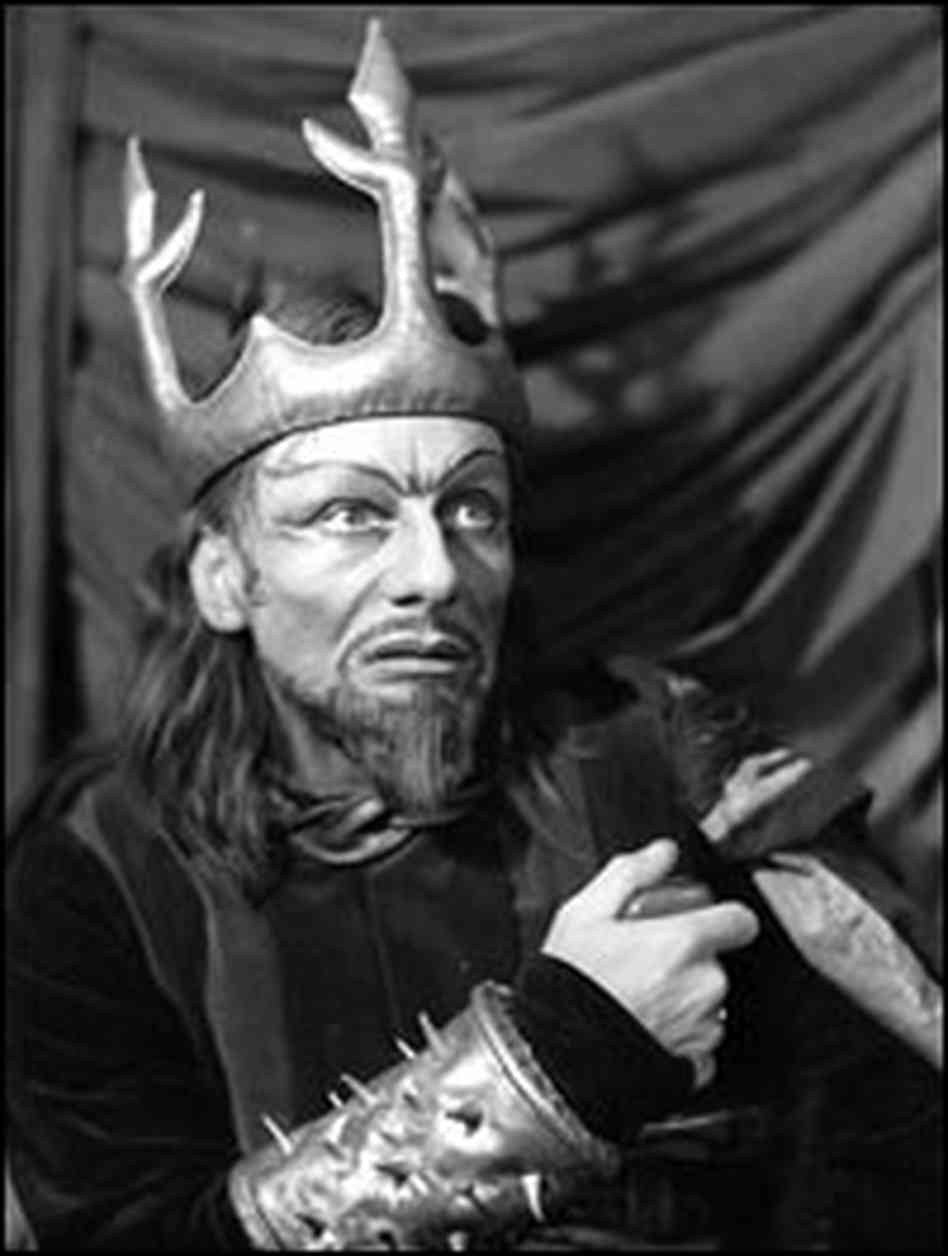
PHOTOS: Gielgud as Macbeth (top) and Tibbett as Brutus Jones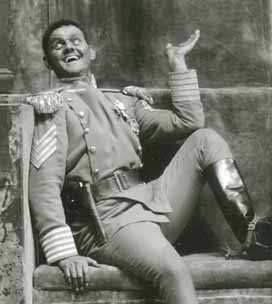
-

All the World’s a Rager, as We Celebrate Shakespeare on “Sweetness and Light”
We don’t know exactly when Shakespeare was born. We do know that he was baptized on April 26, 1564. Since he died on April 23, 1616, the urge to keep it tidy has been too difficult to resist: traditionally the Bard’s birthday has been observed on the same date as that of his death. At any rate, we hardly need an excuse to celebrate his plays, which have inspired lots of colorful music.
I hope you’ll join me this morning on “Sweetness and Light” for our annual Shakespeare celebration. We’ll hear a comedy overture inspired by “Hamlet,” of all things, by Geoffrey Bush; a suite compiled from incidental music for “The Winter’s Tale,” “As You Like It,” and “The Tempest,” by Engelbert Humperdinck (composer of “Hansel and Gretel”); a prelude from one of Sir William Walton’s majestic film scores; further works for the stage by Charles Gounod and Erich Wolfgang Korngold; and one of Ralph Vaughan Williams’ loveliest creations, the “Serenade to Music,” inspired by a passage from “The Merchant of Venice.” This is a piece of such aching beauty, it’s said to have brought the notoriously dour Sergei Rachmaninoff, present at the work’s first performance, to tears.
Laughing at “Hamlet” and crying at beauty? Partying is such sweet sorrow! I hope you’ll join me for an hour of great Shakes on “Sweetness and Light,” this Saturday morning at 11:00 EDT/8:00 PDT, exclusively on KWAX Classical Oregon!
Stream it, wherever you are, at the link!
https://kwax.uoregon.edu/
Tag Cloud
Aaron Copland (93) Beethoven (95) Composer (114) Film Music (144) Film Score (143) Film Scores (255) Halloween (94) John Williams (195) KWAX (229) Leonard Bernstein (104) Marlboro Music Festival (125) Movie Music (159) Mozart (90) Opera (212) Philadelphia Orchestra (89) Picture Perfect (174) Princeton Symphony Orchestra (109) Radio (88) Ross Amico (244) Roy's Tie-Dye Sci-Fi Corner (290) The Classical Network (101) The Lost Chord (269) Vaughan Williams (105) WPRB (397) WWFM (881)