Tag: Shakespeare

  • Shakespeare Birthday Beastmaster and the Bard

    Shakespeare Birthday Beastmaster and the Bard

    Happy birthday – and lamentable death date – William Shakespeare!

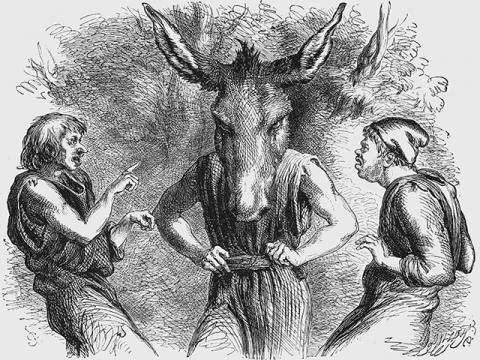
    There is often the sheerest membrane between the Bard and pseudo-historical (or pre-historical) fantasy trash. And I’m not complaining. My favorite production of “The Taming of the Shrew” happens to star The Beastmaster.

    “The Taming of the Shrew” with Marc Singer:

    Marc Singer in “The Beastmaster”:

    https://www.youtube.com/watch?v=f7h7frRoAPk

    #Shakespeare400

  • Shakespeare Goes Italian: Welles & Zeffirelli Films

    Shakespeare Goes Italian: Welles & Zeffirelli Films

    Not only is William Shakespeare arguably England’s greatest poet and playwright, he certainly has legs. The Bard’s influence has been felt all around the globe. His plays have been translated into virtually every language, and filmmakers in such diverse cultures as those of India, Japan and Argentina have adapted his work for the silver screen.

    This week on “Picture Perfect,” we’ll be giving the Bard “the boot,” as we turn our attention to Italy, with two films by Orson Welles and two by Franco Zeffirelli.

    Just about everyone knows about Welles’ difficulties in Hollywood after skewering William Randolph Hearst in “Citizen Kane.” But Welles also was never one to take compromise lightly. As a result, he was frequently forced to strike out on his own, secure his own funding and come up with creative solutions when the money ran out.

    There is a famous bit of ingenuity on display in Welles’ adaptation of “Othello” (1949). The film was shot on and off over a period of three years and at various locales in Italy and Tunisia, as Welles would race off to earn money by acting in other pictures. One important scene was shot in a Turkish bath, with the actors clad in towels, since Welles’ couldn’t pay for the necessary costumes.

    For the music, Welles employed Angelo Francesco Lavagnino, a classically trained musician who, after a career in concert hall and conservatory, turned to film in the 1950s. He became one of the best-known Italian film composers of the era. He was actually Sergio Leone’s first choice to score “A Fistful of Dollars,” but his distributor insisted he use a young, less well-established Ennio Morricone instead.

    Lavagnino would be engaged by Welles for several other projects, including a television movie of “The Merchant of Venice.” Sadly, as was generally the case with Welles’ later films, lack of funding played a role in keeping “Don Quixote” from reaching the scoring stage.

    Lavagnino received very little or even no payment for his work on Welles’ pictures, though he was honored to collaborate with the legendary director. For his part, Welles was only too happy to work with Lavagnino, whose music he admired, certainly. But there was an additional incentive in that, in Italy, it was the practice that record companies would pay for everything – orchestration, recording and everything else – since they kept the rights.

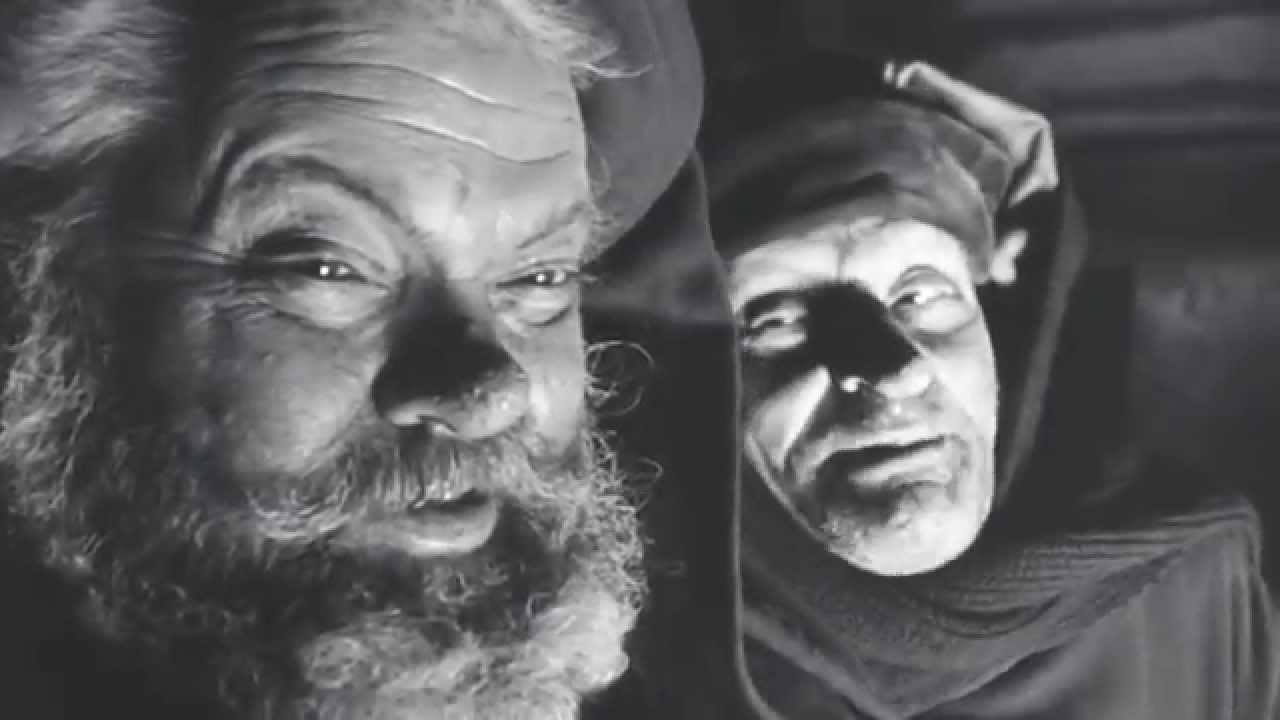
    “Chimes at Midnight” (1965), Welles’ compilation of the Falstaff plays, though a Spanish-Swiss production, was also scored by Lavignino. Welles’ performance in the picture is considered to be one of his finest. Also in the cast were John Gielgud, Jeanne Moreau and Margaret Rutherford. Vincent Canby of the New York Times wrote that “Chimes at Midnight” “… may be the greatest Shakespearean film ever made, bar none.” Lavagnino modeled much of his score on Early Music, since Welles had used a lot of it on the temp track. (Coincidentally, this film is now on the schedule of the Princeton Garden Theatre.)

    Speaking of Morricone, he was very well-established by the time he was approached by director Franco Zeffirelli to score his screen adaptation of “Hamlet” (1990). The film featured a venerable supporting cast, with Glenn Close, Ian Holm, Helena Bonham Carter, Alan Bates and Paul Scofield, and Mel Gibson did a surprisingly respectable job as the lead. At the time, Gibson was known for his action roles.

    Zeffirelli has had notable success adapting Shakespeare, both for film and the operatic stage. He directed a lively film version of “The Taming of the Shrew,” with Elizabeth Taylor and Richard Burton, and an adaptation of Verdi’s “Otello,” with Placido Domingo recreating one of his most celebrated roles.

    By far, however, his biggest success came with “Romeo and Juliet” (1968). Much was made of the fact that the film’s leads, Leonard Whiting and Olivia Hussey, were closer than usual to the age of the characters in the play. “Romeo and Juliet” became one of the great date movies and retains its broad appeal. The score, by Nino Rota, spawned a popular hit, “A Time for Us.”

    I hope you’ll join me for “Shakespeare Italian-Style,” this Friday evening at 6 EDT, with a repeat Saturday morning at 6; or that you’ll listen to it later as a webcast at wwfm.org.

    #Shakespeare400

  • Shakespeare Anniversary Celebration on WPRB

    Shakespeare Anniversary Celebration on WPRB

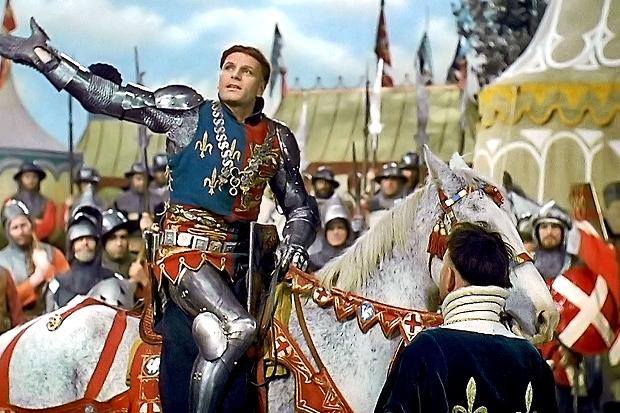
    Saturday is the big day. The 400th anniversary of the death of William Shakespeare. Also the anniversary of his birthday (52 years earlier), allegedly. Have you anything special planned? Back-to-back screenings of the Olivier and Branagh versions of “Henry V?” Falstaff beer pong? A “Hamlet” sleepover?

    We’ll do our best to get your creative juices flowing this morning, as we set the scene with the third of four programs devoted to music inspired by the Bard’s plays. Be with me bright and early for Johan Svendsen’s “Romeo and Juliet,” Sir William Walton’s “As You Like It,” and Josef Bohuslav Foerster’s “From Shakespeare,” really musical portraits of four female characters from Shakespeare’s plays (Perdita from “The Winter’s Tale,” Viola from “Twelfth Night,” Lady Macbeth from, well, “Macbeth,” and Katherina from “The Taming of the Shrew”). And that’s just in the 6:00 hour!

    Before too late, we’ll also have Erich Wolfgang Korngold’s “Much Ado About Nothing” and “Cymbeline” by his teacher, Alexander Zemlinsky. By then, you should be sufficiently caffeinated to compose sonnets with a quill.

    I’ll be welcoming two guests this morning: Mariusz Smolij, music director of the Riverside Symphonia , who will tell us about his orchestra’s Friday night concert at St. Martin of Tours Church in New Hope – he’ll talk to us a little after 8 – and William Walker from The Princeton Singers will drop by a little after 9 to tell us about the choir’s Shakespeare-inspired concerts at Princeton University Art Museum on Saturday evening.

    Music and sweet poetry agree this morning, from 6 to 11 EDT, on WPRB 103.3 FM and at wprb.com. We’re donning an Elizabethan collar, on Classic Ross Amico.

    #Shakespeare400

  • Shakespeare Music Korngold Zemlinsky on WPRB

    Shakespeare Music Korngold Zemlinsky on WPRB

    Right now, we’re listening to some of Erich Wolfgang Korngold’s music for “Much Ado About Nothing.” Though he wrote it in his early 20s, for a 1919 production of the play in Vienna, the “Korngold sound” is already very much in evidence. It would later serve him well during his time in Hollywood, where he would compose music for films like “The Adventures of Robin Hood.” Later on in the hour, we’ll hear music by Korngold’s teacher, Alexander Zemlinsky, written for a production of Shakespeare’s “Cymbeline.”

    Around 9:00, we’ll be joined by William Walker of The Princeton Singers, who will tell us all about the choir’s Shakespeare-inspired concerts coming up this Saturday evening at Princeton University Art Museum.

    Before the morning is out, we’ll hear Ralph Vaughan Williams’ “Serenade to Music” (on a text from “The Merchant of Venice”) and Paul Moravec’s 2004 Pulitzer Prize-winning composition, “Tempest Fantasy.” It’s all Shakespeare Thursday mornings until 11:00 EDT, as we commemorate the 400th anniversary of the Bard’s death (on April 23, 1616), on WPRB 103.3 FM and at wprb.com.


    “Be not afeard. The isle is full of noises,
    Sounds, and sweet airs that give delight and hurt not.
    Sometimes a thousand twangling instruments
    Will hum about mine ears, and sometime voices
    That, if I then had waked after long sleep,
    Will make me sleep again. And then, in dreaming,
    The clouds methought would open and show riches
    Ready to drop upon me, that when I waked
    I cried to dream again.”

    • Caliban, “The Tempest,” Act III, scene 2
  • Shakespeare on the Radio: A Bard Celebration #Shakespeare400

    Shakespeare on the Radio: A Bard Celebration #Shakespeare400

    Once more unto the breach, dear friends!

    With two weeks left in our four-part celebration of William Shakespeare this month, we’ve still got a lot of ground to cover. In case you haven’t heard, April 23 marks the 400th anniversary of the Bard’s death. (It’s also traditionally held to be the date of his birth, 52 years earlier.) Every Thursday morning on WPRB, we’re listening to music inspired by Shakespeare’s plays and sonnets.

    In the remaining hours, I am hoping to get to the following composers and works: Geoffrey Bush’s “Yorick,” Cecil Coles’ “Comedy of Errors Overture,” David Diamond’s “Music for Romeo and Juliet,” Gerald Finzi’s “Let Us Garlands Bring,” Josef Bohuslav Foerster’s “From Shakespeare,” Erich Wolfgang Korngold’s “Much Ado About Nothing,” Florent Schmitt’s “Antony and Cleopatra” (in a recent recording with the Buffalo Philharmonic Orchestra conducted by JoAnn Falletta), Jean Sibelius’ “The Tempest,” Bedrich Smetana’s “Richard III,” Ralph Vaughan Williams’ “Serenade to Music” (on a text from “The Merchant of Venice”), Sir William Walton’s “Macbeth,” and Alexander Zemlinsky’s “Cymbeline,” among others.

    In this week of the Pulitzer Prizes, we’ll also hear Paul Moravec’s “Tempest Fantasy,” the 2004 winner of the Pulitzer Prize for Music.

    With only ten hours to go, can I possibly program all of these, with additional surprises? Where there’s a Will, there’s a way! Maybe I’m a utopianist, but I sure will try. I have no idea if and when any of them will be played, so you will just have to tune in whenever you can, for as long as you can.

    I’ll also welcome two guests tomorrow: Mariusz Smolij, music director of the Riverside Symphonia, will tell us about his orchestra’s Friday night concert at St. Martin of Tours Church in New Hope – he’ll talk to us a little after 8 a.m. – and William Walker from The Princeton Singers will drop by a little after 9 to tell us about their Shakespeare-inspired concerts at Princeton University Art Museum on Saturday evening.

    We’re buried by the Bard, Thursday mornings in April, from 6 to 11 EDT, on WPRB 103.3 FM and at wprb.com. We’re all shook up for Shakespeare, on Classic Ross Amico.


    PHOTO: Funerary monument, carved by Gerard Johnson, a Shakespeare contemporary, which overlooks Shakespeare’s grave at Holy Trinity Church at Stratford-upon-Avon.

    The epitaph on the grave itself (attributed to Shakespeare):

    Good friend for Jesus sake forbeare,
    To dig the dust enclosed here.
    Blessed be the man that spares these stones,
    And cursed be he that moves my bones.

    #Shakespeare400

Tag Cloud

Aaron Copland (92) Beethoven (95) Composer (114) Film Music (120) Film Score (143) Film Scores (255) Halloween (94) John Williams (185) KWAX (229) Leonard Bernstein (100) Marlboro Music Festival (125) Movie Music (135) Opera (198) Philadelphia Orchestra (88) Picture Perfect (174) Princeton Symphony Orchestra (106) Radio (87) Ralph Vaughan Williams (85) Ross Amico (244) Roy's Tie-Dye Sci-Fi Corner (290) The Classical Network (101) The Lost Chord (268) Vaughan Williams (103) WPRB (396) WWFM (881)

DON’T MISS A BEAT

Receive a weekly digest every Sunday at noon by signing up here


RECENT POSTS