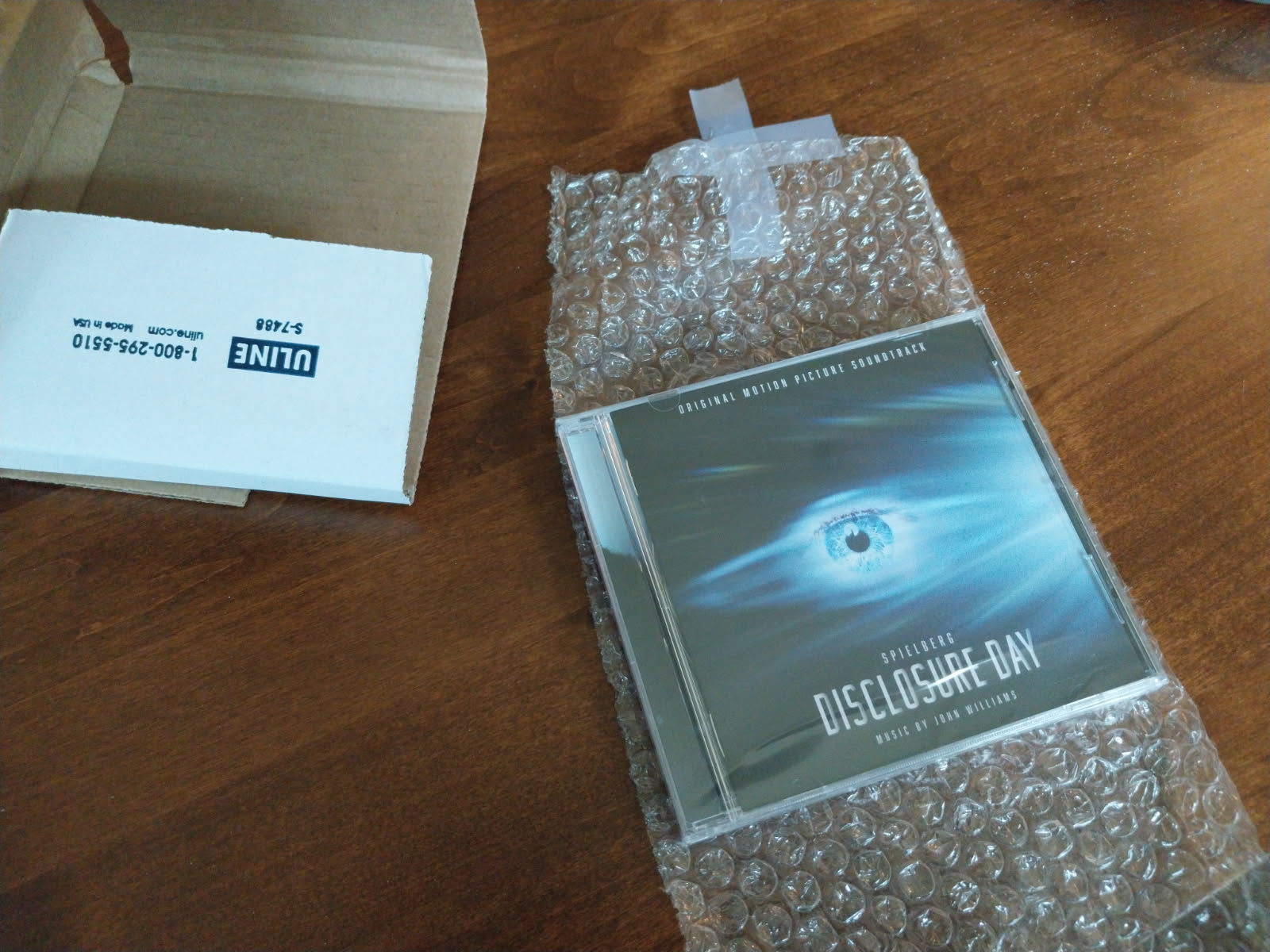
This finally arrived in the mail last week. Does anyone who’s seen the movie even remember it at this point? The quality of the film aside, I am always thankful for more John Williams, especially when he’s not squandering his talent on the diminishing returns of “Star Wars” or Indiana Jones.
What’s remarkable, Williams having written and recorded this at the ages of 93 and 94, is how good it is. This is not one of his scores in “heroic blockbuster” mode. The car chase cue is one of the least remarkable tracks on the album. The train scene everyone raves about, for some reason (it makes no sense), is presented in the film without music. Rather, it is the emotional moments and the moments of wonder (in the music, if not the film) that resonate and remind one of what the movie is so sorely lacking.
The film opened on June 12. I ordered the CD from Waxwork Records on June 18. The soundtrack was shipped exactly one month later. This should not be construed as a slam against Waxwork. It’s just the way things are now, and I can’t see how it helps sales. If the product is not available for purchase by your average, moderately-interested person on the street, either immediately in a brick-and-mortar shop or for two-day delivery from an online retailer, how can you expect more than a few thousand sales, mostly to hardcore John Williams fans and die-hard film score collectors? I guarantee Williams’ name alone would generate many times that amount, if only they would make it easier for people to buy it. As it is, it’s not even available on Amazon, save as a digital download.
Quality-wise, I have no qualms. This is a polished product of the sort that used to be put out by the major labels. The sound is immediate, without seeming to be right in your face; the choral contributions and electronic elements blend well with the acoustic instruments. I must say, the bass is quite striking, to a degree I haven’t really noticed in previous orchestral soundtrack releases – although I confess my consumption of newer movie music has diminished, most of my purchases tending toward music of decades past. Considerably past, in terms of most of the classical stuff. If you want to really feel the lower registers – the cellos, double basses, and percussion – “Disclosure Day” has a unique, appealing sound. More important is the content, and there’s plenty here, in terms of emotion and lyricism, for me to enjoy.
Alas, physical media are not the priority they once were. I miss the days of just being able to walk into a record store and buy a soundtrack when it arrived a week or two before a film’s release. Now, if you want the CD, you have to do your research, find out who is distributing it, and jump through the hoops of preorder and postal delivery. The digital downloads for “Disclosure Day” weren’t even available until the day of the film’s release. I really don’t understand this strategy. A successful soundtrack album has always been one more tool with which to sell a film. How many repeat viewings has Williams’ music inspired? But all that is peanuts, I suppose, in a world in which a movie has to make $300 million in order to turn a profit.
When I called Waxwork to request a few tracks to air on one of my radio shows in advance of the official soundtrack release, I was told it wouldn’t be possible; there would be a rights issues, and I would have to contact Universal directly. Everything has become such a corporate labyrinth over the past decades, it’s like trying to infiltrate the Illuminati to get permission from a studio. Don’t even get me started on Disney. At least at Waxwork someone actually answered the phone, and he was normal and pleasant, competent and human and real, the way people used to be. The prospect of having to deal with Universal was not appealing. In the end, I decided to wait the extra week and just air some tracks from the digital download. So yeah, I bought the soundtrack twice.
All this jealously-guarded secrecy surrounding every aspect of the film, and the final trailer basically gives away the entire movie…
My summation is spoiler-free: I can describe my viewing experience as one of anger, at the start, softening, by the end, to disappointment. At least Emily Blunt and John Williams were good, though I have to admit, in the scenes where Spielberg tries to be more contemporary and dystopian, the score does seem a bit out of place. As I say, Williams does emotion and wonder very well. Watching “Disclosure Day” was a reminder of how much those two qualities are lacking in movies today. Even Spielberg movies, apparently.
I can’t believe I am living in a world where you can’t get a CD of a John Williams soundtrack. The guy who broke all records for soundtrack sales and singlehandedly revived the orchestral film score with such verve that it carried into the 21st century. His appeal transcends the collectors’ market, or at least it did. But since everyone’s awareness about anything, beyond what they are fed on social media, seems to have diminished, you have to be 50 years old to remember a better world.
Disney has to be the biggest group of idiots, judging from its handling of Williams’ last soundtrack, for “Indiana Jones and the Dial of Destiny” – a far less interesting score, save for the delectable “Helen’s Theme,” which is pure golden age, though evidently not appreciated by everyone. As has been the case with the current score, clearly different people expect different things from John Williams. If it doesn’t possess “Jurassic Park” bombast, they’re incapable of recognizing or remembering a theme, apparently. At its best, the music for “Disclosure Day” is gorgeous. I’ve already commented on how the opening track, “Listen,” taps into the spiritual world of Vaughan Williams’ “Tallis Fantasia.” Already, right there, I am sold.
Others have pointed out a kinship between one of the tracks and Williams’ music for Spielberg’s “A.I.,” which, by the way, is easily my most-hated Spielberg film. And while I’m at it, he really missed the boat on creating a prescient sci-fi classic about honest-to-goodness, now-in-the-headlines, anxiety-provoking A.I.! While “Disclosure Day” doesn’t make me violently angry the way “A.I.” did, both movies make me question why I ever liked Spielberg to begin with. But then I remember “Jaws,” “Raiders,” “CE3K,” “E.T.,” and a few others.
“Disclosure Day” is no “Close Encounters,” for as much as it wants to be, and it is certainly no “E.T.” Say what you want about Spielberg’s remake of “War of the Worlds,” at least it was coherent. In 2 ½ hours, “Disclosure Day” has plenty of time to tell its story. But the ideas the screenplay seems to think are the most profound don’t cut very deep, at least in the way they are handled, and plot holes so glaring a ten-year-old child would recognize them are brushed off with a single line of dialogue, if that.
Despite some nice visual touches and some potentially interesting, sadly underdeveloped ideas, there’s more talk than show in what is, after all, a visual medium, and one this director has always exploited better than just about everyone else.
“Disclosure Day” often doesn’t make sense, and I couldn’t understand what any of the critics saw in it, until I realized we have very few actual critics who understand movies anymore, or even basic storytelling. The film proves that, if Spielberg wants to speak to the heart, if he wants empathy and wants us to “listen,” then John Williams is indispensable.
This soundtrack gives me a lot of pleasure, and moves me in a way the movie most definitely did not.
Tag: Steven Spielberg
-
Full Disclosure About “Disclosure Day”
-
“Disclosure Day” Disclosed on “Picture Perfect”
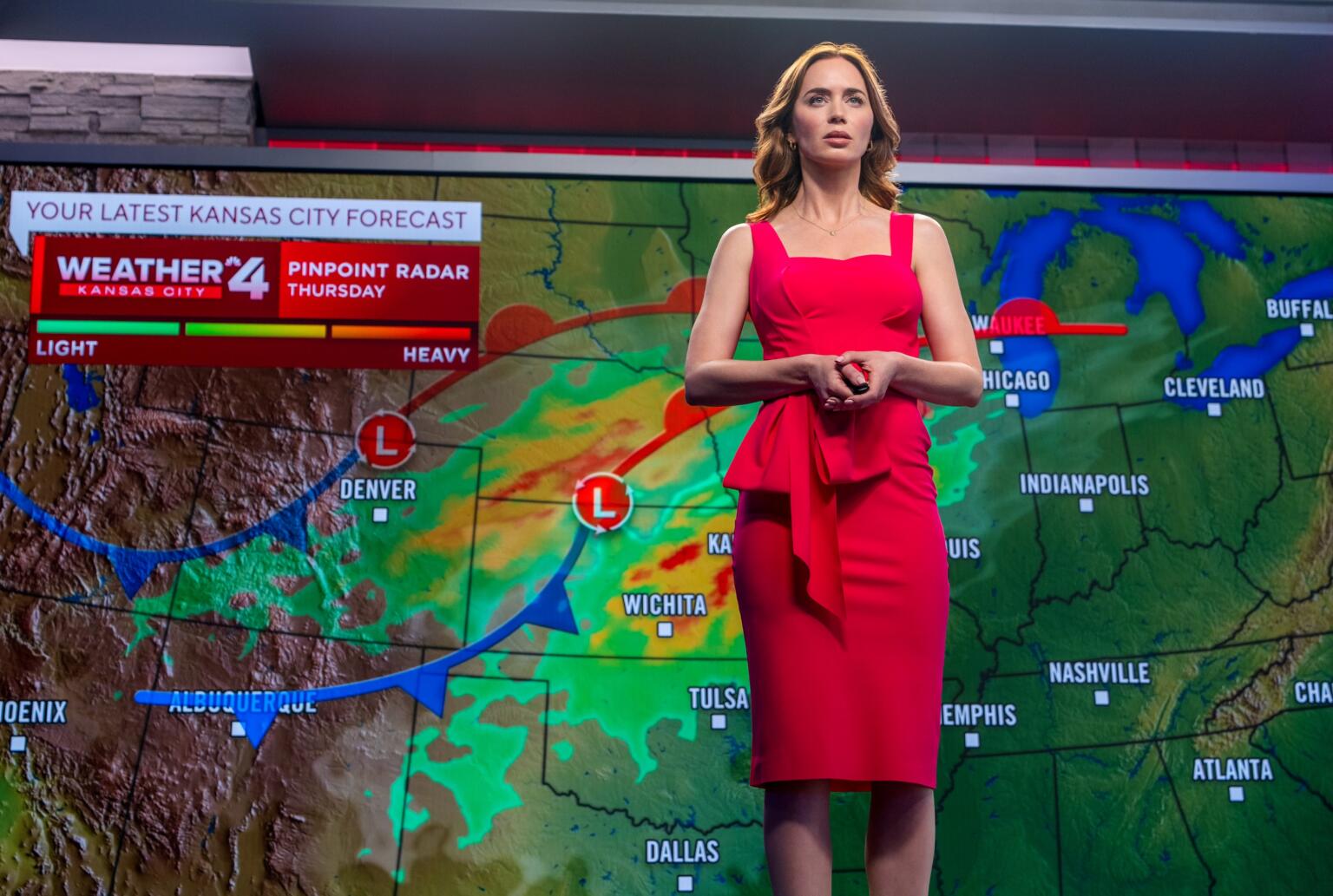
This week on “Picture Perfect” we disclose John Williams’ latest.
“Disclosure Day” will be at the heart of the program, which will feature music from all four of Steven Spielberg’s cinematic musings on intelligent life from other worlds. Has there been another director so fixated on extraterrestrials? Regardless of what one may think of the latest film – for a movie pushing unity, reactions have been unusually polarized – new music by John Williams is always cause for celebration.
We’ll hear 18 minutes from this, his 30th score for Spielberg (composed at the age of 93 & 94!), alongside musical selections from the director’s other otherworldly films, “Close Encounters of the Third Kind,” “War of the Worlds,” and “E.T. The Extra-Terrestrial.”
“Disclosure Day” proves you can’t go home – unless, of course, you’re E.T. – but the music can still be out of this world on “Picture Perfect,” now in syndication on KWAX Classical Oregon!
——-
Clip and save the start times for all three of my recorded shows:
PICTURE PERFECT, the movie music show – Friday at 8:00 PM EDT/5:00 PM PDT
SWEETNESS AND LIGHT, the light music program – Saturday at 11:00 AM EDT/8:00 AM PDT
THE LOST CHORD, unusual and neglected rep – Saturday at 7:00 PM EDT/4:00 PM PDT
Stream them, wherever you are, at the link!
https://kwax.uoregon.edu
——-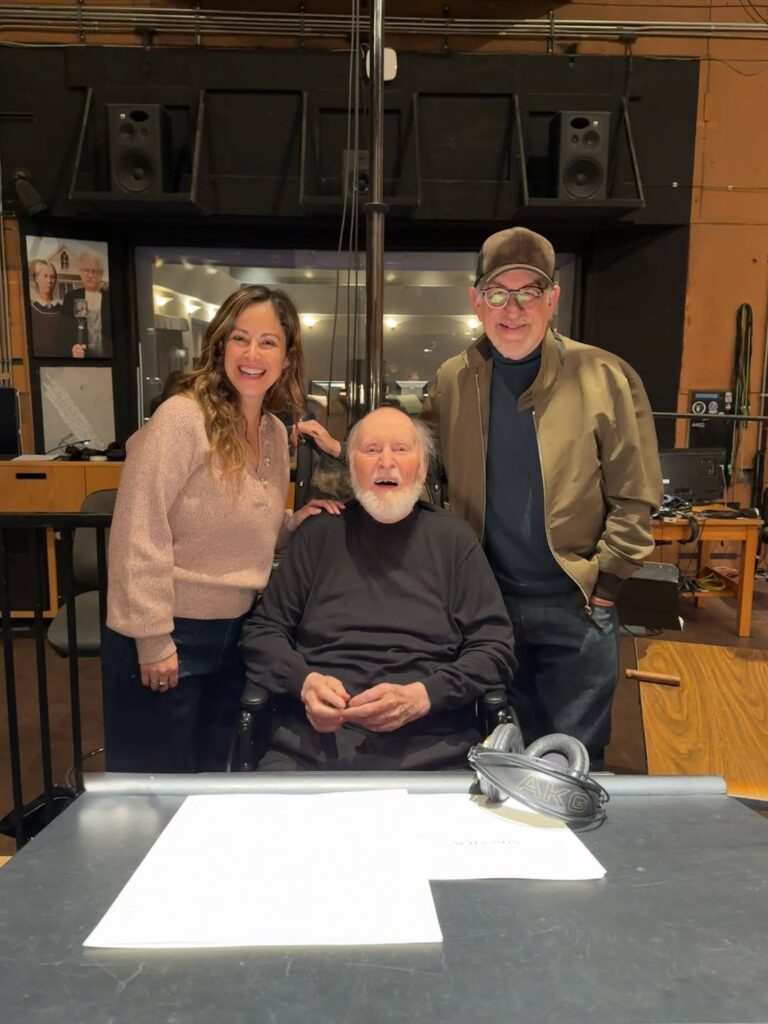
PHOTO: Williams and Spielberg with soprano Holly Sedillos
-
John Williams’ “Disclosure Day”: Film Music’s Last Crusade?
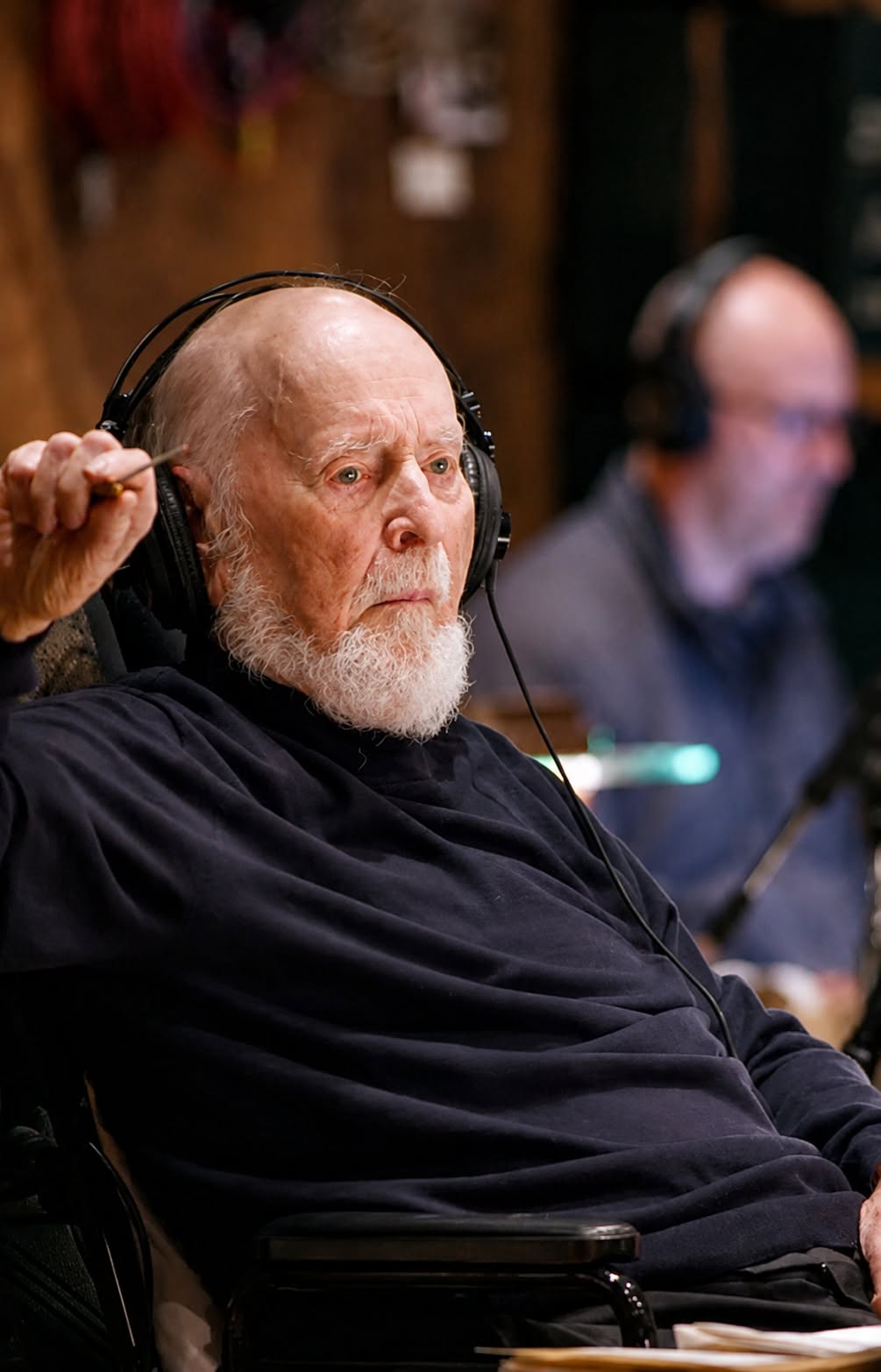
For some reason, the powers-that-be were unusually cagey about the score to Steven Spielberg’s imminent extraterrestrial opus, “Disclosure Day.” I mean, it was common knowledge that John Williams would be writing the music, but when someone at one of the recording sessions posted a video clip of Williams conducting, it was swiftly taken down – as if someone had shared irrefutable evidence of an actual close encounter, and it needed to be covered-up. Why? Naturally, the conspiracy mill was set churning. The truth is out there!
Personally, I wondered if perhaps, on account of his advanced age (Williams is 94-years-old), there was concern that he might not have had the energy to follow-through on the project, or that his work would reveal that he had simply lost his touch. The first trailer for the film transparently did not use Williams’ music, but rather employed what sounded like generic tracks from the studio library – no sense of the Williams magic anywhere – and for me, there was no doubt that its absence diminished it.
Then I thought, there’s got to be a new trailer for the Super Bowl, and this one will definitely feature Williams. There was, and it didn’t. How could I not think that the producers were panicking or that the bean-counters hated the music and that there was scrambling going on behind the scenes to find competent hands to make sense of whatever superannuated Williams had produced?
In the past, there have been a few instances where Williams was assisted by now 77-year-old William Ross (“Harry Potter and the Chamber of Secrets,” “Star Wars: The Rise of Skywalker,” and “Indiana Jones and the Dial of Destiny”), but Ross has always been the first to admit that Williams did all the actual composing. Recent Williams biographer Tim Greiving insists that the new score is substantial, and that John Williams wrote every note.
I won’t watch the most recent trailer, as I don’t want to know any more about the movie until I see it, so I can’t speak to whether or not Williams’ music has finally been utilized in the film’s marketing. But not long ago, someone leaked a minute of the music online, and it’s gorgeous. A few days later, a three-minute teaser for the film’s soundtrack was posted, which turned out to include that minute clip. I’ve been playing it over and over again. This is the kind of film music I have so been missing. It doesn’t hurt that its atmosphere is very much akin to that of Vaughan Williams of the Tallis Fantasia and “A London Symphony.”
This exposure to new John Williams music and the prospect of making it the soundtrack of my summer lifted my heart, but also filled me with trepidation about the physical release of the score. The world has moved on from the 20th century, and wide distribution of a compact disc release is no longer guaranteed. I mean, look at how poorly Disney handled the “Dial of Destiny” soundtrack, with its preorder, limited quantity BS. It took me over a year to luck into a shrink-wrapped overstock copy, which I was able to purchase from a third party for about 50 bucks. THIS IS JOHN WILLIAMS, PEOPLE. Wake up! There is still a market for his music!
Fortunately, Disney has no connection to the current film, a Universal release, with the soundtrack being distributed by Waxwork Records. I had a moment of panic when corresponding with Mather Pfeiffenberger about it. It looked to me like it was only going to be made available as a digital download, with a limited vinyl run. Mather did an A.I. search to confirm my worst fear: that it would not be coming to CD. Naturally, I exploded like Mount Etna (it’s my Sicilian blood), but thankfully I looked further into it, and it will indeed be released on compact disc in July – weeks after the release of the film, which is not ideal, but hey, at least it will be available. (Another epic fail for A.I. Don’t trust it!) It remains to be seen what retailers will be carrying it and how easy it will be to get a copy. I don’t want to be put through the Disney mangler again.
Of course, this poses an issue for “Picture Perfect,” my film music show, as I would have loved to have been able to share some of the music this week. But a phone call to Waxwork revealed that I would have to go through Universal to get permission, and I just didn’t want to deal with it. I believe the digital download will be available on Friday. I’ll pick up what I need for next week, and then buy the CD when it’s available.
Things were so much simpler in the old days. Soundtrack albums were usually in stores well in advance of a movie’s release, and I’d be listening to the music before I even saw the film, scrupulously avoiding reading the titles of the tracks. Life was good then.
At any rate, what we have to enjoy now is the three minutes at the link below, and I’m loving it. Although he continues to do his best to keep himself sharp by composing every day, it’s entirely possible this will be John Williams’ final film score. But he’s been surprising us again and again for the last twenty years. I’m just thankful that if it is his last film, it’s not “Star Wars” or Indiana Jones. The ship should have sailed on those franchises in the ‘80s.
This is the 30th collaboration between Williams and Spielberg, and surely it will bring the composer his 55th Academy Awards nomination. It won’t win, but it will further solidify Williams’ standing as the most nominated person alive. If it comes to pass, he would only need three more nominated scores to match the all-time nominations champ, Walt Disney! He could have done it, too, had he not had periods when he took a few years off. But we can’t begrudge him that. In the words of Charles Ives, “Prizes are for boys, and I’m all grown up.”
Thank you, John Williams, for all the beauty and inspiration you’ve brought to the world. I am deeply grateful for this opportunity to enjoy one last remnant of a great era. -
Music Propels the Action on “Picture Perfect”
This week on “Picture Perfect,” we take flight with music from movies about airports and airplanes.
In the original “Airport” (1970), producer Irwin Allen established the prototype for disaster movies of all stripes by placing an all-star, aging cast in spectacular peril. Burt Lancaster! Dean Martin! George Kennedy! Jean Seberg! Jacqueline Bisset! Helen Hayes! The list goes on and on, longer than the longest runway. The bongo-laden theme is by veteran film composer Alfred Newman,” from the last of his over 200 scores.
Another movie with something of the same feel is “The V.I.P.s” (1963), allegedly inspired by the real-life love-triangle of Vivien Leigh, Laurence Olivier, and Peter Finch. The story is set at London Heathrow Airport, where flights are delayed because of a dense fog. The film was written by Terrence Rattigan and the parts cast from another laundry list of stars, including Elizabeth Taylor, Richard Burton, Louis Jourdan, Maggie Smith, Rod Taylor, and Orson Welles, with Margaret Rutherford in an Academy Award-winning performance. The music is by Miklós Rózsa.
By contrast, Steven Spielberg’s “The Terminal” (2004) is an (intentionally) comic take on the predicament of a hapless Eastern European who finds himself in a kind limbo, trapped in an international arrivals terminal in New York, after his country erupts into civil war, so that his passport and other documentation are no longer valid. His plight mirrors that of real-life Mehran Karimi Nasseri, an Iranian who lived for 17 years in a terminal at Charles de Gaulle Airport.
Tom Hanks plays the unfortunate traveler, who makes the terminal his home, and Catherine Zeta-Jones the airline attendant with whom he strikes up a relationship. The music is by regular Spielberg collaborator John Williams (whose 94th birthday it is on Sunday), and I think you’ll find it quite different from the Williams known for his work on “Star Wars” and “Indiana Jones.”
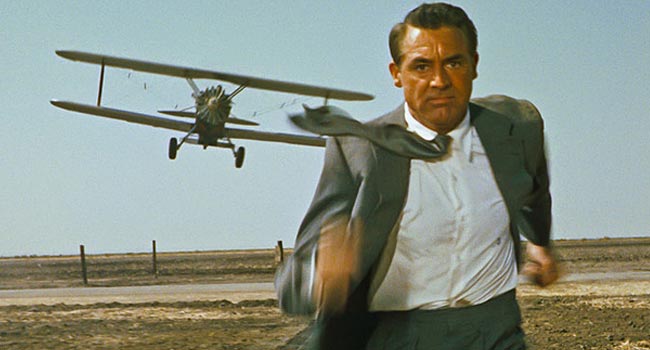
Finally, we’ll turn to the Alfred Hitchcock thriller “North by Northwest” (1959), a film in which Cary Grant encounters love and danger in, on, and from a variety of planes, trains, and automobiles. Planes are particularly significant. During the course of the film, it’s revealed that the title is in reference to a Northwest Airlines flight; Eve Kendall (Eva Marie Saint) must do all she can to avoid getting on a plane with Phillip Vandamm (James Mason); and of course, Roger Thornhill (Grant) flees from a strafing crop duster. Bernard Herrmann’s opening fandango propels us into the adventure.
FUN FACT: The film’s most iconic scene (pictured) is actually played without music.
Rush more to Rushmore! Music propels the action on “Picture Perfect,” music for the movies, now in syndication on KWAX Classical Oregon!
——–
Clip and save the start times for all three of my recorded shows:
PICTURE PERFECT, the movie music show – Friday at 8:00 PM EST/5:00 PM PST
SWEETNESS AND LIGHT, the light music program – Saturday at 11:00 AM EST/8:00 AM PST
THE LOST CHORD, unusual and neglected rep – Saturday at 7:00 PM EST/4:00 PM PST
Stream them, wherever you are, at the link!
https://kwax.uoregon.edu -
John Williams Scores Spielberg UFO Film!
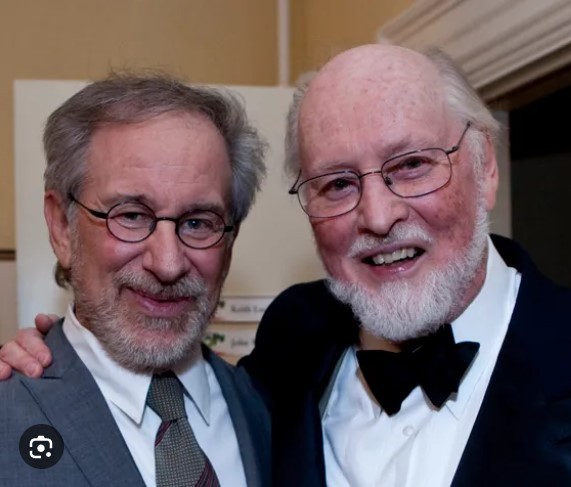
John Williams, who again teased his retirement from film scoring following the execrable “Indiana Jones and the Dial of Destiny,” has agreed to write the music for an upcoming Steven Spielberg UFO opus projected to open on June 12.
Not a lot is known about the project – not even the title – beyond the facts that regular Spielberg collaborator, David Koepp, wrote the screenplay (on an original story by Spielberg) and that the cast includes Colman Domingo, Emily Blunt, and Colin Firth. Maybe some of the other actors will be familiar to you, but I don’t recognize them, as I tend not to see a lot of newer movies.
Williams’ birthday is on February 8. He will likely be 94 years old at the time of the recording sessions. I have a ticket to hear his new piano concerto, with Emanuel Ax and the New York Philharmonic in March, so I expect the creative energy is still churning, if only he can hang on to his good health.
Spielberg’s had a history with this sort of thing (“Close Encounters of the Third Kind,” “E.T. The Extra-Terrestrial,” and “War of the Worlds,” along with a few TV series he executive produced that I wasn’t particularly interested in seeing). I don’t have high expectations for a return of the old Spielberg magic, since we are living in a post-Douglas Trumbull, Carlo Rambaldi age, but hopefully the CGI won’t be too contemptible.
A big plus is that Disney won’t be involved, which means the soundtrack might actually get wide distribution. For “Dial of Destiny,” the Mouse House pulled some kind of pre-order, limited edition bait-and-switch, meaning that millions of John Williams fans were shut out from obtaining the score on physical media and copies on the collectors’ market were priced in the hundreds. I finally managed to get a hold of a copy for $50 from Screen Archives Entertainment. Beyond “Helena’s Theme,” which is ravishing (and has no bearing whatsoever on the character in the film), the score is not top-drawer Williams.
I do wish he had said no to all these recent “Star Wars” and “Indiana Jones” films and poured his energies and creativity into more interesting projects. Let’s hope Spielberg’s film is not a retread and gives the composer something interesting to work with. It would also be nice if it’s not an alien invasion movie. There’s enough unpleasantness in the world right now. I know I’m hopelessly corny and old-fashioned, but I’m yearning for a little hope and uplift in my entertainment.
The film will mark Spielberg and Williams’ 30th collaboration. Their creative partnership dates all the way back to “The Sugarland Express” in 1974. Williams won three of his five Academy Awards writing for Spielberg films (“Jaws,” “E.T.,” and “Schindler’s List”). There’s no way he’ll win for this one, but it could bring him his 55th nomination. He is the most nominated person alive and the second most-nominated person in Oscar history, behind only Walt Disney (with 59).
At the very least, we can expect that the score will be “musical” and not simply a piece of electronically-manipulated sound design. That alone would be cause for celebration.
Best wishes to the Maestro on his latest screen endeavor. Whether or not it’s out of this world remains to be seen.
https://variety.com/2025/film/news/john-williams-steven-spielberg-ufo-movie-1236563896/
Tag Cloud
Aaron Copland (94) Beethoven (95) Composer (114) Film Music (150) Film Score (143) Film Scores (255) Halloween (102) John Williams (198) KWAX (233) Leonard Bernstein (105) Marlboro Music Festival (125) Movie Music (165) Mozart (91) Opera (215) Philadelphia Orchestra (90) Picture Perfect (174) Princeton Symphony Orchestra (110) Radio (90) Ross Amico (244) Roy's Tie-Dye Sci-Fi Corner (290) The Classical Network (101) The Lost Chord (269) Vaughan Williams (107) WPRB (397) WWFM (881)