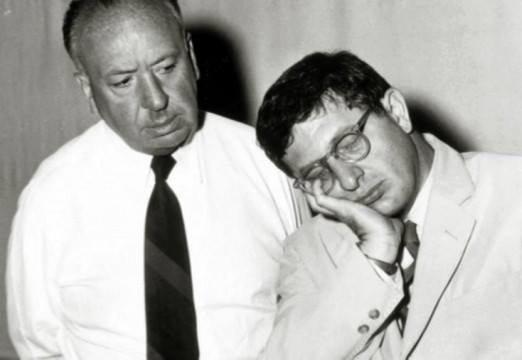
Tag: Steven Spielberg

  • Spielberg, “5-25-77,” & Super 8 Nostalgia

    Spielberg, “5-25-77,” & Super 8 Nostalgia

    Some interesting comparisons can be drawn between Steven Spielberg’s semi-autobiographical “The Fabelmans,” now in theaters, and Patrick Read Johnson’s coming-of-age-in-the-era-of-“Star Wars” comedy, “5-25-77” (2002). Both filmmakers clearly poured their hearts and souls into these creative reminiscences of their early discoveries and explorations of the magic of film, largely through experiments with their families’ home movie equipment. In their cases, the cinema bug bit early and it wound up shaping their lives.

    On the next “Roy’s Tie-Dye Sci-Fi Corner,” Roy and I will talk a little bit about Johnson’s “new” film (actually 18 years in the making), but mostly we’ll be using it as a springboard for our own personal recollections of writing and producing Super-8 movies all throughout our teens

    My cousin and Roy’s lifelong friend, Joe Metz, will join us, along with special guests, a few of those who appeared in the films and helped out behind the scenes. We’ll talk about our undiscovered treasures, projects that occupied our formative summers (mostly), including “The Last Plot,” “Omelet,” “Inner Vorzyd,” “AERO/VOID,” “An Hour to Live,” “Journey to Where,” “Leviathan,” “The Pterodactyls,” “Man and Thin Man,” “The Road to Insanity,” and “A Gorgeous Guy in a City of Women.”

    Sadly, the films themselves will not be shown, but we’ll have plenty of stories, a few stills, some first-hand accounts, and boxes of paraphernalia.

    Self-indulgent? You bet. But Spielberg and Johnson’s passions were not unique. They just happened to be blessed with that magic combination of calling, talent, drive, and good luck to get where they are today. I’m sure there will be others among our viewers who’ve had parallel experiences.

    We’ll be ready for our close-ups on the next Roy’s Tie-Dye Sci-Fi Corner. Join the paparazzi in the comments section when we livestream on Facebook, YouTube, etc. The geekery and nostalgia will be strong with this one, this Friday evening at 7:30 EST!

    https://www.facebook.com/roystiedyescificorner


    PHOTO: Whipping up “Omelet” (1981), written and directed by Joe Metz, with yours truly, center, and Roy, obscured, on far right

  • Back to the Future on Roy’s Tie-Dye Sci-Fi Corner

    Back to the Future on Roy’s Tie-Dye Sci-Fi Corner

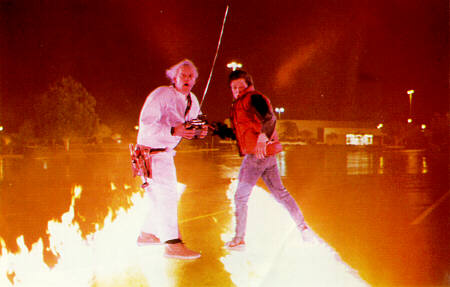
    When we have to turn the clocks back on Roy’s Tie-Dye Sci-Fi Corner, we do so in a big way. Join us this week, when we put pedal to the metal in Doc Brown’s tricked-out DeLorean for a time-traveling discussion of “Back to the Future” (1985).

    Robert Zemeckis and Bob Gale’s tight, Academy Award nominated screenplay is a clever inversion of “It’s a Wonderful Life.” Also, it celebrates a kind of knowing affection and fosters empathy across a generational divide. Incredibly, no studio wanted anything to do with it. It was finally Steven Spielberg who produced, after the success of Zemeckis’ and Gale’s “Romancing the Stone.”

    The film sports career-defining performances by Michael J. Fox, Christopher Lloyd, Lea Thompson, and especially Crispin Glover. All the predictable summer movie set pieces are there, but this is one blockbuster that is genuinely driven by characters and story.

    With just the right balance of innocence and sophistication, “Back to the Future” capped a golden age of Spielberg summer movies that began with “Jaws” in 1975. It’s an era that, without a time-traveling DeLorean, will never come again.

    It’s a reminder to “fall back” this weekend, as we pick up an extra hour. We’ll “make like a tree and get out of here,” on the next “Roy’s Tie-Dye Sci-Fi Corner.” Biff will join you in the comments section with the Turtle Wax (two coats!), when we livestream on Facebook, Twitter, and YouTube, this Friday evening at 7:30 EDT!

    https://www.facebook.com/roystiedyescificorner

  • E.T. at 40 A Sentimental Education

    E.T. at 40 A Sentimental Education

    A four-handkerchief science fiction fantasy? Steven Spielberg managed it 40 years ago, and audiences went for it in a big way. “E.T. The Extra-Terrestrial” has been touching hearts with a great big glowing finger since the film’s release on June 11, 1982. And thank God for it. In a world that very badly needs to remember what it’s like to embrace its humanity, we could use more movies, more stories, more music like it. Never mind Flaubert. “E.T.” is a crash course in sentimental education.

    We’ll talk about it tomorrow night on “Roy’s Tie-Dye Sci-Fi Corner.” I confess, even though I was the one to suggest it, I am also a little reluctant to discuss it. But Roy and I certainly didn’t want the 40th anniversary of this cinematic milestone to pass unremarked. It’s the one movie where, depending on where the discussion goes, I may have to turn off my video. And maybe even the audio. If you have any baggage, “E.T.” will unpack it in a hurry.

    Spielberg and screenwriter Melissa Mathison draw on everything from the Bible to “Peter Pan” to craft an emotionally honest bedtime story that taps into eternal truths about childhood, love, and parting. Remarkably uncynical, full of hope, and just downright beautiful on every level, “E.T.” is a blockbuster with heart. It’s also a remarkably vibrant time capsule of what it was it like to grow up in the 1980s.

    Kudos to Carlo Rambaldi for his animatronic puppetry. Rewatching the film last night, I marveled at what they used to be able to accomplish before CGI became the default.

    And John Williams has never been better. In terms of storytelling, the last 15 minutes of “E.T.” is as good as it gets at the movies. Reportedly Spielberg shut off the projector at the recording session in order to give Williams maximum flexibility in conducting the orchestra, and fine-tuned the sequence later, reediting the images, the better to allow the music to fully breathe.

    This is the film that unhorsed “Star Wars” as the highest-grossing of all time and held the top slot for 15 years.

    Is it Spielberg’s greatest movie? Yes. Yes, it is. I’ll argue why, on the next Roy’s Tie-Dye Sci-Fi Corner. So bring your Reese’s Pieces to the comments section. We’ll be chasing rainbows and clapping our hands for fairies when we livestream on Facebook, this Friday evening at 7:00 EDT.

    https://www.facebook.com/roystiedyescificorner

    If you are one of those obstinate folk who has avoided “E.T.” all these years, and you plan to tune in for our conversation, for the love of movies, do watch it before we spoil it!

    May “E.T.” live long in our hearts!

  • E.T. & Benevolent Movie Aliens

    E.T. & Benevolent Movie Aliens

    I’m one of those people who will dissolve into tears at the movies for no good reason. So when “E.T. The Extra-Terrestrial” opened on this date 40 years ago, I was a total mess. This simple story about the friendship between a boy and a stranded botanist from another world is elevated by John Williams’ most moving score. By turns tender, buoyant, and touching, Williams’ music provides the emotional underpinning of what may very well be Steven Spielberg’s best film. It earned its composer a much-deserved fourth Academy Award.

    In terms of box office, “E.T” was the first film to surpass “Star Wars” to become the highest grossing of all time. The entire moviegoing world, and certainly the entire country, was unified by this emotionally honest bedtime story that tapped into eternal truths about childhood, love, and parting. Remarkably uncynical, full of hope, and just downright beautiful on every level, “E.T.” lit up the screens in 1982 like no other. It was a blockbuster with heart. I don’t know that, in the 21st century, a movie quite like it will ever land again.

    This week on “Picture Perfect,” we recollect kinder, gentler times, with selections from films about benevolent visitors from other worlds. Friendly extraterrestrials have been out of fashion for quite a while now, as we seem to be mired in paranoia, conspiracy theories, and apocalyptic visions. But back in 1982, “E.T.” took the 1950s clichés of invaders from Mars and body snatchers from outer space and almost singlehandedly turned everything on its head.

    Spielberg himself would take a crack at old school alien invasion, for sure, when he remade H.G. Wells’ “The War of the Worlds” in 2005. But during the Reagan Era, with the Cold War winding down, terrorism not yet so much in the news, and Americans not so openly contemptuous of their neighbors, cinematic E.T.’s were benevolent at best, or at worst, just trying to do their thing. They were there to be misunderstood and even imperiled by man until a warm, fuzzy, often poignant finale.

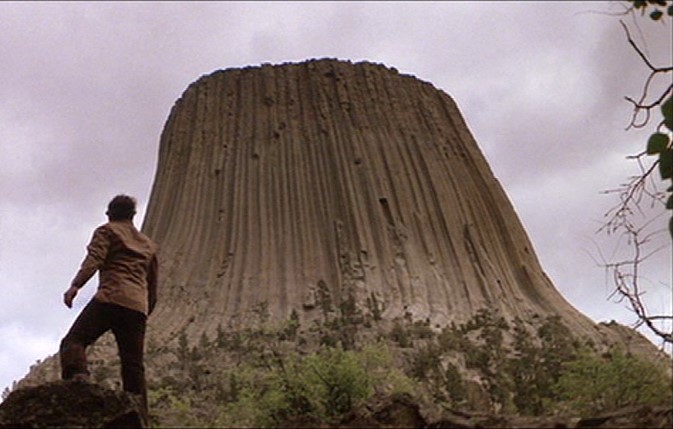
    In Spielberg’s prior exploration of the concept of kindly visitors from another world, “Close Encounters of the Third Kind” (1977), there is an ambiguity for much of the film as to what exactly the aliens’ intentions are. In fact, there is at least one sequence that could very well give a child nightmares, and maybe parents too. Whatever tension is generated dissolves in the euphoric finale, centered around the communicative power of music. Like so many movies back then and so few now, “Close Encounters” doesn’t so much exhaust the viewer as leave him or her with a feeling of hope.

    John Williams’ approach couldn’t be more different than that for “E.T.” For “Close Encounters,” the avant garde syntax of the early, eerier sequences dissolves into unabashed lyricism for the film’s transcendent finale.

    Looking back a quarter century, Klaatu, the “friendly” alien of “The Day the Earth Stood Still” (1951), may come in peace, but it is a message delivered with tough love. If mankind refuses to abide, his giant robot, Gort, will destroy the planet. At a time when Martians invariably meant trouble, this was actually progressive.

    Bernard Herrmann’s score is one of his best, and certainly one of his most interesting. Always an eccentric orchestrator, Herrmann’s concept of extraterrestrial music incorporates violin, cello, electric bass, two theremins, two Hammond organs, a large studio electric organ, three vibraphones, two glockenspiels, two pianos, two harps, three trumpets, three trombones and four tubas. Overdubbing and tape-reversal techniques were also employed.

    Finally, Ron Howard’s “Cocoon” (1985) is one of the more worthwhile of the seemingly endless procession of extraterrestrial films to be released in the wake of “E.T.” At least this one took a different approach by bringing aliens into contact with a Florida retirement community, with the unexpected result of rejuvenating its inhabitants. A modern take on the fabled Fountain of Youth, the film is a showcase for veteran actors Hume Cronyn, Jessica Tandy, Jack Gilford, and Don Ameche (who won an Academy Award). James Horner’s score is much sought after by collectors.

    Klaatu barada nikto! Join me for the touchdown of benevolent extraterrestrials! We come in peace, so forget the tanks and bring a box of tissues, on “Picture Perfect,” music for the movies, this Saturday evening at 6:00 EDT, on WWFM – The Classical Network and wwfm.org.

  • John Williams at 90 A Musical Genius

    John Williams at 90 A Musical Genius

    His music introduced me to the glories of the symphony orchestra and changed my life forever. The world’s greatest living film composer is 90. Happy birthday, John Williams!

    One need only listen to this fan compilation of Williams’ contrapuntal writing, including some unexpected choices, to understand that there really is no one else in the field today who can touch him. You certainly won’t hear anything like it from the Zimmer school.

    This one still gives me chills 43+ years later!

    Williams and Steven Spielberg discuss music from the piano bench:

    Good exchange with Tavis Smiley (especially toward the end):

    Perhaps Williams’ best interview, an unusually candid conversation with André Previn:

    Williams is the recipient of five Academy Awards, 25 Grammy Awards, and four Golden Globe Awards. He’s been nominated for an Oscar 52 times, more than any other living person, and second only to Walt Disney.

    So what’s he up to now? Although he suggested he would be retiring with “Star Wars: The Rise of Skywalker,” he’s been conducting concerts all over place, with Anne-Sophie Mutter the soloist in his new Violin Concerto. He’s also scoring Spielberg’s “The Fabelmans” – their 29th collaboration – and prepping for the fifth Indiana Jones adventure, out next year.

    https://variety.com/2022/artisans/news/john-williams-turns-90-celebrating-1235172996/?fbclid=IwAR3Hon1e-u542wT8M2TouuAaHq-1CrZqG5CxzL7iYUA–BtcvBjsdn-r_t0

    Over the coming month or so, I’ll be including some Williams selections in my “Picture Perfect” programming. Tune in this week to enjoy a suite from “Jane Eyre” (1970), as part of hour of Gothic romances for Valentine’s Day, and next week for music from “JFK” (1991), “Nixon” (1995), “Amistad” (1997), and “Lincoln” (2012) for Presidents Day Weekend. More to come. “Picture Perfect” can be heard Saturday evenings at 6:00 EST on WWFM – The Classical Network and wwfm.org.

Tag Cloud

Aaron Copland (92) Beethoven (95) Composer (114) Film Music (119) Film Score (143) Film Scores (255) Halloween (94) John Williams (185) KWAX (229) Leonard Bernstein (99) Marlboro Music Festival (125) Movie Music (134) Opera (198) Philadelphia Orchestra (86) Picture Perfect (174) Princeton Symphony Orchestra (106) Radio (87) Ralph Vaughan Williams (85) Ross Amico (244) Roy's Tie-Dye Sci-Fi Corner (290) The Classical Network (101) The Lost Chord (268) Vaughan Williams (102) WPRB (396) WWFM (881)

DON’T MISS A BEAT

Receive a weekly digest every Sunday at noon by signing up here


RECENT POSTS