Tag: Stravinsky

  • Stravinsky’s Pulcinella Turns 100

    Stravinsky’s Pulcinella Turns 100

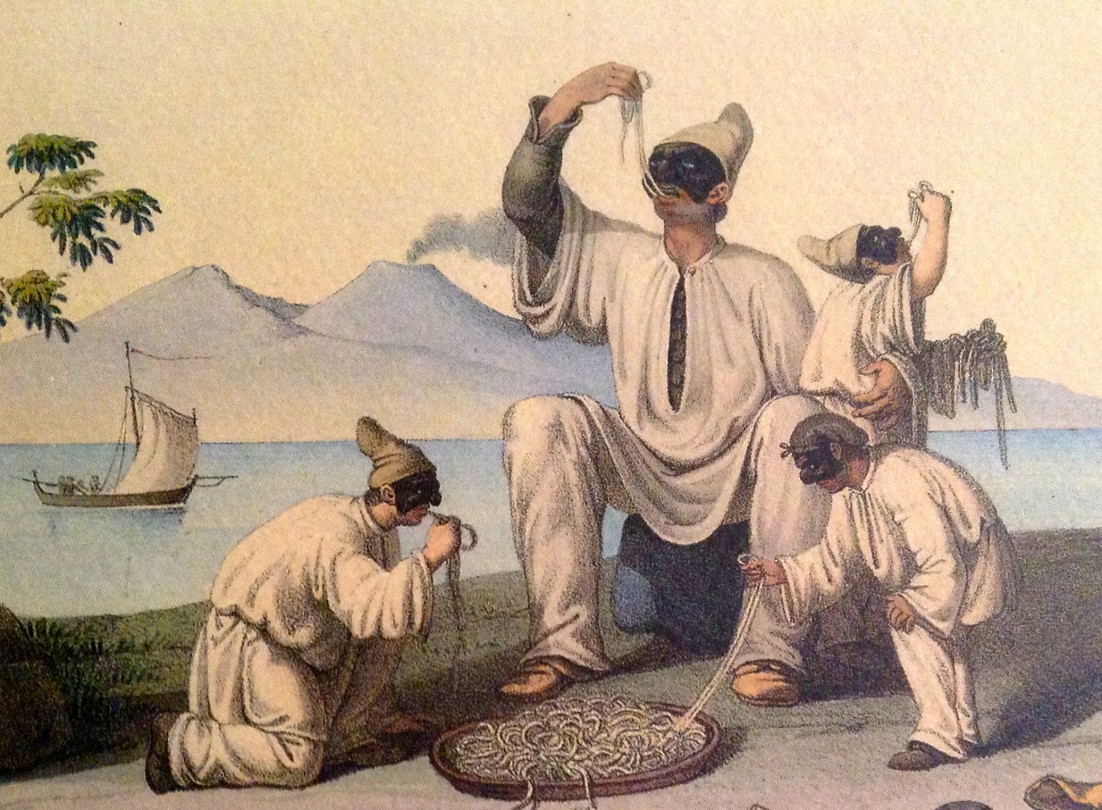
    Stravinsky’s commedia dell’arte scamp is 100 years-old.

    “Pulcinella” was given its first performance on this date in 1920. The ballet was commissioned by Sergei Diaghilev and given its premiere, at the Paris Opera, by the Ballets Russes. Leonide Massine provided both the libretto and the choreography. The sets were designed by Pablo Picasso.

    For years, it was thought that the raw material for Stravinsky’s score, based on manuscripts of the 18th century, derived from the quill of Giovanni Pergolesi. However, over time, scholarship has revealed that many of the original pieces were actually the work of Pergolesi contemporaries, composers such as Domenico Gallo and Unico Wilhelm von Wassenaer.

    The idea of arranging Pergolesi’s music was the idea of conductor Ernest Ansermet, who conducted the ballet’s premiere. Stravinsky was resistant at first, but closer acquaintance with the original scores unlocked their possibilities. Stravinsky’s arrangements honored the spirit of the past, but also imbued it with a modern sensibility, employing a distinctly 20th century syntax. It is one of the composer’s most playful, exuberant scores.

    “‘Pulcinella’ was… the epiphany through which the whole of my late work became possible,” he later wrote. “It was a backward look, of course—the first of many love affairs in that direction—but it was a look in the mirror, too.”

    It would be the first of Stravinsky’s innumerable interactions with historical music and forms and the birth of a style that would soon be identified as “neoclassical.”

    The popular suite, shorn of the complete ballet vocal music, was giving its first performance in Boston, two years later, with Pierre Monteux conducting.

    “Pergolesi” themes also inform the spin-off chamber works “Suite d’après des thèmes, fragments et morceaux de Giambattista Pergolesi,” for violin and piano (1925), and the “Suite Italienne,” for cello or violin and piano (1932-33). Any way you slice it, the music is a delight.


    “Pulcinella” (complete):

    http://www.youtube.com/watch?v=lD6dRSKLjlU&t=0m7s

    The suite, part of a complete concert performed (without conductor) by the Orpheus Chamber Orchestra:

    http://www.youtube.com/watch?v=H5ZpCA4pRtM&t=8m24s

    Cellist Heinrich Schiff and the “Suite Italienne”:
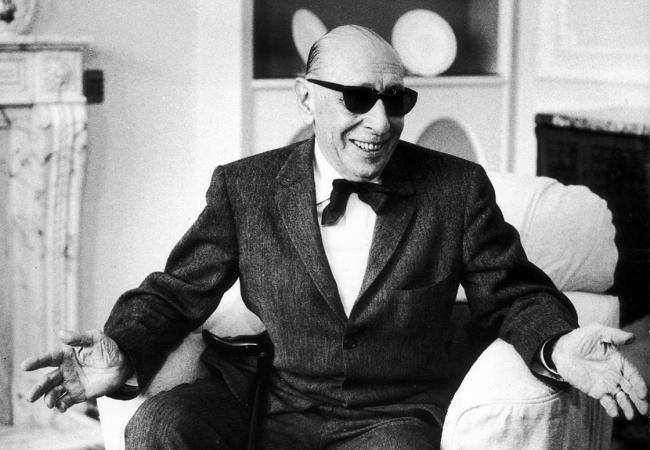
  • Stravinsky’s Money Music WWFM Birthday

    Stravinsky’s Money Music WWFM Birthday

    No applause, please! Just throw money.

    There’s plenty to cheer about on the birthday of Igor Stravinsky, even if the composer could be a mite transparent in his focus on the bottom line. In a practice that would later become commonplace in rap, Stravinsky adopted a dollar sign for use in his monogram.

    Join me today on The Classical Network, as we celebrate one of the greatest composers of the past century. He was certainly one of the best-marketed.

    You can bet your bottom dollar on $travinsky, among our featured composers, from 4 to 7 p.m. EDT, on WWFM – The Classical Network and wwfm.org.

  • Stravinsky Grieg Boulez Marlboro Music

    Stravinsky Grieg Boulez Marlboro Music

    When Igor Stravinsky unveiled his “Four Norwegian Moods” in 1945, Pierre Boulez was appalled. Stravinsky had been a kind of god to him. The young man had been dissecting the score to “The Rite of Spring” under Olivier Messiaen at the Paris Conservatory. That the Master who had revealed to the world the unvarnished brutality of “The Rite” had retreated to a pastiche of Edvard Grieg, of all people – it was unforgivable. Boulez and his classmates booed vigorously.

    Boulez must be spinning in his grave right now, as Stravinsky and Grieg will reunite for this week’s “Music from Marlboro.”

    With a wintry mix in the forecast, our featured work for the hour will be Grieg’s String Quartet in G minor. Grieg wrote his quartet in 1877-78 while living on a farm in Hardanger. It’s a rare long-form piece from a composer generally typecast as a miniaturist.

    From his letters, we know that Grieg was frustrated by his propensity for shorter works. “Nothing that I do satisfies me,” he wrote, “and though it seems to me that I have ideas, they neither soar nor take form when I proceed to the working out of something big.”

    In addition to giving Grieg the opportunity to flex his creative muscle, the quartet may also reveal something of autobiographical significance. The work opens with a motto lifted from one of Grieg’s songs, “The Minstrel,” on a text by Henrik Ibsen. The poem tells of Hulder, a spirit from Norse mythology, who dwells in waterfalls and lures aspiring musicians with the promise to reveal art in music. However, in return for this invaluable gift, Hulder robs its recipient of both happiness and peace of mind.

    Claude Debussy was also dismissive of Grieg’s music, which he famously derided as “pink bonbons filled with snow.” (What is it about the Norwegian’s music that could have so galled the Gauls?) That said, it has been convincingly demonstrated that Debussy owed more than a little to Grieg in the writing of his own String Quartet in G minor and in some of his piano miniatures.

    We’ll hear a performance of the Grieg quartet from the 2002 Marlboro Music Festival, featuring violinists Ayano Ninomiya and Sharon Roffman, violist Teng Li, and cellist David Soyer.

    Beyond its overt Norwegianisms, what really put Boulez over the edge about the “Four Norwegian Moods” was Stravinsky’s embrace of neoclassicism. Boulez, an austere disciple of the serialist techniques advocated by Arnold Schoenberg and his circle, would later conduct and record Stravinsky’s very neoclassical “Pulcinella.” Perhaps he softened his stance somewhat in light of Stravinsky’s late conversion to the serial cause.

    In any case, one wonders what Boulez would have made of the “Octet for Wind Instruments.” Composed in 1922, this is the work with which Stravinsky really threw down the gauntlet as neoclassicism’s foremost champion.

    We’ll hear it performed at Marlboro in 1968 by flutist Paula Robison, clarinetist Larry Combs, bassoonists Sol Schoenbach and Thomas Woodhams, trumpeters Henry Nowak and Ronald Anderson, and trombonists John Swallow and Richard Rodda, all directed by Leon Kirchner.

    The weather outside is frightful. Cozy in with an abominable bouillabaisse for Boulez, on the next “Music from Marlboro,” this Wednesday evening at 6:00 EST, on WWFM – The Classical Network and wwfm.org.

    Marlboro School of Music and Festival: Official Page

  • Ballet Ambivalence Balanchine Stravinsky & More

    Ballet Ambivalence Balanchine Stravinsky & More

    I have always had been ambivalent about the ballet. On the one hand, I am quite enthusiastic about attending live performances of works written specifically for the stage, especially those by 20th century masters (Stravinsky, Prokofiev, Hindemith). On the other, I am generally put off, at least in theory, by choreographers employing in their programs pre-existing works that have nothing at all to do with the dance. When I look at an advertisement for the ballet, and I see a triple bill featuring “George Balanchine’s Piano Concerto,” and there is no indication anywhere of who the actual composer is, I have less than no interest in attending and even feel inclined to fury. But I guess that’s what happens when you’re someone who puts the music first.

    I understand, if I am to be objective (which I seldom am), that that’s not what dance is about. It’s also certainly not about story. How many evening-length ballets have I endured in which the “plot,” such that it is, has run its course by the end of the second act? There really is no purpose for Act III, except to have everyone leap about in a series of interminable divertissements. I learned this lesson early, at my first “Nutcracker” (mercifully a two-acter), when I discovered that most of the famous music underscored the less-than-thrilling-for-children-everywhere second part. Don’t get me wrong, I have grown to love “The Nutcracker,” but I love it most when imaginative choreographers find ways to tie the events of Act II into the narrative set up in Act I. As a boy, I was all about the Mouse King. It was only later, after I hit puberty, that the Act II pas de deux became indispensible. After all, there is no love like doomed love. But why is this music for the Sugar Plum Fairy and her consort so ardent? Doesn’t it make more sense to tie it back in to Clara (as some choreographers thankfully have)?

    But I digress.

    I admit, dogma is a dangerous thing, and there have been notable exceptions to my aversion to ballet set to music not intended for the dance. I was very pleasantly surprised, for instance – especially after having endured his horrible “Nutcracker,” with its stupid candy cane hula hoops – by Balanchine’s “A Midsummer Night’s Dream,” which I recall as compelling and often brilliant. In the end, however, I admit I am not really qualified to assess dance. So I’ll just shut up and play the music.

    Today is Balanchine’s birthday, so I thought I’d spend the bulk of the afternoon spinning records of some of the works he introduced and/or choreographed. My heart is with the commissions, of course, so we’ll hear Stravinsky’s “Apollo,” Prokofiev’s “The Prodigal Son,” and Hindemith’s “The Four Temperaments,” alongside splashy arrangements by Hershy Kay (which I am less enthusiastic about) after works of Gottschalk and Sousa. I also have a vintage recording of Antal Dorati conducting Vittorio Rieti’s arrangement of “Cotillon,” after Chabrier, if I can lay my hands on it, which Balanchine choreographed for the Ballets Russes de Monte-Carlo.

    First, it’s another Noontime Concert from Gotham Early Music Scene, or GEMS. Concordian Dawn will present a program titled “Fortuna Antiqua et Ultra,” medieval music illustrative of the ever-turning Wheel of Fortune and the consolation of hope.

    We’ll be wheeling and pirouetting from 12 to 4 p.m. EST, on WWFM – The Classical Network and wwfm.org.


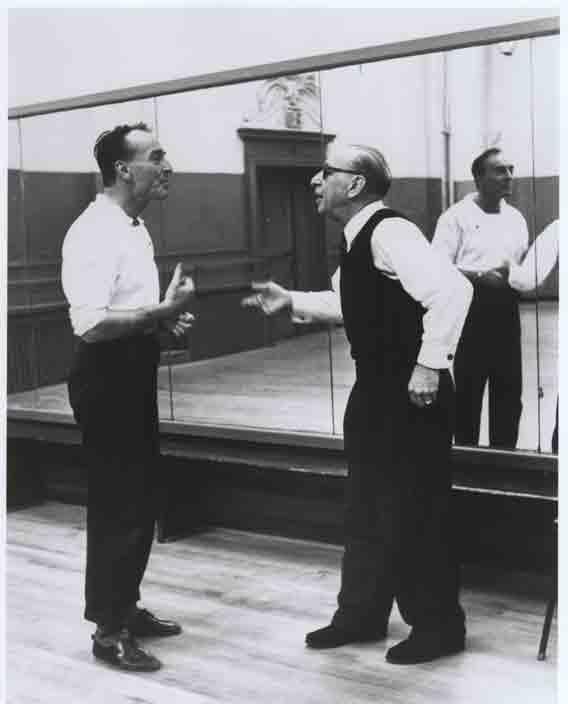
    PHOTO: Balanchine and Stravinsky

  • Renaissance Riddles and Musical Games on WWFM

    Renaissance Riddles and Musical Games on WWFM

    Looking for a little diversion?

    On today’s Noontime Concert on The Classical Network, the ensemble Pomerium will present “Musical Games, Puzzles, and Riddles of the Renaissance: A Century of Musical Ingenuity, 1410-1510.” The program was designed to complement an exhibit of Renaissance playing cards mounted at The Met Cloisters in early 2016.

    Pomerium was founded in New York by Alexander Blachly in 1972. The group has fostered the careers of such outstanding early music performers as Julianne Baird, Drew Minter, and members of Anonymous 4.

    This concert was presented at St. Bartholomew’s Church, 50th Street and Park Avenue, in Midtown Manhattan, where free concerts are held every Thursday at 1:15 p.m.

    Its broadcast is made possible in part by Gotham Early Music Scene, or GEMS. GEMS is a non-profit corporation that supports and promotes artists and organizations in New York City devoted to early music – music of the Middle Ages, Renaissance, Baroque, and early Classical periods. For more information and GEMS’ events calendar, look online at gemsny.org.

    Following the Pomerium concert, we’ll continue with an afternoon of musical diversions and cryptograms, shuffling works about games (Stravinsky’s “Jeu de Cartes” – “A Card Game”) with some actual musical puzzles and codes (Elgar’s “Enigma Variations”). Among these will be “32 Cryptograms for Derek Jarman,” a nod to Philadelphia composer Robert Moran, on his birthday.

    Here’s hoping you’re game for an afternoon of great music, from 12 to 4 p.m. EST, on WWFM – The Classical Network and wwfm.org.


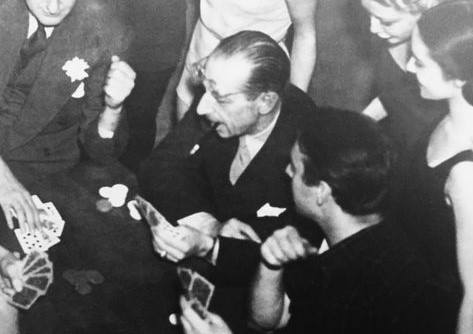
    PHOTO: Stravinsky the card sharp

Tag Cloud

Aaron Copland (92) Beethoven (95) Composer (114) Film Music (120) Film Score (143) Film Scores (255) Halloween (94) John Williams (185) KWAX (229) Leonard Bernstein (100) Marlboro Music Festival (125) Movie Music (135) Opera (198) Philadelphia Orchestra (88) Picture Perfect (174) Princeton Symphony Orchestra (106) Radio (87) Ralph Vaughan Williams (85) Ross Amico (244) Roy's Tie-Dye Sci-Fi Corner (290) The Classical Network (101) The Lost Chord (268) Vaughan Williams (103) WPRB (396) WWFM (881)

DON’T MISS A BEAT

Receive a weekly digest every Sunday at noon by signing up here


RECENT POSTS