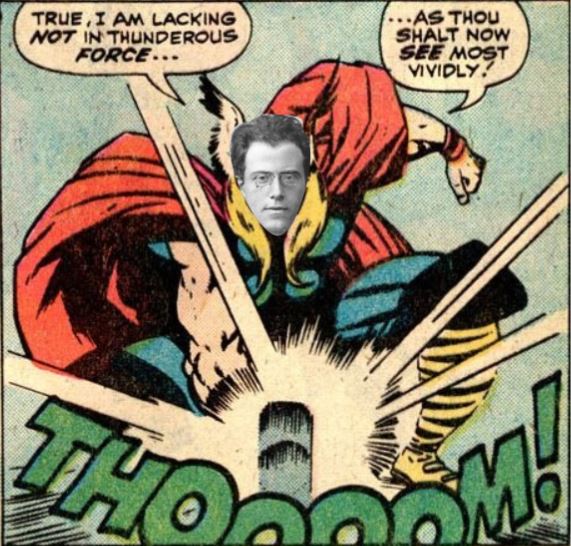
What’s in a name? For Gustav Mahler, a rose by any other name would not necessarily smell as sweet.
Mahler was not overly fond of nicknames being applied to his symphonies. In the hopes of suppressing an early program he had leaked about the content of his Symphony No. 1, he withdrew the subtitle “Titan” after the work’s third performance. He may have once famously declared (while on a walk with Sibelius), “A symphony must be like the world. It must contain everything.” But, in common with Oscar Wilde’s Lord Henry, he must also have felt that “To define is to limit.”
Mahler renounced the associations of “symphonic poem,” and although all of his symphonies are deeply personal and necessarily autobiographical, he wanted them to be heard foremost as music, music capable of being understood and enjoyed divorced from any extra-musical programs.
Yet the subtitle “Titan” continues to dog the First. It is still encountered with frequency on concert posters, in program notes, on package designs, and over the radio. Admittedly, it is a cool nickname!
There’s also the Symphony No. 8, handed down as the “Symphony of a Thousand” (dubbed so by a publicity-hungry impresario), the Symphony No. 2, “Resurrection,” after the Klopstock poem sung during the work’s finale, and the Symphony No. 6, commonly recognized as the “Tragic.”
The last movement of the Sixth notoriously contains three hammer blows. Mahler’s widow, Alma, conveyed that it was her husband’s intention that these signify three mighty blows of Fate against the work’s hero, “the third of which fells him like a tree.” These, she claimed, were tied to three tragedies in Mahler’s life: the death of their eldest daughter, Maria Anna, the diagnosis of Mahler’s heart condition (which would eventually kill him), and his forced resignation from the Vienna Opera. Inconveniently, all three of these things occurred after the work’s completion.
When Mahler revised the symphony, he removed the last of the blows, perhaps out of superstition. What’s certain is that he was so shaken after the first performance that he omitted it from the score. Today, most performances restore the third blow.
Any performance of the Symphony No. 6 builds tremendous anticipation in an audience, as, well into its 80-minute running time, a percussionist ponderously takes up a disproportionately large hammer, assumes a monumental position, and brings it down thunderously onto a block with not infrequently destructive force.
Here are just a few examples:
https://www.youtube.com/watch?v=UwljE3HsfSM&list=PLoubS-PL7KnLR4EONhdp0Ps68oTMekYS6&index=28
https://www.youtube.com/watch?v=dXe0xbRXdZ4
Hell, here’s the whole thing, with all three blows!
https://www.youtube.com/watch?v=rypHeVr_X7c
Happy birthday, Gustav Mahler. Tragedy tomorrow… comedy tonight!