Tag: Tenor

  • Enrico Caruso King of Tenors

    Enrico Caruso King of Tenors

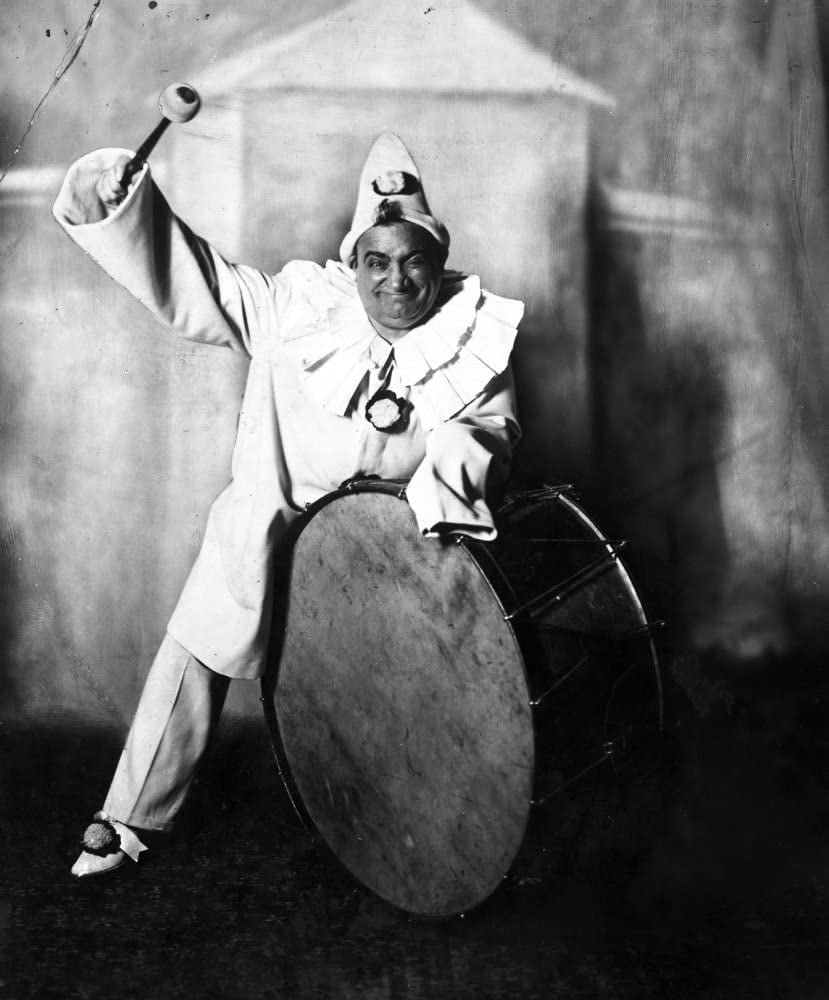
    Before Michael Jackson, before The Beatles, before Elvis, there was the first global superstar of the gramophone – Enrico Caruso. The first million-selling recording was Caruso’s “Vesti la giubba,” from Leoncavallo’s “Pagliacci.” You know it, even if you think you don’t.

    Caruso recorded it three times, in 1902, 1904, and 1907. Here are all three versions, the first two with piano, and the last with orchestra.

    Leoncavallo, as can be imagined, was over the moon. In 1904, he dedicated his “Mattinata” to Caruso. It was the first song ever written expressly for the Gramophone Company (now EMI). It’s been popular with tenors ever since.

    Here’s Caruso’s recording, with the composer at the keyboard.

    Caruso may have had the sales, but Leoncavallo definitely had the mustache.

    This year is significant in that it also marks the centenary of the tenor’s death, on August 2, 1921. It’s believed that an injury suffered on stage precipitated his untimely demise at the age of 48.

    Let’s face it, Caruso was never a model of health. His appetite was prodigious. He liked his food, he liked his cigarettes, and he liked his work. In all, he appeared at the Old Met 863 times, and he toured extensively. He also left 247 records.

    When he died, thousands turned out for his funeral in Naples. For the better part of a decade, his remains were displayed in a glass sarcophagus, until his wife had him sealed up in an ornate tomb.

    More about the King of Tenors in August. For now, happy birthday to the Great Caruso.

  • Mario Lanza A Centennial Celebration

    Mario Lanza A Centennial Celebration

    Mario! Mario!

    Who would have dreamt that Alfredo Arnold Cocozza would grow up to become one of the biggest stars of the 1950s?

    Mario Lanza was born in South Philadelphia, in a row home on the 600 block of Christian Street, one hundred years ago today. It was the year the great Caruso died (on August 9th), and Lanza, famously, went on to play him in the movies. In fact, “The Great Caruso” became the highest-grossing M-G-M film of 1951.

    Legend states that Lanza was discovered by Serge Koussevitzky, traveling music director of the Boston Symphony Orchestra, after booking an adjacent hotel room so that he might be overheard practicing. Koussevitzky described Lanza as “Caruso redivivus” (Caruso reborn), and stated, “Yours is a voice such as is heard once in a hundred years.”

    Fresh-faced and forever young, Lanza is preserved in his everlasting vitality on records and celluloid. He died of an apparent pulmonary embolism in 1959 at the age of 38.

    Shortly before his own death in 1987, Enrico Caruso Jr. observed, “I can think of no other tenor, before or since Mario Lanza, who could have risen with comparable success to the challenge of playing Caruso in a screen biography… Lanza was born with one of the dozen or so great tenor voices of the century, with a natural voice placement, an unmistakable and very pleasing timbre, and a nearly infallible musical instinct.”

    On the one hundredth anniversary of his birth, celebrate Koussevitzky’s “voice of a hundred years.”

    Happy birthday, Mario Lanza.


    “Drink drink drink” from “The Student Prince”:

    At the time of his death, Lanza was preparing a return to the operatic stage as Canio in “Pagliacci” (seen here in “The Great Caruso”):

    “Parigi, o cara” from “La Traviata,” with Frances Yeend and Eugene Ormandy conducting, at the Hollywood Bowl in 1947. In the audience was Louis B. Mayer, who signed the 26 year-old tenor to a long-term movie contract.

    High-spirited tribute in Peter Jackson’s “Heavenly Creatures,” set to Rudolf Friml’s “The Donkey Serenade”:

    Lanza’s first gold record, “Be My Love”:

  • Placido Domingo Turns 80

    Placido Domingo Turns 80

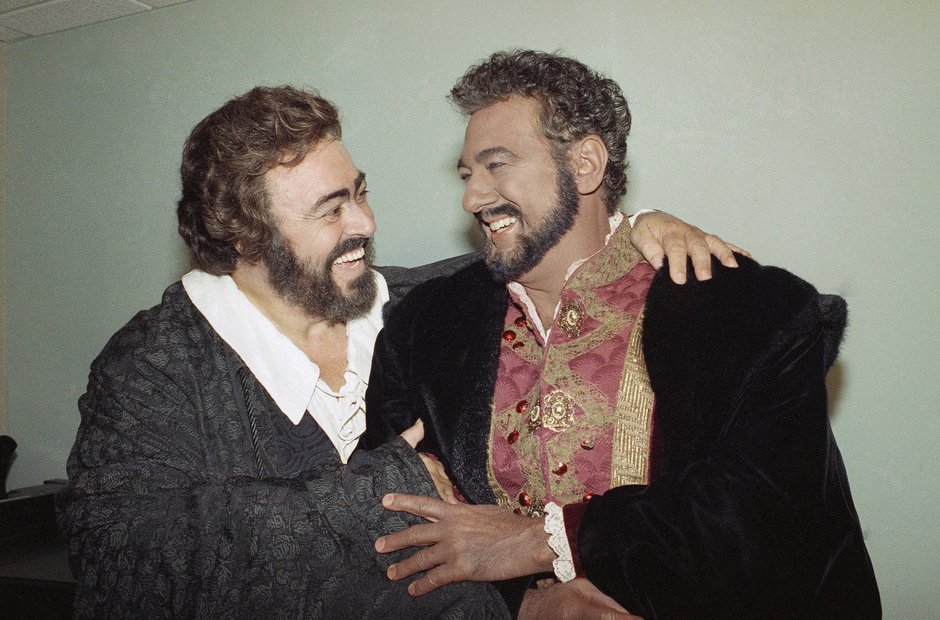
    Today is the 80th birthday of Placido Domingo. Although his star may have lost some of its luster over the past 18 months or so, pocked by the brickbats of # metoo, enough of his colleagues have stepped up to attest to his character that, while he remains something of a political hot potato, especially in the United States, he is still performing, if perhaps under the cloud of greylisting.

    All that has little bearing on the fact that, in his prime, he was one of the greatest tenors of his day, and an “Otello” for the ages. No less than Sir Laurence Olivier once remarked, “Domingo plays Othello as well as I do, AND he has that voice.” In 2009, he diversified, pivoting into baritone roles, even as new operas continued to be written for him. He also frequently appeared in the pit, as a conductor.

    There are those who grouse about his refusal to retire, but Domingo owes nothing to anyone, at least as far as his art is concerned. He’s had an amazing career, with a heroic voice that outlasted those of almost any other in his profession. (Hugues Cuénod sang supporting roles until he was 90.)

    In fact, until 2019, Domingo’s greatest sin seemed to be not having been born Luciano Pavarotti. But it was not for want of trying. Domingo turned up on variety shows, singing alongside John Denver, Julie Andrews, and Kermit the Frog. He appeared in magazine ads for Rolex. He conversed with Johnny Carson. He parodied himself on “The Simpsons.”

    Eventually, he adopted a strategy of “if you can’t beat him, join him.” In 1990, on the eve of the FIFA World Cup Final in Rome, he joined Pavarotti and José Carreras for the first of the blockbuster “Three Tenors” concerts. A recording of the event rapidly became the bestselling classical record of all time.

    The man clearly loves performing, and the adulation. While he’s stated that this month’s run of “Nabucco,” with the Vienna State Opera, will be his farewell with the company, as recently as August – having just beat Covid – he told the press that, while he may at some point have to retire from the stage, he will never retire from music.

    Tomorrow, in compliance with the city’s coronavirus safety standards, Vienna’s “Nabucco” will be livestreamed from an empty house at 4:30 pm. Presumably, that’s Vienna time, or 10:30 am EST. You’ll find more information here:

    https://www.wiener-staatsoper.at/en/

    It’s rather likely that Domingo will keep singing for as long as people will keep paying, or until he feels he can’t do it anymore. Some view this refusal to quit as a mar to his legacy. I say the man has had enough high points in a stunning career that he’ll always be remembered as one of the greats in his field.

    Happy birthday, Placido Domingo.


    With Raina Kabaivanska in “Tosca”

    As “Otello” at the Met:

    https://www.youtube.com/watch?v=FlvI8iEUr0g

    His “Don Carlo” bromance with Sherill Milnes:


    PHOTO: Opera’s answer to “The War of the Gargantuas”: Domingo (right) with Luciano Pavarotti

  • Peter Schreier, Celebrated Tenor, Dies at 84

    Peter Schreier, Celebrated Tenor, Dies at 84

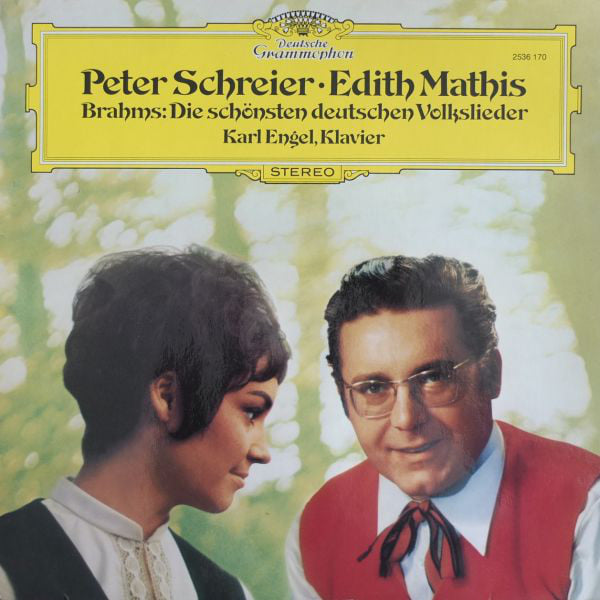
    The great tenor Peter Schreier has died.

    Schreier was born in Saxony in 1935. Though he continued to live in East Germany under Communist rule, he yet managed to achieve international success. He was especially praised for his lieder singing, though was also lauded for his work in some of the world’s great opera houses, where he appeared in works from Mozart to Wagner. Reportedly, Hans Pfitzner’s “Palestrina” was a particular favorite.

    Schreier died on Christmas Day, a notable coincidence, considering he sang so much Christmas music throughout his career, beginning as a boy chorister in the Dresden Kreuzchor. When his voice broke at the age of 16, he continued to pursue his dream of becoming a tenor. He was especially desirous to tackle the Evangelist roles in the oratorios of Johann Sebastian Bach. At the time of his death, Schreier – who had also become a noted conductor – was 84 years-old.

    We’ll remember him this afternoon on The Classical Network, by way of some of his recordings, alongside those of pianist Abbey Simon and chorus master Laszlo Heltay, both of whom we also lost within the past week. In addition, we’ll celebrate musical humorist Anna Russell and pianist, composer, and mordant wit Oscar Levant, on the anniversary of their births.

    At 6:00, it’s another “Picture Perfect,” music for the movies. This week, with the turn of the year only days away, the theme is change and the passage of time.

    Of course, the more things change, the more they stay the same. The parade of musical artistry continues, from 4 to 7 p.m. EST, on WWFM – The Classical Network and wwfm.org.


    Schreier sings Peter Cornelius’ Christmas song, “The Kings,” from his Kreuzchor days:

    Schreier sings Schubert’s “Ständchen” (Serenade):

    Schreier conducts Bach’s “Christmas Oratorio”:

  • Nicolai Gedda Dies at 91

    Nicolai Gedda Dies at 91

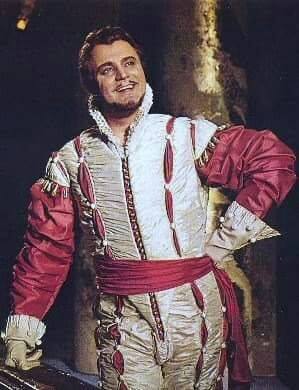
    Like Mark Twain, reports of his death were greatly exaggerated. In 2015, legendary Swedish tenor Nicolai Gedda became the subject of a death hoax that sent panic and despair rippling through the opera-loving community. Alas, today is no hoax. Gedda has died at the age of 91. One of the most widely-recorded tenors in history, he made his final opera recording in 2003 at 77 years-old. R.I.P.

    https://www.francemusique.fr/opera/nicolai-gedda-est-32119


    A devil-may-care Gedda as Berlioz’s Benvenuto Cellini

Tag Cloud

Aaron Copland (92) Beethoven (95) Composer (114) Film Music (123) Film Score (143) Film Scores (255) Halloween (94) John Williams (187) KWAX (229) Leonard Bernstein (101) Marlboro Music Festival (125) Movie Music (138) Opera (202) Philadelphia Orchestra (89) Picture Perfect (174) Princeton Symphony Orchestra (106) Radio (87) Ralph Vaughan Williams (85) Ross Amico (244) Roy's Tie-Dye Sci-Fi Corner (290) The Classical Network (101) The Lost Chord (268) Vaughan Williams (103) WPRB (396) WWFM (881)

DON’T MISS A BEAT

Receive a weekly digest every Sunday at noon by signing up here


RECENT POSTS