Tag: The Lost Chord

  • Kapralova & Smyth: Forgotten Female Composers

    Kapralova & Smyth: Forgotten Female Composers

    This week on “The Lost Chord,” the focus will be on outstanding works by two extraordinary female composers, from comparatively early in their respective careers.

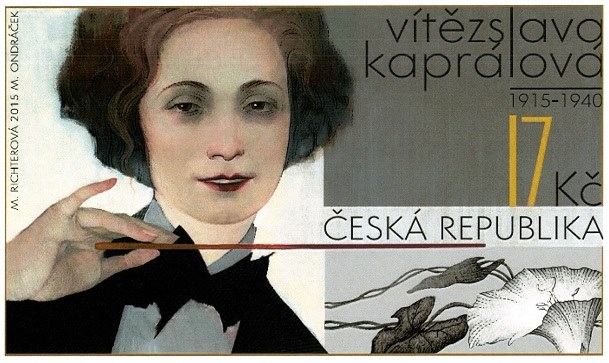
    Unfortunately, in the case of Vitězslava Kápralová (1915-1940), it was not to be a long one. One of the great hopes of Czech music, Kápralová undoubtedly would be much better known had she not died of tuberculosis at the age of 25. As it stands, her reputation is only beginning to emerge from the shadow of her teacher and lover, Bohuslav Martinu.

    Kápralová’s String Quartet was written while she was yet a student at the Prague Conservatory, where her teachers included Vitězslav Novák and Václav Talich. (She studied with Martinu later in Paris.) The work was completed in 1936, when Kápralová was about 21 years-old.

    More about Kápralová here, in this article written to mark her centenary in 2015:

    https://www.telegraph.co.uk/culture/music/classicalmusic/11365848/The-tragedy-of-Europes-great-forgotten-female-composer.html?fbclid=IwAR26f65euwM_lesL-fSWvTids3argkS6dbtmz5P3ruuP9cCYKUsn1F-IXC4

    Ethel Smyth (later DAME Ethel Smyth, 1858-1944) was one of the most vocal advocates of the women’s suffrage movement in England. She overcame early opposition to a career in music on the part of her father to receive the praise of George Bernard Shaw, who called her Mass “magnificent.”

    However, her works were often better-appreciated abroad. Her operas, in particular, were embraced in Germany. One of them, “Der Wald,” was the only opera by a woman composer mounted by New York’s Metropolitan opera for over a century!

    Smyth served time in prison for putting out the windows of politicians who opposed a woman’s right to vote. She also wrote for the cause “The March of the Women.” When Sir Thomas Beecham went to visit her in jail, he witnessed her conducting through the bars of her window with a toothbrush as her associates gathered for exercise in the courtyard.

    Smyth’s “Serenade in D” – a symphony in all but name – was her first orchestral score, composed in 1890, when she was about 32 years-old. In my opinion, it’s better than just about anything composed by her contemporary, Sir Hubert Parry, and much more compelling than the symphonies of Sir Charles Villiers Stanford.

    More about Smyth here, in this piece put together in connection with a revival of her opera, “The Wreckers,” by the great Leon Botstein:

    https://www.npr.org/sections/deceptivecadence/2015/07/23/410033088/one-feisty-victorian-womans-opera-revived?fbclid=IwAR0XG4Np46RjSJWuUIYwENZ9zFIdkoQYGL7vncYT7i5qFK5_sREFzI56gKw

    I hope you’ll join me for music by these two extraordinary women. That’s “A Woman’s Place is in the Concert Hall” on “The Lost Chord,” now in syndication on KWAX, the radio station of the University of Oregon!


    Remember, KWAX is on the West Coast, so there’s a three-hour difference for those of you listening in the East. Here are the respective air-times for all three of my recorded shows (with East Coast conversions in parentheses):

    PICTURE PERFECT, the movie music show – Friday on KWAX at 5:00 PM PACIFIC TIME (8:00 PM EST)

    SWEETNESS AND LIGHT, the light music program – ALL NEW! – Saturday on KWAX at 8:00 AM PACIFIC TIME (11:00 AM EST)

    THE LOST CHORD, unusual and neglected rep – Saturday on KWAX at 4:00 PM PACIFIC TIME (7:00 PM EST)

    Stream all three, at the times indicated, by following the link!

    https://kwax.uoregon.edu/


    Vitězslava Kápralová honored on a postage stamp; Ethel Smyth taken into custody

  • Paul Wittgenstein’s Left-Hand Legacy

    Paul Wittgenstein’s Left-Hand Legacy

    Concert pianist Paul Wittgenstein lost his right arm during the First World War. Rather than abandon his career, he commissioned works for the left hand from some of the great composers of his day, including Benjamin Britten, Sergei Prokofiev, Richard Strauss, and of course Maurice Ravel.

    This week on “The Lost Chord,” we’ll highlight two of Wittgenstein’s lesser-known commissions.

    In 1922, Wittgenstein approached Paul Hindemith – at 27, a rising star of German modernism, indeed the radical avant-garde – to produce his “Klaviermusik mit Orchester.”

    Wittgenstein’s reaction to the piece is unknown, although we can easily surmise. He never played the work in public. Furthermore, since he had secured exclusive performance rights, he wouldn’t allow anyone else to play it, either.

    Following the pianist’s death in 1961, his widow relocated to a farmhouse in Bucks County, Pennsylvania, where for decades she kept all of her husband’s belongings in a single room. When the estate was finally catalogued in 2002, a copy of the Hindemith concerto was discovered among Wittgenstein’s effects, along with other scores, correspondence, and items of interest, including locks of both Beethoven’s and Brahms’ hair.

    It was Leon Fleisher who gave the belated premiere of the concerto, some 80 years after it was written, with the Berlin Philharmonic, conducted by Sir Simon Rattle. I was present at the U.S. East Coast premiere, with Fleisher and the Curtis Symphony Orchestra, conducted by Christoph Eschenbach. Listen carefully to see if you can hear me applauding, in a recording made at Philadelphia’s Verizon Hall, at the Kimmel Center for the Performing Arts, on April 27, 2008.

    As a rule, Wittgenstein gravitated toward composers of a more Romantic bent. Erich Wolfgang Korngold was one of music’s most astounding prodigies, a Viennese wunderkind and celebrated opera composer, who later achieved world fame in Hollywood. There, he produced over a dozen classic scores, for films like “Captain Blood,” “The Adventures of Robin Hood,” and “The Sea Hawk.”

    His greatest operatic success was “Die tote Stadt,” given its debut in 1920. Korngold was 23 years-old. In 1922, he became the first composer to be approached by Wittgenstein for a left-hand piano concerto. (It was the same year, by the way, that Wittgenstein enlisted Hindemith.) The result was the Piano Concerto in C-sharp. On today’s program, Marc-André Hamelin will be the soloist, an outstanding virtuoso figuratively playing with one hand tied behind his back.

    Interestingly, Wittgenstein much preferred this piece to Ravel’s Concerto for the Left Hand. It was the Ravel, commissioned in 1929, that would secure his place in music history, but he must have felt Korngold’s Romanticism and sense of struggle played more to his strengths. For whatever reason, Korngold became a Wittgenstein favorite. In the few minutes remaining at the end of the hour, Leon Fleisher will return to the keyboard for a performance of the “Lied,” the ardent slow movement of Korngold’s Suite for Two Violins, Cello and Piano Left-Hand.

    I hope you’ll join me for “What’s Left?” – rarely-heard commissions by Paul Wittgenstein – on “The Lost Chord,” now in syndication on KWAX, the radio station of the University of Oregon!


    Remember, KWAX is on the West Coast, so there’s a three-hour difference for those of you listening in the East. Here are the respective air-times for all three of my recorded shows (with East Coast conversions in parentheses):

    PICTURE PERFECT, the movie music show – Friday on KWAX at 5:00 PM PACIFIC TIME (8:00 PM EST)

    SWEETNESS AND LIGHT, the light music program – ALL NEW! – Saturday on KWAX at 8:00 AM PACIFIC TIME (11:00 AM EST)

    THE LOST CHORD, unusual and neglected rep – Saturday on KWAX at 4:00 PM PACIFIC TIME (7:00 PM EST)

    Stream all three, at the times indicated, by following the link!

    https://kwax.uoregon.edu/

  • Coleridge-Taylor Rediscovered on KWAX

    Coleridge-Taylor Rediscovered on KWAX

    Afro-British composer Samuel Coleridge-Taylor (1875-1912) achieved much in his comparatively short life, attracting the attention and advocacy of Sir Charles Villiers Stanford, Sir Edward Elgar, and Sir Malcolm Sargent.

    His cantata “Hiawatha’s Wedding Feast” became a cultural phenomenon between the wars. Sargent conducted the piece annually, from 1928 to 1939, in a costumed, semi-ballet version, featuring close to a thousand performers. Unfortunately, this was among the works the composer had sold outright, his heirs thereby missing out on the royalties. By the time of Sargent’s advocacy, the short-lived Coleridge-Taylor had already been dead for 16 years.

    This week on “The Lost Chord,” we’ll hear selections from a complete recording of “Scenes from ‘The Song of Hiawatha,’” one of the earliest to feature rising star Bryn Terfel, released on the Argo label back in 1991. We’ll also hear Sargent’s 1932 recording of Coleridge-Taylor’s “Othello Suite.” The hour will conclude with one of the composer’s musical explorations of his African heritage, the “Symphonic Variations on an African Air,” in a performance conducted by Grant Llewellyn, released on Argo in 1993.

    I hope you’ll join me for “Taylor-Made,” music of Samuel Coleridge-Taylor, on “The Lost Chord,” now in syndication on KWAX, the radio station of the University of Oregon!


    Remember, KWAX is on the West Coast, so there’s a three-hour difference for those of you listening in the East. Here are the respective air-times for all three of my recorded shows (with East Coast conversions in parentheses):

    PICTURE PERFECT, the movie music show – Friday on KWAX at 5:00 PM PACIFIC TIME (8:00 PM EST)

    SWEETNESS AND LIGHT, the light music program – ALL NEW! – Saturday on KWAX at 8:00 AM PACIFIC TIME (11:00 AM EST)

    THE LOST CHORD, unusual and neglected rep – Saturday on KWAX at 4:00 PM PACIFIC TIME (7:00 PM EST)

    Stream all three, at the times indicated, by following the link!

    https://kwax.uoregon.edu/


  • Beecham’s Byronic Schumann Manfred on the Lost Chord

    Beecham’s Byronic Schumann Manfred on the Lost Chord

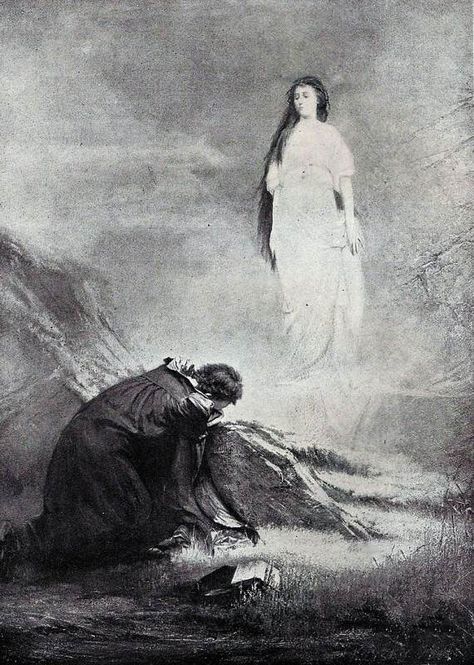
    “Oh God! If it be thus, and thou art not a madness and a mockery, I yet might be most happy…” So laments Lord Byron’s Manfred when confronted by the specter of Astarte.

    Manfred is the quintessential Byronic hero, a Romantic superman who endures unimaginable sufferings and mysterious guilt in connection with the death of his beloved. He wanders the Alps, longing for extinction, and meets his fate defiantly, rejecting all authority, corporeal and supernatural.

    Robert Schumann was intoxicated by Byron’s dramatic poem from the time he first encountered it at the age of 19 in 1829. In 1848, he began to compose music for it, concurrently with that for his “Scenes from Goethe’s ‘Faust.’” Wrote Schumann, “I have never before devoted myself to a composition with such love and such exertion of my powers as to ‘Manfred.’” The piece was given its first performance in Weimar in 1852, with Franz Liszt conducting.

    This week on “The Lost Chord,” we’ll hear highlights from a recording made 102 years later by Sir Thomas Beecham.

    When Beecham came to record Schumann’s incidental music in 1954, it was an act of total reimagination. Unquestionably the work, as written, contains much attractive music. However, if we’re to be completely frank, it can be a bit dramatically static at those times when the music falls silent in deference to florid monologue. Beecham recognized this and enlisted the help of Eugene Goossens and Julius Harrison to assist him in orchestrating a number of Schumann’s piano pieces to be used as underscore for some of the spoken dialogue. He also incorporated a couple of part-songs and even invented a ballet. Fear not! Beecham’s license is nowhere as extreme as that he would later take with Handel’s “Messiah.”

    Beecham’s Byronic credentials are unimpeachable. Byron was among his favorite poets. Of course, he also happened to conduct one of the great recordings of “Harold in Italy” (after “Childe Harold’s Pilgrimage”), with the violist William Primrose. Furthermore, Beecham had been familiar with Schumann’s “Manfred” since at least 1918, when he led two performances of the complete incidental music at the age of 39. Some 36 years later, he decided to resurrect the work via a broadcast performance and then as a program at Royal Festival Hall.

    I first encountered this remarkable recording in the 1980s, in the middle of the night, when it was broadcast over the late, lamented WFLN, for 48 years Philadelphia’s classical music station. Henry Varlack used to play it from time to time on his program, “Sleepers Awake.” Having not heard it for a while, I called in to his Friday night/Saturday morning listener request show, and he told me with regret that the record had become so worn that it was no longer suitable for airplay.

    Imagine my excitement, then, when I learned in the mid-‘90s that it was being reissued on CD. I promptly special-ordered it from England, and it couldn’t get here fast enough. That was on the Beecham Collection label – alas now long out of print. It has since appeared and disappeared (like Astarte?) on Sony.

    The recording features actors, chorus, and orchestra. Laidman Browne may be a bit long-in-the tooth for Byron’s anti-hero, but no one relishes “eeeeeeeeviiiiiiiiiiiiiiiiiiiiiiiiiilllllllll” quite like him.

    I hope you’ll join me for “Byronic Beecham,” on “The Lost Chord,” now in syndication on KWAX, the radio station of the University of Oregon!


    Remember, KWAX is on the West Coast, so there’s a three-hour difference for those of you listening in the East. Here are the respective air-times for all three of my recorded shows (with East Coast conversions in parentheses):

    PICTURE PERFECT, the movie music show – Friday on KWAX at 5:00 PM PACIFIC TIME (8:00 PM EST)

    SWEETNESS AND LIGHT, the light music program – ALL NEW! – Saturday on KWAX at 8:00 AM PACIFIC TIME (11:00 AM EST)

    THE LOST CHORD, unusual and neglected rep – Saturday on KWAX at 4:00 PM PACIFIC TIME (7:00 PM EST)

    Stream all three, at the times indicated, by following the link!

    https://kwax.uoregon.edu/

  • Herzogenberg Friend of Brahms and Forgotten Composer

    Herzogenberg Friend of Brahms and Forgotten Composer

    The composer Heinrich von Herzogenberg (1843-1900), born in Graz, studied in Vienna, where he became a lifelong friend of Johannes Brahms. Of course, being friends with Brahms was a complicated matter. In particular, the older composer was not very diplomatic in his assessment of Herzogenberg’s music. However, toward the end of his life, he grudgingly offered, “Herzogenberg is able to do more than any of the others.”

    This week on “The Lost Chord,” we’ll have music by Brahms’ faintly-praised confidant.

    In 1874, Herzogenberg co-founded the Leipzig Bach-Verein, which dedicated itself to the revival of all the Bach cantatas. He served as its music director for ten years. Following the death of his wife in 1892, he turned increasingly to the writing of sacred music. In particular, he composed music for services of a Lutheran church in Strasbourg, though he himself remained a Roman Catholic. His models for these pieces were, naturally, the oratorios and passions of Bach.

    Three large-scale works of the period call for members of the congregation to participate in the singing of the chorales.

    “Die Geburt Christi,” or “The Birth of Christ,” written in 1894, betrays the influence of composers admired by Herzogenberg. However, the work is not always as “Brahmsian” as one might expect. A prominent role is given to church hymns, with the inclusion of folk material and some familiar Christmas melodies.

    We’ll hear selections from Parts One and Two – “The Promise” and “The Fulfillment” – and then, after a break, the whole of Part Three, “The Adoration.”

    I hope you’ll join me for “German Shepherds,” Herzogenberg’s musical telling of the Nativity story, on “The Lost Chord,” now in syndication on KWAX, the radio station of the University of Oregon!


    Remember, KWAX is on the West Coast, so there’s a three-hour difference for those of you listening in the East. Here are the respective air-times for all three of my recorded shows (with East Coast conversions in parentheses):

    PICTURE PERFECT, the movie music show – Friday on KWAX at 5:00 PM PACIFIC TIME (8:00 PM EST)

    SWEETNESS AND LIGHT, the light music program – ALL NEW, DEBUTING TODAY!! – Saturday on KWAX at 8:00 AM PACIFIC TIME (11:00 AM EST)

    THE LOST CHORD, unusual and neglected rep – Saturday on KWAX at 4:00 PM PACIFIC TIME (7:00 PM EST)

    Stream all three, at the times indicated, by following the link!

    https://kwax.uoregon.edu/

Tag Cloud

Aaron Copland (92) Beethoven (95) Composer (114) Film Music (123) Film Score (143) Film Scores (255) Halloween (94) John Williams (187) KWAX (229) Leonard Bernstein (101) Marlboro Music Festival (125) Movie Music (138) Opera (202) Philadelphia Orchestra (89) Picture Perfect (174) Princeton Symphony Orchestra (106) Radio (87) Ralph Vaughan Williams (85) Ross Amico (244) Roy's Tie-Dye Sci-Fi Corner (290) The Classical Network (101) The Lost Chord (268) Vaughan Williams (103) WPRB (396) WWFM (881)

DON’T MISS A BEAT

Receive a weekly digest every Sunday at noon by signing up here


RECENT POSTS