Tag: The Lost Chord

  • Scarlatti’s Musical Duels and Lasting Legacy

    Scarlatti’s Musical Duels and Lasting Legacy

    It seems as if it was only a matter of time before any Baroque musician of merit would become embroiled in a musical duel.

    In the case of Domenico Scarlatti, he was challenged in Rome by none other than George Frideric Handel. The resulting contest led to Handel being judged superior to his rival on the organ; however, on the harpsichord Scarlatti was deemed to be supreme. In fact, Scarlatti’s unusual facility at the keyboard has had artists “keyed up” for centuries.

    Born in Naples in 1685 – the same year as Handel and Bach – Scarlatti spent much of his career in the service of the Portuguese and Spanish royal families. He wrote 555 keyboard sonatas, which have been admired by composer-performers from Frederic Chopin to Marc-André Hamelin.

    This Sunday night on “The Lost Chord,” we’ll enjoy several works written in tribute to this Baroque master.

    Charles Avison, whose life overlapped Scarlatti’s own (he was born in 1709, when Scarlatti was 23 years-old), arranged a number of his elder colleague’s keyboard works into a set of 12 concerti grossi. We’ll sample one of those, Avison’s Concerto No. 10 in D.

    Then we’ll turn to American composer Norman Dello Joio. Dello Joio was the recipient of the Pulitzer Prize for Music in 1957 for his “Meditations on Ecclesiastes.” From 1979, we’ll hear his four-movement piano work, “Salute to Scarlatti.”

    Dmitri Shostakovich arranged two of Scarlatti’s keyboard sonatas for small wind ensemble and percussion. We’ll enjoy performances of these by members of the former USSR Ministry of Culture Symphony Orchestra conducted by Gennady Rozhdestvensky.

    Finally, Alfredo Casella’s 1926 suite for piano and orchestra, “Scarlattiana,” draws its inspiration from dozens of Scarlatti sonatas. Though unquestionably high-spirited, it was not originally intended for the dance – but since it unabashedly recalls Stravinsky’s “Pulcinella,” it is hardly surprising that some clown decided to choreograph it.

    I hope you’ll join me for a mixed salad of Scarlatti tributes, on “Italian Dressing,” on “The Lost Chord,” now in syndication on KWAX, the radio station of the University of Oregon!


    Keep in mind, KWAX is on the West Coast, so there’s a three-hour difference for the Trenton-Princeton area. Here are the respective air-times of my recorded shows (with East Coast conversions in parentheses):

    PICTURE PERFECT, the movie music show – Friday on KWAX at 5:00 PACIFIC TIME (8:00 PM EDT)

    THE LOST CHORD, unusual and neglected rep – Saturday on KWAX at 4:00 PACIFIC TIME (7:00 PM EDT)

    Stream them here!

    https://kwax.uoregon.edu/

  • Hans Gál Tragedy and Triumph on the Lost Chord

    Hans Gál Tragedy and Triumph on the Lost Chord

    He was a remarkable figure, who weathered much to create works of lasting beauty. This week on “The Lost Chord,” it’s the tragedy and triumph of Hans Gál.

    Gál was born outside Vienna in 1890. He studied with, among others, Eusebius Mandyczewski, lifelong friend of Johannes Brahms. Gál himself became a serious Brahms scholar, co-editing the master’s complete works, in cooperation with Mandyczewski, in ten volumes. He edited other scholarly volumes on Brahms, as well.

    It was while Gál was director of the Mainz Conservatory of Music that the Nazis came to power. Forced out of his position, he returned to Austria. Then the Anschluss drove him to Great Britain.

    There, he made friends with the musicologist Donald Francis Tovey. Tovey, also a friend of Brahms, was based at Edinburgh University. Though Gál would be held in an internment camp during the war, Tovey eased the way for his subsequent employment at Edinburgh. Gál flourished there, becoming a respected member of the faculty and an influential teacher. He remained in Scotland for the rest of his very long life. He died there in 1987 at 97 years-old.

    Gál composed in nearly every genre. He was lauded by many of the greatest musicians of his day. Yet somehow his music and reputation haven’t really pervaded the wider musical consciousness.

    We’ll hear two works by this neglected composer, issued on the Avie label, which has done much to document Gál’s orchestral, chamber and instrumental music.

    First, we’ll have the Piano Sonata, Op. 28, from a complete, 3-CD set devoted to Gál’s output for the keyboard. Gál was about 37 years-old at the time of the sonata’s composition. It’s sobering to think he yet had 60 years of life ahead of him!

    Then we’ll hear his Cello Concerto, from 1944. Gál’s mother died in 1942. Shortly after, his aunt and sister took their own lives to avoid deportation to Auschwitz. Unable to bear up under the strain, the composer’s youngest son also committed suicide at 18 years-old. For all the turbulence and tragedy in Gál’s life, he managed to craft a rewarding and mellifluous work, which on occasion offers glimpses of his beloved Brahms. The concerto is elegiac, lyrical and deeply personal.

    I hope you’ll join me for “Gál’s Worthy,” worthwhile music of Hans Gál, on “The Lost Chord,” now in syndication on KWAX, the radio station of the University of Oregon!


    Keep in mind, KWAX is on the West Coast, so there’s a three-hour difference for the Trenton-Princeton area. Here are the respective air-times of my recorded shows (with East Coast conversions in parentheses):

    PICTURE PERFECT, the movie music show – Friday on KWAX at 5:00 PACIFIC TIME (8:00 PM EDT)

    THE LOST CHORD, unusual and neglected rep – Saturday on KWAX at 4:00 PACIFIC TIME (7:00 PM EDT)

    Stream them here!

    https://kwax.uoregon.edu/

  • Arthurian Music Lost Chord from the West Coast

    Arthurian Music Lost Chord from the West Coast

    King Lot, Lancelot, Camelot – that’s a lot of “lots.”

    This week on “The Lost Chord,” we put the “art” in “Arthur” with musical treatments of the Arthurian legends by two peripatetic American Romantics. We’re a little peripatetic ourselves as, for reasons beyond our control, the show is now being broadcast from KWAX on the West Coast!

    But one cannot expect to attain the Grail without a quest. You’ll find the time and streaming information at the end of this post.

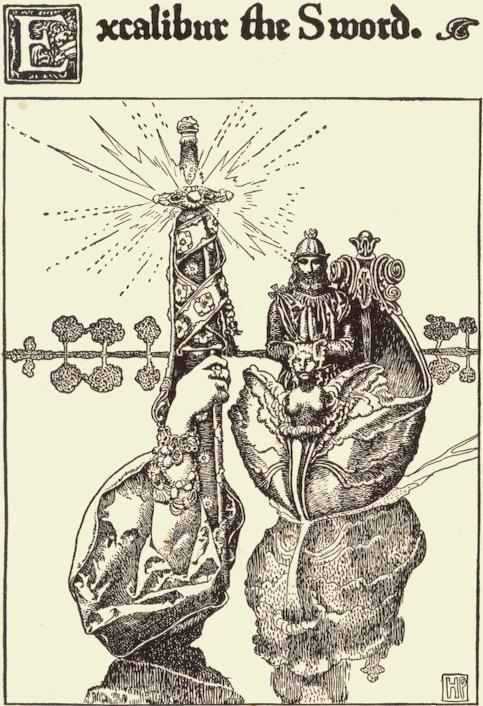
    As for what we’ll hear, we’ll begin with “Excalibur,” a symphonic poem after Arthur’s enchanted sword, by Louis Coerne (pronounced “Kern”). Coerne was born in Newark, NJ, in 1870. As was the custom at the time, he studied abroad, in France and Germany, then closer to home with John Knowles Paine. In Munich, he pursued organ and composition studies with Josef Rheinberger.

    After that, it was back and forth to Germany, between church and conducting appointments in the United States, and then the assumption of a series of academic posts throughout the American Northeast and Midwest. Despite all the worn shoe leather, in his 52 years he managed to produce 500 works.

    The remainder of the hour will be devoted to the Straussian tone poem “Le Roi Arthur,” a work in three movements, by George Templeton Strong, son of the famous Civil War diarist, born in 1856. Strong Jr. studied at the Leipzig Conservatory, where Joachim Raff was among his teachers. For a time, he played viola in the Gewandhaus Orchestra. He rubbed shoulders with Liszt and Wagner, then was lured back to the United States by the offer of a teaching position (by former European transplant Edward MacDowell) at the New England Conservatory.

    However, in part because the work didn’t agree with him, and in part because of health issues, Strong soon took off for Switzerland, where he settled on the banks of Lake Geneva. There, he dedicated the remainder of his life to painting watercolors and composing. Even after musical fashion had changed, he continued to play an active role in Geneva’s musical life.

    I hope you’ll join me for “Kinetic Yankees in King Arthur’s Court.” Break a lance for Arthur, on “The Lost Chord,” now in syndication on KWAX, the radio station of the University of Oregon!


    Keep in mind, KWAX is on the West Coast, so there’s a three-hour difference for the Trenton-Princeton area. Here are the respective air-times of my recorded shows (with East Coast conversions in parentheses):

    PICTURE PERFECT, the movie music show – Friday on KWAX at 5:00 PACIFIC TIME (8:00 PM EDT)

    THE LOST CHORD, unusual and neglected rep – Saturday on KWAX at 4:00 PACIFIC TIME (7:00 PM EDT)

    Stream them here!

    https://kwax.uoregon.edu/

  • Byrd Remembered A Belated Tribute

    Byrd Remembered A Belated Tribute

    Consider it a belated tribute to William Byrd.

    Byrd died 400 years ago, on July 4, 1623. I think it’s understandable that as an American – especially one born on the Fourth – I would have let the observance slip by, at a time when my head would have been a tug-of-war between fireworks and regret.

    Byrd is one albatross I will finally be able to address, this weekend on “The Lost Chord.”

    A “Gentleman of the Chapel Royal,” Byrd was one of the best loved and certainly one of the most powerful musicians in England. In 1575, Queen Elizabeth granted him and Thomas Tallis – who had been a “Gentleman” from the time of Henry VIII – a 21-year monopoly on polyphonic music and a patent to print and publish music.

    Not incidentally, Byrd has his own fireworks connection. Despite his favored status within the Anglican Church, he converted to Catholicism, and even rubbed shoulders with Robert Catesby. Catesby formulated the Gunpowder Plot to blow up Parliament in 1605, during the reign of James I, for which Guy Fawkes gained his undying notoriety.

    Though Byrd was never imprisoned for his religion, he was involved in numerous lawsuits and subjected to heavy fines. Elizabeth interceded on his behalf at least once. He participated in illegal services, and the texts he chose to set to music could, at times, have a subversive edge. In particular, as a Catholic in a Protestant country, he became fond of texts related to persecution. Comparatively speaking, he went unmolested, because of his record of allegiance to the crown.

    Glancing through my recorded shows, I note that Byrd makes a substantial appearance on one of them, by way of Gordon Jacob.

    Jacob, born in 1895, is perhaps best remembered these days as an orchestrator. He did a popular arrangement for full orchestra of Vaughan Williams’ “English Folk Song Suite,” originally composed for symphonic band; he orchestrated Sir Edward Elgar’s Organ Sonata; and his arrangement of the ballet “Les Sylphides” has been eclipsed only by that of Roy Douglas.

    But he was also a prolific composer himself. In all, he wrote some 400 works. In fact, when weighing the size of his output against his reputation, it’s tempting to underestimate – as the Angel did his Biblical namesake – Jacob’s tenacity.

    We’ll hear an example of his talent as an arranger, the “William Byrd Suite,” after virginal pieces by the Elizabethan master. The work was Jacob’s contribution to the celebrations in 1923 surrounding the tercentenary of Byrd’s death. The balance of the program will be devoted to one of his original compositions, the rarely-heard Symphony No. 1, dedicated to the memory of his brother, who died during the First World War.

    We’ll grapple with the range of Jacob’s accomplishments, even as I wing it with an impromptu tribute to Byrd, on “Wrestling Jacob,” this Saturday on “The Lost Chord,” now in syndication on KWAX, the radio station of the University of Oregon.

    For streaming information, see below.


    Keep in mind, KWAX is on the West Coast, so there’s a three-hour difference for the Trenton-Princeton area. Here are the respective air-times of my recorded shows (with East Coast conversions in parentheses):

    PICTURE PERFECT, the movie music show – Friday on KWAX at 5:00 PACIFIC TIME (8:00 PM EDT)

    THE LOST CHORD, unusual and neglected rep – Saturday on KWAX at 4:00 PACIFIC TIME (7:00 PM EDT)

    Stream them here!

    https://kwax.uoregon.edu/


    IMAGES (left to right): Jacob, Byrd, and Jacob

    BONUS: Follow the link for a witty survey ranking the various depictions of Jacob wrestling the angel in Western Art!

    https://the-toast.net/2014/09/16/famous-paintings-jacob-wrestling-angel-ranked-much-actions-resemble-slow-dancing/?fbclid=IwAR2IEewoVZtSngyVhY0VkprxjtH8x7oLoaJJf70Ye29G1Q1YfjKPKPP-EUA

  • George Antheil Bad Boy of Music Birthday

    George Antheil Bad Boy of Music Birthday

    George Antheil, classical music’s original Trenton cracker, was born on this date in 1900.

    The self-proclaimed “Bad Boy of Music” (the title of his autobiography) had to travel all the way to Paris to make good. It doesn’t make my transcontinental exile to Eugene, Oregon seem so bad! I hope you’ll join me for “The Lost Chord,” now on KWAX, as we divvy up the nut bread for a musical celebration of Antheil’s birthday.

    Antheil’s “Ballet Mécanique” sparked one of classical music’s great riots when it was unveiled at the Théâtre des Champs-Élysées in 1926.

    The work made preposterous demands on performers and audience alike, with its battery of player pianos, sirens, bells, and airplane propellers – all difficult to coordinate, but worth it, if they were to transform concert halls into free-for-alls and secure Antheil’s status as enfant terrible. His notoriety earned him the respect, friendship, and envy of Paris’ artistic community. From the stage, he watched as Man Ray punched a heckler in the face, as Satie cheered, “Quel precision!,” and as Ezra Pound shouted, “Shut up, you are all stupid idiots.” Pound became one of Antheil’s most ardent champions, taking a break from poetry to publish an inflammatory book, “Antheil and the Treatise on Harmony.”

    Antheil speculated, perhaps facetiously, that his mechanistic nightmares may have been inspired by his having been born across the street from a noisy machine shop. In fact, a number of his works bear the boisterous imprint of the factories he knew in Trenton as a boy, including the “Airplane Sonata,” “The Death of Machines,” and the “Sonata Sauvage.”

    It was all rather forward-looking. Antheil was one of the first composers to search beyond conventional instruments for musical means. He not only presaged the alien soundscapes of Edgard Varèse, but also anticipated the stupefying repetitions of minimalism – though infusing his own compositions with enough violence to prevent them from ever becoming numbing. Stravinsky was his hero. He fed off the savagery of “The Rite of Spring,” then followed the master’s subsequent hairpin turn into neoclassicism. Both artists suffered a backlash from former idolaters who felt betrayed by what was perceived as a cowardly retreat into the past.

    In Antheil’s case, his reputation never recovered. The one-two punch of his Piano Concerto No. 2, transparently influenced by Bach, and the spectacular failure of his “Ballet Mécanique” to impress at its American premiere at Carnegie Hall (mostly due to faulty machinery) cast Antheil, rebel angel that he was, from the lofty heights of notoriety to the slag heap of has-beenery.

    But if it is true that the remainder of his career was indeed that of a has-been, we should all be so lucky.

    The composer of six symphonies, Antheil also wrote books on endocrinology and speculative war tactics, a murder mystery, a nationally syndicated column of advice to the lovelorn, and over 30 Hollywood film scores. With the actress Hedy Lamarr, he patented a torpedo guidance system that became the basis for modern Bluetooth, Wi-Fi, and cellular phone technology.

    I hope you’ll join me for music by this eccentric and multitalented figure, including “Ballet Mécanique,” in all its original, uncompromising glory; then selections from his neo-classical Piano Concerto No. 2, his wartime Symphony No. 4, and dance music from his score to the ballet film noir “Specter of the Rose.”

    The irony is blistering that Trenton’s own classical music station no longer hosts “The Lost Chord,” but you can still enjoy this celebration of Trenton’s (other) bad boy, thanks to the miracle of worldwide streaming. I hope you’ll be able to join me for “Antheil Establishment,” now in syndication on KWAX, the radio station of the University of Oregon!

    For more information, see below.


    Keep in mind, KWAX is on the West Coast, so there’s a three-hour difference for the Trenton-Princeton area. Here are the respective air-times of my recorded shows (with East Coast conversions in parentheses):

    PICTURE PERFECT, the movie music show – Friday on KWAX at 5:00 PACIFIC TIME (8:00 PM EDT)

    THE LOST CHORD, unusual and neglected rep – Saturday on KWAX at 4:00 PACIFIC TIME (7:00 PM EDT)

    Stream them here!

    https://kwax.uoregon.edu/

Tag Cloud

Aaron Copland (92) Beethoven (95) Composer (114) Film Music (123) Film Score (143) Film Scores (255) Halloween (94) John Williams (187) KWAX (229) Leonard Bernstein (101) Marlboro Music Festival (125) Movie Music (138) Opera (202) Philadelphia Orchestra (89) Picture Perfect (174) Princeton Symphony Orchestra (106) Radio (87) Ralph Vaughan Williams (85) Ross Amico (244) Roy's Tie-Dye Sci-Fi Corner (290) The Classical Network (101) The Lost Chord (268) Vaughan Williams (103) WPRB (396) WWFM (881)

DON’T MISS A BEAT

Receive a weekly digest every Sunday at noon by signing up here


RECENT POSTS