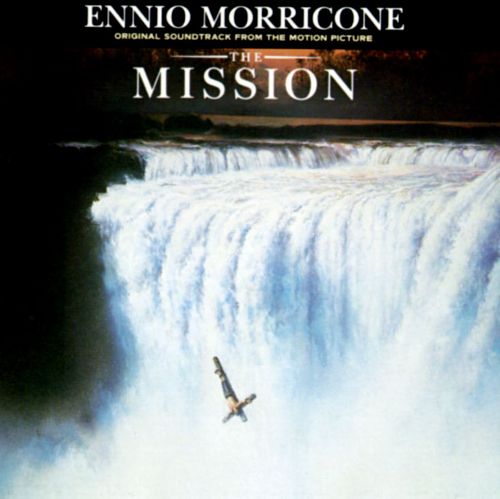
Tag: The Mission

  • Ennio Morricone Gone But Never Forgotten

    Ennio Morricone Gone But Never Forgotten

    Happy birthday, Ennio Morricone, gone but never forgotten.

    The composer of an estimated 500 film and television scores – perhaps the most prolific film composer of all time – Morricone died last year at the age of 91.

    Grazie, Maestro. You are greatly missed.


    Morricone celebrates his 90th birthday with the Orchestra and Chorus of the Accademia Nazionale di Santa Cecilia and music from “The Mission”

    “Once Upon a Time in the West”

    Vintage Morricone: “Two Mules for Sister Sara”

    A personal favorite

    Another, not to be confused with the oft-reissued “Il Gatto a Nove Code” – a completely different animal! Is that a mandolin and a muted trombone? Morricone always provided his own orchestrations.

    Conducting “Cinema Paradiso”

    Andrea Morricone conducts his father’s Concerto for Orchestra:

    Another concert work: “Esercizi for 10 Strings”

    Ricercare per pianoforte (thanks to Paul Moon)

    Easily his greatest hit

    “The Ecstasy of Gold.” I think I need to watch this movie NOW!!

    Far and away the best thing about “The Hateful Eight” (for which he received his only competitive Oscar)

    Morricone conducts “The Untouchables”
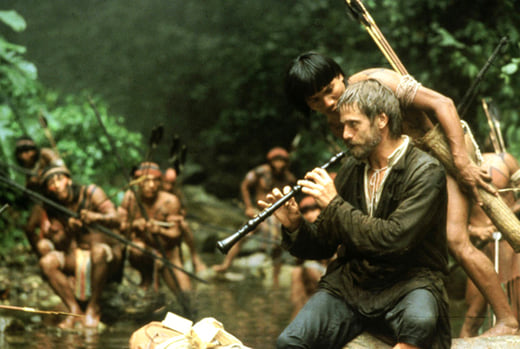
  • Faith & Film Scores: Black Robe to The Mission

    Faith & Film Scores: Black Robe to The Mission

    This week on “Picture Perfect,” in this season of wall-to-wall Biblical epics, enjoy a bit of counterprogramming in the form of music from films about faith, conscience, and grappling with self-abnegation.

    Bruce Bereford’s “Black Robe” (1991), based on a novel by Irish-Canadian writer Brian Moore, tells the tale of a Jesuit priest who treks through 1500 miles of Canadian wilderness on a mission to convert the native tribes of the Huron and the Algonquin. The evocative score is by Georges Delerue.

    “Black Narcissus” (1947), a Powell-Pressburger classic, is one of those startling films that just sort of sneaks up on you. Psychological tension abounds in a tale of repressed nuns struggling to maintain their composure in a voluptuous Himalayan valley. Eventually, the wheels begin to spin off the tracks, to spinetingling effect. The stunning cinematography is by Jack Cardiff. Incredibly, the entire film was shot in England, mostly on soundstages at Pinewood Studios. The music is by Brian Easdale, of “The Red Shoes” fame.

    Audrey Hepburn gave one of her most impressive performances in Fred Zinnemann’s “The Nun’s Story” (1959). A young woman enters a convent of sister-nurses and undergoes many trials in the hopes of becoming a missionary in the Belgian Congo. The film also features Peter Finch, Edith Evans, Peggy Ashcroft, and, in a memorable early role, an unhinged Colleen Dewhurst. The music is by Franz Waxman.

    Finally, Ennio Morricone composed on of his most-beloved scores for “The Mission” (1986). Jeremy Irons plays a Jesuit priest, who ventures into the South American rainforest to convert the Guarani to Christianity. Robert DeNiro is a reformed slave hunter, who seeks redemption. The moving music has received a great deal of exposure over the years through its use in television commercials and by figure skaters, who have made “Gabriel’s Oboe” a recognizable hit.

    Join me in seeking grace in an imperfect world, with music from films about nuns and missionaries this week, on “Picture Perfect,” music for the movies, this Saturday evening at 6:00 EDT, on WWFM – The Classical Network and wwfm.org.

  • Ennio Morricone Death A Loss for Film Lovers

    Ennio Morricone Death A Loss for Film Lovers

    A sad day for anyone who loves the movies. Ennio Morricone is dead.

    The composer of over 500 film and television scores, he was likely the most prolific film composer of all time.

    Although he has always been very popular in America, and around the world, with tributes pouring in over the decades from both pop and classical artists, acknowledgment from the Hollywood establishment came only fairly recently. He received a star on Hollywood’s Walk of Fame in 2016, the same year he won his only competitive Academy Award, for his score to Quentin Tarantino’s “The Hateful Eight.” By then, he was 87 years-old. (He was nominated five other times, the first in 1979.) Earlier, he received an honorary Oscar, for lifetime achievement, in 2007.

    Of course, Morricone never needed Hollywood to confirm his greatness. He churned out score after score from his home in Rome, and always supplied his own orchestrations – by no means standard practice in the film industry. The sheer volume of his output ensured that he left his mark on nearly every genre, but none more indelibly than the western. His collaborations in the form with director Sergio Leone – especially “A Fistful of Dollars,” “For a Few Dollars More,” “The Good, the Bad and the Ugly,” and “Once Upon a Time in the West” – made him internationally famous.

    His music for “The Mission,” “The Untouchables,” and “Cinema Paradiso” also remains popular. His melodies are much appropriated by figure skaters, television commercials, and by the movies themselves. His music has been quoted or reused in over 150 films, in which he has had absolutely no involvement. Even in instances in which the movies were absolutely atrocious, Morricone could be counted on to draw on his unfailing professionalism, infusing the ridiculous with dramatic tension and often heartbreaking lyricism.

    No word on whether or not he was able to follow through on his commitment to write music for the 2026 Olympic Games in Milano Cortina.

    Morricone was 91 years-old. One of the last of the legends is gone.


    “The Good, the Bad and the Ugly”

    “The Mission”

    https://www.youtube.com/watch?v=L41oGXgVmZg

    Morricone conducts “Cinema Paradiso”

  • South American Film Scores Rózsa & Morricone

    South American Film Scores Rózsa & Morricone

    If you are a Miklós Rózsa fan, you’ll want to join me for this week’s “Picture Perfect,” as I dig deep into the archive for two contrasting scores to movies set in South America.

    Rózsa, who is probably best remembered for his work on Biblical and historical epics (he won his third Academy Award for “Ben Hur” in 1959) provides a lush symphonic tapestry for “Green Fire” (1954), starring Stewart Granger and Grace Kelly. Rózsa piles on the MGM gloss, for a conflict between love and lust for emeralds in the jungles of Colombia.

    Then we’ll hear perhaps Rózsa’s most unusual venture, “Crisis” (1950). “Crisis” stars Cary Grant and Jose Ferrer in the story of a brain surgeon who must weigh ethical considerations when faced with saving the life of a dictator who oppresses the people of an unnamed banana republic. Unusual for a composer who likes to swing for the fences, Rózsa set himself the limitations of writing for solo guitar.

    MGM must have felt it had scored a major coup when securing famed Brazilian composer Heitor Villa-Lobos to supply music for “Green Mansions” (1959). The big screen adaptation of W.H. Hudson’s novel, set in the rainforests of southeastern Venezuela, stars Audrey Hepburn as Rima the Bird Girl. Unfortunately, the studio deemed what Villa-Lobos produced unusable, since the composer had begun writing based on his impressions of the novel, rather than wait for the completed film. MGM house composer Bronislau Kaper was brought in to salvage what he could.

    Finally, we’ll turn to one of Ennio Morricone’s best-loved scores – that for “The Mission” (1986). “The Mission” stars Jeremy Irons, as a Jesuit priest who penetrates the South American jungle to convert the native Guarani to Christianity, and Robert DeNiro, as a reformed slave hunter. The lovely and moving “Gabriel’s Oboe” became a recognizable hit, thanks in particular to its use by figure skaters and Aer Lingus.

    This is the score for which Morricone believed he should have won the Oscar.

    I hope you’ll join me for these South American adventures this week, on “Picture Perfect” – music for the movies – this Friday evening at 6:00 EDT, on WWFM – The Classical Network and wwfm.org.

  • Rózsa Morricone South America Film Scores

    Rózsa Morricone South America Film Scores

    If you are a Miklós Rózsa fan, you’ll want to join me for this week’s “Picture Perfect,” as I dig deep into the archive for two contrasting scores to movies set in South America.

    Rózsa, who is probably best remembered for his work on Biblical and historical epics (he won his third Academy Award for “Ben Hur” in 1959) provides a lush symphonic tapestry for “Green Fire” (1954), starring Stewart Granger and Grace Kelly. Rózsa piles on the MGM gloss, for a conflict between love and lust for emeralds in the jungles of Colombia.

    Then we’ll hear perhaps Rózsa’s most unusual venture, “Crisis” (1950). “Crisis” starred Cary Grant and Jose Ferrer in the story of a brain surgeon who must weigh ethical considerations when faced with saving the life of a dictator who oppresses the people of an unnamed banana republic. Unusual for a composer who likes to swing for the fences, Rózsa set himself the limitations of writing for solo guitar.

    M-G-M must have felt it had scored a major coup when securing famed Brazilian composer Heitor Villa-Lobos to supply music for “Green Mansions” (1959). The big screen an adaptation of W.H. Hudson’s novel, set in the rainforests of southeastern Venezuela, starred Audrey Hepburn as Rima the Bird Girl. Unfortunately, the studio deemed what Villa-Lobos produced unusable, since the composer had begun writing based on his impressions of the novel, rather than wait for the completed film. M-G-M house composer Bronislau Kaper was brought in to salvage what he could.

    Finally, we’ll turn to one of Ennio Morricone’s best-loved scores – that for “The Mission” (1986). “The Mission” starred Jeremy Irons, as a Jesuit priest who penetrates the South American jungle to convert the native Guarani to Christianity, and Robert DeNiro, as a reformed slave hunter. The lovely and moving “Gabriel’s Oboe” became a recognizable hit, thanks in particular to its use by figure skaters and Aer Lingus.

    This is the score for which Morricone believed he should have won the Oscar.

    I hope you’ll join me for these South American adventures this week, on “Picture Perfect” – music for the movies – this Friday evening at 6:00 EDT, on WWFM – The Classical Network and wwfm.org.

Tag Cloud

Aaron Copland (92) Beethoven (95) Composer (114) Film Music (123) Film Score (143) Film Scores (255) Halloween (94) John Williams (187) KWAX (229) Leonard Bernstein (101) Marlboro Music Festival (125) Movie Music (138) Opera (202) Philadelphia Orchestra (89) Picture Perfect (174) Princeton Symphony Orchestra (106) Radio (87) Ralph Vaughan Williams (85) Ross Amico (244) Roy's Tie-Dye Sci-Fi Corner (290) The Classical Network (101) The Lost Chord (268) Vaughan Williams (103) WPRB (396) WWFM (881)

DON’T MISS A BEAT

Receive a weekly digest every Sunday at noon by signing up here


RECENT POSTS