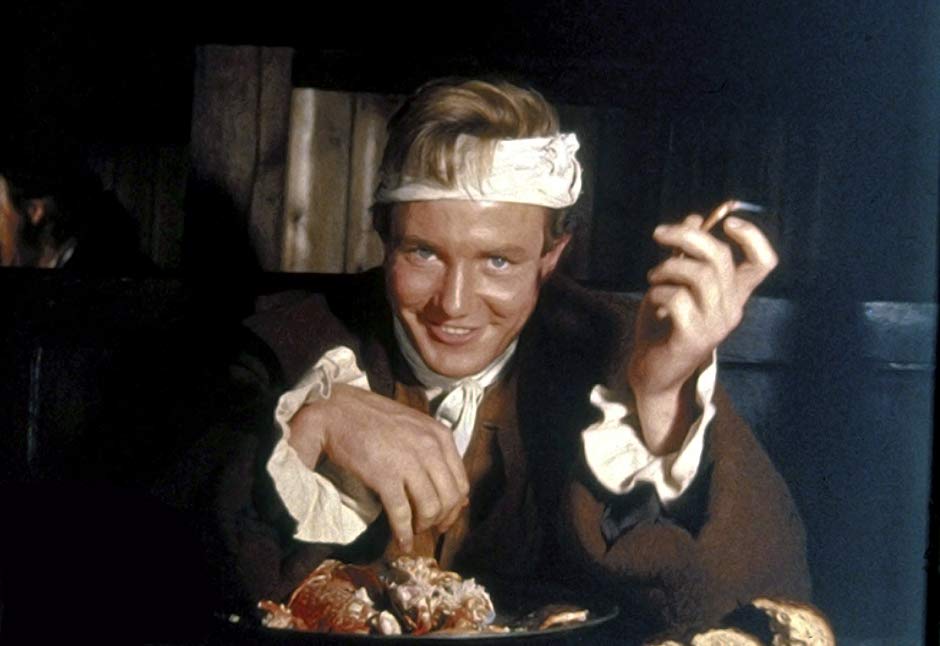
Tag: The Reivers

  • Picaresque Novels on Film Summer’s Last Adventure

    Picaresque Novels on Film Summer’s Last Adventure

    When I think back on the summers of my youth, I remember my elation at three months of illusory freedom – sucking the marrow out of life for the first half of the season or so; then getting drawn into family visits and vacations and losing track of friends; and finally, with the new school year looming, that last desperate frenzy to LIVE SUMMER!

    This week on “Picture Perfect,” with the season winding down, it’s one last grasp for adventure. Revel in some freewheeling lack of judgment, with an hour of films based on picaresque novels.

    Novels, you say? As in literature?

    And picaresque? Ain’t that one of them 20-dollar words???

    I suppose, in its way, it is also a foretaste of the classroom. But trust me, there will be enough impulsive behavior by rapscallions and scapegraces to keep things interesting.

    In case you weren’t an English major, picaresque novels are frequently characterized by rogues and anti-heroes as protagonists, episodic, wayward structure, and not infrequently lowly humor.

    We’ll hear music from “The Reivers,” after William Faulkner’s Pulitzer Prize-winning novel, a coming-of-age story about a boy swept into automobile theft and illicit horseracing in the American south. Mark Rydell directed the 1969 film, which starred Steve McQueen as the rakish Boon Hogganbeck and featured narration by Burgess Meredith. John Williams wrote the breezy Americana score.

    Mark Twain’s “The Adventures of Huckleberry Finn” is frequently characterized as an American picaresque. It’s certainly one of the funniest of “serious” books. A middling film adaptation was made in 1960, directed by Michael Curtiz, with Tony Randall given top billing, shifting the focus of the story to the con artistry of the King and the Duke. It features an evocative score by Jerome Moross.

    If Hervey Allen’s “Anthony Adverse” had any humor to begin with, it was definitely lost in translation. (Too bad the novel was written in English.) However, the 1936 screen adaptation certainly does sprawl. One could say it’s picaresque in the worst way. It just doesn’t go anywhere. It does, however, feature a top-notch cast (Frederic March, Olivia De Havilland, Claude Rains, etc.) and an Academy Award-winning score by Erich Wolfgang Korngold.

    While the modern picaresque novel had its roots in the Renaissance, the genre really seemed to hit its stride in the 18th century, with comic novelists like Henry Fielding. Fielding’s “Tom Jones,” perhaps the quintessential picaresque, was made into a film in 1963. It went on to win Academy Awards for Best Picture, Best Director (Tony Richardson), Best Adapted Screenplay (John Osborne) and Best Original Score (John Addison). Addison’s music suits Richardson’s quirky virtuosity like an off-kilter powdered wig.

    Get ready to wear some holes into your new school clothes. We’re up to no good, with an hour of picaresque adventures, on “Picture Perfect,” music for the movies, now in syndication on KWAX, the radio station of the University of Oregon!


    Keep in mind, KWAX is on the West Coast, so there’s a three-hour difference for the Trenton-Princeton area. Here are the respective air-times of my recorded shows (with East Coast conversions in parentheses):

    PICTURE PERFECT, the movie music show – Friday on KWAX at 5:00 PACIFIC TIME (8:00 PM EDT)

    THE LOST CHORD, unusual and neglected rep – Saturday on KWAX at 4:00 PACIFIC TIME (7:00 PM EDT)

    Stream them here!
    https://kwax.uoregon.edu/

  • Where Did All the Inspirational Movies Go?

    Where Did All the Inspirational Movies Go?

    Where are all the inspirational movies? Now, more than at any time in recent memory, there should be a wave of optimistic films to lift us up, out of all the dread, gloom, and rancor.

    Over the course of his unparalleled career, John Williams almost always managed to convey the exhilaration of being alive, even in the darkest thrillers. Everyone remembers his theme for the great white, but it’s the swashbuckling third act that made “Jaws” a monstrous hit.

    Not that everything has to be a march, necessarily, but how about a few interludes of light and beauty? Must these be totally absent from the movies these days? Is the best in life really reflected in the hip, the dark, the badass, and the ironic? Must the pace always be relentless?

    The 1970s was far from the most hopeful decade. In the wake of Vietnam, Watergate, and all the political and social unrest of the 1960s, who could have predicted that a young generation of filmmakers would embrace imagination, wit, and adventure? After a hot afternoon of sweating it out on a gas line, the American public was hungry for affirmation and escape. They could still find it in a darkened theater, and these movies became enormous moneymakers.

    But then, as usual, the Man got a hold of it and squeezed hard. A corporate mindset took root and bled everything of its fun and turned the world into a bleak thrill-ride.

    There was plenty of grit in American movies of the 1970s, to be sure. But at some point, you’ve got to look away from all the crime and conspiracy, the dystopias and divorces, the horrors, real and supernatural, and celebrate the simple pleasures of biking to a friend’s house, sitting in a park with the sun on your face, or standing on a lawn in your bare feet.

    Who knows, maybe it’s just not practical to expect any kind of soul, patience, or reflection anymore, with all the smartphones and computers. And the tighter deadlines for composers, and the ability to manipulate films virtually until the day they are released.

    Does anyone watch the birds or the snow or the clouds, or even dream? Or breathe? Or is that considered boring? All I’m asking for is a little poetry, or even a smile.

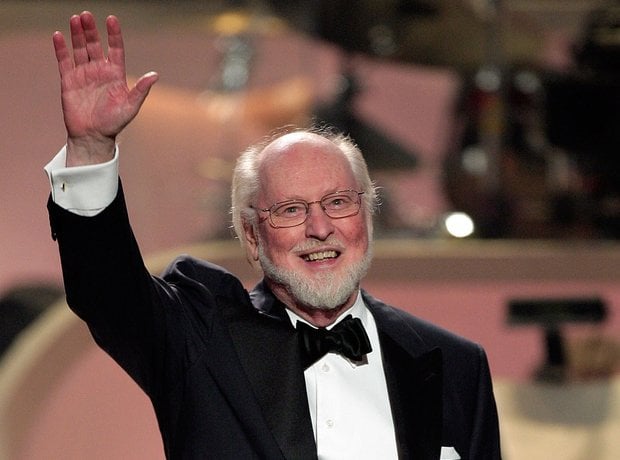
    Even when the movies weren’t the best, John Williams put his stamp on the music, so that you felt you were actually watching something ennobling. He’s one of few who still knows how to convey that life is worth living.

    Happy birthday, Maestro. Now at work on a violin concerto for Anne-Sophie Mutter, John Williams turns 89.

    The Reivers (1969):

    The Fury (1978):

    Jaws 2, for crying out loud (1978):

    The Rise of Skywalker (2019):

  • Picaresque Novels on Film Rogues and Music

    Picaresque Novels on Film Rogues and Music

    Calling all rapscallions and scapegraces! This week on “Picture Perfect,” get ready to revel in some freewheeling lack of judgment, with an hour of films based on picaresque novels.

    In case you weren’t an English major, picaresque novels are generally characterized by having rogues or anti-heroes as protagonists, episodic, wayward structures, and, not infrequently, low humor.

    We’ll hear music from “The Reivers,” after William Faulkner’s Pulitzer Prize-winning novel, a coming-of-age story about a boy swept into automobile theft and illicit horseracing in the American South. Mark Rydell directed the 1969 film, which starred Steve McQueen as the rakish Boon Hogganbeck and featured narration by Burgess Meredith. John Williams wrote the breezy Americana score.

    Mark Twain’s “The Adventures of Huckleberry Finn” is frequently characterized as an American picaresque. It’s certainly one of the funniest of “serious” books. A middling film adaptation was made in 1960, directed by Michael Curtiz, with Tony Randall given top billing, shifting the focus of the story to the con artistry of the King and the Duke. It features an evocative score by Jerome Moross.

    If Hervey Allen’s “Anthony Adverse” had any humor to begin with, it was definitely lost in translation. (Too bad the novel was written in English.) However, the 1936 screen adaptation certainly does sprawl. One could say it’s picaresque in the worst way. It just doesn’t go anywhere. It does, however, feature a top-notch cast (Frederic March, Olivia De Havilland, Claude Rains, etc.) and an Academy Award-winning score by Erich Wolfgang Korngold.

    While the modern picaresque novel had its roots in the Renaissance, the genre really seemed to hit its stride in the 18th century, with comic novelists like Henry Fielding. Fielding’s “Tom Jones,” perhaps the quintessential picaresque, was made into a film in 1963. It went on to win Academy Awards for Best Picture, Best Director (Tony Richardson), Best Adapted Screenplay (John Osborne) and Best Original Score (John Addison). Addison’s music suits Richardson’s quirky virtuosity like an off-kilter powdered wig.

    We’re up to no good, with an hour of picaresque adventures, this Friday evening at 6:00 EDT, on WWFM – The Classical Network and wwfm.org.

  • Picaresque Novels on Film: Rogues & Road Trips

    Picaresque Novels on Film: Rogues & Road Trips

    It’s May Day! This week on “Picture Perfect,” revel in some freewheeling lack of judgment, as we present an hour of films based on picaresque novels.

    In case you weren’t an English major, picaresque novels are generally characterized by rogues or anti-heroes as protagonists; episodic, wayward structure; and not infrequently, lowly humor.

    We’ll hear music from “The Reivers,” after William Faulkner’s Pulitzer Prize-winning novel, a coming-of-age story about a boy swept into automobile theft and illicit horseracing in the American south. Mark Rydell directed the 1969 film, which starred Steve McQueen as the rakish Boon Hogganbeck and featured narration by Burgess Meredith. John Williams wrote the breezy Americana score.

    Mark Twain’s “The Adventures of Huckleberry Finn” is frequently characterized as an American picaresque. It’s certainly one of the funniest of “serious” books. A middling film adaptation was made in 1960, directed by Michael Curtiz, with Tony Randall given top billing, shifting the focus of the story to the con artistry of the King and the Duke. It features an evocative score by Jerome Moross.

    If Hervey Allen’s “Anthony Adverse” had any humor to begin with, it was definitely lost in translation. (Too bad the novel was written in English.) However, the 1936 screen adaptation certainly does sprawl. One could say it’s picaresque in the worst way. It just doesn’t go anywhere. It does, however, feature a top-notch cast (Frederic March, Olivia De Havilland, Claude Rains, etc.) and an Academy Award-winning score by Erich Wolfgang Korngold.

    While the modern picaresque novel had its roots in the Renaissance, the genre really seemed to hit its stride in the 18th century, with comic novelists like Henry Fielding. Fielding’s “Tom Jones,” perhaps the quintessential picaresque, was made into a film in 1963. It went on to win Academy Awards for Best Picture, Best Director (Tony Richardson), Best Adapted Screenplay (John Osborne) and Best Original Score (John Addison). Addison’s music suits Richardson’s quirky virtuosity like an off-kilter powdered wig.

    Tune in for an hour of picaresque adventures, this Friday evening at 6 ET, or listen to it later as a webcast, at http://www.wwfm.org.

Tag Cloud

Aaron Copland (92) Beethoven (95) Composer (114) Film Music (123) Film Score (143) Film Scores (255) Halloween (94) John Williams (187) KWAX (229) Leonard Bernstein (101) Marlboro Music Festival (125) Movie Music (138) Opera (202) Philadelphia Orchestra (89) Picture Perfect (174) Princeton Symphony Orchestra (106) Radio (87) Ralph Vaughan Williams (85) Ross Amico (244) Roy's Tie-Dye Sci-Fi Corner (290) The Classical Network (101) The Lost Chord (268) Vaughan Williams (103) WPRB (396) WWFM (881)

DON’T MISS A BEAT

Receive a weekly digest every Sunday at noon by signing up here


RECENT POSTS