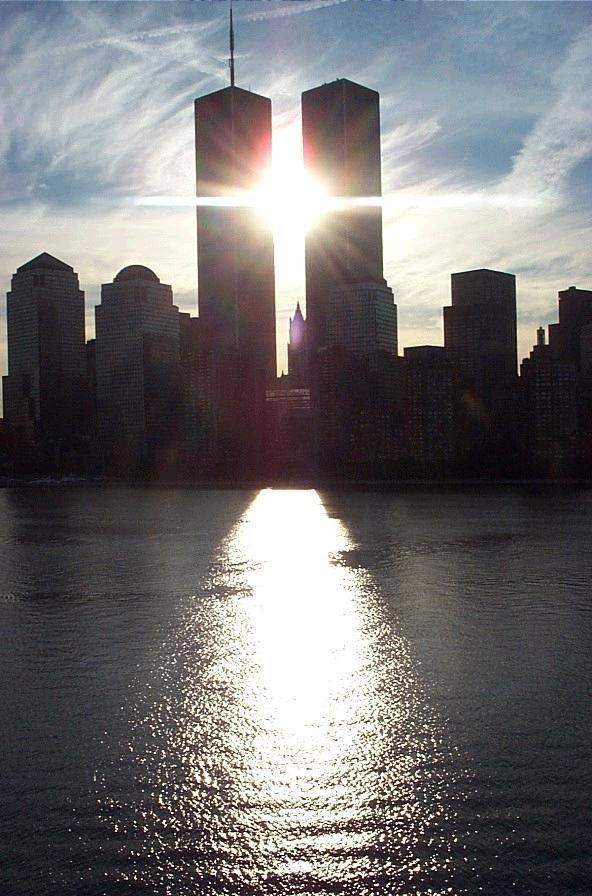
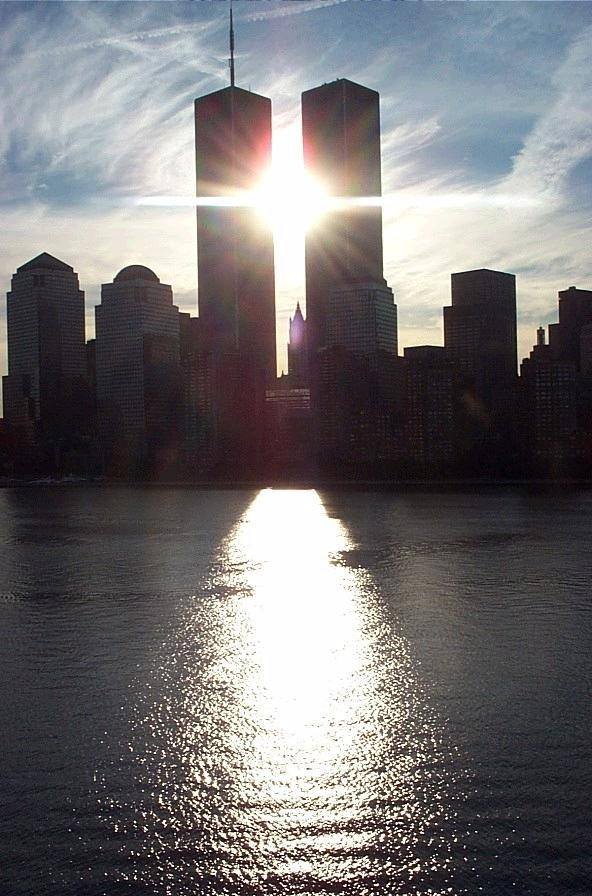
Around 9 a.m. A ringing telephone. Me, at work on my computer, somehow oblivious to the news. My friend on the line, informing me that a plane has crashed into the World Trade Center. I’m thinking a piper. I recall the plane that struck the Empire State Building in the 1940s. Terrible, but these things happen. Then she tells me one of the towers “fell over.” That propels me to the TV.
September 11, 2001. Every year, I marvel at the passage of time. 18 years ago this morning, but still so vivid. I can’t even imagine what it was like to be there. I never really want to know.
My parents were actually in the air at the time of the attacks, en route to China. They were traveling west, across Pennsylvania. At 10:03 a.m., United Airlines Flight 93 crashed near Shanksville, southeast of Pittsburgh. The phone lines were jammed. Nobody owned a cell phone. I knew my folks had to be okay, right? It was an uneasy wait until I learned that they had been grounded in Pittsburgh.
Everyone has a 9/11 story. Some are more tragic than others. But the day touched us all and changed us as a people. It changed the world. Welcome to the 21st century.
This afternoon on The Classical Network, I’ll offer a musical memorial, which will include Pulitzer Prize winner Kevin Puts, composer’s moving response to the attacks, as he processes expectancy, uncertainty and hope in his Symphony No. 2.
We’ll also find solace in Philadelphia composer Robert Moran’s sublimely beautiful “Trinity Requiem,” commissioned by Music at Trinity Wall Street, the so-called “Ground Zero Church,” whose St. Paul Chapel was shielded from a falling beam by a sycamore tree.
I’ve been celebrating the contributions of female composers this month to tie in with the Clara Schumann bicentennial on Friday. Today, we’ll hear Composer Alla Pavlova’s “The Old New York Nostalgia,” which features a movement titled “Lullaby for the Twins” – an allusion to the Twin Towers. The recording, by the way, will be conducted by Rossen Milanov, music director of the Princeton Symphony Orchestra.
The horror and surreality of the attacks and their aftermath are perfectly reflected in Gloria Coates’ String Quartet No. 8, with its eerie approximations not only of plane engines but also a kind of emotional instability. I know it gives me a sinking feeling, and that’s pretty much how it was to experience 9/11.
At 6:00 EDT, we’ll have more chamber music – by Clara Schumann and also her husband Robert – on the next “Music from Marlboro.” But from 4 to 6, we’ll remember 9/11. Music keeps us centered when faced with the unfathomable, on WWFM – The Classical Network and wwfm.org.