Tag: Uuno Klami

  • Aurora Borealis Music on KWAX’s Lost Chord

    Aurora Borealis Music on KWAX’s Lost Chord

    All signs point north!

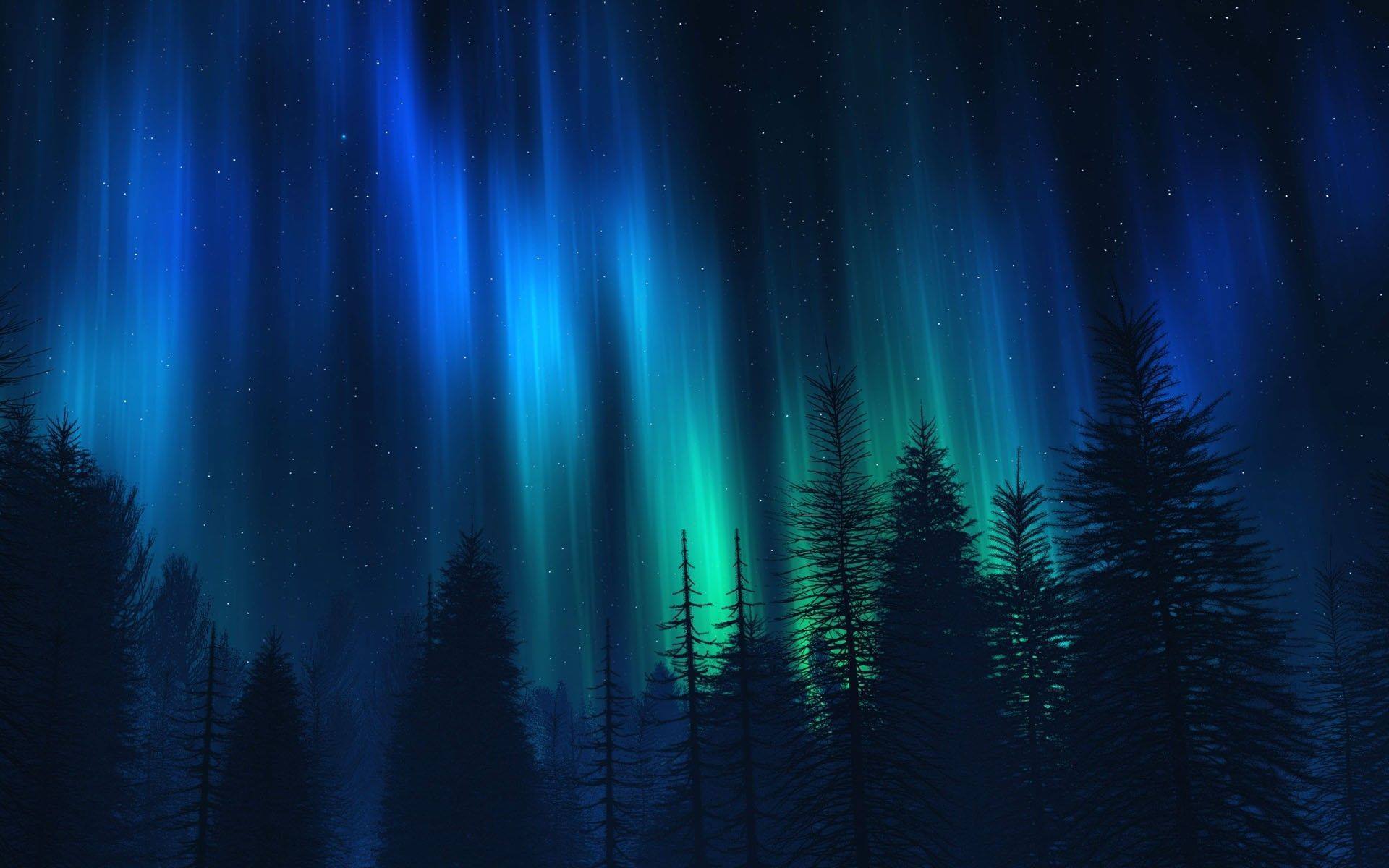
    On the next edition of “The Lost Chord,” with so much geomagnetic activity this week, we encourage you to keep looking up, with musical responses to the uncanny, natural phenomenon known as the Aurora Borealis.

    Uuno Klami studied in Helsinki, with Erkki Melartin, then in Paris and Vienna. Following the premiere of his “Northern Lights” in 1948, some critics questioned whether the content of the piece lived up to the expectations engendered by its title. Klami remarked, “The northern lights can be much more than the superficial play of colors in the sky. They can be an expression of the infinite loneliness of the human spirit.” Personally, he thought it his best work.

    Geirr Tveitt was born in Bergen, Edvard Grieg’s native city. Though he was very much influenced by folk music of the Norwegian countryside, he too acquired further polish abroad. He studied first in Leipzig and then in Paris, with Arthur Honegger, Heitor Villa-Lobos, and Nadia Boulanger.

    In 1970, a very great tragedy occurred, when a fire swept through Tveitt’s home, a farmhouse in Nordheimsund, destroying most of his unpublished manuscripts – 300 pieces, stored in wooden chests – fully 4/5ths of his compositional output. It also crippled his ability to compose. Tveitt succumbed to alcoholism and died a broken man, with little hope of being remembered, in 1981.

    Happily, since then, a number of these “lost” works have been reconstructed. In the case of his Piano Concerto No. 4, subtitled “Aurora Borealis,” from 1947, the orchestral parts survived, along with a two-piano reduction and an archived broadcast recording.

    The restored concerto falls into three movements: “The Northern Lights awaken above the autumn colors,” “Glittering in the winter heavens,” and “Fading away in the bright night of spring.”

    I hope you’ll join me for an hour of radiant music, on “Aural Borealis, on “The Lost Chord,” now in syndication on KWAX, the radio station of the University of Oregon!


    Remember, KWAX is on the West Coast, so there’s a three-hour difference for the Trenton-Princeton area. Here are the respective air-times of my recorded shows (with East Coast conversions in parentheses):

    PICTURE PERFECT, the movie music show – Friday on KWAX at 5:00 PACIFIC TIME (8:00 PM EST)

    THE LOST CHORD, unusual and neglected rep – Saturday on KWAX at 4:00 PACIFIC TIME (7:00 PM EST)

    Stream them here!
    https://kwax.uoregon.edu/

  • Explore the Kalevala Finnish National Epic

    Explore the Kalevala Finnish National Epic

    The Kalevala is frequently referred to as the Finnish national epic. Its fantastic and heroic tales informed the work of Finland’s greatest artists at a time when the country began its surge toward independence, after 700 years of Swedish rule and another century as a duchy of the Russian Empire.

    This Sunday night on “The Lost Chord,” with Kalevala Day right around the corner (celebrated in Finland with great pride on February 28), we’ll have music inspired by this disparate collection of long narrative poems.

    Robert Kajanus was the first great champion of Jean Sibelius. He conducted first performances of many of the composer’s major works and led the Helsinki Philharmonic for 50 years. He also wrote over 200 pieces himself. “Aino” was composed in 1885 for the Kalevala Society, to mark the 50th anniversary of the poem’s publication.

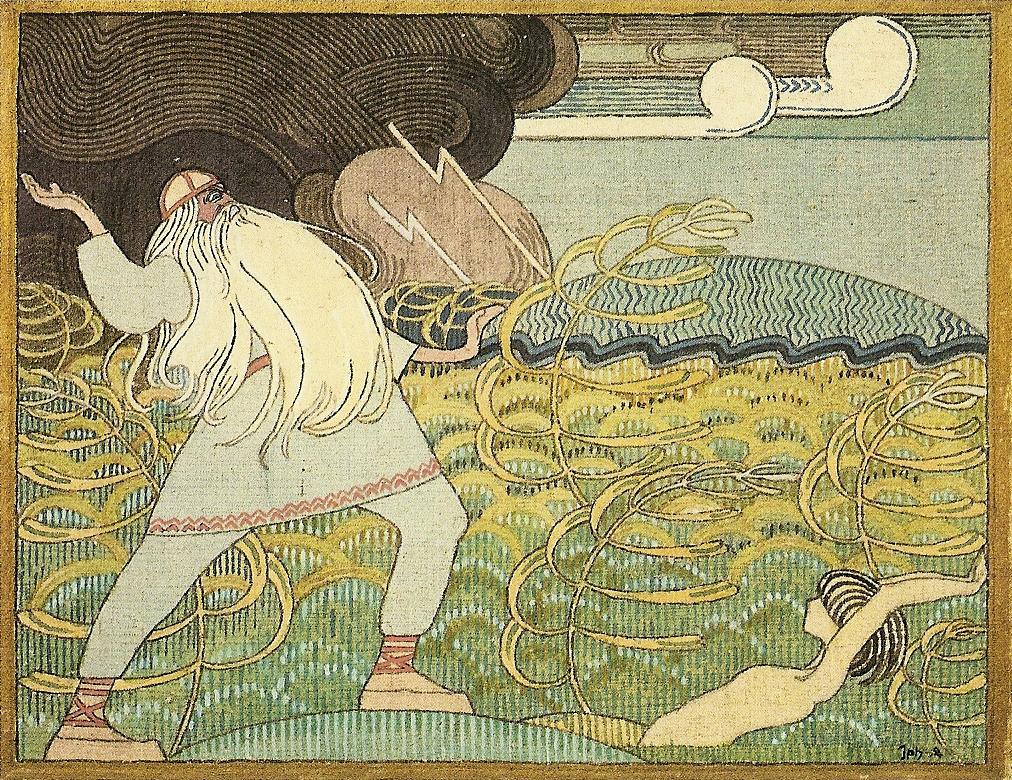
    One of the Kalevala’s central figures, Väinämöinen the wizard, always seems to be plagued by bad luck. He wins a singing contest, plunging his rival, Joukahainen, into a swamp, but when the latter promises him his sister’s hand in marriage if he will save him from drowning, the sister, Aino, drowns herself rather than submit to this seemingly intolerable fate. She returns to taunt the grieving Väinämöinen in the form of a salmon.

    Uuno Klami, one of the most important Finnish composers after Sibelius, brought a degree of French polish back from his studies in Paris, where he fell under the irreverent sway of Les Six. This led to the composition of an unusually anti-heroic take on the “Kalevala” legends, “Lemminkäinen’s Island Adventures.” Despite the Gallic influence on his music, Klami grew into one of Finland’s most respected composers. Sibelius recognized his talent and even lobbied for a small lifetime stipend for him from the Finnish government.

    Unlike Sibelius’ better-known “Four Legends from the Kalevala,” Klami’s “Kalevala Suite” scrupulously avoids the more swashbuckling elements of the epic’s narrative. Klami opts instead to paint on a much broader canvas, with movements titled “The Creation of the Earth,” “The Sprout of Spring,” “Terhenniemi” (replete with the sounds of nature and the sunny bliss of a summer’s day), “Cradle Song for Lemminkäinen” (Lemminkäinen’s mother’s song sung over the body of her son, soon to be resurrected), and “The Forging of the Sampo” (a kind of talisman everyone seems to want).

    Of course, no composer had more success drawing on the Kalevala legends than Sibelius himself. We’ll conclude the hour with a Sibelius rarity, “A Song for Lemminkäinen,” from 1896. This inspiring work for male chorus followed on the heels of the composer’s “Lemminkäinen Suite” (also known as “Four Legends from the Kalevala”), written earlier in the decade.

    I hope you’ll join me in acquiring some “Epic Finnish.” That’s music inspired by the Kalevala, this Sunday night at 10:00 EST, on WWFM – The Classical Network and wwfm.org.


    “Väinämöinen Sings Joukahainen into a Fen,” by Joseph Alanen (1885–1920)

  • Aurora Borealis Classical Music Sounds North

    Aurora Borealis Classical Music Sounds North

    All signs point north!

    This Sunday night on “The Lost Chord,” keep looking up, with musical responses to the uncanny, natural phenomenon known as the Aurora Borealis.

    Uuno Klami studied in Helsinki, with Erkki Melartin, then in Paris and Vienna. Following the premiere of his “Northern Lights” in 1948, some critics questioned whether the content of the piece lived up to the expectations engendered by its title. Klami remarked, “The northern lights can be much more than the superficial play of colors in the sky. They can be an expression of the infinite loneliness of the human spirit.” Personally, he thought it his best work.

    Geirr Tveitt was born in Bergen, Edvard Grieg’s native city. Though he was very much influenced by folk music of the Norwegian countryside, he too acquired further polish abroad. He studied first in Leipzig and then in Paris, with Arthur Honegger, Heitor Villa-Lobos, and Nadia Boulanger.

    In 1970, a very great tragedy occurred, when a fire swept through Tveitt’s home, a farmhouse in Nordheimsund, destroying most of his unpublished manuscripts – 300 pieces, stored in wooden chests – fully 4/5ths of his compositional output. It also crippled his ability to compose. Tveitt succumbed to alcoholism and died a broken man, with little hope of being remembered, in 1981.

    Happily, since then, a number of these “lost” works have been reconstructed. In the case of his Piano Concerto No. 4, subtitled “Aurora Borealis,” from 1947, the orchestral parts survived, along with a two-piano reduction and an archived broadcast recording.

    The restored concerto falls into three movements: “The Northern Lights awaken above the autumn colors,” “Glittering in the winter heavens,” and “Fading away in the bright night of spring.”

    I hope you’ll join me for an hour of radiant music, on “Aural Borealis,” this Sunday night at 10:00 EST, on WWFM – The Classical Network and wwfm.org.

  • Northern Lights Music Klami & Tveitt

    Northern Lights Music Klami & Tveitt

    “The northern lights can be much more than the superficial play of colors in the sky,” observed the Finnish composer Uuno Klami. “They can be an expression of the infinite loneliness of the human spirit.”

    This Sunday night on “The Lost Chord,” Klami’s “Northern Lights” (1948) will be one of two works inspired by the atmospheric phenomena, written by composers who would have been intimately acquainted with them.

    Klami’s melancholy observation seems almost superficial alongside the life experience of Norwegian composer Geirr Tveitt. In 1970, Tveitt suffered an unfathomable loss, when fire swept through his farmhouse in Nordheimsund, destroying most of his unpublished manuscripts – 300 pieces, stored in wooden chests – fully 4/5ths of his compositional output. By extension, and not surprisingly, it also destroyed his ability to compose. He succumbed to alcoholism and died a broken man, with little hope of being remembered, in 1981.

    Two of Tveitt’s piano concertos, Nos. 2 & 6, seem to have been lost forever in the conflagration. Another, No. 3, was reconstructed from a broadcast recording. Orchestral parts to the Piano Concerto No. 4 (1947) survived, along with the score to a two-piano version, and again a recording, so that the work could be restored.

    The work, subtitled “Aurora Borealis,” falls into three movements – “The Northern Lights awaken above the autumn colors;” “Glittering in the winter heavens,” and “Fading away in the bright night of spring.”

    I hope you’re moved to join me for “Aural Borealis,” this Sunday night at 10:00 EST, on WWFM – The Classical Network and wwfm.org.

Tag Cloud

Aaron Copland (92) Beethoven (95) Composer (114) Film Music (123) Film Score (143) Film Scores (255) Halloween (94) John Williams (187) KWAX (229) Leonard Bernstein (101) Marlboro Music Festival (125) Movie Music (138) Opera (202) Philadelphia Orchestra (89) Picture Perfect (174) Princeton Symphony Orchestra (106) Radio (87) Ralph Vaughan Williams (85) Ross Amico (244) Roy's Tie-Dye Sci-Fi Corner (290) The Classical Network (101) The Lost Chord (268) Vaughan Williams (103) WPRB (396) WWFM (881)

DON’T MISS A BEAT

Receive a weekly digest every Sunday at noon by signing up here


RECENT POSTS