Tag: Verdi

  • Italian Orchestra at Dubai Expo Hear Rossini Verdi

    Italian Orchestra at Dubai Expo Hear Rossini Verdi

    I received a note from a cousin living in Palermo that her orchestra, the Orchestra Sinfonica Nazionale dei Conservatori Italiani (ONCI), was chosen to represent Italy at the Dubai Expo last month. As the name suggests, musicians were selected by audition from conservatories across the country. Last night, I finally settled in to enjoy their committed performances of music by Rossini, Donizetti, Bellini, Mascagni, Puccini, and Verdi. Perhaps you will too. Here’s the complete concert, presented on December 14:

    https://virtualexpodubai.com/listen-watch/events/italy-italian-conservatory-orchestra?fbclid=IwAR0PDUFh14rS_znKDpt7eWEoIfi_VwjVamPH-OcbsMpHHlwAmsdTTlmtJ9U#video

    With more about my talented cousin here:

    La giovane violinista nissena Alice Rosapane protagonista il 14 dicembre a Dubai con l’Orchestra Nazionale dei Conservatori Italiani.

  • Viva VERDI! Italian Music & Unification

    Viva VERDI! Italian Music & Unification

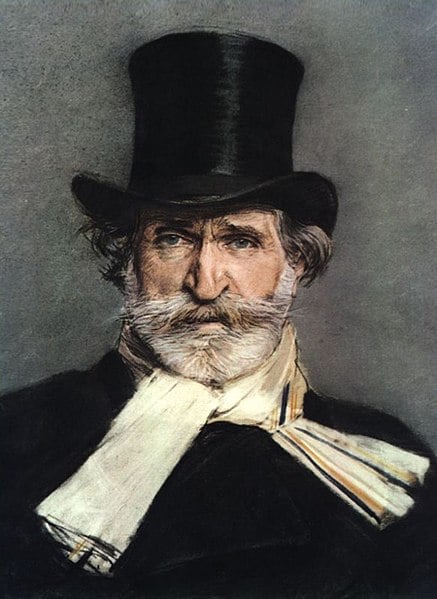
    “Viva VERDI!” – the cry of Italian patriots on the eve of unification.

    Italy of the 1850s was but a conglomerate of individual states, many of them still under foreign rule. The slogan “Viva VERDI!” was coined in 1859, following the premiere of the composer’s politically sensitive opera “Un ballo in maschera.”

    Verdi’s ongoing troubles with the censors are well-known. It’s a safe bet that when he undertook an opera about a political assassination, he had a pretty good idea what to expect. The name VERDI was taken up by firebrands of the Risorgimento as an acronym for “Vittorio Emanuele, Re D’Italia.” King Vittorio Emanuele II of Piedmont was seen by many as the best hope for a free and united Italy.

    This Sunday night on “The Lost Chord,” we’ll refrain for delving too much into Italy’s Second War for Independence, or of Garibaldi’s struggles with the Bourbons. Instead, we’ll enjoy examples of MUSICAL unification – various composers of Italian origin coming together to attempt cohesive works of art.

    There are those who believe the serenata “Andromeda Liberata” may have been composed entirely by Antonio Vivaldi – but perhaps not. The likely impetus for its creation was the return to Rome of one Cardinal Ottobone, who was also a patron of both Arcangelo Corelli and Alessandro Scarlatti.

    The story is that of Perseus and Andromeda. Andromeda has already been rescued from the sea serpent at the start of the piece, which mostly explores the ambiguous feelings of its characters, with a few extraneous love interests tossed into the mix to provide romantic conflict.

    The two-hour entertainment contains in its second part a single aria known definitively to have been composed by Vivaldi. The authorship of the rest remains in doubt. The long-lost manuscript, dating from 1726, was rediscovered as recently as 2002.

    In 1868, Verdi’s great operatic predecessor, the long-retired Gioachino Rossini, died. Rossini had completed his last opera nearly forty years before. Verdi undertook to bring together 12 of his contemporaries, now largely forgotten. The oldest, Carlo Coccia, at age 87, was actually a decade Rossini’s senior!

    Within the year, a collaborative mass was compiled in Rossini’s memory, for which Verdi provided the concluding “Libera me.” In fact, the music looks forward to Verdi’s own masterful Requiem. The completed work doesn’t attain anywhere near the lofty heights of Verdi’s solo run. However, it’s an interesting compendium of contemporary styles, and even the music of lesser talents serves to cast Verdi’s genius in a new light.

    Remarkably, the work lay unperformed in Verdi’s lifetime. Talk about politics! Here was Verdi, a Milanese, trying to kindle some sort of enthusiasm in Bologna (the location of Rossini’s earliest successes), for a project which was to bring together a bunch compositional dinosaurs, to salute a figure who, for all intents and purposes, had retired from public life some four decades earlier. Bologna at the time was in the process of becoming a stronghold of the musical avant-garde.

    All these factors, along with puzzling stipulations, such as the work being locked away after its first performance, to be trotted out only on special occasions, doomed the project virtually from the start. It remained unheard for another 120 years, resurrected only in 1988.

    I hope you’ll join me for “Viva VERDI!” – Italian unification through music – on Verdi’s birthday, this Sunday night at 10:00 EDT, on WWFM – The Classical Network and wwfm.org.

  • Arturo Toscanini Legend Intensity and Legacy

    Arturo Toscanini Legend Intensity and Legacy

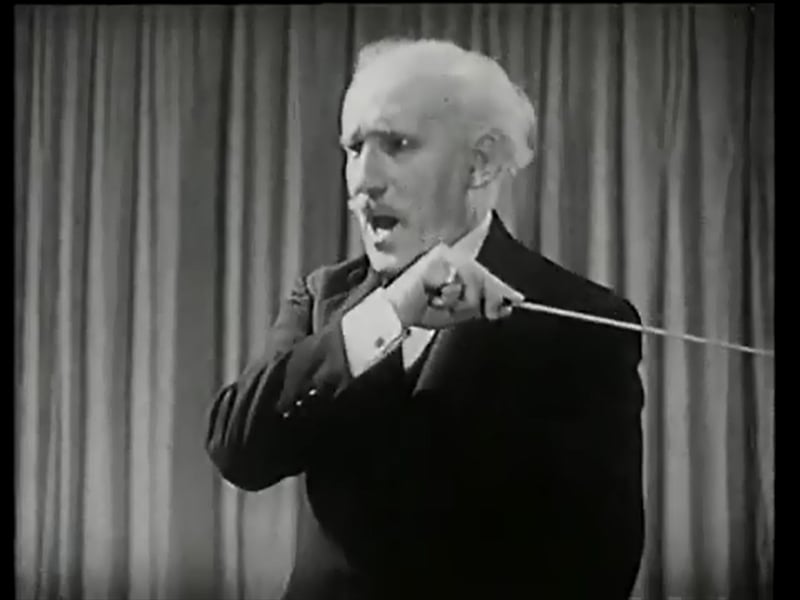
    Arturo Toscanini was one of the most celebrated conductors of the 20th century. His intensity, perfectionism, and alleged fidelity to the score have been enshrined in legend. And when the legend becomes fact, I print the legend.

    Toscanini served as music director of La Scala, Milan, the Metropolitan Opera, the New York Philharmonic, and the NBC Symphony Orchestra. He conducted first performances of Puccini’s “La bohème,” Leoncavallo’s “Pagliacci,” Respighi’s “Feste Romane,” and Barber’s “Adagio for Strings.” As a cellist, he played in the world premiere of Verdi’s “Otello.”

    From 1937 to 1954, he reached millions of Americans via his weekly broadcast concerts on NBC radio. These originated at Rockefeller Center’s Studio 8-H, now the home of “Saturday Night Live.”

    Toscanini was vehemently anti-fascist. He despised Hitler, and vowed never to conduct in Germany as long as “the Führer” remained in power. In Italy, he was beaten up by brownshirts and had his passport confiscated for refusing to conduct “Giovinezza,” the fascist anthem. He also worked closely with violinist Bronislaw Huberman in support of the Palestine Orchestra, made up of Jewish exiles from fascist Europe. He once confided to a friend, “If I were capable of killing a man, I would kill Mussolini.”

    Il Duce really caught a break when Toscanini emigrated to America. It sounds to me as if the Maestro could have been borderline more than once. Ironically, for someone who hated dictators, he sure could dish out an autocratic tirade.

    Happy birthday, Arturo Toscanini.


    Conducting Verdi, “La Forza del Destino Overture” (on film, 1944)

    Beethoven, Symphony No. 3, “Eroica” (at Carnegie Hall, 1939)

    https://www.youtube.com/watch?v=uYfgjL9dBkU

    Respighi, “Feste Romane” (“Roman Festivals,” 1949)

    Toscanini snaps his baton and calls his double bassists “ball breakers.”

    https://www.youtube.com/watch?v=i-1KtSOwLXE

  • Verdi’s Macbeth Witches Goth Dance

    Verdi’s Macbeth Witches Goth Dance

    For Giuseppe Verdi’s birthday, totally Goth witches’ chorus from “Macbeth”:

    https://www.youtube.com/watch?v=7b4tKhV5mcg

    Act III Witches’ Dance from Taiwan:


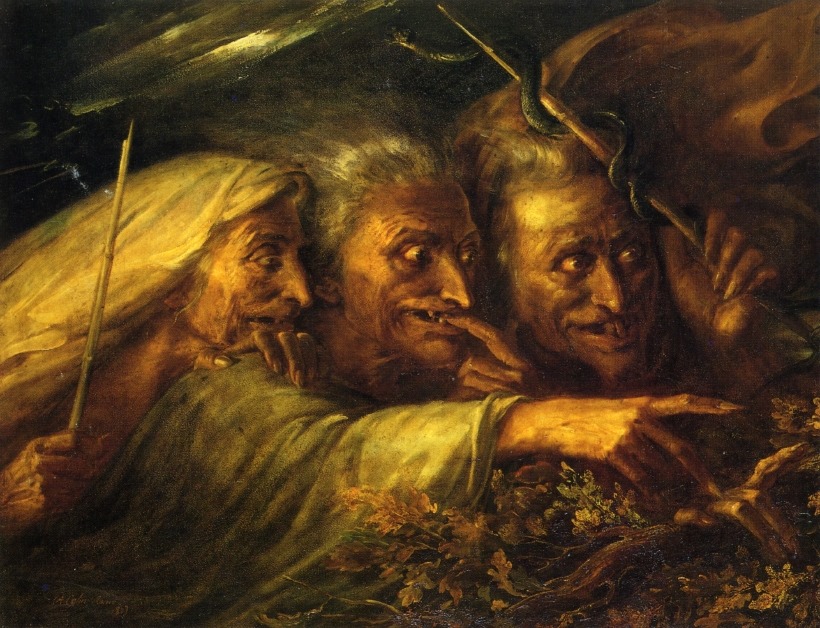
    “The Three Witches from Macbeth” (1827) by Alexandre-Marie Colin

  • Free Opera Week at the Met: Glass, Verdi & More

    Free Opera Week at the Met: Glass, Verdi & More

    Good Lord! Two Philip Glass operas in one week! I offer this mild oath in tribute to the monotheistic pharaoh at the center of Glass’ “Akhnaten.”

    Even if you think Minimalism drives you up a wall, try to catch the Metropolitan Opera production, which features an uncanny performance by Princeton University alumnus Anthony Roth Costanzo in the title role, impressive sets, evocative costumes, and plenty of jugglers (!).

    The Met will also offer two – count ‘em – two Rossini operas, “Armida” and “Semiramide.” The Met’s Rossini has been among the more gratifying revelations for me since the COVID-era streaming began. It sounds a little silly to state the obvious, but he’s a very theatrical composer!

    Oh yeah, and there will be two by Verdi, as well, including “La Forza” with Leontyne Price.

    The Met continues to make good on its pledge to stream free opera for the duration of the house’s shutdown. Each opera is accessible for approximately 23 hours, starting every day around 7 p.m. EDT. Handel’s “Rodelinda” streams through 6 p.m. today, at metopera.org.

    Here’s a complete schedule of this week’s offerings. You’ll find teasers and bonus materials when following the link:

    https://www.metopera.org/user-information/nightly-met-opera-streams/week-14/

    Monday, June 15
    Rossini’s Armida
    Starring Renée Fleming, Lawrence Brownlee, John Osborn, Barry Banks, and Kobie van Rensburg, conducted by Riccardo Frizza. From May 1, 2010.

    Tuesday, June 16
    Rossini’s Semiramide
    Starring Angela Meade, Elizabeth DeShong, Javier Camarena, Ildar Abdrazakov, and Ryan Speedo Green, conducted by Maurizio Benini. From March 10, 2018.

    Wednesday, June 17
    Gluck’s Iphigénie en Tauride
    Starring Susan Graham, Plácido Domingo, and Paul Groves, conducted by Patrick Summers. From February 26, 2011.

    Thursday, June 18, and Friday, June 19
    Verdi’s La Forza del Destino
    Starring Leontyne Price, Giuseppe Giacomini, Leo Nucci, and Bonaldo Giaiotti, conducted by James Levine. From March 24, 1984.

    Saturday, June 20
    Philip Glass’s Akhnaten
    Starring Dísella Lárusdóttir, J’Nai Bridges, Anthony Roth Costanzo, Aaron Blake, Will Liverman, Richard Bernstein, and Zachary James, conducted by Karen Kamensek. From November 23, 2019.

    Sunday, June 21
    Philip Glass’s Satyagraha
    Starring Rachelle Durkin, Richard Croft, Kim Josephson, and Alfred Walker, conducted by Dante Anzolini. From November 19, 2011.

Tag Cloud

Aaron Copland (93) Beethoven (95) Composer (114) Film Music (126) Film Score (143) Film Scores (255) Halloween (94) John Williams (189) KWAX (229) Leonard Bernstein (101) Marlboro Music Festival (125) Movie Music (141) Mozart (87) Opera (203) Philadelphia Orchestra (89) Picture Perfect (174) Princeton Symphony Orchestra (107) Radio (87) Ross Amico (244) Roy's Tie-Dye Sci-Fi Corner (290) The Classical Network (101) The Lost Chord (268) Vaughan Williams (103) WPRB (396) WWFM (881)

DON’T MISS A BEAT

Receive a weekly digest every Sunday at noon by signing up here


RECENT POSTS