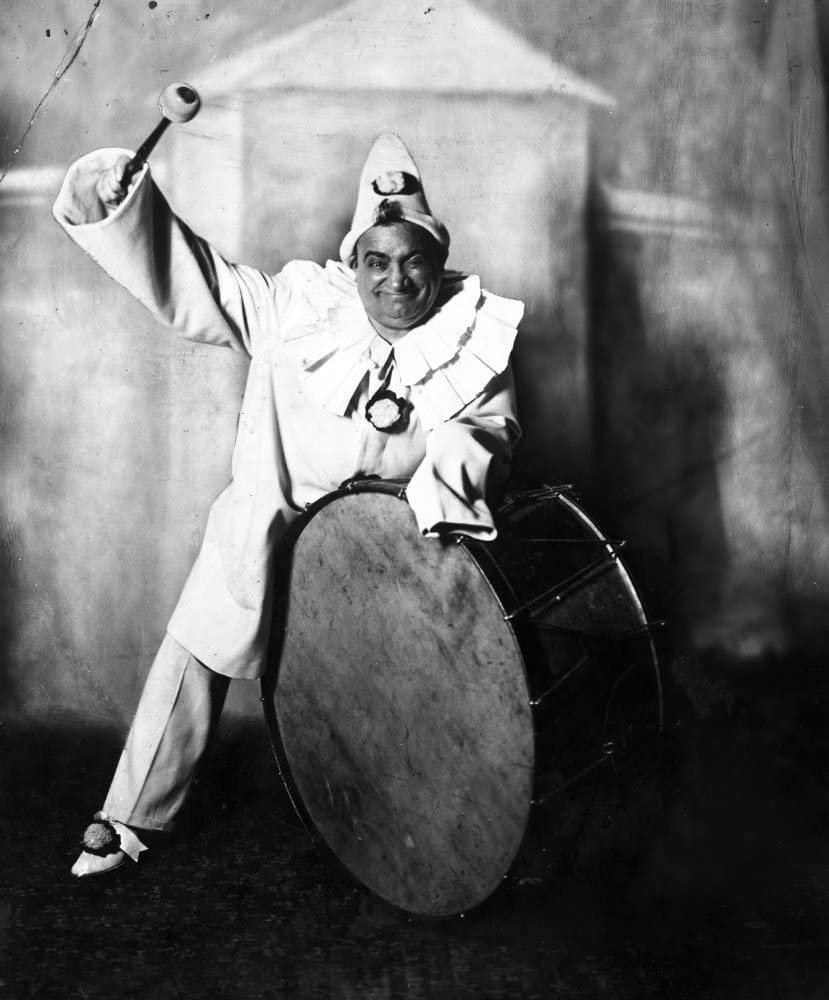
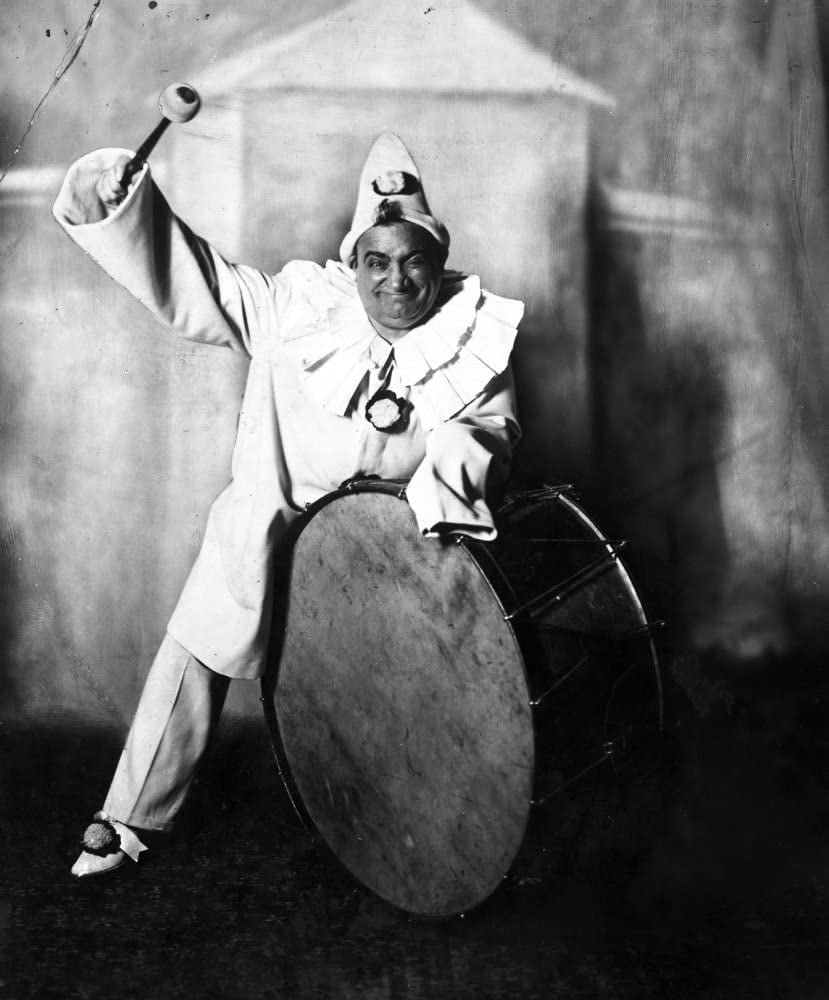
You know him as LSD (the flower-power Hitler) from Mel Brooks’ “The Producers,” as Sylvester Marcus from “It’s a Mad Mad Mad Mad World” (“Your baby’s comin’ to save you, Mama!”), and as Snow Miser from “The Year without a Santa Claus.” Now…. Dick Shawn sings Pagliacci.
“Vesti la giubba” begins around 6:20. I’ve got it cued up for you at the link. The end of the routine refers back to a Civil War bit in first half of the video. Sobering to think this was only 90 years after the actual war. Hell, we’re 70 years away from this video now!
It’s a cruel irony that the first superstar of the gramophone would have appeared in a silent movie. Here’s Enrico Caruso in a dual role, in the 1918 film “My Cousin.”
Caruso’s “Vesti la giubba,” from Leoncavallo’s “Pagliacci,” was the first million-selling recording. He performs it in the movie – without sound!
However, he did record it three times, in 1902, 1904, and 1907. Here are all three versions, the first two with piano, and the last with orchestra. It’s one of those arias you know, even if you think you don’t.
Caruso was paid $100,000 to appear in “My Cousin.” Unfortunately, the film bombed at the box office. I guess no one thought about Caruso’s celebrity being tied up with, you know, HIS EXTRAORDINARY VOICE (though Caruso was hardly the only opera singer to appear in the silents). In the meantime, a second Caruso vehicle, “The Splendid Romance” – for which he was also paid $100,000 – was shot, but apparently never released.
The Great Caruso was born 150 years ago today. It’s believed that an on-stage injury precipitated his untimely demise in 1921 at the age of 48. But the overeating, sedentary lifestyle, and strong Egyptian cigarettes couldn’t have helped. His final months were a phantasmagoria of ailments and surgeries.
Thousands turned out for his funeral in Naples. For the better part of a decade, his remains were kept on display in a glass sarcophagus, until his wife had him sealed up in an ornate tomb.
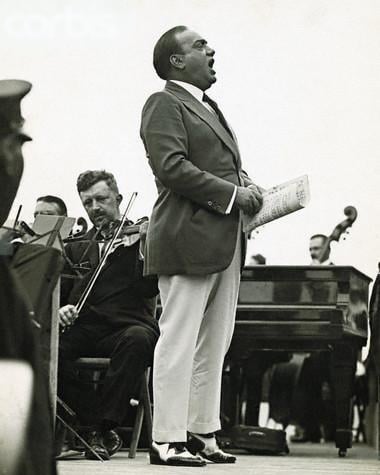
Thanks in part to his 247 records, which wound up earning millions of dollars in royalties, Caruso became one of the first global celebrities. In all, he appeared at the Old Met 863 times. He toured extensively throughout Europe, and North and South America, singing in all the major opera houses. A single appearance in Cuba earned him $10,000. That he was able to achieve the level of superstardom he did, before radio, television, or even transatlantic telephone service, is astonishing.
It’s a cruel irony that the first superstar of the gramophone would have appeared in a silent movie. Here’s Enrico Caruso in a dual role, in the 1918 film “My Cousin.”
Caruso’s “Vesti la giubba,” from Leoncavallo’s “Pagliacci,” was the first million-selling recording. He performs it in the movie – without sound!
However, he did record it three times, in 1902, 1904, and 1907. Here are all three versions, the first two with piano, and the last with orchestra. It’s one of those arias you know, even if you think you don’t.
Caruso was paid $100,000 to appear in “My Cousin.” Unfortunately, the film bombed at the box office. I guess no one thought about Caruso’s celebrity being tied up with, you know, HIS EXTRAORDINARY VOICE (though Caruso was hardly the only opera singer to appear in the silents). In the meantime, a second Caruso vehicle, “The Splendid Romance” – for which he was also paid $100,000 – was shot, but apparently never released.
The Great Caruso died 100 years ago today. It’s believed that an on-stage injury precipitated his untimely demise at the age of 48. But the overeating, sedentary lifestyle, and strong Egyptian cigarettes couldn’t have helped. His final months were a phantasmagoria of ailments and surgeries.
Thousands turned out for his funeral in Naples. For the better part of a decade, his remains were kept on display in a glass sarcophagus, until his wife had him sealed up in an ornate tomb.
Thanks in part to his 247 records, which wound up earning millions of dollars in royalties, Caruso became one of the first global celebrities. In all, he appeared at the Old Met 863 times. He toured extensively throughout Europe, and North and South America, singing in all the major opera houses. A single appearance in Cuba earned him $10,000. That he was able to achieve the level of superstardom he did, before radio, television, or even transatlantic telephone service, is astonishing.
Before Michael Jackson, before The Beatles, before Elvis, there was the first global superstar of the gramophone – Enrico Caruso. The first million-selling recording was Caruso’s “Vesti la giubba,” from Leoncavallo’s “Pagliacci.” You know it, even if you think you don’t.
Caruso recorded it three times, in 1902, 1904, and 1907. Here are all three versions, the first two with piano, and the last with orchestra.
Leoncavallo, as can be imagined, was over the moon. In 1904, he dedicated his “Mattinata” to Caruso. It was the first song ever written expressly for the Gramophone Company (now EMI). It’s been popular with tenors ever since.
Here’s Caruso’s recording, with the composer at the keyboard.
Caruso may have had the sales, but Leoncavallo definitely had the mustache.
This year is significant in that it also marks the centenary of the tenor’s death, on August 2, 1921. It’s believed that an injury suffered on stage precipitated his untimely demise at the age of 48.
Let’s face it, Caruso was never a model of health. His appetite was prodigious. He liked his food, he liked his cigarettes, and he liked his work. In all, he appeared at the Old Met 863 times, and he toured extensively. He also left 247 records.
When he died, thousands turned out for his funeral in Naples. For the better part of a decade, his remains were displayed in a glass sarcophagus, until his wife had him sealed up in an ornate tomb.
More about the King of Tenors in August. For now, happy birthday to the Great Caruso.