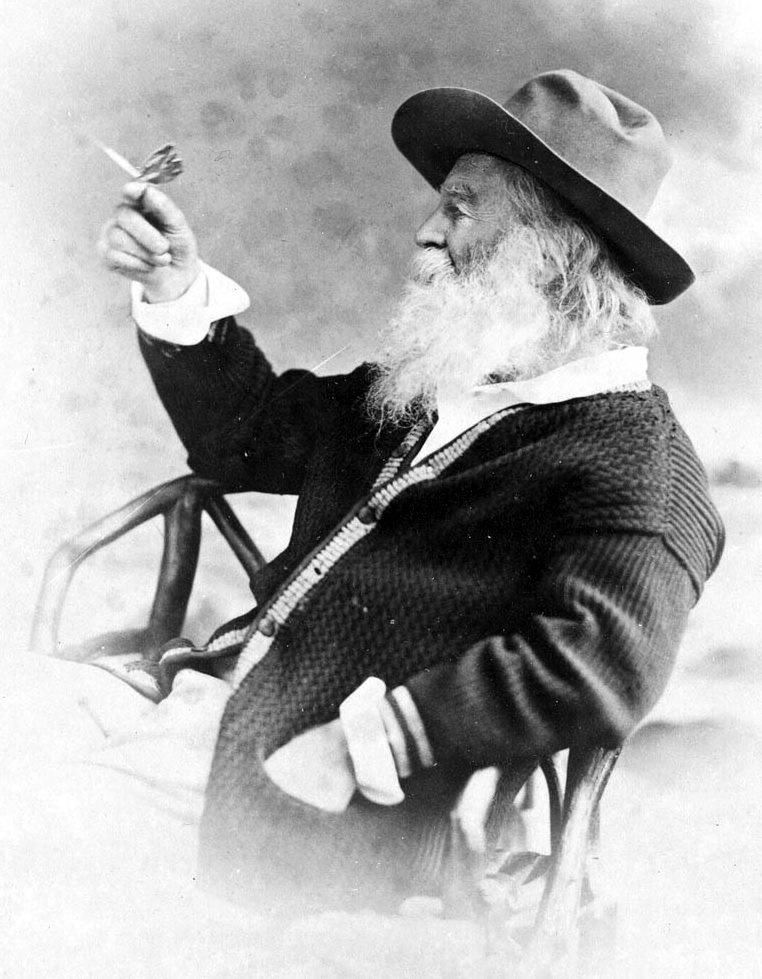
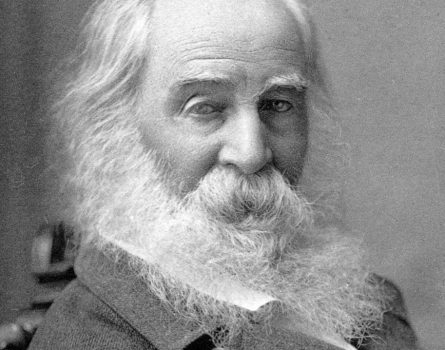
Tag: Walt Whitman

  • Walt Whitman’s New Music Archive Revealed

    Walt Whitman’s New Music Archive Revealed

    Walt Whitman has a new music archive.

    Learn more about it in this short film, debuted during a Zoom discussion last night, presented in cooperation with the Walt Whitman Birthplace Association in Huntington Station, New York.

    Filmmaker H. Paul Moon and composer Daron Hagen talked about Whitman’s far-reaching influence on composers, of course (Whitman is the second most-set of all American poets, behind only Emily Dickinson), but also the profound influence on Whitman of opera and song.

    In addition, music archivist George Mallis provided an overview of the collection, sharing some the scores, recordings, and photographs that have so far been compiled. The project builds on the work of Whitman enthusiast and musician, Fredrick Berndt, one-time director of San Francisco’s Walt Whitman Music Library.

    The entire film spans 12 minutes. Absolutely stick around for Moon’s one-shot documentation, beginning at minute 4, of the world premiere of Hagen’s Whitman setting, “Restoring Darkness,” in a stunning a cappella performance by composer-collaborator Gilda Lyons. The location is Church of the Messiah in Rhinebeck, New York.

    Watch here:

    “Is there a more musical American poet than Whitman?” Hagen asks. You tell me. So far, roughly 500 songs and orchestral works have been identified.

    More about Whitman and music from the archive.

    https://whitmanarchive.org/criticism/current/encyclopedia/entry_544.html?fbclid=IwAR2PTTxWzumzp9Z5i3VPmbqr-yqeb9DflgyiIqz7t0WSgPI18ueWfd2JyOY

    https://whitmanarchive.org/criticism/current/encyclopedia/entry_545.html?fbclid=IwAR0qPZgx2-SGDkegRTutf0wmHYOTuXRcS87rM4iE8jsku6wik62ALbftR8M

    Zen Violence Films
    FocusPulling.com

  • Whitman Mania on WWFM Classical Network

    Whitman Mania on WWFM Classical Network

    If you’ve a mania for Whitmaniana, you need look no further than WWFM The Classical Network.

    Walt Whitman was born on this date in Huntingdon, New York, 200 years ago; he died in Camden, New Jersey, in 1892.

    America’s national poet has inspired literally hundreds of musical responses. We’ll liven up your Friday afternoon with choral works, orchestral pieces, and songs. Join me at a special time, from 12 to 4 p.m., for a playlist of tributes to “the bard of democracy.”

    On a related note, “Picture Perfect,” at 6 p.m., will offer music from movies about poetry and poets, including selections from “Dead Poets Society” (Maurice Jarre), “Lady Caroline Lamb” (Richard Rodney Bennett), “Il Postino” (Luis Bacalov), and “Cyrano de Bergerac” (Dimitri Tiomkin).

    Poetry and movies will also inform an exciting live broadcast, tomorrow at 7:30 p.m., of Bernard Herrmann’s radio play, “Whitman.” Baritone William Sharp will assume the title role, with the PostClassical Ensemble conducted by Angel Gil-Ordóñez at Washington National Cathedral. The program will also include Herrmann’s Clarinet Quintet “Souvenirs de Voyage” and “Psycho: A Narrative for String Orchestra.”

    In addition, some of our archived shows may be of interest. Check out our webcasts, including a four-part series devoted to Whitman on “The Lost Chord.”

    Also, Rachel Katz spoke with Malcolm J. Merriweather, music director of The Dessoff Choirs, last Saturday on “A Tempo.” The Dessoff Choirs will present three world premieres of Whitman settings, as part of a Whitman Bicentennial Festival, tonight at the Church of St. Paul and St. Andrew in New York City. That show too has been archived.

    To listen to the webcasts, go to wwfm.org. Click on “About Us,” then “Our Programs A-Z,” and then the individual shows, which are listed alphabetically. (“The Lost Chord” appears under the letter T.)

    Or if you have the time and the patience to scroll through everything, simply click on “Classical” and then “Webcasts.”

    Happiness, knowledge, not in another place but this place, not for another hour but this hour!

    Join us in sounding a barbaric yawp. It’s wall-to-wall Whitman, today from 12 to 4 p.m.; “Poetry in Motion” on “Picture Perfect,” Friday evening at 6; and Bernard Herrmann’s “Whitman,” with the PostClassical Ensemble, Saturday night at 7:30, on WWFM – The Classical Network and wwfm.org.

  • Whitman’s 200th Birthday Celebration on WWFM

    Whitman’s 200th Birthday Celebration on WWFM

    Whitman Week is underway!

    May 31st marks the 200th anniversary of the birth of America’s “bard of democracy.” We’ve been celebrating this most influential of American poets, all month long, with music inspired by his verse.

    Over the past several weeks, we’ve taken side trips to England and Germany. This Sunday night on “The Lost Chord,” we’ll conclude, as we began the series, with an all-American program.

    Howard Hanson wrote several works inspired by Whitman. Hanson lived from 1896 to 1981. For some 40 years, he was the director of the Eastman School of Music. The recipient of the Pulitzer Prize in 1944 for his Symphony No. 4, he is really best remembered for his Second Symphony, from 1930. Subtitled the “Romantic,” the moniker pretty much sums up Hanson’s personal and artistic disposition.

    We’ll experience his setting of “The Mystic Trumpeter,” from 1969. The speaker will be none other than James Earl Jones.

    Lowell Liebermann, born in New York City in 1961, has met with considerable success in the writing tonal, immediately accessible music. His Flute Concerto, written for James Galway, has entered the repertoire, as has his Flute Sonata, and his suite for piano, “Gargoyles.”

    Liebermann studied at Julliard with David Diamond and Vincent Persichetti. Over the course of his career, he has written symphonies, concertos, operas, and ballet, as well as chamber and instrumental music. He is currently on the faculty of the Mannes School.

    Liebermann evidently has great affection for the music of Sergei Prokofiev, and a refreshing open-heartedness characterizes his output. In fact, like Hanson, he has been criticized in some circles for being so ingratiating, a throwback to less cynical times – to which I say, own it, brother!

    Liebermann’s Symphony No. 2, for large chorus and orchestra, was composed for the centennial of the Dallas Symphony Orchestra and Chorus. It was given its first performance in the year 2000.

    The work unfolds in one continuous, 40-minute span, yet manages to honor the conventions of a traditional, four-movement structure. Liebermann incorporates Whitman texts in a spirit of optimism and affirmation.

    Whitman’s verse has inspired literally hundreds of musical responses. We’ll conclude our four-week survey of choral works, orchestral pieces, and songs – merely scratching the surface, with eleven works by ten composers – on “Joy, Shipmate, Joy,” this Sunday night at 10:00 EDT, on WWFM – The Classical Network and wwfm.org.


    PLEASE NOTE: This is not the end of our Whitman celebrations on The Classical Network. On Saturday at 7:30 p.m., we’ll offer a live broadcast, from Washington’s National Cathedral, of Bernard Herrmann’s radio play “Whitman.” Baritone William Sharp will assume the title role, with the PostClassical Ensemble conducted by Angel Gil-Ordóñez. In addition, the program will include Herrmann’s Clarinet Quintet “Souvenirs de Voyage” and “Psycho: A Narrative for String Orchestra.”

    We’ve also got something cooking for Friday afternoon, the actual anniversary of Whitman’s birth. Watch this space for further developments.

  • Whitman’s Cinema & Music Bicentennial Celebration

    Whitman’s Cinema & Music Bicentennial Celebration

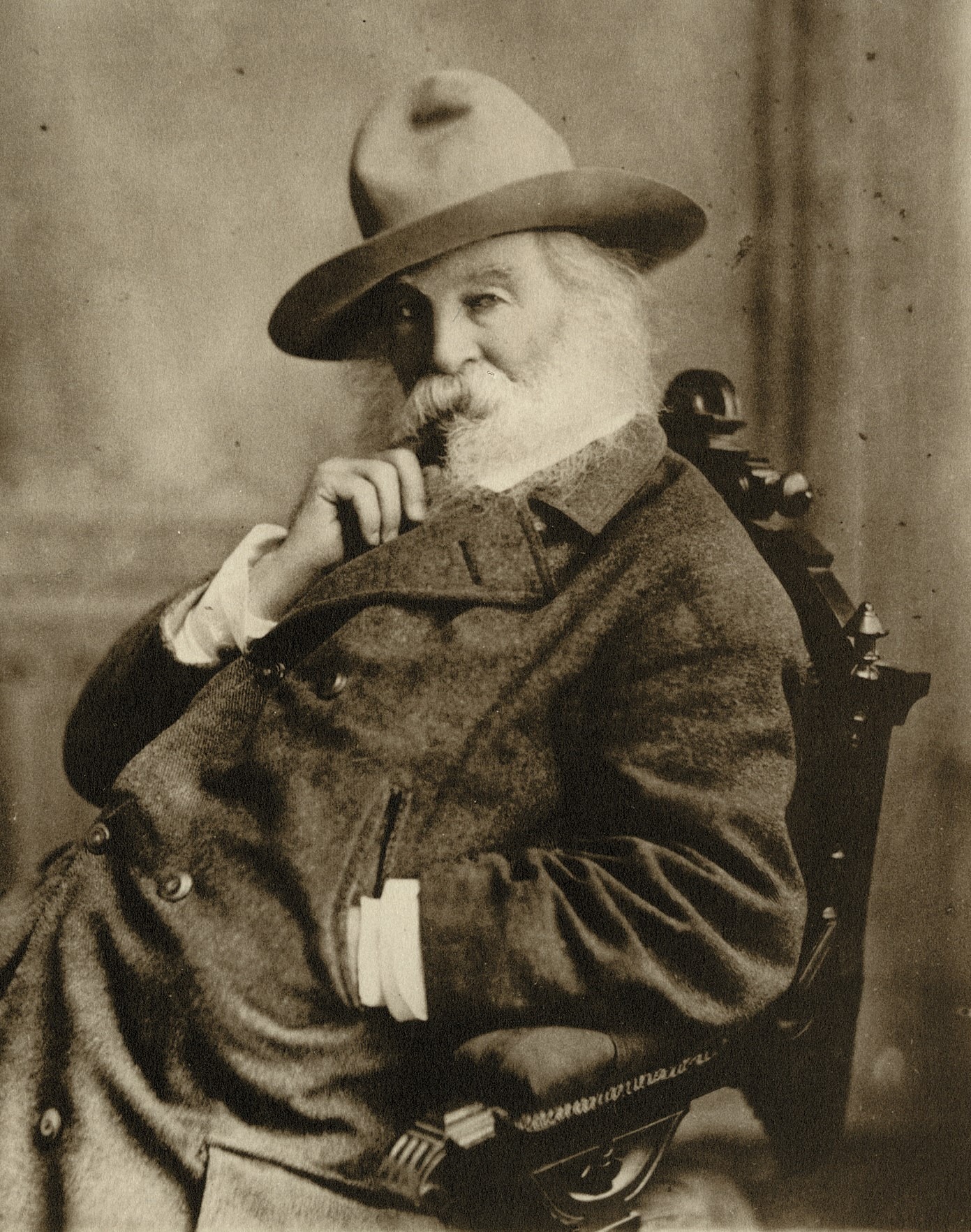
    I am proud to have documentarian H. Paul Moon of Zen Violence Films as a follower of this page. Paul has been working very hard to get ready for the Walt Whitman bicentennial. Here is his definitive analysis of every appearance by Whitman in cinema and television.

    This video essay is part of a trilogy of Moon’s short films about Whitman that will be screened at Rhizome DC, located in the Takoma neighborhood of Washington, on May 31, the actual anniversary of Whitman’s birth.

    Watch it in preparation for tomorrow night’s broadcast of “The Lost Chord,” the last in a four-part series celebrating Whitman in music. Of the literally hundreds of musical responses inspired by Whitman’s verse, I’ve been able to touch on only ten composers. But what variety! Tune in this week for two openhearted and ecstatic works for chorus and orchestra by Howard Hanson and Lowell Liebermann. “Joy, Shipmate, Joy” will air this Sunday night at 10:00 EDT, on WWFM – The Classical Network.

    And if you just can’t get enough of Whitman, Rachel Katz will also focus on “the Good, Gray Poet” on “A Tempo,” as she speaks with Malcolm J. Merriweather, music director of The Dessoff Choirs. The group will present three world premieres of Whitman settings, again on the actual anniversary of his birth, as part of a Whitman Bicentennial Festival. The concert will take place at the Church of St. Paul and St. Andrew in New York City on May 31. “A Tempo” can be heard on WWFM The Classical Network Saturday evening (tonight) at 7:00 EDT.

    If you miss the Whitman broadcasts, both will be archived at the WWFM website sometime next week, as have been past installments of “The Lost Chord” series. You’ll find them at wwfm.org. Click on “About Us,” then “Our Programs A-Z,” and then the individual shows, which are listed alphabetically. (“The Lost Chord” appears under the letter T.)

    Or if you have the time and the patience to scroll through everything, simply click on “Classical” and then “Webcasts.”

    Now voyager sail thou forth to seek and find!

  • Whitman’s Lilacs: Hartmann & Higdon’s Musical Echoes

    Whitman’s Lilacs: Hartmann & Higdon’s Musical Echoes

    “When Lilacs Last in the Dooryard Bloom’d,” Walt Whitman’s pastoral elegy, written in the wake of the assassination of Abraham Lincoln, drew its most famous musical response from Paul Hindemith. Hindemith dedicated his requiem to the memory of Franklin Delano Roosevelt. This Sunday night on “The Lost Chord,” we continue our celebration of the bicentennial of the birth of America’s national poet (on May 31, 1816) with two lesser-known works inspired by the same source.

    Karl Amadeus Hartmann died within weeks of Hindemith (who fled Germany in 1938), in December of 1963. An anti-fascist composer who made the decision to remain at home during Hitler’s reign of terror, Hartmann’s music was condemned as degenerate and banned from public performance. Holding fast was a dangerous game for an artist at odds with the regime. This type of opposition was described by writer Thomas Mann as “inner immigration.”

    Following the war, Hartmann was one of the few surviving anti-fascists in Bavaria whom the Allied Forces could promote to a position of responsibility. He used that trust to reintroduce the world to music which had been prohibited since 1933 under National Socialist aesthetic policy.

    Hartmann remained in Munich for the rest of his life, where his administrative duties cut heavily into what would have been his own compositional time and energy. His own greatest champions were his contemporaries, and performances of his music nearly died out with them. However, in recent years, his works have received more exposure thanks to recordings.

    Hartmann wrote Symphony No. 1 in 1935 as an act of political dissidence. Naturally, at the time, no one in Germany would touch it, and Hartmann cemented his “undesirable” status. It would be over a decade before the piece would receive its first performance, in 1948. Following revisions, the work reached its final form in 1955.

    Subtitled “Versuch eines Requiems” (or “Attempt at a Requiem”), the symphony employs texts selected from Whitman’s poetry. Unusually, it falls into five movements, as opposed to four. Four of them employ a contralto, but the third is purely instrumental, a set of variations on a theme from Hartmann’s anti-war opera, “Simplicius Simplicissimus.”

    Closer to home, Philadelphia-based composer Jennifer Higdon scored her setting, “Dooryard Bloom,” for baritone and orchestra. The work was written on a commission from the Brooklyn Philharmonic in 2004.

    Higdon, born in Brooklyn in 1962, but raised in Atlanta and Seymour, TN, took up composition while studying as a flutist at Bowling Green State University. She went on to earn an Artist’s Diploma from the Curtis Institute of Music, and a Master’s Degree from the University of Pennsylvania. She is now on the faculty of Curtis, and her works are frequently programmed by the Philadelphia Orchestra. She was the recipient of the Pulitzer Prize for Music in 2010 for her Violin Concerto.

    I hope you’ll join me for the third of four weeks devoted to music inspired by the verse of Walt Whitman. Whitman chants his song of “sane and sacred death,” on “Lilacs Last,” this Sunday night at 10:00 EDT, on WWFM – The Classical Network and wwfm.org.


    Clockwise from left: Lilacs, Whitman, Hartmann, and Higdon (with helper)

Tag Cloud

Aaron Copland (92) Beethoven (95) Composer (114) Film Music (123) Film Score (143) Film Scores (255) Halloween (94) John Williams (187) KWAX (229) Leonard Bernstein (101) Marlboro Music Festival (125) Movie Music (138) Opera (202) Philadelphia Orchestra (89) Picture Perfect (174) Princeton Symphony Orchestra (106) Radio (87) Ralph Vaughan Williams (85) Ross Amico (244) Roy's Tie-Dye Sci-Fi Corner (290) The Classical Network (101) The Lost Chord (268) Vaughan Williams (103) WPRB (396) WWFM (881)

DON’T MISS A BEAT

Receive a weekly digest every Sunday at noon by signing up here


RECENT POSTS