Tag: War of the Worlds

  • War of the Worlds & H.G. Wells on Picture Perfect

    War of the Worlds & H.G. Wells on Picture Perfect

    This week on “Picture Perfect,” with Halloween only days away, my thoughts turn to Grover’s Mill, the community located not far outside of Princeton, NJ, that became the focal point of Orson Welles’ notorious radio adaptation of H.G. Wells’ “The War of the Worlds.”

    On October 30, 1938, Welles’ Mercury Theatre presented the classic’s dramatization after the manner of “breaking news,” with simulated live reports interrupting a program of regularly scheduled dance music. What the alleged reports described was chilling – a Martian invasion of rural America by hostile aliens bearing fiery weapons and poisonous gas. The whole story was authenticated, in real time, by a “Professor Richard Pierson of Princeton Observatory.”

    Those who tuned in late or were only half-listening completely freaked out, and reacted in a manner unimaginable in an era of social media. Panicked mobs choked the streets, phone lines were jammed, and police flooded CBS Studios. Welles had dropped the biggest firecracker right in the middle of a United States already on edge, thanks to widespread access to radio reports of mounting tensions in Europe.

    You might say Welles’ (and Wells’) fame skyrocketed. Orson Welles would match his early notoriety a few years later with his Hollywood debut, as producer, director, co-writer, and star of “Citizen Kane,” which inflamed William Randolph Hearst, while H.G. Wells’ novel has remained his most popular, the work having been adapted to film several times.

    To mark the 85th anniversary of the radio broadcast and the 125th anniversary of the publication of the novel, we’ll hear music from a classic film, released 70 years ago, in 1953, produced by George Pal, with music by Leith Stevens; also, from the Steven Spielberg blockbuster, from 2005 (titled, simply, “War of the Worlds”), with music by John Williams.

    The remainder of the hour will be devoted largely to other Wells creations, including “First Men in the Moon,” from 1964, with music by Laurie Johnson; “The Shape of Things to Come,” from 1936, with music by Arthur Bliss; and “The Time Machine,” from 1960, with music by Russell Garcia.

    The capper will be a loosely-related thriller from 1979, called “Time After Time,” which is not actually based on any of Wells’ writings; however, Wells appears in the film as a character, and his Time Machine plays a very important role.

    The screenplay is by Nicholas Meyer, who also directed. Meyer knew a thing or two about having fun with revisionist takes on well-worn, even iconic material, as evidenced by his earlier novel, “The Seven Percent Solution,” a new Sherlock Holmes adventure, which was made into a film, directed by Herbert Ross, in 1976.

    Here, H.G. Wells pursues Jack the Ripper across time to modern day San Francisco. Malcolm MacDowell plays Wells, David Warner the Ripper, and Mary Steenburgen, the banker who assists Wells in the present. The music is by Miklós Rózsa, a brilliant choice, and the composer provides one of the better scores from the twilight of his career.

    All’s well that’s based on Wells this week, on “Picture Perfect,” music for the movies, now in syndication on KWAX, the radio station of the University of Oregon!


    Remember, KWAX is on the West Coast, so there’s a three-hour difference for the Trenton-Princeton area. Here are the respective air-times of my recorded shows (with East Coast conversions in parentheses):

    PICTURE PERFECT, the movie music show – Friday on KWAX at 5:00 PACIFIC TIME (8:00 PM EDT)

    THE LOST CHORD, unusual and neglected rep – Saturday on KWAX at 4:00 PACIFIC TIME (7:00 PM EDT)

    Stream them here!

    https://kwax.uoregon.edu/

  • War of the Worlds & Martian Movie Music

    War of the Worlds & Martian Movie Music

    This week on “Picture Perfect,” with Halloween only days away, my thoughts turn to Grover’s Mill, the community located not far outside of Princeton, NJ, that became the focal point of Orson Welles’ notorious radio adaptation of H.G. Wells’ “The War of the Worlds.”

    On October 30, 1938, Welles’ Mercury Theatre presented the classic’s dramatization after the manner of “breaking news,” with simulated live reports interrupting a program of regularly scheduled dance music. What the alleged reports described was chilling – a Martian invasion of rural America by hostile aliens bearing fiery weapons and poisonous gas. The whole story was authenticated, in real time, by a “Professor Richard Pierson of Princeton Observatory.”

    Those who tuned in late or were only half-listening completely freaked out, and reacted in a manner unimaginable in an era of social media. Panicked mobs choked the streets, phone lines were jammed, and police flooded CBS Studios. Welles had dropped the biggest firecracker right in the middle of a United States already on edge, thanks to widespread access to radio reports of mounting tensions in Europe.

    You might say Welles’ (and Wells’) fame skyrocketed. Orson Welles would match his early notoriety a few years later with his Hollywood debut, as producer, director, co-writer, and star of “Citizen Kane,” which inflamed William Randolph Hearst, while H.G. Wells’ novel has remained his most popular, the work having been adapted to film several times.

    We’ll hear music from the classic 1953 version, produced by George Pal, with music by Leith Stevens; then the Steven Spielberg blockbuster, from 2005 (titled, simply, “War of the Worlds”), with music by John Williams.

    After that, we’ll take it to the Red Planet, when an American astronaut is stranded with his test monkey, in 1964’s “Robinson Crusoe on Mars,” with music by Van Cleave.

    Finally, we’ll turn to Edgar Rice Burroughs’ John Carter. Why Disney dropped “of Mars” from the title – something that would have actually elaborated on the subject matter, for uninitiated – is anybody’s guess. The belated 2012 adaptation was undertaken 100 years after the character was introduced.

    Unfortunately, the intervening decades robbed Burroughs’ creation of much of its freshness, with dozens, if not hundreds, of science fiction novels and movies having plundered the author’s pulp treasure trove. “John Carter” was less striking than it might have been, but the film was certainly not the train wreck the press made it out to be. Michael Giacchino’s score concludes the hour on a romantic note, a welcome relief after dodging so many Martian heat rays.

    I hope you’ll join me for this interplanetary exchange program (albeit not always a peaceful one), on “Picture Perfect,” music for the movies, this Saturday evening at 6:00 EDT, on WWFM – The Classical Network and wwfm.org.

  • War of the Worlds & Roy’s Tie-Dye Sci-Fi Corner

    Okay, so maybe I didn’t know that Princeton really had an observatory (since 1934!) or that California declared square dance its official state dance (in 1988!) or that the correct name of the actor who played the science advisor on season one of “Space: 1999” was Barry Morse – but I think a good time was still had by all. As always, Roy and my observations, on the 1953 film “The War of the Worlds,” were enhanced by plenty of fun and insightful comments from our viewers. Here’s a link to the show, in case you missed it.

    “Roy’s Tie-Dye Sci-Fi Corner” will celebrate it’s 30th episode on Sunday evening at 7:00 EDT. For this landmark occasion, Roy will open up the Zoom conference to his loyal and knowledgeable audience. Details available on the show’s Facebook page. Thanks, Roy, and live long and prosper!

  • Sin & Sci-Fi A Double Feature with Ross Amico

    Sin & Sci-Fi A Double Feature with Ross Amico

    Get ready for an evening of sin and retribution, and another Classic Ross Amico double-feature.

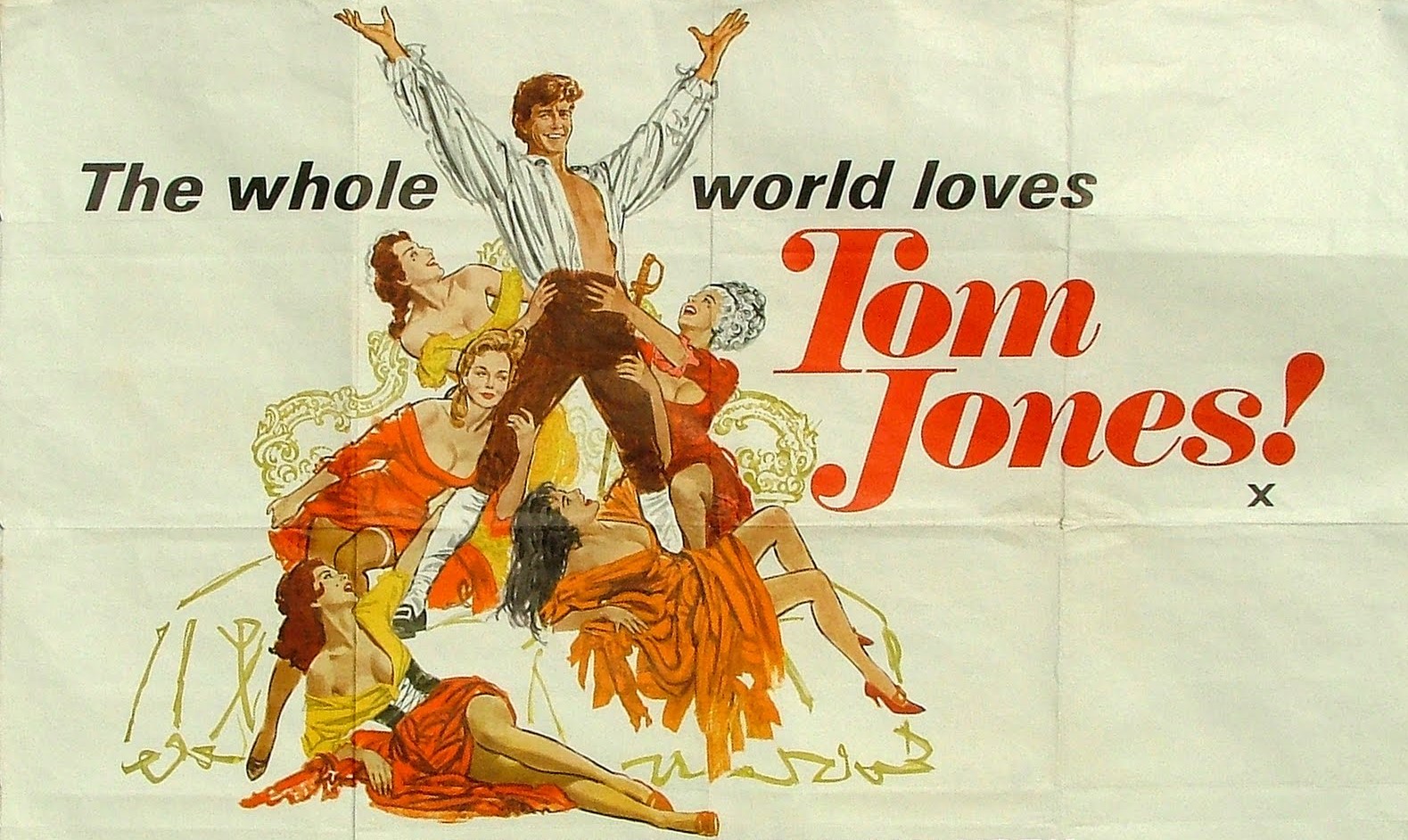
    First, scoundrels, rakes, and rogues raise hell on “Picture Perfect,” music from the movies, with selections from “The Reivers” (John Williams), “The Adventures of Huckleberry Finn” (Jerome Moross), “Anthony Adverse” (Erich Wolfgang Korngold), and “Tom Jones” (John Addison). Carouse vicariously on WWFM – The Classical Network and wwfm.org, at 6 pm EDT.

    Then it’s time to pay the piper, with fiery retribution from the heavens, with George Pal’s 1953 adaptation of H.G. Wells’ allegorical invasion novel, “The War of the Worlds.” Roy Bjellquist and I will address this apocalyptic masterpiece, in which humanity and science are nearly quashed by man’s baser instincts, on the next Facebook live-stream of “Roy’s Tie-Dye Sci-Fi Corner,” at 7 pm EDT.

    https://www.facebook.com/roystiedyescificorner/

    Keep watching the skies, certainly, but also beware the threat from within!

  • Classical Network Thanks Listeners After Fundraiser

    Classical Network Thanks Listeners After Fundraiser

    People of Earth! Thank you for supporting The Classical Network!

    We wrapped up our autumn fundraiser last night with the conclusion of “Picture Perfect.” It was particularly gratifying that we continued to receive donations through the 6:00 hour, even as I buffeted our loyal listeners with Martian heat rays and invasion anxiety courtesy of music from “The War of the Worlds” (1953), “War of the Worlds” (2005), “Rocketship X-M,” “The Day the Earth Stood Still,” “Ed Wood,” and “The Thing from Another World.” Unfortunately, since this week’s show was done live, it has not been preserved as a webcast. (That’s another way of saying I forgot to record it.)

    Be that as it may, despite the heroic efforts of those of you who contributed, we came up somewhat short of our projected goal of $65,000. As I said, the drive is over, but we are still hoping to fulfill our budgetary requirements by the end of the month. Therefore, you may hear us “soft pitching” between now and then, giving the phone number and working some of the remaining thank you gifts into our playlists, but no more extended stretches of us jabbering on and asking you to give. If you think we do an especially fine job leading up to Hallowe’en, why not toss us a bone or two?

    We’ll still be happy to take your donation by phone during regular weekday business hours, at 1-888-232-1212, and of course you are free to donate anytime, around the clock, at wwfm.org.

    Again, thank you for your support. We at WWFM – The Classical Network are here to serve you!

Tag Cloud

Aaron Copland (92) Beethoven (95) Composer (114) Film Music (123) Film Score (143) Film Scores (255) Halloween (94) John Williams (187) KWAX (229) Leonard Bernstein (101) Marlboro Music Festival (125) Movie Music (138) Opera (202) Philadelphia Orchestra (89) Picture Perfect (174) Princeton Symphony Orchestra (106) Radio (87) Ralph Vaughan Williams (85) Ross Amico (244) Roy's Tie-Dye Sci-Fi Corner (290) The Classical Network (101) The Lost Chord (268) Vaughan Williams (103) WPRB (396) WWFM (881)

DON’T MISS A BEAT

Receive a weekly digest every Sunday at noon by signing up here


RECENT POSTS