Tag: William Grant Still
-

William Grant Still’s “Afro-American Symphony”
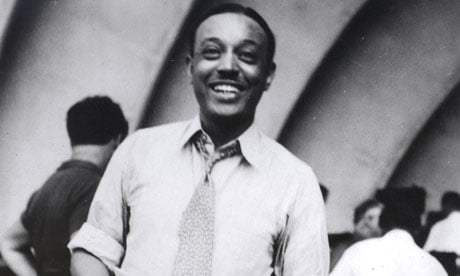
It’s hard to believe I made the following observations as recently as 2019, prior to this show’s first airing. So much has changed since then. William Grant Still has gone from a neglected master to probably one of the most frequently programmed American symphonists of his generation. The change may have been propelled by social and political trends, but if ever anyone deserved more notice, it’s this composer.
As someone with an insatiable appetite for American symphonies composed during the first half of the 20th century, I try not to miss a performance or even a radio broadcast of music by Roy Harris, William Schuman, or Aaron Copland. But for as much as I adore these composers, the American symphonies that delight me the most, off the top of my head, are Charles Ives’ 2nd, Howard Hanson’s 2nd (the “Romantic”), and William Grant Still’s 1st (the “Afro-American”). I never get tired of listening to these, and they move me like few others.
I am only too happy to include Still’s symphony, then, as a kind of capstone to my four-part survey of the landmark Black Composer Series of the 1970s – reissued on Sony Classical as a 10-CD boxed set – this week on “The Lost Chord.”
The “Afro-American Symphony,” composed in 1930, is informed by African-American spirituals, the blues, and syncopated banjo-like riffs. Indeed, a banjo actually turns up in the work’s third movement.
To me, the symphony has always been a kind of “portrait of the artist as a young man.” (Still was born in Woodville, Mississippi, and grew up in Little Rock, Arkansas.) In this respect, it puts me in the mind somewhat of Virgil Thomson “Symphony on a Hymn Tune,” which similarly draws on hymns and folk songs of his boyhood in Kansas City, Missouri.
But Still’s music comes across as more personal, more sincere, and certainly less self-consciously “modernist.” It goes straight to my heart and then gets in my head so that it literally disturbs my sleep. It’s one of the great American symphonies. The concert suites from George Gershwin’s “Porgy and Bess” remain popular, but some enterprising music director should give the “Afro-American Symphony” a shot, because I know audiences will love it. (NOTE: Again, since I wrote this, the work has gone on to be played by seemingly every major American orchestra.)
There is a solid Gershwin connection. Still quotes the melody of “I Got Rhythm” in the third movement of his symphony. And for good reason. It’s actually his! According to Eubie Blake, Gershwin was in the audience during one of Still’s performances in the pit band for Blake’s revue “Shuffle Along.” Still’s improvisation became the basis for Gershwin’s hit tune. (Blake was quick to add that the appropriation was probably inadvertent.)
The “Afro-American Symphony” is now the best-known piece in the Black Composers Series, which originally appeared on vinyl between 1974 and 1978. But at the time of the recording’s original release that was by no means definitively the case. The only previous recording of the work, made by Karl Krueger and the Royal Philharmonic Orchestra, was available only through mail-order subscription. Exposure to this gem of a symphony, then, was comparatively limited.
Thankfully, there have been a number of recordings since, but for me none match the commitment and loving attention to detail of the performance in this set, with Paul Freeman conducting the London Symphony Orchestra.
Also included on today’s program will be “Markings,” by Ulysses Kay, composed in 1966 to the memory of Dag Hammerskjöld, secretary general of the United Nations. Called “the greatest statesman of our century” by John F. Kennedy, Hammarskjöld was killed in a plane crash in Zambia en route to ceasefire negotiations during the Congo Crisis of 1961. Hammarskjöld was awarded a posthumous Nobel Peace Prize.
We’ll conclude on an “up” note, with the lively “Danse Nègre” from the “African Suite” of 1898, by Afro-English composer Samuel Coleridge-Taylor.
I hope you’ll join me for the grand finale of my month-long survey of highlights from CBS Records’ forward-looking Black Composers Series – that’s “Black to the Future, Part IV,” on “The Lost Chord,” now in syndication on KWAX, the radio station of the University of Oregon!
Clip and save the start times for all three of my recorded shows:
PICTURE PERFECT, the movie music show – Friday at 8:00 PM EST/5:00 PM PST
SWEETNESS AND LIGHT, the light music program – ALL NEW! – Saturday at 11:00 AM EST/8:00 AM PST
THE LOST CHORD, unusual and neglected rep – Saturday at 7:00 PM EST/4:00 PM PST
Stream them, wherever you are, at the link!
-

Black Composers Shine on KWAX Radio
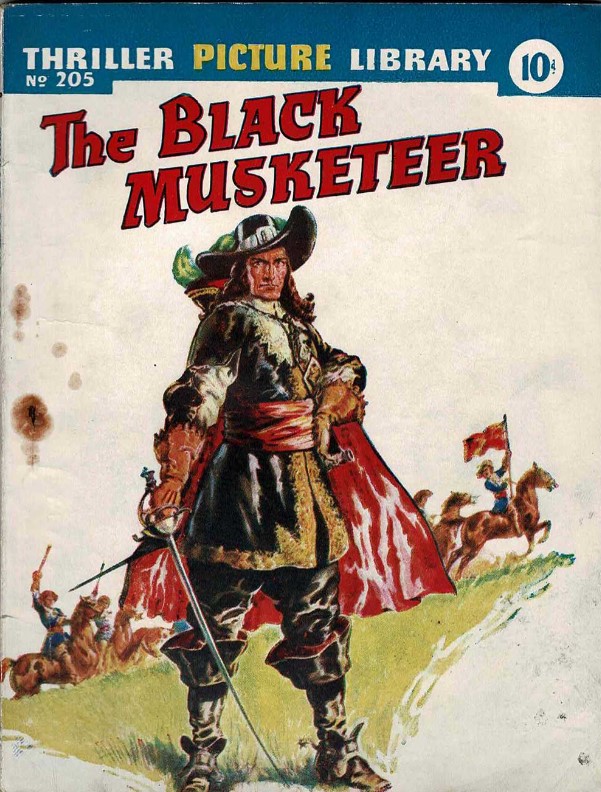
Very little is known about the Chevalier de Meude-Monpas. Among what we DO know is that he was a musketeer in the service of Louis XVI, who went into exile with the onset of the French Revolution. He also studied music in Paris and published six concertos for violin in 1786. In 1997, violinist Rachel Barton (now Rachel Barton Pine) put together a revelatory album for Cedille Records, “Violin Concertos by Black Composers of the 18th and 19th Centuries.” Meude-Monpas’ Violin Concerto No. 4 will be among the featured works this morning on “Sweetness and Light,” cumulatively guaranteed to put a smile on your face.*
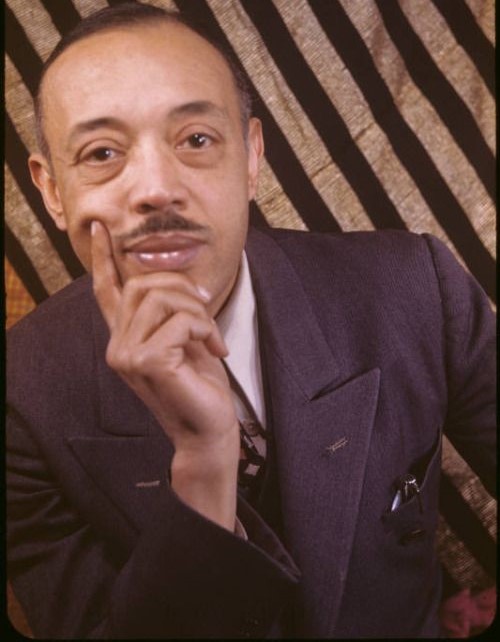
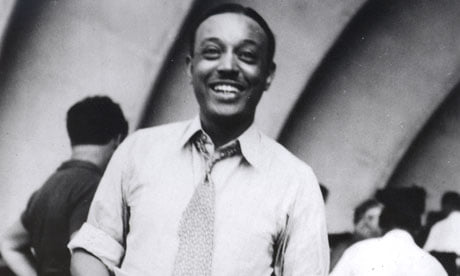
Much better known, William Grant Still was regarded in his day as the “Dean of Afro-American Composers.” He the first composer of color to have a symphony performed by a major orchestra, the first to have a symphony widely performed, the first to conduct a major orchestra, and the first to have an opera televised nationally. A pupil of both George Whitefield Chadwick and Edgard Varèse, Still certainly had “serious” credentials, but he also worked in pit bands and wrote arrangements for Hollywood musicals. In many senses, he was the quintessential American composer. Also, he always knew how to write a good tune. This morning we’ll enjoy his “Danzas de Panama,” performed by the Oregon String Quartet.
It took nearly 90 years for Florence Price to become an overnight success. Price was the first African American woman to have a symphony performed by a major orchestra. Her Symphony No. 1 was played by the Chicago Symphony, conducted by Frederick Stock, in 1933. But it’s only fairly recently, after decades of comparative neglect, that her music has finally begun to gain traction. From a 2-disc set devoted to her piano works on the Guild label, we’ll hear Kirsten Johnson play “Dreamboat.”
Duke Ellington requires little introduction. He was a major figure in American music, especially in the field of jazz. But for the past hundred years or so, there has been quite a bit of “blurring of the lines” between genres of art music. In 1943, Ellington composed “New World a-Comin’,” a work for piano and 15-piece band. He never wrote down the piano part, so it was reconstructed by ear by Maurice Peress from a recording made of an Ellington concert at Carnegie Hall in 1943. Subsequently, Peress expanded the jazz band to full orchestra. The soloist on the recording we’ll hear, Jeffrey Biegel, obtained permission from Sir Roland Hanna to transcribe the improvised final cadenza from a recording Hanna made with the American Symphony Orchestra under Peress’ baton.
So, yeah, it’s February 1 – Black History Month – not that any excuse is required to share these delights. But it does ensure that they will make it to the air waves and, hopefully, your ears. We’ll be enjoying our coffee black on “Sweetness and Light,” this Saturday morning at 11:00 EST/8:00 PST, exclusively on KWAX, the radio station of the University of Oregon!
Stream it, wherever you are, at the link:
- Please note: Meude-Monpas is not to be confused with that other swashbuckling composer, the Chevalier de Saint-Georges, whose music also appears on Barton Pine’s record.
-

NYCO: Will the Phoenix Rise Again?
Is it possible the phoenix is about to rise again?
For decades, New York City Opera was always the other, upstart opera company at Lincoln Center. From 1966 to 2010, it made its home at New York State Theater, across the plaza from the more venerated Metropolitan Opera.
While NYCO could not compete with the larger budgets and star-power of the Met, it was not unusual for it to excel its establishment neighbor – which could often be encumbered by its larger space and more ponderous productions – through creative artistic solutions and investment in unusual and neglected repertoire. Furthermore, NYCO provided a launchpad for many singers who went on to international careers and graduated to the Met itself, among them Placido Domingo, Samuel Ramey, José Carreras, Carol Vaness, and of course Beverly Sills. Sills served as NYCO’s director from 1979 to 1989.
Approximately one-third of NYCO’s repertoire was devoted to American opera. Among works to have received their first performances by the company include Aaron Copland’s “The Tender Land,” Robert Kurka’s “The Good Soldier Schweik,” Robert Ward’s “The Crucible” (recipient of a Pulitzer Prize in 1962), Jack Beeson’s “Lizzie Borden,” and Ned Rorem’s “Miss Julie.”
The company also presented a number classic musicals and served as a springboard into the opera house for Leonard Bernstein’s “Candide.”
Despite its decades of artistic success, in 2008, it was revealed the organization was struggling against serious financial difficulties. After 45 years, it would depart Lincoln Center to perform in a variety of New York venues, including the Brooklyn Academy of Music, until its seemingly inevitable bankruptcy in 2013. (Ironically, it was in 2008 that billionaire David H. Koch donated $100 million for the renovation of New York State Theater. The space has since borne his name.)
In 2016, the company was revived under new management, NYCO Renaissance Ltd. The new NYCO returned to Lincoln Center with a performance of “Tosca,” not at Koch Theater, but at Jazz at Lincoln Center. Since then, it has maintained something of an itinerant existence, in recent years maintaining its presence mainly through recitals and park performances. It has not given a staged performance since the world premiere of Ricky Ian Gordon’s “The Garden of the Finzi-Continis” in 2022.
Now the company seems poised to begin a new era. Conductor Constantine Orbelian, who had been the organization’s music director since 2021, was promoted to its executive director in September. The first concert under his administration will not be a staged opera, but rather an ambitious program to be presented at Carnegie Hall under the title “Music of Survival: A Celebration of Survival and Perseverance Told Through the Universal Language of Music.” The evening will include Mieczyslaw Weinberg’s Suite from “The Last Inch” and Fantasy for Cello and Orchestra, Erich Wolfgang Korngold’s rarely-heard Cello Concerto, conceived for the Bette Davis film “Deception,” and the U.S. premiere of Gennady Rovner’s “Metamorphosis” Symphony. The concert will take place on February 24 at 8 p.m.
This will serve as preamble to next season, which will highlight a fully-staged revival of William Grant Still’s opera “Trouble Island.” The work, with a libretto by Langston Hughes and Still’s wife, Verna Arvey, focuses on the rise and fall of Jean-Jacques Dessalines, leader of the Haitian Revolution, the only slave rebellion in history to successfully establish an independent nation.
“Troubled Island,” the first work by a Black American to be performed by a major company, in 1949 (after having been withdrawn twice in 1945 and 1948), was a great success with the opening night audience, receiving 22 curtain calls. Critical reaction was not as kind. Years later, Still’s daughter Judith claimed the work’s positive reception had been undermined by institutional racism. “Howard Taubman came to my father and said ‘Billy, because I’m your friend I think that I should tell you this – the critics have had a meeting to decide what to do about your opera. They think the colored boy has gone far enough and they have voted to pan your opera.’ And that was it. In those days, critics had that kind of influence.”
Still had already achieved unprecedented recognition in his field for a composer of color, having also been the first Black American to have had a symphony performed by a major orchestra, the first to have had a symphony performed widely, the first to have conducted a major orchestra, and much later – three years after his death, in fact – the first to have an opera (“A Bayou Legend”) broadcast on national television, as late as 1981. During his heyday, Still was widely hailed as the “Dean of Afro-American Composers.” But for some reason, a Black man in the opera house was evidently perceived by influential forces as an audacious step too far.
In 2006, Judith Still organized the heartbreaking story into a 600-page book she compiled from original documents, “Just Tell the Story: Troubled Island.” I ordered it in 2021, from William Grant Still Music, which is owned and operated by the composer’s family, but have yet to read it. I will do so before attending next season’s performance. Hopefully the planned revival will not be hampered or dismissed because of anti-DEI initiatives. While I agree that music and composers should rise or fall according to their individual merit, they should also be given the same opportunities as their peers. From what has been allowed to reach the public, Still has long proven himself an important voice in American music. Sadly, it’s only in the wake of George Floyd that many of our musical institutions are finally giving Still the platform he has so long deserved. I think he would be shocked to know his music is now being played by most of the country’s great orchestras.
NYCO was founded in 1943, offering affordable opera out of New York City Center, on West 55th Street, formerly a Masonic temple, converted into a performing arts center by New York Mayor Fiorello La Guardia and City Council President Newbold Morris. La Guardia dubbed it “the people’s opera.” As previously indicated, the company moved to Lincoln Center in 1966, the same year the Met opened at its new digs. (Since 1883, the Old Met had been located at 1411 Broadway.)
Unfortunately, I missed the glory days of Sills and her associates, but in the 1990s, I would travel in to New York with my best friend to catch NYCO performances of rarely-staged operas by Korngold, Sir Michael Tippett, Ferruccio Busoni, and Paul Hindemith. This would have been during Christopher Keene’s tenure. Keene had conducted at NYCO since 1970, and I am greatly indebted to him for some highly enjoyable and musically stimulating afternoons at the theater. Later, I learned of Keene’s personal demons, which made his energy and professionalism all the more remarkable. Sadly, he died of complications from AIDS in 1995 at the age of 48.
Buoyed by the excellence of these productions, I brought my parents, who were not “opera people,” but were curious, to see Arrigo Boito’s “Mefistofele.” Tito Copabianco’s classic production had propelled both Norman Treigle and Samuel Ramey to superstardom, but regrettably by 1994, it was looking a little threadbare and sad. At least it had an orgy and some horses (though not in the same scene).
Orbelian says he also plans to resurrect Pietro Mascagni’s “Isabeau.” You can read more about it here:
https://apnews.com/article/new-york-city-opera-constantine-orbelian-c4b9260c0ca4d5dbb8caf326de81a430
Music of Survival at Carnegie Hall on February 24
PHOTOS: William Grant Still and baritone Robert Weede, behind the scenes of “Troubled Island;” and New York City Opera’s Constantine Orbelian
-

Juneteenth, Classical Music, and Cultural Change
Is Juneteenth poised to become the next Mardi Gras/St. Patrick’s Day/Cinco de Mayo? Well, at least it’s not a drinking holiday yet.
While I venture to guess it’s still all fairly new to most white folks (I was probably ahead of the curve, thanks to Ralph Ellison’s novel, “Juneteenth,” finally published in full, posthumously, in 1999), I can’t say its wider dissemination is altogether a bad thing. For classical music lovers, especially, there has been so much to discover – and yes, to celebrate – as the result of sweeping cultural changes and broader awareness over the past few years, and by no means restricted to June 19.
Some may roll their eyes at all the “over-exposure” of Florence Price, but come on, admit it, isn’t it a little invigorating to hear some American music other than the same old Gershwin and Copland? In the interest of full disclosure, I offer this as someone for whom Copland is probably one of my favorite composers. So much Black classical music, if it was known at all, was almost never heard, unless it was on that one, scrappily-played, often out-of-print and hard-to-find recording. For how many years was I hungry to hear the complete symphonies of William Grant Still? Now they’re getting played – in concert, no less!
For those of you tiring of George Walker’s “Lyric for Strings” (and how could you?), look at it as a corrective. At some point, the pendulum will swing back, and ideally this belated inundation of Black music will lead to the best of it taking its place in the active repertoire. It can’t happen unless people know it’s out there and are exposed to it.
I look forward to the day that we’ll be past the point of anyone grousing about quotas or “woke” or any of that nonsense. People are ridiculous creatures. It’s easy to deride and it’s tempting to mock – believe me, I can be as cynical as anyone, and in all things – but really, there are many sincere concert programmers out there who are just trying to do the best that they can. For anyone who happens merely to be paying lip-service to the zeitgeist, I’m sure there are many more who want to do the right thing.
For those for whom the holiday has always meant something (June 19 is the date in 1865 on which the federal enforcement of the Emancipation Proclamation guaranteed freedom to enslaved peoples in all Confederate states following the Civil War), I can imagine how, after a while, it could all get to be a little much for them, too. The more popular it becomes, the more corporate or Disneyfied it risks becoming. How long before Juneteenth is ruined by the Man?
Anyway, celebrate responsibly, everyone, and remember – keep the Juneteenth in Juneteenth!
Florence Price, “Juba” from the Symphony No. 1
George Walker, “Lyric for Strings”
William Grant Still, “Serenade”
Adolphus Hailstork, “Celebration!” (composed for the U.S. Bicentennial)
Tag Cloud
Aaron Copland (92) Beethoven (95) Composer (114) Film Music (120) Film Score (143) Film Scores (255) Halloween (94) John Williams (185) KWAX (229) Leonard Bernstein (100) Marlboro Music Festival (125) Movie Music (135) Opera (198) Philadelphia Orchestra (88) Picture Perfect (174) Princeton Symphony Orchestra (106) Radio (87) Ralph Vaughan Williams (85) Ross Amico (244) Roy's Tie-Dye Sci-Fi Corner (290) The Classical Network (101) The Lost Chord (268) Vaughan Williams (103) WPRB (396) WWFM (881)