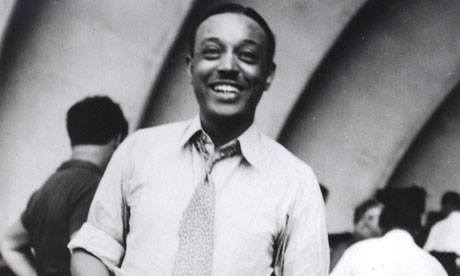
Tag: William Grant Still

  • Joplin’s Treemonisha Education vs Superstition

    Joplin’s Treemonisha Education vs Superstition

    It’s education versus superstition in Scott Joplin’s “Treemonisha” – with the added peril of being tossed into a wasps’ nest!

    “Treemonisha” (1915) has often been described, though perhaps not entirely accurately, as a “ragtime opera” – Joplin was, after all, the king of the rag – but his opera encompasses a broader range of influences than that would suggest. Even so, none of it could have been written by anyone else. Everything is distilled into a unified artistic statement. Better still, all of it is tuneful and engaging and very, very American.

    “Treemonisha” will be our featured work this Sunday morning on WPRB, the crowning achievement in three hours of earworms and toe-tappers by American composers of African descent.

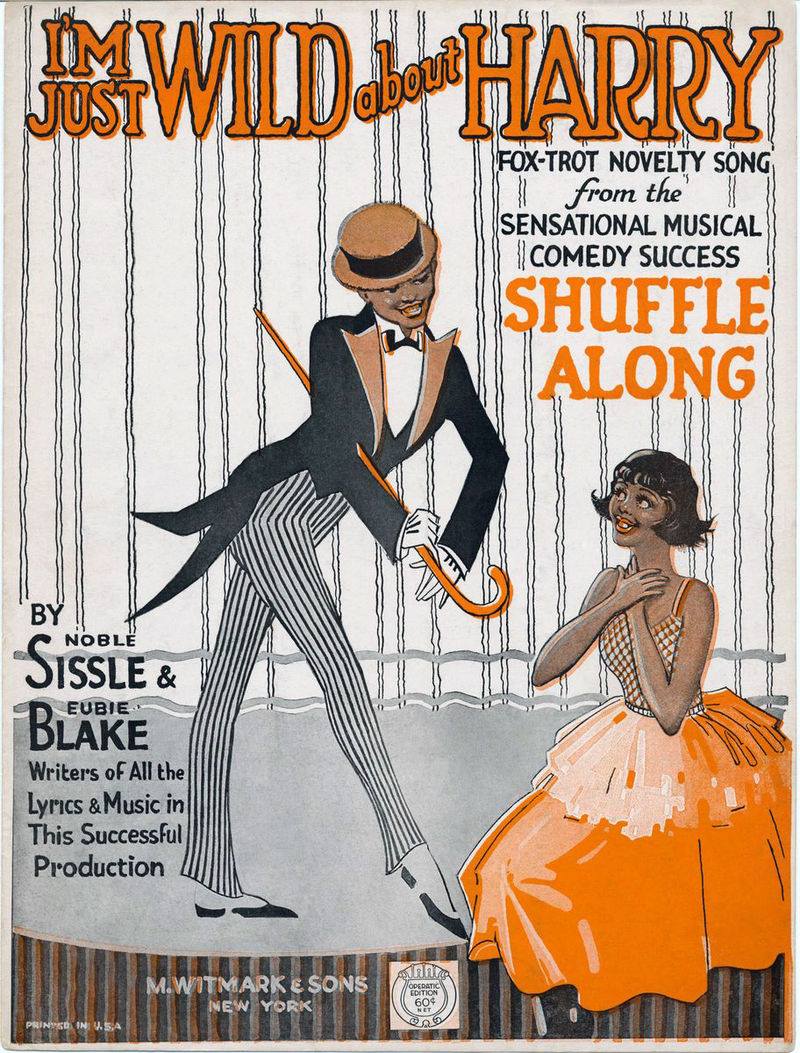
    We’ll also hear ballet music, “Miss Sally’s Party” (1940), by William Grant Still, and the Paragon Ragtime Orchestra will perform a medley of hit tunes from the Broadway revue “Shuffle Along” (1921), by Noble Sissle and Eubie Blake.

    Perhaps the least likely pupil of Edgard Varèse, Still cut his teeth writing arrangements for Paul Whiteman, W.C. Handy, and Artie Shaw. According to Blake, one of Still’s improvisations while working in the pit band for “Shuffle Along” became the basis for George Gershwin’s hit tune “I Got Rhythm.” Still didn’t appear to be bitter about the appropriation (which Blake conceded was probably inadvertent), and in fact Still and Gershwin were on friendly terms and made it a point to attend performances of one another’s music.

    “Shuffle Along” was the first financially successful Broadway play to have African-American writers and an all African-American cast. “I’m Just Wild About Harry” became the show’s break-out number. The song shattered what had been a taboo against musical and stage depictions of romantic love between African-Americans.

    Fun fact: So mainstream was the show’s success, and so enduring its influence, that Harry Truman selected “I’m Just Wild About Harry” for his campaign song during the presidential election of 1948.

    We’re just wild about light music, this Sunday morning from 7 to 10 EST, on WPRB 103.3 FM and wprb.com. Join me for these compositions in black and light, on Classic Ross Amico.

  • William Grant Still American Composer

    William Grant Still American Composer

    They say that still waters run deep.

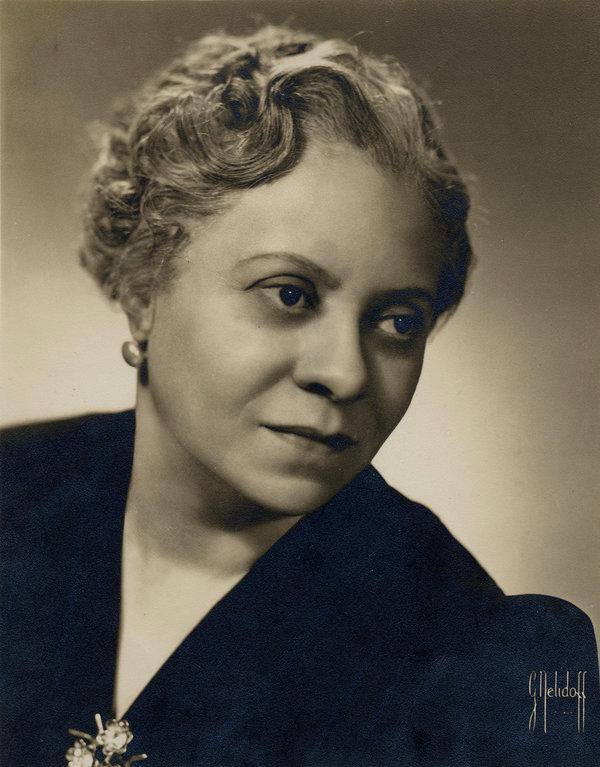
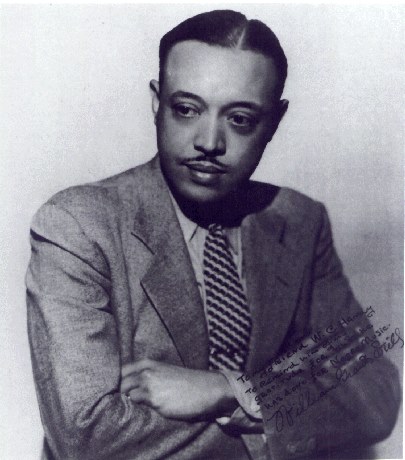
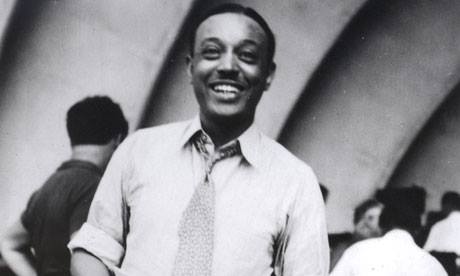
    William Grant Still, the so-called “Dean of Afro-American Composers,” composed a lot of attractive music, much of it informed by the black experience. This Sunday night on “The Lost Chord,” we’ll hear Still’s delightful Symphony No. 2, subtitled “Song of a New Race,” and a more serious work fueled by racial considerations, “And They Lynched Him on a Tree,” for double-choir, narrator and orchestra.

    Still, who lived from 1895-1978, emerged from unlikely circumstances – born in Woodville, Mississippi; raised in Little Rock, Arkansas – to become a major force in American music. Having abandoned a career in medicine for studies at the Oberlin Conservatory of Music and the New England Conservatory in Boston, where he studied with George Whitefield Chadwick, Still was a “first” in many respects.

    His Symphony No. 1, the “Afro-American Symphony,” was the first written by a black composer to be performed by a major orchestra (the New York Philharmonic). He was the first to be given the opportunity to conduct a major orchestra (the Los Angeles Philharmonic, at the Hollywood Bowl). His opera, “Troubled Island,” became the first to be produced by a major company (the New York City Opera). Another of his operas, “A Bayou Legend,” was the first to be performed on national television (as late as 1981). His works were performed internationally by the Berlin Philharmonic, the London Symphony Orchestra, the BBC Symphony, and the Tokyo Philharmonic.

    Perhaps the least likely pupil of Edgard Varèse, he incorporated jazz and blues elements into his concert music. He cut his teeth writing arrangements for Paul Whiteman, W.C. Handy and Artie Shaw. According to Eubie Blake, one of Still’s improvisations in the pit band during Blake’s revue “Shuffle Along” became the basis for Gershwin’s hit tune “I Got Rhythm.” Still didn’t appear to be bitter about the appropriation (which Blake conceded was probably inadvertent), and in fact Still and Gershwin were on friendly terms and made it a point to attend performances of one another’s music.

    Pay particular attention to the second movement of Still’s Symphony No. 2, first performed in 1936 by Leopold Stokowski and the Philadelphia Orchestra, and see if you agree that Gershwin would have killed to have composed its second movement.

    We’ll follow that with a very different piece, Still’s choral ballad “And They Lynched Him on a Tree,” composed in 1940. The libretto is by the poet Katherine G.C. Biddle, the niece of Charlotte Mason, the so-called “Godmother of the Harlem Renaissance.” The work calls for a contralto soloist, as the mother of the victim, a “white chorus” to depict the mob, a “black chorus” to discover the lynching, a narrator, and a small orchestra. The composition is almost exactly contemporary with Abel Meeropol’s “Strange Fruit.” It was given its first performance by the New York Philharmonic, conducted by Artur Rodzinski.

    There will be just a few minutes left at the end of the show, during which we’ll decompress with Still’s miniature “Summerland.”

    I hope you’ll join me for “Still Runs Deep” – an hour of music by William Grant Still – this Sunday night at 10 ET, with a repeat Wednesday evening at 6; or that you’ll listen to it later as a webcast at wwfm.org.

  • William Grant Still Still the One

    William Grant Still Still the One

    He’s Still the one.

    Today is the birthday of William Grant Still (1895-1978), the so-called “Dean of Afro-American Composers.” Still emerged from unlikely circumstances (born in Woodville, Mississippi; raised in Little Rock, Arkansas) to become a major force in American music.

    Having abandoned a career in medicine for studies at the Oberlin Conservatory of Music and the New England Conservatory in Boston (where he studied with George Whitefield Chadwick), Still was a “first” in many ways.

    His was the first symphony written by a black composer to be performed by a major orchestra (the Eastman-Rochester). He was the first to be given the opportunity to conduct a major orchestra (the Los Angeles Philharmonic, at the Hollywood Bowl). His opera, “Troubled Island,” became the first to be produced by a major company (the New York City Opera). Another of his operas, “A Bayou Legend,” was the first to be performed on national television (as late as 1981).

    Any of these would be significant in and of themselves, but it just so happens that Still was a damn fine composer. Perhaps the least likely pupil of Edgard Varèse, he incorporated jazz and blues elements into his concert music, which also frequently reflected the African and African-American experiences.

    He cut his teeth writing arrangements for Paul Whiteman, W.C. Handy and Artie Shaw. According to Eubie Blake, one of Still’s improvisations in the pit band during Blake’s revue “Shuffle Along” became the basis for Gershwin’s hit tune “I Got Rhythm.” Still didn’t appear to be bitter about it, and in fact the two composers were on friendly terms and made it a point to attend performances of one another’s music.

    Still quotes the melody in the third movement of his Symphony No. 1, otherwise known as the “Afro-American Symphony.” In fact, it had always been his intention to do so, before Gershwin popularized it. (Blake went on to say the swipe was probably inadvertent, but Still had definitely gotten there first.)

    I’ve always been fond of the symphony, from the very first time I heard it. To me, it is every bit as much of a portrait of an artist as a young man as Virgil Thomson’s “Symphony on a Hymn Tune.” It’s a beautiful and wistful piece, built on lovely daydreams and uptempo, banjo-like riffs. This is the kind of music that Dvořák would have loved.

    Here it is, in a pioneering recording by Karl Krueger and the Royal Philharmonic Orchestra, after all these years, still my favorite:

    Mov’t I: https://www.youtube.com/watch?v=5s7o8UfKsV0
    Mov’t II: https://www.youtube.com/watch?v=xSQUrW8eBhU
    Mov’t III: https://www.youtube.com/watch?v=iEeaLvX82Lw
    Mov’t IV: https://www.youtube.com/watch?v=Fu_qzX5K39g

    And just to prove it was no accident, here’s the second movement of his Symphony No. 2, “Song of a New Race,” with Neeme Järvi and the Detroit Symphony:

    https://www.youtube.com/watch?v=uaHe5hvWu6w

    Now tell me Gershwin wouldn’t have killed to write that!

    Happy birthday, William Grant Still.

Tag Cloud

Aaron Copland (92) Beethoven (95) Composer (114) Film Music (120) Film Score (143) Film Scores (255) Halloween (94) John Williams (185) KWAX (229) Leonard Bernstein (100) Marlboro Music Festival (125) Movie Music (135) Opera (198) Philadelphia Orchestra (88) Picture Perfect (174) Princeton Symphony Orchestra (106) Radio (87) Ralph Vaughan Williams (85) Ross Amico (244) Roy's Tie-Dye Sci-Fi Corner (290) The Classical Network (101) The Lost Chord (268) Vaughan Williams (103) WPRB (396) WWFM (881)

DON’T MISS A BEAT

Receive a weekly digest every Sunday at noon by signing up here


RECENT POSTS