Tag: William Grant Still

  • Black Composers Reissue: Still, Kay & More

    Black Composers Reissue: Still, Kay & More

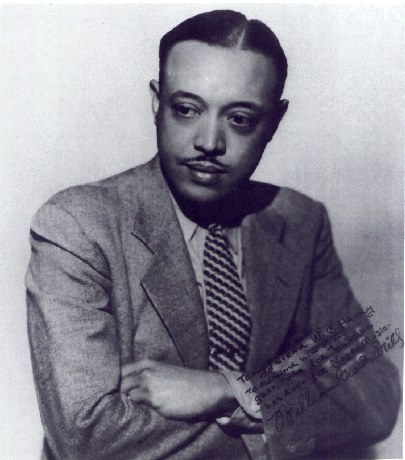
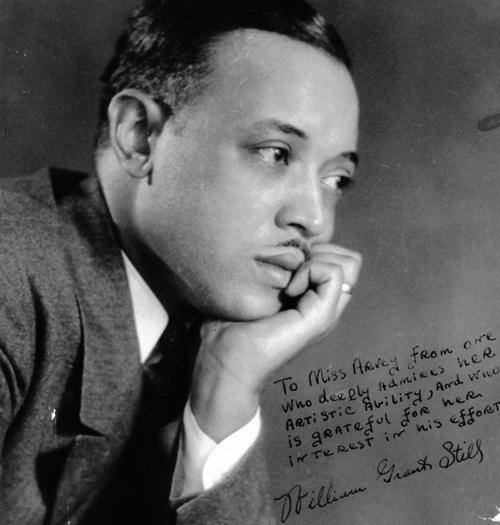
    As someone with an insatiable appetite for American symphonies composed during the first half of the 20th century, I try not to miss a performance, or even a radio broadcast, of music by Roy Harris, William Schuman, or Aaron Copland. But for as much as I adore those composers, the American symphonies that delight me the most, off the top of my head, are Charles Ives’ 2nd, Howard Hanson’s 2nd (the “Romantic”), and William Grant Still’s 1st (the “Afro-American”).

    Still’s symphony, the first by a Black American to be performed by a major orchestra, serves as a kind of capstone to my four-part survey of Columbia Records’ landmark Black Composer Series. This was put together for “The Lost Chord” and originally broadcast on WWFM The Classical Network to mark the belated reissue of the series – after 40 years! – as a 10-CD boxed set by Sony Classical.

    The “Afro-American Symphony” is one of the few pieces in this set, which originally appeared on vinyl between 1974 and 1978, that is heard with any frequency. It serves as a portrait of the artist as a young man, drawing on spirituals, blues, and banjo riffs redolent of the composer’s boyhood in Little Rock, Arkansas. (He was born in Woodville, Mississippi.) More enterprising music directors should give it a shot. It’s the kind of work that goes straight to the heart and gets lodged in the head. Audiences will love it.

    Hear it on the final program in my survey, which also includes “Markings,” by Ulysses Kay. Kay composed his piece in 1966 to the memory of Dag Hammerskjöld, secretary general of the United Nations. Called “the greatest statesman of our century” by John F. Kennedy, Hammarskjöld was awarded a posthumous Nobel Peace Prize, after he was killed in a plane crash en route to ceasefire negotiations during the Congo Crisis of 1961.

    The series concludes on an “up” note, with a lively “Danse Nègre,” from the “African Suite” of 1898, by Afro-English composer Samuel Coleridge-Taylor.

    Enjoy the fourth and final installment of “Black to the Future” – celebrating the reissue of Columbia Records’ forward-looking Black Composers Series – by following the link and clicking on “listen”:

    https://www.wwfm.org/post/lost-chord-february-24-black-future-part-iv

    In case you missed it, here’s Part One, with music by Chevalier de Saint-Georges, Olly Wilson, and Fela Sowande:

    https://www.wwfm.org/post/lost-chord-february-3-black-future

    Part Two, with works by George Walker and José Maurício Nunes Garcia:

    https://www.wwfm.org/post/lost-chord-black-future-part-ii

    And Part Three, with works by José Silvestre de los Dolores White y Lafitte (José White), David Baker, and Roque Cordero:

    https://www.wwfm.org/post/lost-chord-february-17-black-future-part-iii

    On a related note, Michael Kownacky will introduce Still’s “Troubled Island,” the first opera by an African-American composer to be staged by a major company – the New York City Opera, in 1949 – on a double-bill with Paul Moravec’s “Sanctuary Road,” this week on the Sunday Opera at 3:00 EST, on WWFM – The Classical Network and wwfm.org.


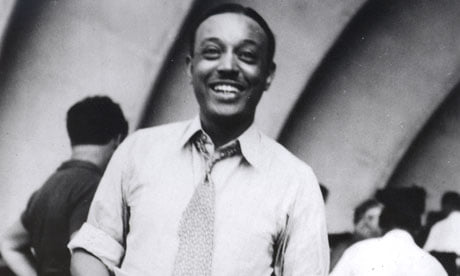
    PHOTO: William Grant Still at the Hollywood Bowl
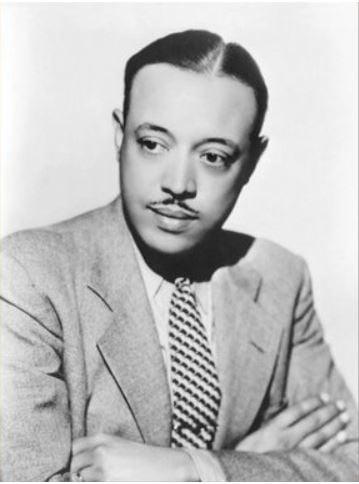
  • William Grant Still American Composer Rediscovered

    William Grant Still American Composer Rediscovered

    They say that still waters run deep.

    William Grant Still, frequently described as the “Dean of Afro-American Composers,” wrote a lot of attractive music, much of it informed by the black experience. This Sunday night on “The Lost Chord,” we’ll hear some of it, including the delightful Symphony No. 2, subtitled “Song of a New Race.” Also, a more serious work fueled by racial injustice, “And They Lynched Him on a Tree,” for double-choir, narrator and orchestra.

    Still, who lived from 1895 to 1978, emerged from unlikely circumstances – born in Woodville, Mississippi and raised in Little Rock, Arkansas – to become a major force in American music. Having abandoned a career in medicine for studies at the Oberlin Conservatory of Music and the New England Conservatory in Boston, where he studied with George Whitefield Chadwick, Still was a “first” in many respects.

    His Symphony No. 1, the “Afro-American Symphony” was the first written by a black composer to be performed by a major orchestra (the New York Philharmonic). He was the first to be given the opportunity to conduct a major orchestra (the Los Angeles Philharmonic, at the Hollywood Bowl). His opera, “Troubled Island,” became the first to be produced by a major company (the New York City Opera). Another of his operas, “A Bayou Legend,” was the first to be performed on national television (as late as 1981). His works were performed internationally by the Berlin Philharmonic, the London Symphony Orchestra, the BBC Symphony, and the Tokyo Philharmonic.

    Perhaps the least likely pupil of Edgard Varèse, Still incorporated jazz and blues elements into his concert music. He cut his teeth writing arrangements for Paul Whiteman, W.C. Handy, and Artie Shaw. According to Eubie Blake, one of Still’s improvisations in the pit during Blake’s revue “Shuffle Along” became the basis for Gershwin’s hit tune “I Got Rhythm.” (Blake conceded the appropriation was probably inadvertent.) Still and Gershwin were on friendly terms and made it a point to attend one and another’s performances.

    Listen to Still’s Symphony No. 2 – first performed in 1936 by Leopold Stokowski and the Philadelphia Orchestra – and see if you don’t agree that Gershwin could only wish that he had composed its elegant second movement.

    We’ll follow that with a very different piece, Still’s choral ballad “And They Lynched Him on a Tree,” composed in 1940. Poet Katherine G.C. Biddle, niece of Charlotte Mason, “Godmother of the Harlem Renaissance,” provided the libretto. The work is scored for contralto soloist, as mother of the victim, a “white chorus” to depict the mob, a “black chorus” to discover the lynching, a narrator (William Warfield in this recording), and small orchestra. The piece is almost exactly contemporary with Abel Meeropol’s “Strange Fruit.” It was given its first performance by the New York Philharmonic, conducted by Artur Rodzinski.

    Finally, at the end of the hour, we’ll decompress with Still’s beautiful and contemplative “Summerland.”

    I hope you’ll join me for “Still Runs Deep” – music by William Grant Still – this Sunday night at 10:00 EST, on WWFM – The Classical Network and wwfm.org.

  • William Grant Still Birthday Celebration

    William Grant Still Birthday Celebration

    Today is the birthday of William Grant Still, the so-called “Dean of Afro-American composers.”

    Still, who lived from 1895 to 1978, emerged from unlikely circumstances – born in Woodville, Mississippi, and raised in Little Rock, Arkansas – to become a major force in American music. Having abandoned a career in medicine for studies at the Oberlin Conservatory of Music and the New England Conservatory in Boston, Still was a “first” in many regards.

    His Symphony No. 1, the “Afro-American Symphony,” was the first written by a black composer to be performed by a major orchestra (the New York Philharmonic). He was the first to have been allowed the opportunity to conduct a major orchestra (the Los Angeles Philharmonic, at the Hollywood Bowl). His opera, “Troubled Island,” became the first to be produced by a major company (the New York City Opera). Another of his operas, “A Bayou Legend,” was the first to be performed on national television (as recently as 1981). His works were performed internationally by the Berlin Philharmonic, the London Symphony Orchestra, the BBC Symphony, and the Tokyo Philharmonic.

    Perhaps the least likely pupil of Edgard Varèse, Still incorporated jazz and blues elements into his concert music. He cut his teeth writing arrangements for Paul Whiteman, W.C. Handy, and Artie Shaw. According to Eubie Blake, one of Still’s improvisations in the pit band during Blake’s revue “Shuffle Along” became the basis for Gershwin’s hit tune “I Got Rhythm.” Still didn’t appear to be bitter about the appropriation (which Blake conceded was probably inadvertent). In fact, Still and Gershwin remained on amicable terms and made it a point to attend performances of one another’s music.

    I’m sure Gershwin would have been only too happy to have composed the second movement of Still’s Symphony No. 2, “Song of a New Race”:

    Still’s Symphony No. 1 (the first of five) – better known as the “Afro-American Symphony” – is a personal favorite, as fresh and difficult to resist as Dvořák’s “American” String Quartet. For me, the first recording, with Karl Krueger conducting, is still the best.

    I. https://www.youtube.com/watch?v=5s7o8UfKsV0
    II. https://www.youtube.com/watch?v=xSQUrW8eBhU
    III. https://www.youtube.com/watch?v=lzzddBmiFow
    IV. https://www.youtube.com/watch?v=Fu_qzX5K39g

    It was only fairly recently that I learned of (and acquired) this recording of Still’s “Lenox Avenue,” with the composer conducting:

    It’s been issued as a limited edition compact disc on the Kritzerland label.

    http://www.kritzerland.com/still.htm

    Still waters run deep. Happy birthday, William Grant Still!

  • Black Composers Series on WWFM

    Black Composers Series on WWFM

    It’s music by the so-called “Dean of Afro-American composers” tonight on “The Lost Chord.”

    William Grant Still’s “Afro-American Symphony” (1930) will be heard alongside Ulysses Kay’s “Markings” (1966), an elegy for secretary general of the United Nations Dag Hammerskjöld, and Samuel Coleridge-Taylor’s lively “Danse Nègre” from the “African Suite” (1898).

    I hope you’ll join me for the grand conclusion of my month-long survey of highlights from the landmark Black Composers Series of 1974-1978, newly reissued in a handsome 10-CD boxed set, thanks to Sony Classical, on “Black to the Future, Part IV,” this Sunday night at 10:00 EST, on WWFM – The Classical Network.

    But if you find the siren song of Oscar is simply too strong to resist, you can always catch the show later in the week as a webcast, along with previous installments from the series, at wwfm.org.


    PHOTOS (clockwise from left): William Grant Still, Ulysses Kay, and Samuel Coleridge-Taylor

  • William Grant Still & Black Composers in NJ

    William Grant Still & Black Composers in NJ

    It’s a banner day for William Grant Still in the Trenton-Princeton area.

    As I posted only a short while ago, Still’s “Afro-American Symphony” will be the featured highlight on “The Lost Chord,” tonight at 10:00 on WWFM The Classical Network and wwfm.org, as I conclude my month-long survey of highlights from the reissued Black Composers Series on Sony Classical.

    Another of Still’s symphonies – the much less frequently heard (read NEVER) Symphony No. 4, subtitled “Autochthonous” – will be performed by the Capital Philharmonic of New Jersey at Trenton’s Patriots Theater at the War Memorial this afternoon at 4:00. The concert will also include the recently rediscovered Violin Concerto No. 1 by Florence Price and, as an added bonus, Adolphus Hailstork’s “Celebration.”

    My preview of this exciting program is in the current edition of U.S. 1 Newspaper – PrincetonInfo. I know I posted about it earlier in the week, but I thought it would be helpful to mention it again, not least because the last time I failed to notice that I didn’t include a link until about five hours after! So here it is again.

    https://princetoninfo.com/african-american-composers-shine-in-trenton/

    The so-called “Dean of Afro-American composers,” Still lived from 1895 to 1978. He was a “first” in many ways. His was the first symphony written by a black composer to be performed by a major orchestra (the New York Philharmonic). He was the first to be given the opportunity to conduct a major orchestra (the Los Angeles Philharmonic, at the Hollywood Bowl). His opera, “Troubled Island,” became the first to be produced by a major company (the New York City Opera). His works were performed internationally by the Berlin Philharmonic, the London Symphony Orchestra, the BBC Symphony, and the Tokyo Philharmonic.

    Similarly, Florence Price, who lived from 1887 to 1953, was the first African-American woman to be recognized as a symphonic composer, and the first to have her music performed by a major orchestra (the Chicago Symphony). Her violin concerto was among a stash of manuscripts rescued from her dilapidated summer home as recently as 2009. This afternoon’s performance by the Capital Philharmonic will be the work’s East Coast premiere, and possibly only the second time it has ever been heard in public.

    This is the rare concert that is more than just a concert.

    Tickets are still available through the orchestra’s website, capitalphilharmonic.org.

Tag Cloud

Aaron Copland (93) Beethoven (95) Composer (114) Film Music (139) Film Score (143) Film Scores (255) Halloween (94) John Williams (195) KWAX (229) Leonard Bernstein (103) Marlboro Music Festival (125) Movie Music (154) Mozart (89) Opera (210) Philadelphia Orchestra (89) Picture Perfect (174) Princeton Symphony Orchestra (108) Radio (88) Ross Amico (244) Roy's Tie-Dye Sci-Fi Corner (290) The Classical Network (101) The Lost Chord (268) Vaughan Williams (103) WPRB (396) WWFM (881)

DON’T MISS A BEAT

Receive a weekly digest every Sunday at noon by signing up here


RECENT POSTS