This weekend: @[100057996013792:2048:Mimi Stillman] plays music by @[100056202085826:2048:Zhou Tian, composer] with the @[100063545561737:2048:Allentown Symphony Orchestra]! Also on the program: William Grant Still’s “Ennanga” for harp and strings and Dvořák’s “New World” Symphony. Show them some love, Lehigh Valley!
Tag: William Grant Still
-
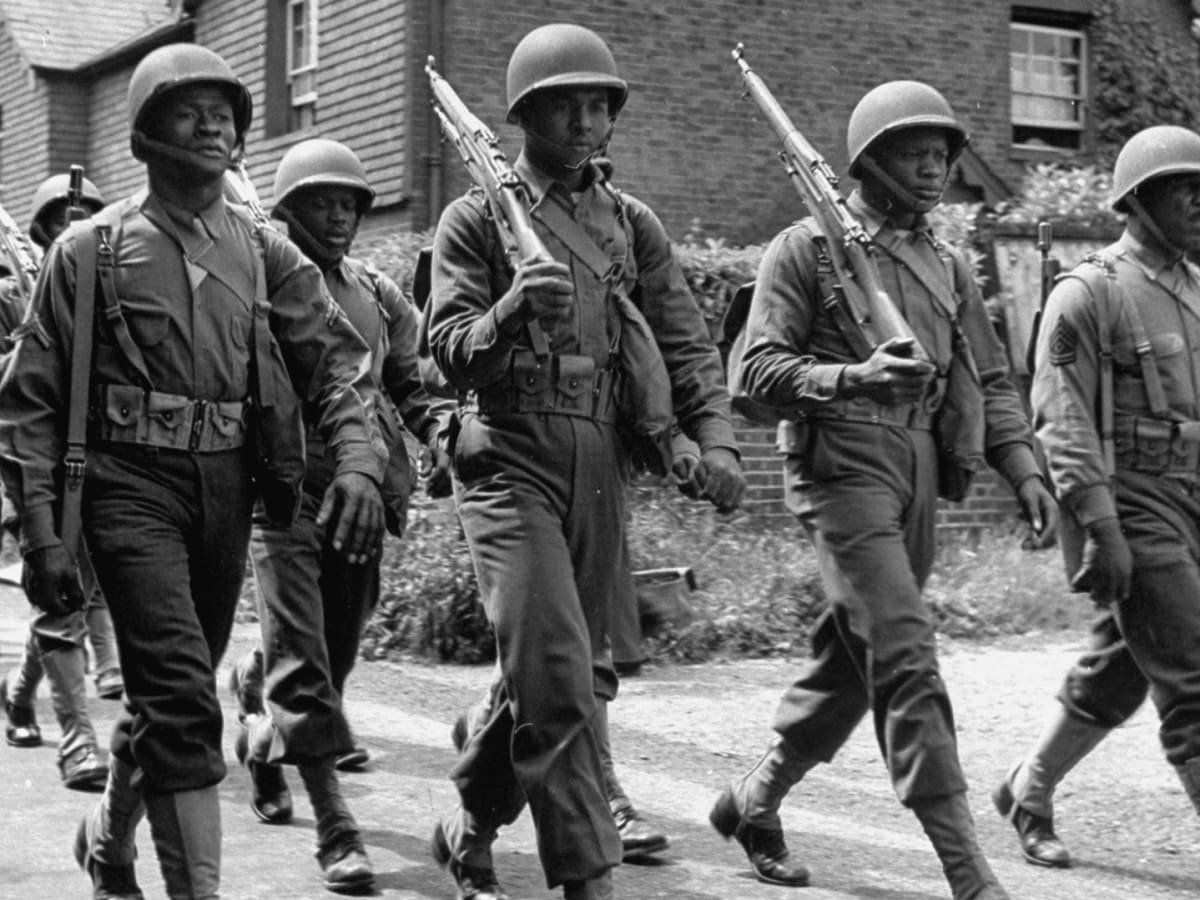
Still’s “In Memoriam” & Black Soldiers’ Sacrifice
In common with many American composers, William Grant Still turned to patriotic themes during World War II. Only in his case, there is an added poignancy in his choice of subject matter, “In Memoriam, The Colored Soldiers Who Died for Democracy” (1943), since the black soldiers to whom the work is dedicated not only fought in segregated units, but also experienced inequality at home.
By nature, Still was not a political person, but because of the simple fact of his skin color, the association of race – of what it meant to live in and serve a country that wasn’t always fair to its minorities – is inescapable. The piece is about democracy and war, but the subtext, whether or not the composer intended it as such, is one of racial inequality, even for those who served with honor and gave everything for this country.
Still himself served in the U.S. Navy during World War I.
George Szell and the Cleveland Orchestra perform “In Memoriam, The Colored Soldiers Who Died for Democracy” in Kyiv in 1965:
Charles Ives was inspired by the Memorial to Colonel Robert Gould Shaw and the 54th Massachusetts Infantry Regiment, one of the earliest African American units in the American Civil War, when he composed “Saint-Gaudens on Boston Common,” the first movement of his “Three Places in New England” (1915). The 54th was also the subject of the film “Glory.”
-
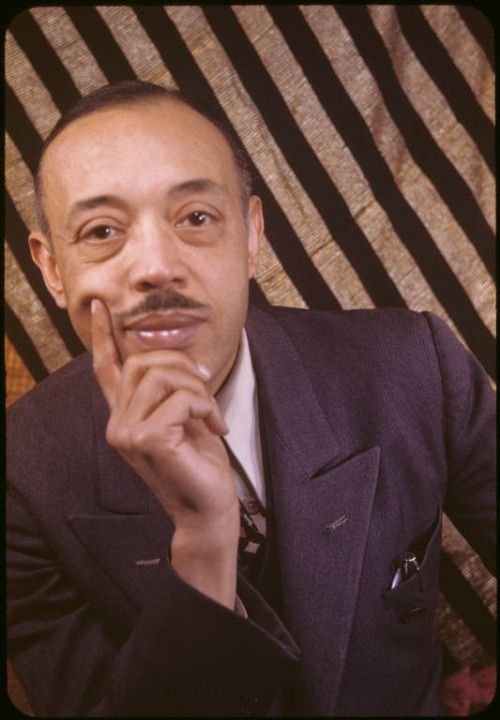
William Grant Still: An American Voice
Perhaps it’s not “The Great American Symphony,” self-consciously aspirational, oratorical, or grandiose in the manner the third symphonies of Roy Harris, William Schuman, or Aaron Copland; but it does go straight to the heart, which is something none of the composers of that great American triumvirate do, at least in those particular works.
William Grant Still’s “Afro-American Symphony” is poetic, it’s genuinely reflective, it’s beautiful, and it brims with great tunes. It’s congenial, and in the end quite moving. It remains one of my favorite symphonies by an American composer.
When I want “big statements” made on a colossal scale, I will turn to those Lincoln Center composers, who would have us believe they are eating out of lunch pails in their spare time, and riveting skyscrapers, or busting sod in denim overalls. But let’s face it, they are mostly hobnobbing in suits, jostling to get their music conducted by “Lenny.”
Still is a composer in the mold, if not the manner, of Charles Ives. He’s a perpetual outsider, and always true to himself. His music grows directly out of his autobiographical experience, the blues, ballads, and spirituals of his childhood, in Woodville, Mississippi and Little Rock, Arkansas, and later his experience playing in pit bands during the Harlem Renaissance.
He also studied at the Oberlin Conservatory and privately with George Whitefield Chadwick and Edgard Varèse, of all people. There is no Varèse to be found in Still’s music.
He composes with the directness of a Virgil Thomson, but with none of Thomson’s affected naiveté. He shares with George Gershwin a refreshing lack of pretention – or at any rate his music does (he did, after all, subtitle one of his symphonies “Autochthonous”) – and a wonderful facility with melody.
Of course, any discussion of Still must come with a litany of “firsts.” His “Afro-American Symphony” was the first written by a black composer to be performed by a major orchestra (the New York Philharmonic at Carnegie Hall). He was the first to be given the opportunity to conduct a major orchestra (the Los Angeles Philharmonic, at the Hollywood Bowl). His opera, “Troubled Island,” became the first to be produced by a major company (the New York City Opera). Another of his operas, “A Bayou Legend,” was the first to be performed on national television (as late as 1981). His works were performed internationally by the Berlin Philharmonic, the London Symphony Orchestra, the BBC Symphony, and the Tokyo Philharmonic.
For years, all I could locate was the “Afro-American Symphony,” and that only in two out-of-print, albeit very fine recordings (with Karl Krueger and the Royal Philharmonic, and Paul Freeman and the London Symphony Orchestra). It wasn’t until the digital era that the other four symphonies gradually – very gradually – became available. Thankfully, all of them have now been recorded and are available for purchase.
Furthermore, in all these years, I’ve only ever come across a single modern recording of any of his nine operas, “Highway One U.S.A,” with Philip Brunelle and Vocal Essence. This especially is a shame, since, as an opera lover himself, Still so wanted to add something significant to the repertoire.
For all the love Florence Price has had lavished on her as a woman of color (the Philadelphia Orchestra was recently awarded a Grammy for its excellent recording of two of her symphonies, for the Deutsche Grammophon label), it would be great if a world-class, American ensemble would take up the cause of Still.
Let’s face it, most American orchestras are pretty terrible about recording even the white guys that were once so revered during that era. Unless you’re Copland, Gershwin, or Barber, you’re pretty much out of luck with the majors. Must so many of our American composers be documented by less-costly orchestras abroad?
Fashion would seem to favor a Still revival. At least play his music in concert, Americans!
Happy birthday, WGS (1895-1978).
“Afro-American Symphony”
“Danzas de Panama”
A little more severe, “Dismal Swamp” for piano and orchestra
“Lenox Avenue,” conducted by Still
“Troubled Island,” still awaiting a modern recording
-
Ulysses Kay Rediscovered on The Lost Chord
Is the time ripe for the return of Ulysses?
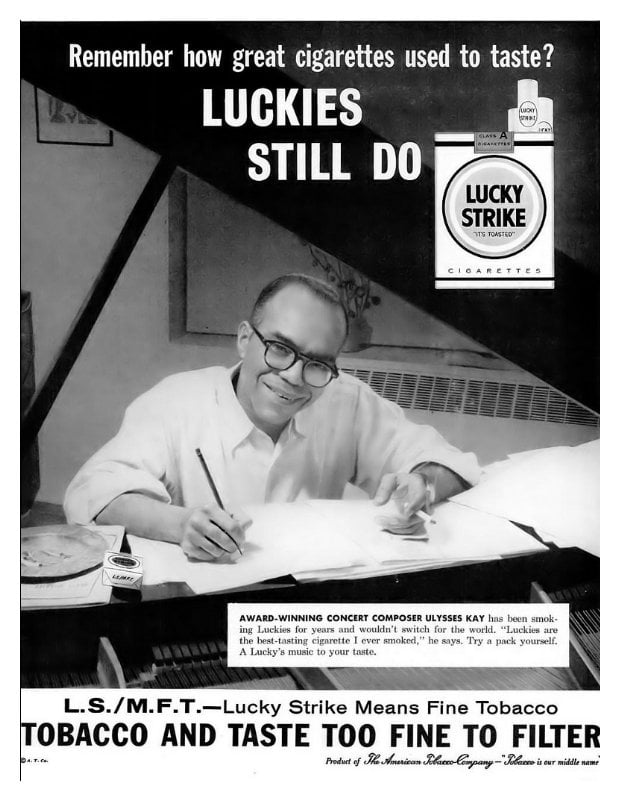
In determining his life’s course, Ulysses Kay (1917-1995), received encouragement from his uncle, King Oliver, and William Grant Still. Among his teachers were Howard Hanson, Paul Hindemith, and Otto Luening. He also attended the American Academy in Rome.
A longtime resident of Teaneck, NJ, he composed music in all genres. This week on “The Lost Chord,” we’ll sample “Tromba” for trumpet and piano, his Concerto for Orchestra, a suite from the semi-documentary “The Quiet One,” and “Six Dances for String Orchestra.”
I hope you’ll join me for “Giving Kay His Say.” Ulysses strings his bow, this Sunday night at 10:00 EST, on WWFM – The Classical Network and wwfm.org.
An interview with Kay conducted by Bruce Duffie:
http://www.bruceduffie.com/kay.html
PHOTO: Kay gets Lucky!
-
William Grant Still: An American Original
I am proud to say I was a William Grant Still advocate before it was cool to be so. When I first encountered his “Afro-American Symphony” in the early 1980s, it was love at first sound. It remains one of my favorite symphonies by an American composer.
Perhaps it’s not “The Great American Symphony,” self-consciously aspirational, oratorical, or grandiose in the manner the third symphonies of Roy Harris, William Schuman, or Aaron Copland; but it does go straight to the heart, which is something none of the composers of that great American triumvirate do, at least in those particular works.
Still’s symphony is poetic, it’s genuinely reflective, it’s beautiful, and it brims with great tunes. It’s congenial, and in the end quite moving. When I want “big statements” made on an Olympian scale, I will turn to those Lincoln Center composers, who would have us believe they are eating out of lunch pails, in their spare time, and riveting skyscrapers, or busting sod in denim overalls. But let’s face it, they are mostly hobnobbing in suits, jostling to get their music conducted by “Lenny.”
Still is a composer in the mold, if not the manner, of Charles Ives. He’s a perpetual outsider, and always true to himself. His music grows directly out of his autobiographical experience, the blues, ballads, and spirituals of his childhood, in Woodville, Mississippi and Little Rock, Arkansas, and later his experience playing in pit bands during the Harlem Renaissance.
He also studied at the Oberlin Conservatory and privately with George Whitefield Chadwick and Edgard Varèse, of all people. There is no Varèse to be found in Still’s music.
He composes with the directness of a Virgil Thomson, but with none of Thomson’s affected naiveté. He shares with George Gershwin a refreshing lack of pretention – or at any rate his music does (he did, after all, subtitle one of his symphonies “Autochthonous”) – and a wonderful facility with melody.
Of course, any discussion of Still must come with a litany of “firsts.” His “Afro-American Symphony” was the first written by a black composer to be performed by a major orchestra (the New York Philharmonic at Carnegie Hall). He was the first to be given the opportunity to conduct a major orchestra (the Los Angeles Philharmonic, at the Hollywood Bowl). His opera, “Troubled Island,” became the first to be produced by a major company (the New York City Opera). Another of his operas, “A Bayou Legend,” was the first to be performed on national television (as late as 1981). His works were performed internationally by the Berlin Philharmonic, the London Symphony Orchestra, the BBC Symphony, and the Tokyo Philharmonic.
For years, all I could find was the “Afro-American Symphony,” and that only in two out-of-print, albeit very fine recordings (with Karl Krueger and the Royal Philharmonic, and Paul Freeman and the London Symphony Orchestra). It wasn’t until the digital era that the other four symphonies gradually – very gradually – became available. Thankfully, all of them now have been recorded and are available for purchase.
It was only a couple of months ago that I discovered the official William Grant Still website, williamgrantstillmusic.com, run by the composer’s family. Through them, many of his scores, recordings, and written material may be acquired. I purchased a book about Still’s opera, “Troubled Island,” and its troubled history, combined with a CD-R of a live recording of the piece at its world premiere performance, a fascinating historical document. In all these years, I’ve only ever come across a single modern recording of any of his nine operas, “Highway One U.S.A,” with Philip Brunelle and Vocal Essence. This is a particular shame, since, as an opera lover himself, Still so wanted to add something significant to the repertoire.
For all the love Florence Price has had lavished on her recently (the Philadelphia Orchestra just announced it will be recording her complete symphonies for Deutsche Grammophon), it would great if a world-class American band would take up the cause of Still.
For me, William Grant Still is still the one.
Happy birthday, WGS (1895-1978).
“Afro-American Symphony”
“Troubled Island”
“Joe Hill” by Earl Robinson, sung by Paul Robeson
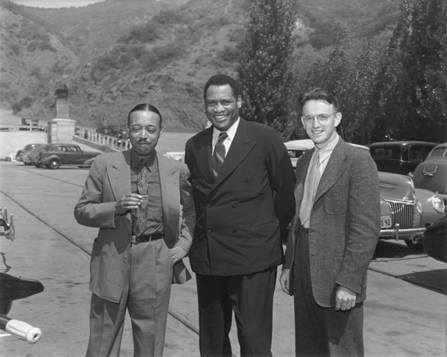
PHOTO: Still (left), with Paul Robeson and Earl Robinson
Tag Cloud
Aaron Copland (94) Beethoven (95) Composer (114) Film Music (149) Film Score (143) Film Scores (255) Halloween (97) John Williams (197) KWAX (232) Leonard Bernstein (105) Marlboro Music Festival (125) Movie Music (164) Mozart (91) Opera (215) Philadelphia Orchestra (90) Picture Perfect (174) Princeton Symphony Orchestra (110) Radio (90) Ross Amico (244) Roy's Tie-Dye Sci-Fi Corner (290) The Classical Network (101) The Lost Chord (269) Vaughan Williams (107) WPRB (397) WWFM (881)