Tag: Wolfgang Amadeus Mozart

  • Celebrate Mozart’s Birthday with Classical Music

    Celebrate Mozart’s Birthday with Classical Music

    There’s no art quite like MozArt.

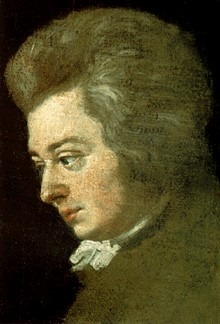
    Reacquaint yourself with the astonishing facility and pervasive humanity of Mozart’s music, as we observe his birthday today (he was born on January 27, 1756) with a full playlist of his symphonies, concertos, chamber and choral works, and selections from his music for the stage.

    Yes, Mozart is good for you. Whether or not exposure to his output improves the development of babies’ brains, it has undoubtedly contributed to the world’s sentimental education. Mozart’s music is just plain good for the soul. It reassures and it keeps us in touch with the larger truths of what it means to be human. Was Mozart’s life a bed of roses? No. But he knew where to find beauty, and he devoted a substantial portion of his brief existence to shepherding it into the world.

    We at The Classical Network understand the significance of keeping great music in our lives and in our community. But we can only do it with your help and with the help of listeners just like you. If you haven’t contributed to The Classical Network, or if you haven’t contributed recently – or if you HAVE contributed, but now feel you are in a position to bestow an additional gift – please consider joining us in membership today. We have four brand new Mozart-oriented thank you gifts to hopefully entice you and certainly to demonstrate our gratitude to you for doing your part to keep classical music on the airwaves and in continued good health.

    There’s more to life than acquiring things, struggling to survive, or shouting down those who happen to disagree with us. The greatest truths and consolations are to be found in the finest music. You don’t have to “know” anything about it. All you to do is open yourself up to it and support it.

    Please call us today (between 9 a.m. and 6 p.m. EST) at 1-888-232-1212, or donate online (anytime) at wwfm.org. Then enjoy the music of Mozart right along with us, your friends, at WWFM – The Classical Network. Thank you for ALL that you do.

  • Viola Love from Marlboro Music Festival

    Viola Love from Marlboro Music Festival

    The viola gets some love on this week’s “Music from Marlboro.” We’ll hear two very different quintets, composed over a century apart, that yet reveal their creators’ shared affinity for the instrument’s dark, rich timbre.

    Ralph Vaughan Williams’ “Phantasy Quintet,” written in 1912, was one of numerous works commissioned from England’s great composers by one Walter Wilson Cobbett, a businessman and amateur musician whose dual passions were chamber music and music of the Elizabethan era. (“Phantasy” was Cobbett’s preferred spelling.) The work is full of Tudor inflections and stamped by Vaughan Williams’ tell-tale love of folk music. Vaughan Williams doubles his violas, and the instrument is heard to great effect throughout the piece. We’ll hear a performance from the 1975 Marlboro Music Festival, with James Buswell and Sachiko Nakajima, violins; Philipp Naegele and Caroline Levine, viola; and Anne Martindale, cello.

    Wolfgang Amadeus Mozart, too, adds a second viola to his String Quintet No. 5 in D Major, K. 593. Composed in 1790, the work was recollected by the composer’s widow, Costanze, to have been written for another musical amateur, speculated to be Johann Trost. Trost must have been quite the gifted dilettante. He also knew Haydn from Esterhaza, and Haydn dedicated some of his quartets to him. When Haydn and Mozart played through the D Major Quintet together before Haydn’s first visit to London, the two men took turns indulging in the first viola part.

    The work was known for centuries as the “Zigzag” because of an alteration to the original manuscript that modified what had been a descending chromatic figure in the final movement into something decidedly more humorous. We’ll hear a performance from Marlboro in 2005, with Sarah Kapustin and Diana Cohen, violins; Mark Holloway and Sebastian Krunnies, viola; and David Soyer, cello.

    The two quintets will be divided by an evocative “Elegiac Trio” by Sir Arnold Bax, composed in 1916. The work, scored for flute, viola, and harp, appeared the year after Debussy’s trio for the same instrumental combination (which Bax may or may not have known). Its alluring melancholy emerged from a world at war. Bax was especially affected by escalating tensions between England and his beloved Ireland, which had just boiled over into violence with the Easter Rising. We’ll hear a performance of the trio from 1978, with Carol Wincenc, flute; Caroline Levine, viola; and Moya Wright, harp.

    Leave your viola jokes in the comments section, if you must; then join me for more exceptional music-making from the archives of the Marlboro Music Festival, this Wednesday evening at 6 EDT, on WWFM – The Classical Network and wwfm.org.

    Marlboro School of Music and Festival: Official Page

  • Samuel Barber on WWFM Today

    Samuel Barber on WWFM Today

    It’s unusual for me to do double-duty on Thursday, but that’s exactly what will happen today, as I scoot over for an afternoon of production work and live broadcasting at WWFM. (I’m generally there anyway, trying to get my recorded programs in for the weekend.)

    Today, we’ll celebrate the anniversary of the birth of the great American composer, Samuel Barber (b. 1910). It’s a beautiful day, so I wouldn’t be the least bit surprised if we have our share of American romantics. We’ll also hear from Czech composer Josef Mysliveček (b. 1737). Mysliveček was a close friend of Wolfgang Amadeus Mozart, so that will take care of the classicism.

    Eat your heart out, Tony Stark. I’m pulling the iron man shift today, from 4 to 7 p.m. EST, on WWFM – The Classical Network at wwfm.org.


    Samuel Barber contemplates Iron Man. (Please don’t sue me, Marvel.)

  • Michael Haydn: Beyond Joseph’s Shadow

    Michael Haydn: Beyond Joseph’s Shadow

    He ain’t heavy; he’s Haydn’s brother.

    Though Johann Michael Haydn’s entrance into a musical career was eased by his yet-to-be-famous older brother, he very much earned a reputation on his own merits. Michael started out as an organist and chorister (gone to Vienna at age 8; employed as an organist there by age 12). It’s said that Michael was the brighter student of the two and that his singing was more admired.

    In 1762, Michael arrived in Salzburg, where he rose through the ranks to become concertmaster and organist to Archbishop Sigismund Schrattenbach. In Schrattenbach’s service, he churned out over 360 compositions. The Haydns met Wolfgang Amadeus Mozart in Salzburg. Naturally, his music made a great impression. What’s surprising, perhaps, is that their music made a great impression on him, as well.

    For years, Michael’s Symphony No. 26 was misidentified as Mozart’s Symphony No. 37. Mozart had borrowed the work to perform in Linz. On another occasion, Mozart stepped up to fulfill one of Michael’s commissions (anonymously) when Michael was too ill to do so himself. When he came to write his Requiem in 1791, Mozart clearly remembered the requiem mass Michael had composed some 20 years earlier on the death of his employer.

    For his part, Mozart’s father, Leopold, disapproved of Michael’s heavy drinking. Perhaps that only made him all the more appealing to his son.

    Joseph Haydn also thought very highly of his brother’s music. He found his sacred works to be particularly effective, bearing an intimate and devotional stamp in contrast to his own more secular, monumental approach. At a point, Michael received a job offer from Joseph’s former boss, Prince Nikolaus Esterházy, but he opted to remain in Salzburg. He would die there at the age of 68.

    Join me this afternoon, as we honor the Haydn brothers, on this, Michael’s birthday (born in 1737). We’ll also have music of Luigi Cherubini on the anniversary of his birth (in 1760). In addition, there will be selections by Franz Liszt, William Mathias, Roberto Sierra, and others, between 4 and 7 EDT on WWFM – The Classical Network and at wwfm.org.


    FUN FACT: Franz Joseph and Johann Michael had a still younger brother named Johann Evangelist. He was a tenor, whom the family nicknamed Hansl (without the “e”).

    IMAGES: Those talented Haydn boys, Michael (left) and Joseph

  • Happy Birthday Mozart Genius of Music

    Happy Birthday Mozart Genius of Music

    Today is the birthday of Johannes Chrysostomus Wolfgangus Theophilus Mozart. I suppose the last name is enough to give it away, but I am speaking, of course, of Wolfgang Amadeus Mozart. Mozart was born in 1756; he died in 1791. In less than 35 years (he composed his first music around the age of 5), he created over 600 works, producing astonishing masterpieces in every category. Even so, he seldom had two thaler to rub together. Haydn wrote that “posterity will not see such a talent again in 100 years.” Posterity is still waiting.

Tag Cloud

Aaron Copland (93) Beethoven (95) Composer (114) Film Music (141) Film Score (143) Film Scores (255) Halloween (94) John Williams (195) KWAX (229) Leonard Bernstein (103) Marlboro Music Festival (125) Movie Music (156) Mozart (89) Opera (212) Philadelphia Orchestra (89) Picture Perfect (174) Princeton Symphony Orchestra (108) Radio (88) Ross Amico (244) Roy's Tie-Dye Sci-Fi Corner (290) The Classical Network (101) The Lost Chord (268) Vaughan Williams (103) WPRB (396) WWFM (881)

DON’T MISS A BEAT

Receive a weekly digest every Sunday at noon by signing up here


RECENT POSTS