
Tag: WWFM

  • Hanukkah Music & Holiday Concerts on Classical Network

    Hanukkah Music & Holiday Concerts on Classical Network

    Hanukkah begins at sunset. Get ready for the Festival of Light.

    String quintets by Mozart will illuminate your lunch hour, on today’s Noontime Concert on The Classical Network. The Manhattan Chamber Players will perform the Quintet No. 2 in C minor, K. 406, and the Quintet No. 4 in G minor, K. 516.

    The musicians will appear with guest artist/violist Samuel Rhodes tomorrow night (Wednesday at 7:30) in concert in Engelman Recital Hall at Baruch College in New York City. The program will include Maurice Ravel’s “Introduction and Allegro” for harp, flute, clarinet, and string quartet, Frank Bridge’s “Lament” for two violas, Brahms’ Clarinet Trio in A minor, and Arnold Schoenberg’s “Verklärte Nacht.” A pre-concert talk will be given at 7:00. You’ll find more information at manhattanchamberplayers.com.

    We’ll also hear the Symphony No. 3 by English composer Stanley Bate, on his birthday, and Ralph Vaughan Williams’ ballet “On Christmas Night,” inspired by Charles Dickens’ “A Christmas Carol.”

    If you like Benjamin Britten’s “A Ceremony of Carols,” I think you’ll enjoy Samuel Adler’s “The Flames of Freedom.” The cantata, scored for three-part treble chorus, is based on ten well-known Hanukkah songs and hymns, alongside original music to two other liturgical Hanukkah texts. The work is cast in eight movements to represent the eight candles of the menorah.

    Then, in the festive spirit of midwinter celebrations of all cultures, we’ll hear Christopher Rouse’s “Karolju,” a wholly fabricated holiday blow-out based on a kind of pidgin text drawn from many different languages. Even the title is pure invention, suggestive of the word “carol,” but ending with “u” (because the composer always liked words that end with “u”). Hey, just like “Merry Christmas” and “Happy Hanukkah,” it’s the thought that counts.

    There will be much multi-cultural merriment, this Tuesday from 12 to 4 p.m. EST, on WWFM – The Classical Network and wwfm.org.
  • Berlioz Love Passion and Revenge

    Berlioz Love Passion and Revenge

    Quite possibly, he is the quintessential Romantic composer, with a capital “R.”

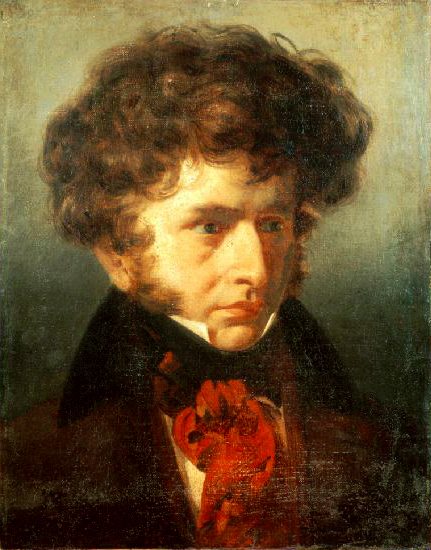
    Hector Berlioz revolutionized art music, even as his personal life practically rolled off the rails with unbridled emotion. My favorite Berlioz anecdote concerns Harriet Smithson, the equally fiery Irish actress who resisted his advances. Then he wooed her with a symphony – the grandest of grand gestures – and they lived miserably ever after, at least for a time. Berlioz could not understand spoken English, and Smithson didn’t know French, but apparently they were both fluent in volcanic passion.

    They married in 1833. (Franz Liszt was a witness at the civil ceremony.) It would prove to be a tempestuous relationship between two strong-willed artists. The couple had a son, but then Berlioz found a mistress and Smithson began to drink. Eventually, they separated, but Berlioz continued to support Smithson until her death in 1854.

    Ostensibly both the “Symphonie fantastique” (1830) – with a program of unrequited love that drives an artist to attempt suicide through an overdose of opium (and the nightmarish visions he experiences as a result) – and its seldom-heard sequel, “Lelio, or The Return to Life” (1831) – in which the artist finds consolation in music and literature, especially Shakespeare – were inspired by Smithson. That was the official story endorsed by the composer.

    However, Berlioz being Berlioz, after writing the symphony, but before Smithson could hear it, he reacted to her indifference by entering into a rebound relationship. This resulted in a quick engagement. Then the composer went to Italy to study, having been awarded a Prix de Rome scholarship. While there, he learned that his recent fiancée, prompted by her mother, had made a more favorable match.

    Berlioz flew into a rage, and he was determined to have his revenge. His plan involved assuming the disguise of a woman and taking a coach back to Paris with a pair of double-barrel pistols in order to put an end to his inconstant lover, her new beau, her mother, and then himself. If the pistols happened to jam, he would poison everyone instead. As luck would have it, he left the costume in the side pocket of the carriage, and this gave him a chance to cool down.

    In his day, much of Berlioz’s music was deemed hopelessly avant-garde and met with confusion, if not outright hostility. We know better now. Right?

    Join me for selections by Berlioz, Miecyszlaw Karlowicz, and Elliot Carter, all birthday celebrants, this afternoon between 4 and 7 p.m. EST, on WWFM – The Classical Network and wwfm.org.


    Berlioz in 1832. Believe it or not, I once had hair like this.

  • St Nicholas Day Miracle on WWFM

    St Nicholas Day Miracle on WWFM

    Happy St. Nicholas Day!

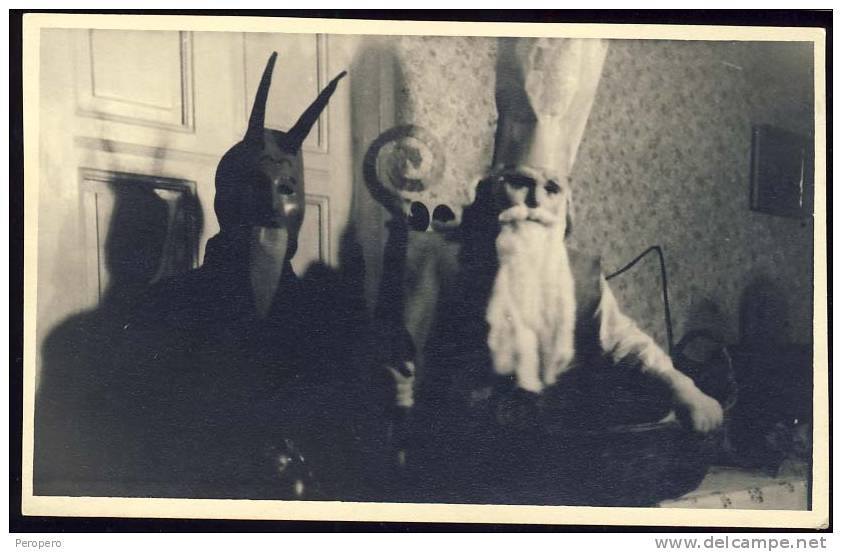
    Coming up on WWFM at 4:30 p.m. EST, it’s “The Miracle of Saint Nicholas” by Joseph-Guy Ropartz. Ropartz, a native of Brittany, and a pupil of Jules Massenet and César Franck, focuses on the infamous Nicholas legend in which three boys are slain by a butcher, and chopped up and pickled in brine, with the aim of passing them off as ham. Nicholas restores the youths, and the butcher repents. The story would later be set by Benjamin Britten, as part of his cantata, “Saint Nicholas.”

    ‘Tis the season, on WWFM – The Classical Network and wwfm.org.

  • Norwegian Composers on The Lost Chord

    Norwegian Composers on The Lost Chord

    This Sunday night on “The Lost Chord, we’re off to Norway for music by a couple of composers, neither of which are terribly well-known.

    Halfdan Cleve (1879-1951) received an unusually strict musical upbringing. His father was an organist, who insisted his son play nothing but Bach until he was 16! The young Cleve later went to Germany, where he received instruction from the Scharwenkas, brothers Philipp and Franz Xaver. The latter, a pupil of Franz Liszt, was regarded as one of the towering keyboard virtuosos of his day.

    Cleve became widely known as a composer and pianist, but his popularity waned after World War I. He reacted to the rise of modernism by clinging more firmly to his Norwegian roots, celebrating the Norwegian countryside and its folk idioms in his music. His Violin Sonata of 1919 is reflective of this attitude.

    Also from 1919, we’ll hear the Piano Concerto of Eyvind Alnaes (1872-1932), a figure who is known, if at all, for his art songs, some of which were recorded by Kirsten Flagstad and Feodor Chaliapin. Alnaes’ musical language is less overtly “Norwegian” than that of Cleve. In fact, his concerto echoes Brahms and Tchaikovsky, with some interesting suggestions of Rachmaninoff’s Piano Concerto No. 4, which was not completed until seven years later. Did Rach know this work? You can’t a-fjord to miss it!

    I hope you’ll join me for “Dark Horse Norsemen,” works by neglected Norwegian composers, this Sunday night at 10:00 EST, on WWFM – The Classical Network and wwfm.org.


    Flagstad sings Alnaes: https://www.youtube.com/watch?v=5aT6ZdY320Q

    PHOTO: Norwegian horse can’t stop yawning because of “The Lost Chord” late start time

  • WWFM Giving Tuesday Salutes Local Non-Profits

    WWFM Giving Tuesday Salutes Local Non-Profits

    To mark Giving Tuesday, The Classical Network will salute a number of non-profit organizations that continue to make a difference in our community.

    Throughout the day, WWFM hosts will conduct brief interviews with representatives of the following: SAVE, A Friend to Homeless Animals (10:15 a.m.), Trenton Area Soup Kitchen (11:15 a.m.), Trenton Music Makers (12:15 p.m.), Ryan’s Quest (1:15 p.m.), Princeton Senior Resource Center – PSRC (4:15 p.m.), and HomeFront (5:15 p.m.). Tune in to learn more and see how you, too, can lend a hand.

    Of course, as always, there will be plenty of music, also! It’s the gift that keeps on giving at WWFM – The Classical Network and wwfm.org.

Tag Cloud

Aaron Copland (92) Beethoven (95) Composer (114) Film Music (124) Film Score (143) Film Scores (255) Halloween (94) John Williams (188) KWAX (229) Leonard Bernstein (101) Marlboro Music Festival (125) Movie Music (139) Opera (202) Philadelphia Orchestra (89) Picture Perfect (174) Princeton Symphony Orchestra (106) Radio (87) Ralph Vaughan Williams (85) Ross Amico (244) Roy's Tie-Dye Sci-Fi Corner (290) The Classical Network (101) The Lost Chord (268) Vaughan Williams (103) WPRB (396) WWFM (881)

DON’T MISS A BEAT

Receive a weekly digest every Sunday at noon by signing up here


RECENT POSTS