There will be Irish music to start this afternoon, hopefully some Florent Schmitt later on, and a nod to Philadelphia composer Romeo Cascarino on his birthday.
Pour yourself a cup of something nice, and then join me for these and more, between 4 and 7:00 EDT, on WWFM – The Classical Network, and at wwfm.org.
I hope you’ll join me for today’s Noon Time Concert, when I’ll be introducing works performed by Bucks County’s Lenape Chamber Ensemble. On the program will be music by Franz Schubert, Joaquin Turina and Antonin Dvorak. Lenape Chamber Ensemble is made up of crackerjack musicians from Philadelphia and New York City.
The group’s next set of concerts, which will feature works by Haydn, Schubert and Jean Francaix, will take place on October 7 at Upper Tinicum Lutheran Church in Upper Black Eddy, Pa., and October 9 at Delaware Valley University in Doylestown, Pa. For more information, look online at lenapechamberensemble.org.
Then stick around: later this afternoon, among my featured selections, we’ll enjoy a symphony by Sir Arnold Bax, on WWFM – The Classical Network and at wwfm.org.
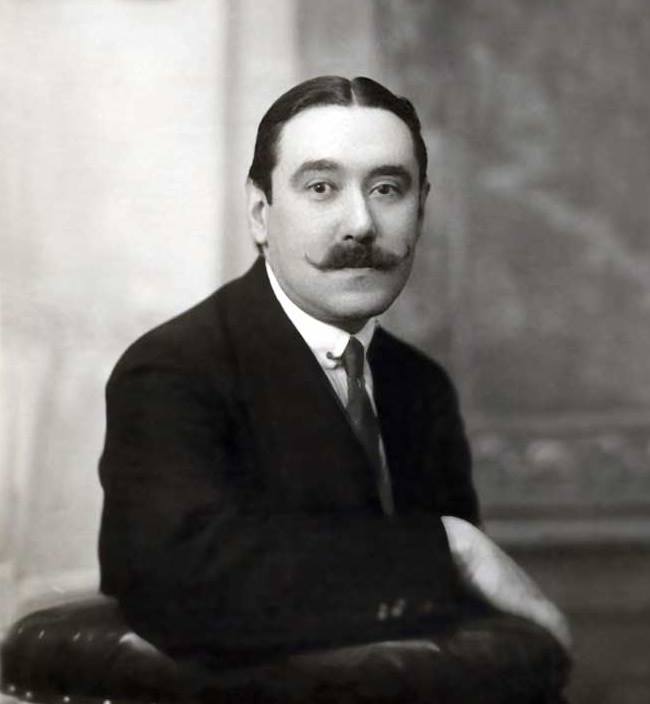
PHOTO: Turina, sporting the most dapper mustache in the room
He began his career as a song plugger on New York’s Tin Pan Alley. He was “discovered” by Al Jolson, who gave him his biggest hit. He composed a string of successful stage musicals with lyrics by his brother, Ira.
Though he had classical training, he was turned away by both Nadia Boulanger and Maurice Ravel, on the grounds that they didn’t want to spoil his natural voice. He played tennis with Arnold Schoenberg, who also refused him lessons. He kept an autographed photo of Alban Berg in his apartment, next to one of Jack Dempsey.
His musical, “Of Thee I Sing,” was the first to win a Pulitzer Prize. His opera, “Porgy and Bess,” was a failure at its premiere. His songs graced elegant screen comedies of the 1930s. In the concert hall, he was America’s most authentic voice.
George Gershwin died of a brain tumor in 1937, at the age of 38. Reportedly, his last words were “Fred Astaire.”
I invite you to join me this afternoon, as I salute this versatile composer on his birthday anniversary. Gershwin’s music will be among our featured highlights, between 4 and 7 p.m. EDT, on WWFM – The Classical Network and at wwfm.org.
You know Aram Khachaturian, right? The guy who wrote that frenetic tune that makes you want to spin plates on the tops of sticks? The one that is used to usher in the elephants at the circus?
This Sunday night on “The Lost Chord,” we’ll be listening to Leopold Stokowski’s rarely-heard recording of Khachaturian’s Symphony No. 2, sometimes called “The Bell.”
Khachaturian wrote the work in 1943, the height of World War II, while he was holed up at a Composers Union retreat with Shostakovich, Prokofiev, Miaskovsky and Gliere. He said of the piece, “The Second Symphony is a requiem of wrath, a requiem of protest against war and violence.”
The symphony’s nickname alludes to a kind of alarm that opens and closes the work. Overall, the tone is one of resolve in the face of tragedy.
Stokowski’s recording, long unavailable, was originally issued on United Artists Records in the late 1950s. It reappeared briefly on compact disc, on the EMI label, in 1994, and again in 2009, as part of a 10-disc box set of entrancing Stokowski performances.
The master tapes have not weathered the years well, alas, so there are moments of distortion, but the power of the piece transcends any technical limitations. There is certainly nothing wanting in the performance.
To round out the hour, we’ll hear the Russian-born pianist, Nadia Reisenberg, in a selection from her 1947 Carnegie Hall recital, Khachaturian’s most famous piano work, the “Toccata.” Reisenberg studied at Philadelphia’s Curtis Institute of Music under Josef Hoffman.
Join me for these Khachaturian rarities, “Khach as Catch Can,” tonight at 10 EDT, on WWFM – The Classical Network and at wwfm.org.
Here’s the composer, highly-decorated, conducting his “Concerto-Rhapsody,” with Mstislav Rostropovich:
Music for spinning plates, Liberace style:
A rare document of Khachaturian singing about the glories of Armenian wine!
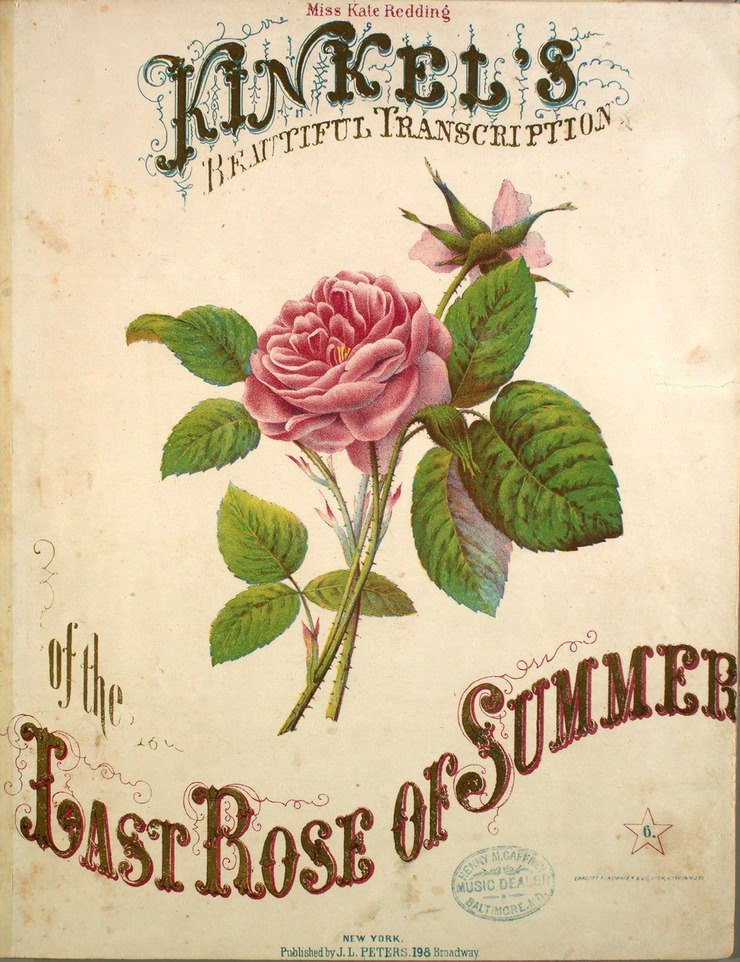
The Autumn Equinox will transpire tomorrow morning at 10:21 EDT. Summer is dictating its last will and testament. Join me this afternoon to hear music by Felix Mendelssohn (his “Fantasy on ‘The Last Rose of Summer’”) and Wilhelm Stenhammar (his cycle of piano pieces, “Late-Summer Nights”).
We’ll also honor Gustav Holst (1874-1934) on the anniversary of his birth. So get ready for plenty of English folksong, beside.
We’ll bid adieu to the season, even as the weather continues to be obstinate, from 4 to 7 p.m., on WWFM – The Classical Network and at wwfm.org.